
Table of Contents
- Understanding Why Water Damage Claims Get Denied
- Step 1: Review Your Insurance Policy and Denial Letter
- Step 2: Gather Evidence and Documentation for Your Appeal
- Step 3: Write and File a Formal Appeal Letter for Your Denied Claim
- Step 4: Communicate Effectively with Your Claims Adjuster
- Hiring a Public Adjuster to Strengthen Your Denied Claim
- Filing a Complaint with Your State Insurance Department
- When to Request a Re-Inspection and Independent Expert Review
Last Updated: August 7, 2026
Understanding Why Water Damage Claims Get Denied
Water damage claims get denied for specific, avoidable reasons: inadequate documentation, misunderstood policy exclusions, and filing delays. Insurance companies scrutinize water damage closely because it’s frequently claimed and vulnerable to fraud.
Most denials fall into predictable categories. Sudden and accidental water damage, burst pipes, overflowing toilets, failed water heaters, is typically covered under standard homeowner policies. Long-term neglect or gradual damage, like slow roof leaks left unaddressed for months, usually isn’t. Another common reason: the adjuster believes the damage falls outside your coverage limits or you failed to meet contractual obligations, such as mitigating damage promptly or meeting filing deadlines. Some policies exclude specific water damage types entirely, like sump pump failures or water entering from outside the foundation.
The good news: most denials can be appealed and overturned with solid evidence and a clear argument. Understanding exactly why the insurance company said no is the first step to systematically addressing that reason.
Step 1: Review Your Insurance Policy and Denial Letter
Your denial letter is the roadmap for your entire appeal. Read it carefully multiple times, the insurance company must provide a written explanation for the denial.
Open your homeowner’s insurance policy and locate the water damage coverage section. Most standard policies cover sudden and accidental water damage but exclude flood damage (requiring separate flood insurance) and gradual leaks. Note what’s covered, what’s excluded, and any conditions you must meet.
Compare the denial letter’s reason against your policy. Common disconnect points include:
- The adjuster claims gradual damage when you believe it was sudden
- The policy excludes a specific cause you weren’t aware of
- The company says you didn’t mitigate damage adequately, but you took immediate steps
Write down the exact denial reason. If the letter is vague, call the claims adjuster and ask for specifics. Document the date, time, and person’s name, this conversation may become important if you escalate.
Step 2: Gather Evidence and Documentation for Your Appeal
Evidence is everything in a denied claim appeal. Insurance companies make decisions based on documentation, not your word.
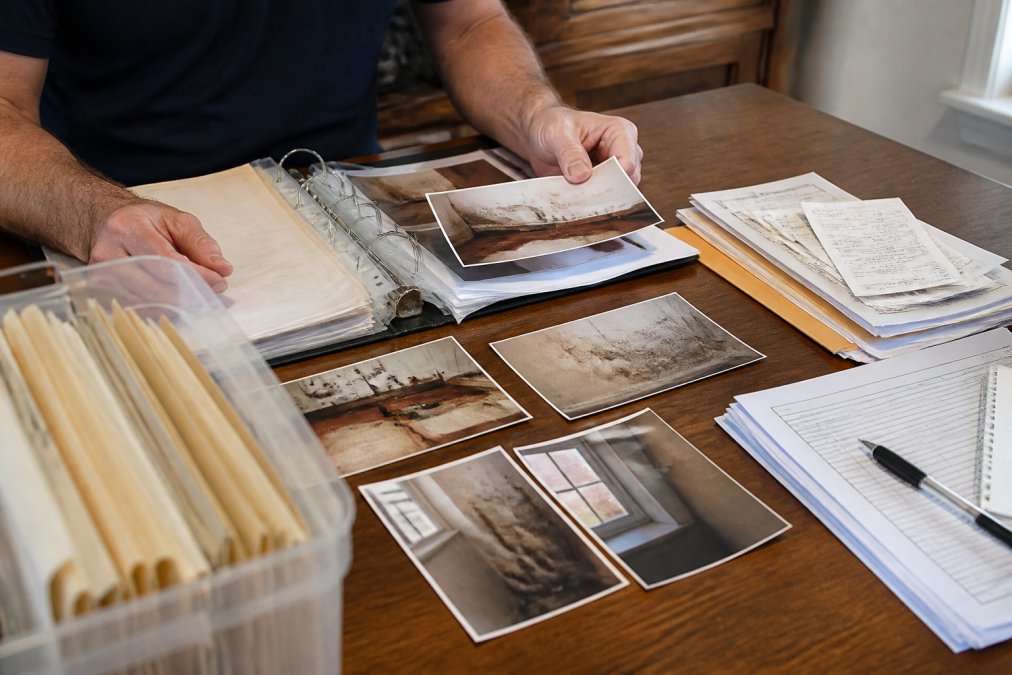
Establish the date of loss with timestamped photos or videos, text messages, receipts for emergency supplies, or work orders from restoration companies. Photograph all damage from multiple angles, capturing both the water damage and surrounding context. If you haven’t already, hire a professional restoration company to document the damage, professional assessments carry significant weight because they’re created by trained third parties with no stake in the outcome.
Gather receipts and invoices for all mitigation and restoration work. These prove you took immediate steps to prevent further loss, a contractual obligation in most policies. Aquaflame Restores It, for example, provides detailed invoices and documentation that strengthen your appeal file considerably.
Creating a Checklist for Evidence Organization
Keep your appeal file organized in a single location, digital or physical. Use this checklist:
- Copy of the denial letter
- Your insurance policy (full document)
- Proof of loss form
- Date-stamped photos and videos of damage
- Photos showing the cause of damage if visible
- Receipts and invoices for restoration work
- Contractor quotes for repairs
- Payment history showing current premiums
- Communication with the insurance company
- Documentation of the date of loss
- Weather records if applicable
- Maintenance records proving property upkeep
- Expert reports or damage assessments
Step 3: Write and File a Formal Appeal Letter for Your Denied Claim
A formal appeal letter is your chance to make a persuasive, documented case directly to the insurance company. This is a formal business document that becomes part of your official claim file.
Your letter should be factual, organized, and specific. Walk through the denial reason point by point and present evidence that contradicts it. If the adjuster claimed gradual damage, show evidence it was sudden. If they said you didn’t mitigate, list every step you took immediately after discovery.
Keep the letter to one or two pages. Use professional business letter format with your name, address, claim number, and date at the top.
What to Include in Your Appeal Letter
Open with your claim number and a clear statement: "I am formally appealing the denial of my water damage claim dated [date of loss]."
Address the denial reason directly with specific evidence: "As documented in the attached photos and the damage assessment from [restoration company], the water damage occurred on [date] when the pipe at [location] burst suddenly due to [cause]."
State the coverage you believe applies: "My policy covers sudden and accidental water damage under Section [X]. The damage meets this definition because [specific facts]."
List your supporting documentation and close with a clear request: "I request that you reconsider this claim and approve coverage for the documented water damage."
Sample Appeal Letter Template
[Your Name]
[Your Address]
[City, State ZIP]
[Your Phone Number]
[Your Email]
[Date]
[Insurance Company Name]
Claims Department
[Company Address]
[City, State ZIP]
RE: Formal Appeal of Denied Water Damage Claim
Claim Number: [Your Claim Number]
Date of Loss: [Date]
Policyholder: [Your Name]
Dear [Claims Manager/Adjuster Name]:
I am writing to formally appeal the denial of my water damage claim dated [date of loss]. On [date], my property at [address] sustained water damage caused by [specific cause]. Your denial letter dated [denial date] stated the claim was denied because [exact reason from denial letter].
I respectfully disagree. The damage was sudden and accidental, not gradual or from neglect. The following facts support this:
- The water damage occurred on [specific date] when [describe the incident]
- I discovered the damage on [date] and immediately contacted [restoration company name]
- [Restoration company name] arrived on [date] and documented the damage professionally
- The damage assessment report (attached) confirms the sudden nature of the water intrusion
My homeowner’s insurance policy covers sudden and accidental water damage under Section [X]. This claim meets the policy’s definition of covered loss because [explain how it meets the definition].
I have taken all reasonable steps to mitigate further damage. Documentation of these mitigation efforts is attached, including invoices from [restoration company name] for water extraction and structural drying, receipts for emergency supplies, and photos documenting the restoration work.
I have maintained my insurance policy in good standing and paid all premiums on time. Based on the evidence presented, I believe this claim should be approved for the full amount of documented losses.
Please contact me at [phone number] or [email address] if you require any additional information.
Sincerely,
[Your Signature]
[Your Typed Name]
Enclosures:
- Copy of denial letter
- Copy of insurance policy (relevant sections)
- Damage assessment report
- Photographs of damage
- Invoices from restoration company
- Proof of loss form
- Payment history
Send this letter via certified mail with return receipt requested. Keep a copy for your records.

Step 4: Communicate Effectively with Your Claims Adjuster
Your claims adjuster is your primary contact for the appeal process. Effective communication can sometimes resolve the appeal without escalation.
Before calling, prepare. Have your claim number, denial letter, and key documentation in front of you. Write down specific questions. Call professionally and collaboratively, adjusters are more likely to reconsider if you’re respectful.
Ask the adjuster to explain the denial in more detail. Ask: "Can you walk me through the specific policy language you’re applying to my claim?" and "What documentation would change your decision?" These questions often reveal exactly what you need to address.
Document every conversation with the date, time, adjuster’s name, and what was discussed. Follow up in writing via email: "Per our conversation on [date], I understand you will [specific action]. Please confirm receipt and your timeline for review."
Maintain professionalism even if frustrated. An adjuster who feels respected and understands your position is more likely to reconsider.
Hiring a Public Adjuster to Strengthen Your Denied Claim
A public adjuster is a licensed professional who specializes in negotiating insurance claims on behalf of policyholders. They work for you, not the insurance company, and are paid a percentage of the settlement they recover (typically 5-10%).
Hire a public adjuster if your claim is substantial (typically over $10,000), the denial seems unjustified, or you’re uncomfortable handling the appeal yourself. They understand policy language, state regulations, and negotiation processes that most homeowners don’t.
A public adjuster will review your claim file, assess damage independently, and present a professional case to the insurance company. Their involvement signals you’re serious about the appeal, sometimes prompting reconsideration.
Check your state’s licensing requirements, public adjusters must be licensed in most states. Ask for references and verify their license status with your state’s insurance department before hiring.
Filing a Complaint with Your State Insurance Department
If your appeal doesn’t succeed, your state’s insurance department is the next step. Every state has a department of insurance that handles consumer complaints against insurance companies.
Filing a complaint is free and doesn’t require a lawyer. The department investigates and can pressure the insurance company to reconsider. They can’t force payment but can determine whether the company violated state insurance laws or treated you unfairly.
Visit your state’s insurance department website for the consumer complaint process. Provide your claim number, a summary of what happened, and copies of key documents. Be factual and specific. The investigator will contact the insurance company and ask them to respond.
The complaint process can take several weeks or months. During this time, the insurance company may reconsider your claim to avoid a formal finding of wrongdoing. If the investigation concludes the company violated state law or acted in bad faith, the department can impose penalties or require payment.
When to Request a Re-Inspection and Independent Expert Review
If you believe the adjuster’s damage assessment is incomplete or inaccurate, you can request a re-inspection.
Hire an independent water damage expert or engineer separate from the restoration company. The expert should have credentials like IICRC certification or professional engineering licensure. They’ll produce a detailed report documenting the damage, its cause, and repair costs.
Send this independent assessment to the insurance company with a letter requesting re-inspection: "The initial assessment did not document damage to [specific areas]. The attached independent assessment identifies additional damage and provides detailed analysis of the cause."
The insurance company may send a new adjuster or review your independent assessment and reconsider their decision. An independent expert report carries significant weight because it comes from someone with no financial stake in the outcome.
Appealing a denied water damage insurance claim is a systematic process you can handle yourself with careful documentation and a professional approach. Start by understanding exactly why the claim was denied, gather comprehensive evidence that addresses that reason, and present your case in a formal appeal letter. If the insurance company doesn’t reconsider, escalate to your state’s insurance department or hire a public adjuster.
Act quickly, most policies have strict deadlines for appeals, often 30 to 60 days from the denial date. Missing that deadline can eliminate your right to appeal. At Aquaflame Restores It, we provide detailed damage documentation and professional assessments that support appeals. Our IICRC-trained technicians document every aspect of the damage, providing the evidence you need to make a compelling case to your insurance company.
Contact Aquaflame Restores It 24/7 for emergency water damage response and professional documentation that strengthens your insurance claim. Our 30-minute arrival guarantee and direct insurance billing mean your restoration starts immediately while your appeal is building momentum.
Frequently Asked Questions
Why would a water damage claim be denied?
Water damage claims are denied for several reasons. The most common is that the damage falls under policy exclusions, such as flooding, which requires a separate flood policy, or damage from lack of maintenance. Claims may also be denied if the damage is considered gradual (like a slow leak) rather than sudden and accidental. Some denials occur because the policyholder failed to mitigate further damage quickly enough, or documentation is incomplete. Understanding the specific reason in your denial letter is the first step to building a strong appeal.
What evidence do I need to support a water damage claim appeal?
Gather photos and videos of the damage taken immediately after the loss, receipts for emergency mitigation efforts, repair estimates from contractors, proof of the loss date, your insurance policy, the original denial letter, and any communication with the claims adjuster. If the damage was caused by a burst pipe or appliance failure, keep the failed item or photos of it. For gradual damage claims, document the timeline showing when you first noticed the issue and when you reported it. An independent water damage expert's assessment can also strengthen your appeal significantly.
How long do I have to appeal a denied insurance claim in the US?
Most states require insurers to allow appeals within 30 to 60 days of the denial letter, though some states allow up to one year. Check your state insurance commissioner's website for your specific state's statute of limitations. Your insurance policy and denial letter should also state the appeal deadline. Don't delay, file your appeal well before the deadline expires. If you miss the deadline, you may lose your right to appeal through the insurance company and have to pursue other remedies like mediation or legal action.
Can I hire a public adjuster after my claim has been denied?
Yes, you can hire a public adjuster at any point in the claims process, including after a denial. Public adjusters work on your behalf to negotiate with the insurance company and can be especially valuable if your claim involves complex damage or a significant settlement. They typically charge a percentage of the settlement (usually 5-10%), so they only get paid if they recover money for you. A public adjuster can review your case, identify weaknesses in the denial, gather additional evidence, and negotiate a better outcome than you might achieve alone.
This article was written using GrandRanker