Last Updated: November 7, 2026
Quick Summary
To stop smoke odor from lingering in a living room, remove the residue rather than masking it: open windows and run fans outward for 20 to 30 minutes, wash curtains and cushion covers, wipe surfaces top to bottom, and HEPA-vacuum rugs and upholstery. Control humidity and keep filtration running, because damp air re-releases residue and smoke odor returns.
- Smoke residue bonds to paint, fabric, and dust, then off-gasses for weeks.
- A light cigarette smell can fade in a few days; fire odor can last months without proper cleaning.
- Vacuum rugs, upholstery, and floors with a HEPA filter after wiping surfaces.
- Cushions that still smell after two cleanings usually need replacement, not another spray.
- Run the A/C or a dehumidifier while airing out, since damp air holds odor.
Table of Contents
- Why Smoke Odor Lingers in Living Rooms and How Long It Lasts
- How to Remove Cigarette Smell From a Room
- Smoke Odor Removal From Upholstery and Curtains
- Cleaning Hard Surfaces: Walls, Ceilings, Glass, and Floors
- Ventilation, Airflow, and Odor Absorbers That Actually Work
- Professional Smoke Odor Removal After a Fire
- Preventing Smoke Odor From Coming Back
- Book a Free Smoke Odor Assessment in Metro Atlanta
- Frequently Asked Questions
Why Smoke Odor Lingers in Living Rooms and How Long It Lasts
Smoke odor lingers because smoke residue settles into porous materials and keeps releasing particles into the air long after the fire is out. The living room is often the hardest room to clear.
Smoke residue is the fine film of charred particles and oils that coats surfaces after any fire or long-term cigarette use. It bonds to paint, fabric, and dust. Then it off-gasses for weeks.
Where Smoke Residue Settles in a Living Room
Smoke rises, then cools and falls. It lands on everything with texture.
- Upholstery and cushions. Sofa fabric, chair backs, and throw pillows trap smoke deep in the padding.
- Curtains and drapes. Hanging fabric collects residue on both sides.
- Rugs and carpets. Foot traffic pushes smoke particles down into the pile.
How Long Smoke Smell Lingers in a Room
There is no single timeline. A light cigarette smell in a well-ventilated room can fade in a few days. A house fire leaves odor that can last months without proper cleaning.
Three things decide how long smoke smell lingers in a room:
- How much porous material was exposed
- How much residue was cleaned versus sealed over
- Whether airflow and filtration keep running
If you can still smell smoke after two weeks of cleaning and airing out, the source is deeper than the surface. That is when a professional assessment saves time.
How to Remove Cigarette Smell From a Room
To remove cigarette smell from a room, you have to remove the residue, not cover it. Air fresheners and candles mask the smell for an hour.
Here is the order that works:
- Clear the air first. Open windows and run fans pushing air outside for 20 to 30 minutes before you start.
- Remove loose fabric. Take down curtains, pull off cushion covers, and bag up throw blankets for washing.
- Wipe from top to bottom. Start at the ceiling and work down walls, trim, and baseboards so residue does not redrip.
- Vacuum everything. Use a vacuum with a HEPA filter on rugs, upholstery, and floors.
- Wash hard surfaces last. Glass, mirrors, and painted trim get a second pass once dust settles.
Watch out: scrubbing soot with a dry cloth grinds it deeper into paint and fabric. Use a damp cloth and change it often.
Here is the order that works, from clearing the air to the final wash.
| Step | What to do | Time or frequency |
|---|---|---|
| 1 | Open windows and run fans pushing air outside | 20 to 30 minutes |
| 2 | Remove loose fabric: curtains, cushion covers, throw blankets | Before cleaning surfaces |
| 3 | Wipe from top to bottom: ceiling, walls, trim, baseboards | So residue does not redrip |
| 4 | Vacuum rugs, upholstery, and floors with a HEPA filter | After wiping |
| 5 | Wash hard surfaces: glass, mirrors, painted trim | Last, once dust settles |
Smoke Odor Removal From Upholstery and Curtains
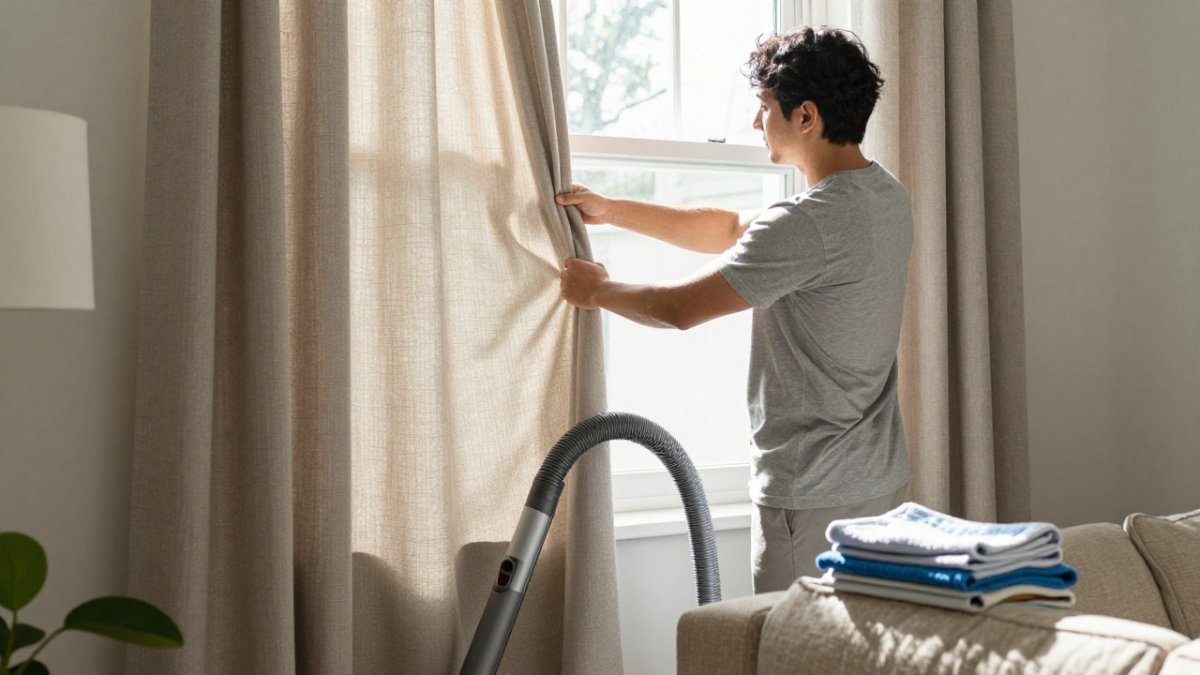
Smoke odor removal from upholstery and curtains starts with the care label, because the wrong cleaner can set a stain or shrink a panel permanently.
Match the Method to the Material
Different fabrics fail in different ways. A method that saves one sofa can ruin another.
- Cotton and linen slipcovers. Usually machine washable on a gentle cycle with mild detergent. Air dry outside if you can, because sunlight helps break down odor.
- Polyester and blended upholstery. Vacuum both sides of every cushion, then spot clean with a fabric-safe cleaner. Avoid soaking, which can leave water rings.
- Velvet and chenille. Do not rub. Brush with the nap and use a low-moisture cleaner, because wet rubbing crushes the pile.
Why the Padding Is the Real Problem
Smoke soaks into foam cushions and curtain linings, and no surface wipe reaches it. The foam acts like a sponge: it pulls in residue during the fire or smoking period and releases it slowly for weeks. Cushions that still smell after two cleanings usually need replacement, not another spray. The same is true of curtain lining fabric, which traps residue on the side you never see.
A Step-by-Step Routine That Works
- Remove loose fabric. Take down curtains, pull off cushion covers, and bag up throw blankets for washing.
- Vacuum both sides. Use a HEPA vacuum on cushions, seams, and the back of each piece.
- Sprinkle baking soda on dry fabric. Let it sit several hours, then vacuum it up to pull surface residue.
- Spot clean hidden areas first. Test any cleaner where it will not show.
- Air dry outside when possible. Sunlight and moving air do more than most sprays.
Watch out: scrubbing soot with a dry cloth grinds it deeper into fabric, and over-wetting foam can grow mold in Georgia humidity. Use a damp cloth and change it often.
For deeper help on sofas and fabric furnishings, our guide on 7 ways to remove smoke smell from furniture walks through each material.
Cleaning Hard Surfaces: Walls, Ceilings, Glass, and Floors
Hard surfaces hold smoke residue as a sticky film, so they need a degreasing wash, not just a rinse.
Work in this order:
- Ceilings and upper walls with a damp sponge and mild degreaser
- Trim, doors, and baseboards with a microfiber cloth
- Glass and mirrors with a vinegar and water mix
Pay attention to the wall behind the TV and any wall near a fireplace or kitchen pass-through.
Watch out: painted drywall can pill or peel if you soak it. Wring the sponge nearly dry.
In older Decatur and DeKalb County homes, popcorn ceilings and original plaster soak up smoke differently than modern drywall.
Ventilation, Airflow, and Odor Absorbers That Actually Work
Ventilation and odor absorbers work together: airflow carries particles out, and absorbers trap what is left.
Set up cross-ventilation by opening windows on opposite walls.
For airborne particles, run an air purifier with a HEPA filter and a carbon pre-filter.
Odor absorbers that help:
- Activated charcoal in bowls near soft furnishings
- Baking soda on carpets and upholstery before vacuuming
- Coffee grounds in open containers for small spaces
Skip ozone generators in occupied rooms. They can irritate lungs, and they do not remove the source.
Georgia humidity works against you here.
Professional Smoke Odor Removal After a Fire
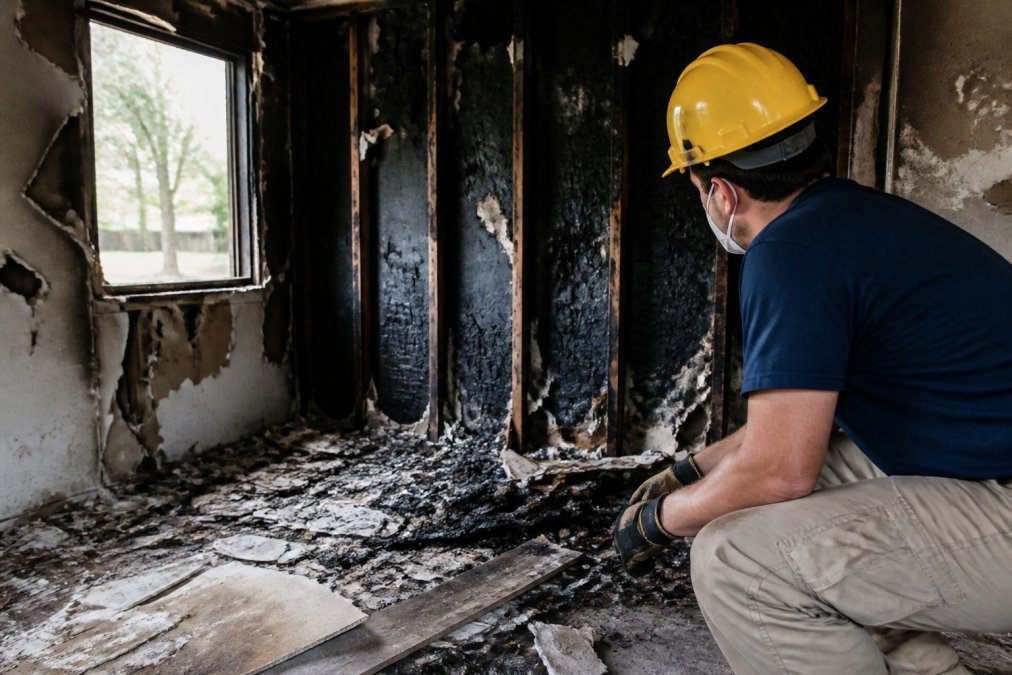
Professional smoke odor removal after a fire goes beyond surface cleaning. Fire residue gets into wall cavities, HVAC ducts, and insulation, and those need equipment most homeowners do not own.
Signs you need professional help:
- The smell returns within days of cleaning
- Soot is visible inside cabinets, vents, or outlets
- Anyone in the home has asthma or breathing issues
Aquaflame Restores It’s IICRC-certified technicians can assess what burned and where residue traveled. We offer contents pack-out and emergency board-up after fires.
For the full service, see smoke damage cleanup and odor removal. If you are unsure whether damage is smoke, soot, or both, this breakdown of smoke damage versus soot damage explains the difference.
Preventing Smoke Odor From Coming Back
Preventing smoke odor from returning means controlling three things at once: the source, the airflow path, and the moisture that re-releases residue. Cleaning once is not enough if smoke exposure continues, and most guides stop at “open a window.” The living room needs a repeatable routine, not a one-time scrub.
Stop the Source Before You Clean Again
If smoke exposure is ongoing, the residue keeps rebuilding faster than you can remove it. Identify which source you are dealing with, because each one leaves a different film:
- Cigarette smoke leaves a yellow tar and nicotine film that creeps up walls and stains paint.
- Fireplace and wood-stove smoke leaves dry soot plus creosote oils that smell strongest in humid weather.
- Cooking smoke leaves a light grease film that settles on cabinets, range hoods, and nearby upholstery.
A common pattern in metro Atlanta homes is a fireplace or candle habit that never gets vented properly. Run the exhaust fan or open a window during and after use, and keep the flue open until embers are cold.
Set Up Smoke-Free Boundaries and Entryway Controls
Prevention starts at the door, not in the living room. Smoke travels on clothing, hair, and pets.
- Designate outdoor smoking areas away from doors and windows.
- Keep a dedicated jacket or overshirt for smoking and leave it outside the living room.
- Wipe down pets that spend time around smoke before they settle on upholstery.
Place Ventilation and Filtration Where They Actually Work
Airflow placement matters more than running a fan. Cross-ventilation pulls fresh air in one window and pushes stale air out another. Put a box fan facing outward in the downwind window so it exhausts rather than recirculates.
Keep a HEPA purifier with a carbon pre-filter running in the living room, and change or rinse the filter weekly while odor persists.
Control Humidity So Residue Stops Re-Releasing
Georgia humidity works against every cleaning effort. Damp air holds odor molecules and pulls residue back out of porous materials, which is why a room that smells clean in dry January can smell smoky again in July. Run the A/C or a dehumidifier while you air the room out, and keep indoor humidity in the range most practitioners target for comfort and odor control.
Build a Maintenance Routine That Keeps Odor Down
Once the room is clean, a light routine keeps it that way:
- Vacuum upholstery weekly with a HEPA vacuum.
- Wash curtains and cushion covers on a regular schedule, not only when they smell.
- Wipe hard surfaces near the fireplace, kitchen pass-through, and TV monthly.
After a fire, ask whether every porous item was cleaned or removed. A sealed-over smell comes back when humidity rises, and that is the most common reason a living room smells smoky again months later.
For a broader post-fire plan, our steps to take after fire damage covers what to handle first.
Book a Free Smoke Odor Assessment in Metro Atlanta
If smoke smell keeps returning, the source is still there. Guessing wastes weeks.
Aquaflame Restores It is locally owned in Decatur and serves metro Atlanta, including DeKalb, Clayton, Cobb, and Henry counties.
Call 678-379-8000 to schedule a free smoke odor assessment. You can also review our smoke cleanup and fire damage restoration in Decatur service details before you call.
Smoke odor that keeps coming back usually means residue is still trapped in cavities, ducts, or padding.
Frequently Asked Questions
How long does smoke smell linger in a room after a small fire?
It depends on how much residue settled and how porous your surfaces are. A contained kitchen fire with quick cleanup can clear in a few days to two weeks. A larger fire, or one where smoke pushed through the HVAC system, can leave smoke odor in a living room for months. Upholstery, curtains, and carpet hold it longest because the particles settle deep into the fibers. If the smell is still strong after two weeks of cleaning and ventilation, the residue is likely embedded in materials you cannot reach.
Will the smoke smell eventually go away from the couch on its own?
Rarely. Cushions, batting, and fabric backing trap smoke residue, and the odor reactivates every time humidity rises. Metro Atlanta summers make this worse. Vacuuming both sides of the cushions and airing them outside helps, but most couches need a fabric refresher or professional cleaning. If the foam itself smells, the cushion may need replacing. A free assessment can tell you whether cleaning will work or whether the piece is a total loss.
What cancels out the smell of smoke in a living room?
Nothing cancels it. Air fresheners and candles mask smoke odor for an hour or two, then it returns. What works is removing the source: washing hard surfaces with a cleaning solution, laundering curtains and slipcovers, vacuuming upholstery and rugs, and running an air purifier with a HEPA filter to trap airborne particles. Activated charcoal and baking soda absorb some odor but cannot reach residue inside walls or padding. If odor persists after a thorough clean, call a professional.
When should I call a professional about persistent smoke odor?
Call when the smell survives a full clean of surfaces, fabrics, and ventilation, or when it returns within days. Also call if you had a real fire rather than cigarette smoke, if the odor sits in walls or HVAC ducts, or if anyone in the home has asthma or allergies. Professional smoke odor removal after a fire uses equipment and methods homeowners do not have access to. Aquaflame Restores It offers free damage assessments across metro Atlanta at 678-379-8000.