Last Updated: November 13, 2026
Quick Summary
To speed up a hotel insurance claim, report the loss to your insurer and agent right away, since delays in notice invite questions about timing and damage. Then build a complete file with policy details, photos taken before cleanup, room-level damage logs, and revenue records, and follow up in writing at regular intervals.
- Call your insurer and agent as soon as you know about the loss, and get a claim number.
- Photograph every affected area before cleanup begins, and record a narrated walk-through video.
- Reconcile your room-level damage log with occupancy reports before you submit.
- Ask the adjuster in writing what they still need, when a decision is expected, and when payment would follow.
- Keep a communication log of every call and email so you can escalate with clear evidence.
Table of Contents
- Why Hotel Insurance Claims Stall and How to Prevent It
- Step 1: Notify Your Insurer and Agent Right Away
- Step 2: Build a Hotel Property Insurance Claim Checklist
- Step 3: Document Damage and Lost Revenue With Photos, Video, and Records
- Step 4: Understand Commercial Property Claim Processing Time
- Step 5: Send Clear Follow-Up Emails and Keep a Communication Log
- Step 6: Coordinate Multiple Parties During a Hotel Loss
- Booking Your Free Assessment to Start Your Claim Faster
- Frequently Asked Questions
Why Hotel Insurance Claims Stall and How to Prevent It
Most hotel insurance claims don’t stall because the damage is hard to fix. They stall because of gaps in paperwork, slow notice, and missing details that an adjuster needs before they can approve anything. Knowing where delays start is the first step to avoiding them.
A common mistake is waiting too long to report the loss. Every day between the damage and the first call gives the insurer a reason to question when the damage happened and whether it got worse. Start the hotel insurance claim process as soon as the water, smoke, or fire is under control.
The other frequent cause is incomplete information. Adjusters need the policy number, the date and cause of loss, photos, and a clear list of affected areas. When any of those are missing, the file sits in a queue while someone asks for them.
In practice, a complete first submission moves faster than a quick one with gaps. Spend the first day gathering what you can, and the weeks after will go more smoothly.
Step 1: Notify Your Insurer and Agent Right Away
Call your insurance carrier and your agent as soon as you know about the loss. Most policies require prompt notice, and a late report can complicate coverage.
Ask for a claim number during the first call and write down the name of the representative. Follow the call with a written notice by email so there is a timestamped record.
Keep your notes simple:
- Date and time of the call
- Name of the person you spoke with
- Claim number
- Next steps the representative gave you
If you have an emergency mitigation need, tell the insurer what you are doing to stop further damage. Most policies expect reasonable steps to prevent more loss, and you should keep receipts for those costs.
Step 2: Build a Hotel Property Insurance Claim Checklist
A hotel property insurance claim checklist keeps your file organized from the start. Adjusters reviewing a hotel loss want to see how the damage maps to rooms, revenue, and guests, so build the file in four layers.
Policy and claim layer
- Policy declarations page, endorsements, and any riders
- Claim number and the named adjuster’s direct contact information
- Date, time, and cause of loss, written in one or two plain sentences
- A list of every affected room number, corridor, mechanical space, and common area
Damage layer
- Wide and close-up photos of each affected area, taken before cleanup
- A narrated walk-through video that names each room as you enter it
- Moisture readings or inspection notes from your mitigation team
- Mitigation invoices and any emergency board-up or plumbing repair receipts
Operations layer
- Room-level damage log showing which rooms were out of service and for how many nights
- Occupancy reports for the same period in prior years
- Rate sheets, booking calendars, and group contracts for the affected dates
- Cancellation, relocation, and no-show logs tied to the loss
- Payroll, overtime, and extra staffing costs caused by the loss
Communication layer
- A running log of every call and email with the insurer, adjuster, and vendors
- Copies of every document you sent, with the date sent
A complete checklist shows the adjuster you are organized, and it shortens the time they spend chasing missing items.
Watch out: a room-level damage log that conflicts with your occupancy report is one of the fastest ways to trigger a follow-up question, so reconcile the two before you submit.
Step 3: Document Damage and Lost Revenue With Photos, Video, and Records
Strong documentation is the fastest way to speed up a claim. Photograph every affected area before cleanup begins, and take wide shots and close-ups.
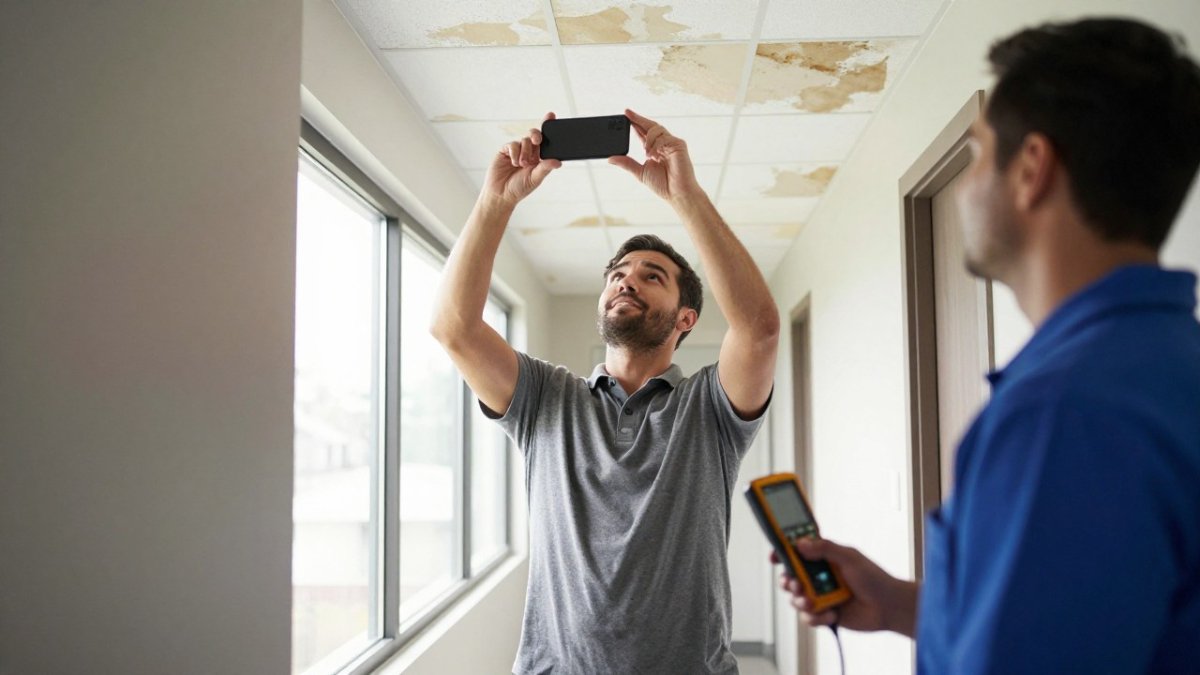

Record a walk-through video that narrates each room. Note the date and time on every file. Keep the original files, not just screenshots.
For lost revenue, gather records that show what the hotel would normally earn. Useful documents include:
- Occupancy reports for the same period in prior years
- Rate sheets and booking calendars
- Cancellation and relocation logs
- Staff schedules and overtime costs tied to the loss
Store everything in one shared folder so the adjuster and your accountant can access the same version.
Step 4: Understand Commercial Property Claim Processing Time
Commercial property claim processing time varies by the size of the loss, the complexity of the coverage, and how quickly the file is complete. A small water loss with clear documentation moves much faster than a fire that affects multiple floors and requires an engineering review. What you can control is how cleanly the file moves through each milestone.
A common pattern for a hotel claim looks like this:
- First notice of loss, you report the damage and receive a claim number.
- Adjuster assignment, an adjuster is named and makes initial contact.
- Inspection, the adjuster or an independent inspector visits the property and photographs the damage.
- Document review, the insurer reviews your photos, mitigation invoices, occupancy records, and revenue evidence.
- Coverage decision, the insurer confirms what is covered and what is not.
- Payment or partial payment, funds are released, sometimes in stages as repairs progress.
Deadlines vary by policy, so treat this as a sequence rather than a calendar. Ask the adjuster for a timeline in writing, and ask three specific questions: what they still need from you, when they expect a coverage decision, and when payment would follow approval. Clear milestones make it easier to tell whether the claim is moving or sitting.
Where hotel claims lose time
- Incomplete room-level damage logs that don’t match occupancy records
- Repair estimates that arrive in different formats from different vendors
- Missed deadlines for submitting receipts or supporting records
- No single point of contact, so requests get duplicated or dropped
- Business interruption figures submitted without the underlying booking and cancellation records
Substantiating lost income
If your policy includes business interruption coverage, the lost-income portion often takes longer than the property portion because it depends on records rather than photos. Prepare occupancy reports for the same period in prior years, rate sheets, group contracts, cancellation and relocation logs, and extra expenses such as guest relocation or added security. The goal is to show what the hotel would normally have earned and how the loss changed it. Not every policy includes this coverage, so confirm with your adjuster before you build the file around it.
If a milestone passes without an update, follow up in writing and note the date. Persistent, documented follow-up is often the difference between a slow claim and a stalled one. If the file stalls, your communication log is the evidence you use to ask for a supervisor or escalate.
Watch out: submitting a business interruption estimate before the underlying booking records are ready can send the file back for rework and reset the review clock.
The table below summarises the typical stages of a hotel claim and where delays most often occur, so you can track progress against each milestone.
| Stage | What happens | What to watch for |
|---|---|---|
| First notice of loss | You report the damage and receive a claim number | Confirm the claim number in writing |
| Adjuster assignment | An adjuster is named and makes initial contact | Get the adjuster’s direct contact details |
| Inspection | Adjuster or inspector visits and photographs damage | Have room-level logs ready |
| Document review | Insurer reviews photos, invoices, and revenue records | Missing or mismatched records cause delays |
| Coverage decision | Insurer confirms what is and is not covered | Ask for the decision date in writing |
| Payment | Funds released, sometimes in stages | Track each partial payment against repairs |
Step 5: Send Clear Follow-Up Emails and Keep a Communication Log
Regular follow-up keeps your claim visible. Send a short email every few business days asking for status and naming any open requests.
A hotel insurance claim follow-up email template you can adapt:
Subject: Claim #[number] – Status Request
Hello [Adjuster name],
I am following up on claim #[number] for the [date] loss at [property address]. Could you confirm the status of our coverage review and tell me what information you still need from us? We can provide [documents] by [date].
Thank you,
[Your name, title, phone]
Keep a communication log with the date, the method (call or email), the person, and a summary of what was said. Save all written replies. If the claim stalls, the log helps you ask for a supervisor or escalate the file with clear evidence.
Step 6: Coordinate Multiple Parties During a Hotel Loss
A hotel loss often involves the insurer, an adjuster, a restoration company, contractors, a property manager, and sometimes a mortgage holder or franchise brand. Each party needs the same facts, and mixed messages slow everything down.
Name one point of contact for the claim inside your hotel. Share a single project timeline so every party sees the same dates. When a contractor sends an estimate, forward it to the adjuster the same day.
Confirm who approves which costs before work begins. Unapproved changes can become disputes later. Our team at Aquaflame Restores It can coordinate mitigation with your insurer.
Booking Your Free Assessment to Start Your Claim Faster
A free assessment gives your claim a clear starting point. Aquaflame Restores It works directly with insurance companies and bills them directly.
We are available 24/7, and our IICRC-certified technicians are on site within one hour. Call Aquaflame Restores It at 678-379-8000 to schedule your free assessment.
Frequently Asked Questions
What documents should a hotel include in an insurance claim?
A complete hotel insurance claim usually includes the policy declarations page, a written description of the incident, dated photos and video of the damage, repair estimates, invoices for emergency services such as water extraction, and records showing lost room revenue during repairs. Keep operational records like occupancy reports and cancelled bookings, since they support business interruption. Your insurer or adjuster may request additional items, so ask for a written list of what they need and respond to each item in order.
How soon should a hotel report property damage to its insurer?
Report damage as soon as it is safe and you have stopped further harm. Most policies require prompt notice, and a delay can complicate coverage. Call your insurance agent or the carrier’s claims line, then confirm the report in writing by email so there is a dated record. Early notice also lets you start mitigation sooner, which helps limit the total loss.
How often should a hotel follow up on an open insurance claim?
Follow up at least once a week, and more often during active repairs or when the adjuster has asked for documents. Keep each follow-up short: state the claim number, what you are waiting on, and the date you need an answer. Written follow-ups create a timeline that makes it easier to escalate to a claims manager if progress stops.
Can a hotel begin emergency cleanup before the claim is approved?
In most cases you should start emergency mitigation to prevent further damage, since policies generally expect reasonable steps to protect the property. Document the damage and the work before it begins, keep every invoice, and tell your adjuster what you are doing. Ask your agent whether specific steps need prior approval so you do not create a coverage dispute over cleanup costs.
