
Table of Contents
- What Structural Reconstruction Services for Residential Homes Actually Involve
- Structural Contractor for Homes: How to Evaluate Qualifications
- Structural Reconstruction Cost: What Drives the Price
- Home Reconstruction Process: From Damage Assessment to Final Walkthrough
- Water Damage Structural Repair: When Moisture Compromises Your Home’s Frame
- Comparing Reconstruction Approaches: Traditional Rebuild vs. Phased Restoration
- Conclusion
- Frequently Asked Questions
Last Updated: October 13, 2026
What Structural Reconstruction Services for Residential Homes Actually Involve
Structural reconstruction services for residential homes are the professional repairs that restore a house’s load-bearing framework after damage, going beyond cosmetic fixes to rebuild the parts that keep the structure standing. At Aquaflame Restores it, we handle this work daily across metro Atlanta, and we can tell you the biggest mistake homeowners make is assuming a fresh coat of paint solves a structural problem. It does not. Reconstruction covers foundation repair, support replacement, load-bearing wall work, and rebuilding damaged framing so the home is safe to live in again.
The scope usually breaks into four parts:
- Damage assessment by a structural engineer or qualified contractor
- Temporary stabilization, such as shoring or board-up, to stop further movement
- Repair or replacement of the affected structural support system
- Final inspection and documentation for your insurer and your records
Repair vs. Rebuild: How the Decision Gets Made
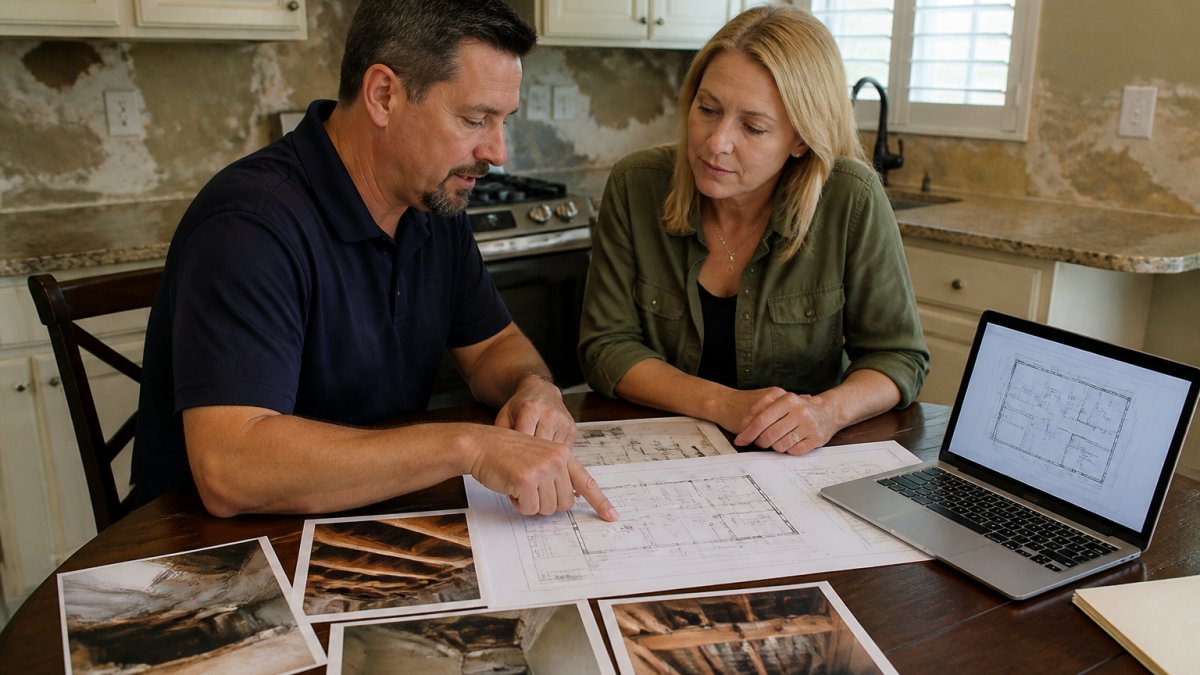
The decision hinges on how much of the structural support system is compromised and whether the cost of repair approaches the cost of rebuilding that section. A common approach is to repair when damage is isolated to a few members, and rebuild when the foundation structure or multiple load-bearing elements have failed. Your contractor should walk you through both scenarios in writing before you commit.
Warning Signs That Reconstruction Is Necessary
Watch for sagging floors, cracks that widen over time, doors and windows that suddenly stick, and visible bowing in walls. These signal that the building structure has moved. If you see them after a leak, flood, or fire, get a structural assessment before doing any cosmetic work. Ignoring the signs usually means a bigger, costlier repair later.
Structural Contractor for Homes: How to Evaluate Qualifications
Hiring the right structural contractor for homes comes down to verifying credentials, insurance, and proof of comparable work, not just the lowest bid. Ask for a state license number, a certificate of insurance, and references from similar residential projects. A qualified contractor will hand these over without hesitation.
Our checklist for vetting any contractor:
- Confirm a current state contractor license
- Verify general liability and workers’ compensation coverage
- Ask for two or three references from comparable structural jobs
- Request a written scope of work and timeline
- Confirm who pulls the permits
- Get the warranty and workmanship guarantee in writing
Never hire a contractor who asks for full payment upfront or who cannot show proof of insurance. If a crew damages your home further or a worker is injured on your property, an uninsured contractor leaves you holding the liability.
Structural Reconstruction Cost: What Drives the Price
Structural reconstruction cost depends on the extent of damage, the materials involved, and how much of the home needs to be opened up to reach the problem. Pricing for any specific job is quote-based, so treat any flat number you see online with suspicion. The real drivers are the size of the repair scope, the type of foundation structure, and whether the work is urgent.
The factors that move the number most:
- Access and demolition: opening walls and floors to reach damaged framing adds labor. A repair behind a finished wall costs more than the same repair in an open basement because of the demolition and rebuild of finishes.
- Material type: a timber frame repair differs from joisted masonry work. Matching historic lumber dimensions or masonry units can require custom milling or sourcing, which adds both material and labor time.
- Permits and engineering: some jobs require stamped drawings from a licensed engineer. Engineered designs add a design fee and can also change the scope if the engineer specifies a different reinforcement method than the contractor proposed.
- Emergency conditions: water, fire, or storm damage often needs stabilization first. Shoring, board-up, and temporary weather protection are separate line items that appear before the permanent repair begins.
- Foundation type and depth: a slab-on-grade repair is usually less invasive than a basement or crawlspace repair, where crews must work in confined space and may need to underpin or add piers.
- Duration of disruption: if the home must be vacated, temporary housing and storage become part of the homeowner’s total cost, even if they are not on the contractor’s invoice.
A common pattern is for the assessment to reveal that the visible damage is only part of the problem. Moisture behind a wall, a cracked foundation that has shifted, or a load path that was altered by a previous renovation can all expand the scope after work begins. That is why a written estimate should state what is included, what is excluded, and how change orders will be priced. Anticipating these hidden costs requires a disciplined approach to structural renovation budgeting that accounts for the inevitable discovery of underlying site conditions.
For an accurate figure, request a written estimate after an on-site damage assessment. Aquaflame Restores it provides direct insurance billing, which takes the guesswork out of what you owe.
Ask every contractor for a line-item estimate that separates labor, materials, engineering, permits, and contingency. A single lump-sum number makes it impossible to compare bids fairly or to see where the scope may grow.
Home Reconstruction Process: From Damage Assessment to Final Walkthrough
The home reconstruction process follows a predictable sequence, and knowing it helps you spot a contractor who is cutting corners. It starts with a damage assessment, moves through stabilization and repair, and ends with a final walkthrough and documentation. What the sequence does not show is how long each phase takes, what can delay it, and how it affects the people living in the home.
| Phase | What Happens | Who Is Involved | Typical Duration | Household Impact |
|---|---|---|---|---|
| Assessment | Engineer or contractor documents the damage | Structural specialist, adjuster | 1-3 days | Minimal; access to damaged areas needed |
| Stabilization | Shoring, board-up, or temporary support | Reconstruction crew | 1-5 days | Noise, limited access to affected rooms |
| Engineering and permits | Stamped drawings, permit application, inspections scheduled | Engineer, contractor, local building department | 1-4 weeks | None directly, but work cannot start |
| Repair or rebuild | Framing, foundation, and support replacement | Licensed contractor, subs | 2-12 weeks depending on scope | Dust, noise, utility shutoffs, possible relocation |
| Verification | Final inspection and walkthrough | Contractor, homeowner, inspector | 1-3 days | Final punch-list items |
Each phase should be documented with photos and notes. That record matters when you file a claim or sell the home.
A few practical points that are easy to miss:
- Assessment does not always lead straight to construction. If the engineer finds that the damage is stable, the repair may be scheduled as routine work rather than emergency work, which can lower cost but extend the timeline.
- Permits are often the longest lead item. In many jurisdictions, structural permits require plan review, and the review clock does not start until the application is complete. A missing document can add a week or more.
- Temporary support is not the same as repair. Shoring holds the structure while the permanent solution is designed and permitted. It is a safety measure, not a fix.
- Inspections happen in stages. Foundation, framing, and final inspections are usually separate, and each one must pass before the next phase can be covered up.
- Disruption is not uniform. A basement or crawlspace repair may barely affect daily life, while a main-floor load-bearing wall replacement can require the family to move out for part of the project.
Photograph every phase yourself, not just the contractor’s crew. If a dispute arises with your insurer later, your own dated photos are the most persuasive evidence you can hold.
Water Damage Structural Repair: When Moisture Compromises Your Home’s Frame
Water damage structural repair is the work of drying, treating, and replacing framing that prolonged moisture has weakened. Water is patient. It seeps into a timber frame, swells the wood, rusts fasteners, and softens the very members holding your house up. By the time you see a stain on the ceiling, the damage behind it is often worse than it looks.
The root cause matters more than the visible symptom. A roof leak, a leaking A/C line, or a sprinkler discharge all feed the same problem, and patching the surface without finding the source guarantees a repeat. FEMA guidance on flood-damaged structures notes that moisture trapped inside wall cavities can undermine structural members long after surfaces appear dry. That is why we dry the structure fully before any reconstruction begins.
Comparing Reconstruction Approaches: Traditional Rebuild vs. Phased Restoration
Choosing between a traditional rebuild and phased restoration depends on your budget, your timeline, and whether you can stay in the home during the work. A traditional rebuild replaces the damaged section in one continuous project. Phased restoration spreads the work across stages, which can ease cash flow but stretches the disruption.
| Approach | Best For | Tradeoff |
|---|---|---|
| Traditional rebuild | Severe damage, unoccupied home | Faster, higher upfront cost |
| Phased restoration | Occupied home, tight budget | Slower, longer disruption |
| Emergency stabilization | Active damage, insurance pending | Temporary, requires follow-up |
Neither approach is universally better. For a historic building or an investment property, phasing often protects tenants and income. For a private residence with major damage, a single rebuild is usually cleaner.
Homeowners who need to stay in the property while repairs proceed, and who want to spread costs across several months.
Conclusion
Structural damage rarely announces itself, and the gap between a small repair and a full rebuild closes fast once moisture or movement takes hold. Aquaflame Restores it brings IICRC-trained technicians, a 30-minute arrival guarantee, and full reconstruction under one team, so you are not juggling contractors while your home sits exposed. We also handle direct insurance billing to keep the claim moving. Get started with Aquaflame Restores it and get your home back to solid, safe condition.
Frequently Asked Questions
How much does structural reconstruction cost for a house?
Structural reconstruction cost depends on the extent of damage, materials, permits, and labor. Minor repairs might start in the low thousands, while major rebuilding can exceed tens of thousands. Your location, the age of the home, and whether hazardous materials like asbestos are present also affect the total. Because every project is unique, request a detailed written estimate from a licensed contractor. Many restoration companies, including Aquaflame Restores it, offer free inspections and work directly with your insurance to clarify what’s covered.
When does a home need structural reconstruction instead of repairs?
Reconstruction is necessary when the structural integrity is compromised beyond what patching can fix. Signs include sagging floors, cracked foundation walls, bowing basement walls, or a roof that dips. If a load-bearing wall has been removed or damaged, or if water damage has rotted primary support beams, reconstruction is likely. A professional structural assessment will confirm whether targeted repairs can restore safety or if a rebuild is required. Ignoring these signs can lead to progressive failure and higher costs later.
How long does residential structural reconstruction take?
Most residential structural reconstruction projects take several weeks to several months. Factors include the scope of work, permit approvals, material availability, and weather. A small foundation repair might finish in two weeks, while rebuilding a fire-damaged wing can take six months or more. Contractors typically provide a timeline after the damage assessment. Expect some disruption, but a reputable team will phase work to keep parts of your home livable when possible.
Does homeowners insurance cover structural reconstruction after water damage?
Homeowners insurance often covers sudden and accidental water damage, such as a burst pipe, but typically excludes gradual leaks or flooding. If covered, your policy may pay for structural reconstruction, temporary housing, and personal property. The key is documenting the damage immediately and filing a claim promptly. Many restoration contractors, like Aquaflame Restores it, offer direct insurance billing and can communicate with your adjuster to streamline the process. Review your policy or ask your agent for specifics.
How do I choose a qualified structural contractor for homes?
Look for a licensed general contractor with specific experience in structural repair and reconstruction. Verify their state license, insurance, and bonding. Ask for references from similar projects and check online reviews. A qualified contractor will perform a thorough damage assessment, explain the scope in writing, and provide a detailed estimate. They should also be familiar with local building codes and permit requirements. Don’t hesitate to interview multiple contractors and trust your instincts about communication and transparency.
Aquaflame Restores it is a locally-owned, 5-star rated restoration team based in Decatur, serving homeowners across metro Atlanta with 24/7 emergency response.