Table of Contents
- How to Remove Water From Carpet: Immediate Steps
- Best Tools for Water Extraction From Carpet
- How to Dry Wet Carpet Fast: Professional Techniques
- How to Prevent Mold in Wet Carpet
- DIY vs. Professional Water Extraction: Cost and Results
- Subfloor Damage Assessment and Carpet Pad Replacement
- Insurance Claims and Documentation for Water Damage
- Common Mistakes to Avoid When Removing Water From Carpet
Last Updated: July 7, 2026
Water damage to your carpet requires immediate action. Whether from flooding, burst pipes, or leaks, standing water damages carpet fibers, backing, and subfloor. The first few hours are critical, waiting 24 hours significantly increases mold risk and permanent odor. This guide covers extraction methods, drying techniques, and when to call professionals.
According to the National Institute of Building Sciences, water damage claims represent the largest category of homeowner insurance losses, with mold remediation costs averaging thousands of dollars. Acting fast with the right approach can mean the difference between saving your carpet and replacing it entirely.
How to Remove Water From Carpet: Immediate Steps
The first 24 hours determine whether your carpet can be saved. Your immediate priority is stopping the water source, removing standing water, and assessing contamination level.
Step 1: Stop the Water Source
Locate and shut off the water immediately. For burst pipes, find your main water shutoff valve near the water meter. For roof leaks, move belongings away and place buckets to catch drips. For toilet overflows, turn off the supply valve behind the toilet. Don’t attempt repairs yourself if you lack experience; let restoration teams handle this safely.
Step 2: Remove Standing Water
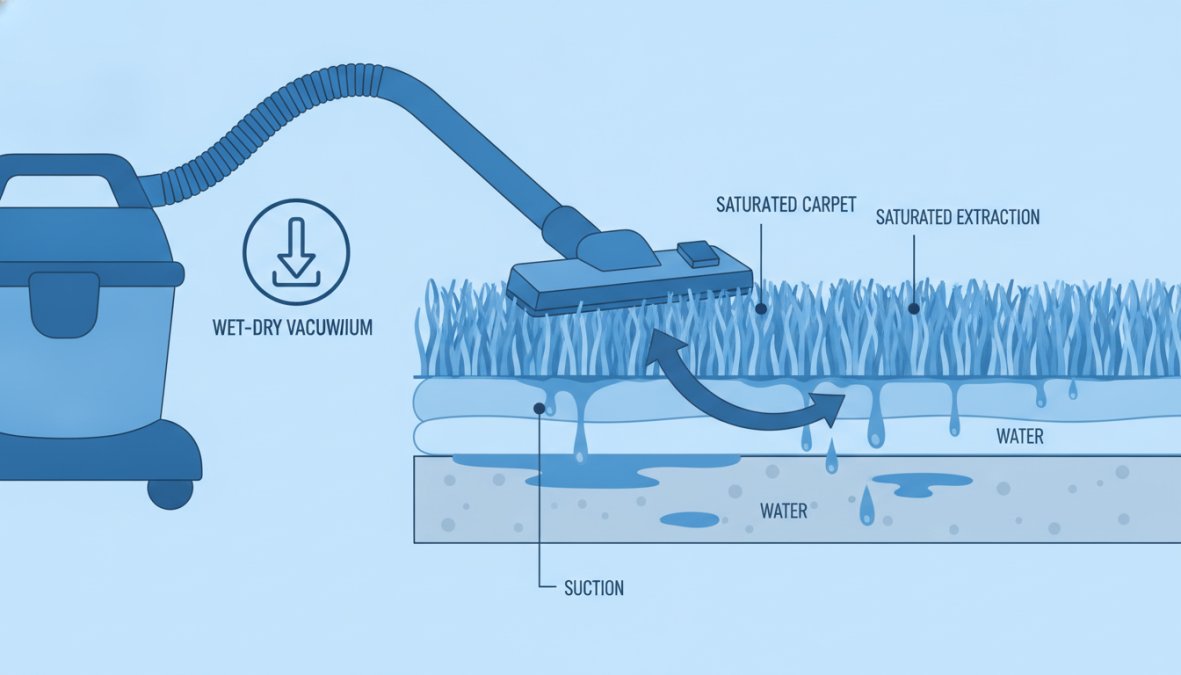
Standing water must be extracted before drying begins. Use towels to absorb shallow water (under 1/4 inch), then move to mechanical extraction. A wet-dry vacuum is essential for larger volumes, these machines handle water far more effectively than standard vacuums. Rental centers stock them for reasonable daily rates.
Step 3: Assess Water Type and Contamination
Water contamination level determines your next steps. Clean water from broken supply lines poses less health risk than gray water from washing machines or black water from sewage. If the water source is questionable, treat it as contaminated. Contaminated water requires biocide treatment and professional sanitization.
Best Tools for Water Extraction From Carpet
Professional water extraction relies on specific equipment designed for thorough moisture removal.
Wet-Dry Vacuum for Maximum Extraction
A wet-dry vacuum (shop vac) is the most important tool for water removal. Unlike standard vacuums, these handle liquids without damage. Larger tanks (16+ gallons) mean fewer emptying cycles. Suction power should exceed 80 inches of water lift for effective extraction. Position the hose flat against carpet and make overlapping passes, moving slowly to allow maximum moisture extraction.
Rental wet-dry vacuums cost $15-30 per day and deliver 5-6 horsepower, adequate for residential carpet. Professional restoration teams use truck-mounted systems with 200+ horsepower and continuous water removal, which explains faster and more complete extraction than DIY approaches.
Blotting With Towels and Absorbent Materials
Blotting complements mechanical extraction. Lay absorbent towels directly on wet carpet and apply body weight to press moisture into the towels. Replace towels as they saturate. Avoid rubbing, which pushes water deeper into carpet backing and padding. For stubborn moisture in seams and edges, place towels and weight them down. Change towels every 2-4 hours during the first day.
Dehumidifiers and Air Movers for Evaporation
After standing water removal, evaporation becomes your primary drying mechanism. Industrial dehumidifiers remove 20-50 pints of water daily. Position them in the center of affected rooms with doors closed. Air movers (high-velocity fans) circulate air across carpet surfaces, accelerating evaporation. Angle air movers at 45 degrees toward carpet and position dehumidifiers to capture moisture-laden air.
Rental centers stock both tools together. The combination of wet-dry vacuum extraction, towel blotting, dehumidifiers, and air movers represents the standard approach for residential water damage drying.
How to Dry Wet Carpet Fast: Professional Techniques
Speed matters because moisture supports mold germination. Mold colonies can establish within 24-48 hours in saturated carpet.
Maximize Air Circulation and Ventilation
Open windows to create cross-ventilation, drawing humid air out of the home. Position air movers to create airflow paths from the wet area toward open windows. Multiple air movers working together move significantly more air than single units. Professional teams often deploy 5-10 air movers in a single room.
Avoid sealing windows or doors during drying. Trapped humid air prevents evaporation regardless of equipment. If outdoor humidity is high (above 60%), keep windows closed and rely on dehumidifiers and air movers. Ceiling fans help distribute air movers’ output throughout rooms.
Hot Water Extraction for Deep Drying
Hot water extraction differs from standard carpet cleaning. Professional restoration teams use truck-mounted systems that inject hot water into carpet backing while simultaneously extracting moisture. Heat helps loosen trapped moisture in carpet padding and subfloor areas that surface extraction cannot reach. This technique requires professional equipment; consumer carpet cleaners lack the necessary power and temperature control.
Monitor Moisture Levels in Carpet and Subfloor
Moisture meters measure water content in carpet and subfloor materials. Professional teams use these to track drying progress and confirm when carpet reaches safe moisture levels (typically below 12-15%). Without measurement, you’re guessing whether drying is complete. Check moisture levels daily during drying. If levels plateau despite equipment running, the subfloor may be saturated, requiring additional intervention.
How to Prevent Mold in Wet Carpet
Mold prevention starts immediately after water extraction. Mold spores germinate rapidly in saturated conditions, with visible colonies appearing within 48-72 hours.
Act Quickly to Prevent Mold Growth
Speed is your primary mold prevention tool. Begin extraction within 4-6 hours of water exposure if possible. Carpet that remains saturated beyond 24 hours faces extremely high mold colonization risk. This timeline explains why professional restoration teams emphasize immediate response.
If you cannot begin extraction immediately, open windows for air circulation and run fans to promote evaporation. These interim steps buy time but don’t replace mechanical extraction.
Apply Biocide and Sanitization Treatments
Biocide products kill mold spores and prevent germination on carpet fibers and backing. Professional restoration teams apply EPA-approved biocides after water extraction but before complete drying. Biocides work best on damp (not soaking wet) carpet. Sanitization treatments eliminate bacteria and pathogens, particularly important for gray water and black water contamination.
Remove Odors With Baking Soda and Disinfectants
Wet carpet develops musty odors from mold and bacterial growth. Baking soda absorbs odors as carpet dries, sprinkle it liberally and allow it to sit for 24-48 hours before vacuuming. Enzymatic disinfectants break down organic compounds causing odors. For severe odors persisting after drying, professional odor removal becomes necessary.
DIY vs. Professional Water Extraction: Cost and Results
The decision between DIY extraction and professional restoration depends on water volume, contamination level, and drying timeline.
When DIY Methods Suffice
Small water incidents from minor leaks affecting less than 100 square feet from clean supply lines may be manageable with DIY extraction. Rent a wet-dry vacuum, dehumidifier, and air movers for 1-2 days. Total rental cost typically ranges from $50-150.
DIY success requires consistent effort and active management. Clean water damage is more forgiving than contaminated water. If you’re certain the water source is clean, DIY extraction is lower risk.
When to Call a Professional Restoration Team
Professional restoration becomes necessary when water affects more than 100 square feet, when contamination is present, or when you cannot manage drying personally. Professional advantages include truck-mounted extraction systems (far more powerful than rentals), continuous monitoring with moisture meters, biocide application at optimal timing, and subfloor assessment.
Insurance claims favor professional documentation. Restoration professionals photograph damage, measure affected areas, track drying progress, and provide detailed reports supporting insurance claims. This documentation often justifies professional costs by ensuring full coverage approval.
| Situation | Recommended Approach | Cost Range | Timeline |
|---|---|---|---|
| Small clean water spill (<50 sq ft) | DIY with rentals | $50-150 | 1-3 days |
| Medium clean water (50-200 sq ft) | DIY or professional | $100-500 | 2-5 days |
| Large water damage (>200 sq ft) | Professional required | $1,000+ | 3-7 days |
| Contaminated water (gray/black) | Professional required | $2,000+ | 5-10 days |
| Flooding/structural water | Professional required | $3,000+ | 7-14 days |
Document damage with photos and video before beginning extraction. Insurance claims require before-and-after evidence of damage extent. Photograph standing water, saturated carpet padding, and affected walls.
Subfloor Damage Assessment and Carpet Pad Replacement
Carpet padding absorbs and holds water, becoming saturated quickly. Unlike carpet fibers, padding rarely dries completely and often requires replacement.
Identifying Saturated Carpet Backing and Padding
Lift carpet edges to inspect padding. Saturated padding feels spongy and may emit musty odors. If padding remains wet after 48 hours of drying equipment, it’s unlikely to dry completely. Check subfloor materials beneath padding. Concrete subfloors may show water staining. Wood subfloors are particularly vulnerable, prolonged moisture causes rot, warping, and structural compromise. Moisture meters reveal subfloor saturation levels invisible to visual inspection.
When to Replace Carpet Pad and Backing
If padding remains damp after 48 hours of professional drying, replacement is necessary. Professional teams recommend padding replacement when moisture meter readings indicate saturation beyond recovery. If backing is compromised or remains saturated, carpet replacement may be more cost-effective than backing repair.
Never attempt to dry saturated carpet padding indefinitely. Padding that remains wet beyond 48 hours will develop mold regardless of continued drying efforts. Replacement becomes necessary.
Insurance Claims and Documentation for Water Damage
Insurance coverage for water damage depends on cause and policy terms. Sudden accidental damage is typically covered; gradual leaks and flooding may not be.
Document Damage With Photos and Details
Photograph standing water, affected carpet areas, saturated padding, and visible damage to walls or flooring. Include wide shots showing room context and close-ups showing water line and damage extent. Document the water source and timeline. Keep all receipts for extraction equipment rentals, materials, and professional services.
Work With Restoration Professionals on Claims
Professional restoration teams manage direct insurance billing, eliminating out-of-pocket payment. Their IICRC-trained technicians provide detailed documentation insurers require for claim approval. Professional teams understand insurance requirements and policy language, increasing approval likelihood and claim amounts.
Common Mistakes to Avoid When Removing Water From Carpet
Delaying extraction beyond 6 hours. Every hour increases mold risk exponentially. Professional teams respond within 30 minutes because this timeline prevents catastrophic mold colonization.
Using standard household vacuums on wet carpet. Standard vacuums aren’t designed for water and can be damaged. Wet-dry vacuums are essential.
Assuming visible dryness means complete drying. Moisture can remain in padding and subfloor. Moisture meters reveal hidden saturation.
Failing to address contaminated water properly. Gray water and black water require biocide treatment and professional sanitization.
Skipping subfloor assessment. Subfloor damage determines whether carpet can be saved.
Neglecting to document damage for insurance. Insurance claims require photos, moisture measurements, and professional assessments.
Continuing to dry saturated padding indefinitely. Padding that remains wet beyond 48 hours will develop mold. Replacement becomes necessary.
Ignoring odor problems. Musty odors indicate mold and bacterial growth. Professional odor removal addresses the source.
Water damage to carpet demands immediate action. The first 24 hours determine whether your carpet survives or requires replacement. While DIY extraction works for small, clean water incidents, contaminated water and large-scale damage require professional restoration. Contact a professional restoration team immediately when water damage occurs, their rapid response and expertise save carpets, prevent mold, and protect your home’s structural integrity.
Frequently Asked Questions
How do you get water out of carpet without a wet vac?
You can remove water from carpet using towels for blotting, which absorbs moisture from carpet fibers. Layer clean towels over saturated areas and press down firmly to pull water into the towels. Repeat with fresh towels until no more water transfers. You can also use a mop and bucket to extract water, or rent industrial fans and a dehumidifier to accelerate evaporation. However, these methods are slower than professional water extraction equipment and may not prevent mold growth in the carpet pad or subfloor if water penetrates deep.
How long does it take for carpet to dry after getting wet?
Drying time depends on water saturation level, carpet type, humidity, and ventilation. Lightly dampened carpet may dry in 24-48 hours with fans and dehumidifiers. Heavily saturated carpet typically requires 48-72 hours or longer. Carpet padding and subfloor dry slower than surface fibers, waterlogged padding may take a week or more to dry completely. Professional hot water extraction and industrial air movers significantly speed drying. Without proper ventilation and equipment, wet carpet risks mold growth within 24-48 hours, making fast drying critical to prevent mildew and odors.
How do you prevent mold after carpet gets wet?
Act immediately to prevent mold growth in wet carpet. Extract standing water within the first 24 hours using a wet-dry vacuum or professional equipment. Increase ventilation with fans and dehumidifiers to reduce moisture. Apply biocide treatments to carpet fibers and backing to kill mold spores. If the carpet pad or subfloor remains saturated after 48 hours, consider replacing the pad, mold thrives in waterlogged materials. Use baking soda or disinfectant sprays for odor control. Ensure the subfloor dries completely to prevent mildew and structural damage. Professional restoration teams use industrial dehumidifiers and sanitization to eliminate mold risk.
Is it necessary to remove carpet padding if it gets wet?
Wet carpet padding should be removed if it remains saturated after 24-48 hours of drying efforts. Carpet pads absorb and retain moisture, creating ideal conditions for mold and mildew growth even if the carpet fibers appear dry. Waterlogged padding also causes odors and prevents proper evaporation. If the padding is only slightly damp and dries completely within 48 hours with professional dehumidifiers and air movers, it may be salvageable. However, gray water or black water contamination typically requires pad replacement for health and safety reasons. Assess the carpet backing and subfloor for damage, if they're saturated, the padding must be replaced to prevent structural issues and mold colonization.
This article was written using GrandRanker