Table of Contents
- Water Damage Assessment and Inspection
- Emergency Water Extraction and Removal
- Structural Drying and Dehumidification Techniques
- Best Tools for Water Removal and Cleanup
- Mold Prevention After Water Damage
- Safety Precautions and Health Considerations During Water Clean Up
- DIY vs. Professional Water Clean Up: When to Call Experts
- Water Damage Cleanup Cost and Insurance Documentation
Last Updated: August 4, 2026
When water damage strikes your home, every minute counts. The difference between quick action and delayed response can mean thousands of dollars in additional repairs, structural damage, and mold growth. At Aquaflame Restores it, we’ve responded to countless emergencies across metro Atlanta, and we’ve seen firsthand how proper water clean up procedures save homes and protect families. This guide walks you through the critical steps of water clean up, from initial assessment through final verification.
Water damage comes in different forms, each requiring a different response strategy. A burst pipe creates different challenges than a roof leak or sewage backup. The contamination level, volume of standing water, materials affected, and time elapsed all determine your approach.
Water Damage Assessment and Inspection
The first step in any water clean up process is understanding what you’re dealing with. You cannot develop an effective response plan without knowing the category of water, the extent of saturation, and which structural elements are affected.
Identifying Water Categories and Contamination Levels
Water damage falls into three distinct categories based on contamination level. Category 1 water is clean water from a burst pipe, melting snow, or roof leak, posing minimal health risk if handled properly. Category 2 water, or "gray water," contains some contamination from washing machines, dishwashers, or water heaters and can cause illness if ingested. Category 3 water is heavily contaminated "black water" including sewage backup or floodwater, containing dangerous pathogens requiring professional remediation.
Identifying which category you’re dealing with determines your approach. If you see discoloration, smell sewage, or suspect contamination, assume Category 3 and call professionals immediately. Category 1 water from a burst pipe is manageable for homeowners willing to act quickly.
Using Moisture Mapping and Thermal Imaging
Professional restoration teams use moisture mapping and thermal imaging to detect water your eyes cannot see. A hygrometer measures relative humidity levels, showing where moisture remains trapped after visible water is removed. Thermal imaging reveals temperature variations indicating moisture presence, preventing the common mistake of thinking water clean up is complete when standing water is gone.
If handling minor water clean up yourself, use your senses: touch drywall to feel for dampness, check for musty odors, and look for visible discoloration or swelling in wood and drywall.
Category 1 water from clean sources like burst pipes can sometimes be managed by homeowners. Category 2 water requires caution. Category 3 water with sewage or contamination always requires professional restoration teams.
Emergency Water Extraction and Removal
Standing water must be removed quickly to prevent secondary damage and mold growth. Extraction is the second critical step in water clean up, and the method depends on the volume and category of water involved.
Removing Standing Water Safely
For small amounts of Category 1 water, a few inches in a basement corner or flooded closet, you can use a wet vacuum designed for water extraction. A water extraction vacuum has a sealed motor and separate collection tank. Rent one from a hardware store for under $50 per day.
For larger volumes or any Category 2 or 3 water, do not attempt extraction yourself. Professional water clean up teams use industrial-grade pumps and extraction equipment that remove water far faster than household tools. If waiting for professionals, open windows and doors for ventilation, turn off electrical power to affected areas, and move unaffected items to higher ground.
Equipment Needed for Water Extraction
Professional water clean up requires specialized equipment. Industrial water extractors create powerful suction that pulls water from carpets, padding, and structural cavities. Submersible pumps handle large volumes of standing water in basements or ground-level spaces. Dewatering equipment removes water from materials without destroying them.
If renting equipment for small-scale water clean up, a wet vacuum and submersible pump cover most residential needs. However, professional restoration teams have industrial-grade machines that extract water more completely and dry materials faster.
Never use a standard household vacuum on water. The motor will be damaged, creating an electrical hazard and a ruined appliance. Water extraction requires equipment specifically designed for wet conditions.
Structural Drying and Dehumidification Techniques
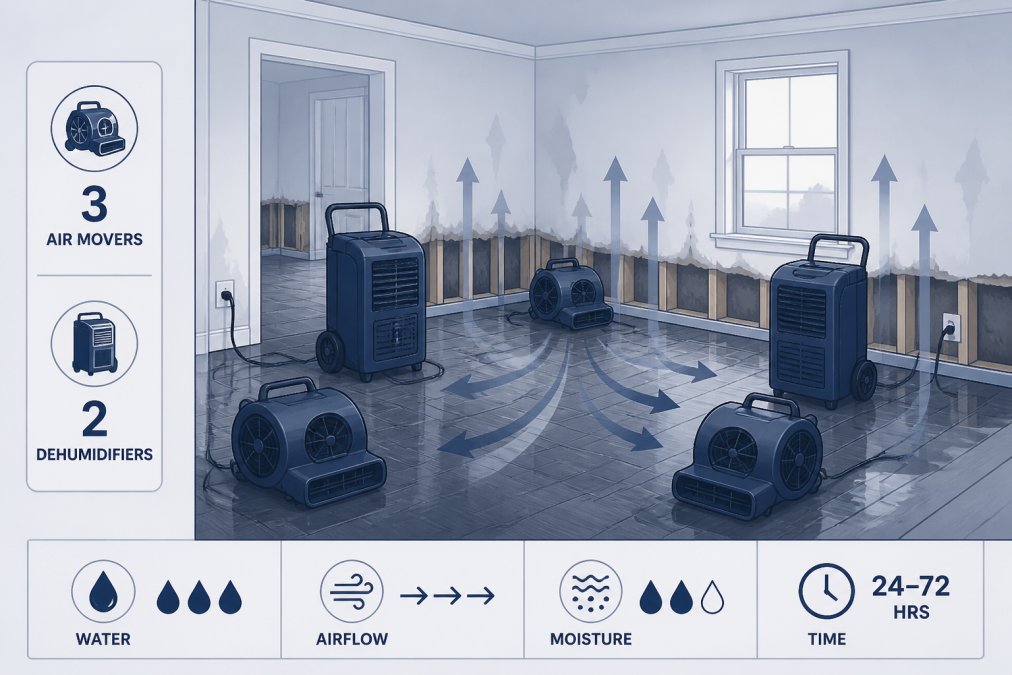
Once standing water is removed, water trapped inside walls, under flooring, and in structural materials must be evaporated and removed from the air. This phase takes days or weeks, depending on the volume of water and materials involved. Without proper drying, mold will grow within 24-48 hours.
Air Movers, Dehumidifiers, and Air Scrubbers
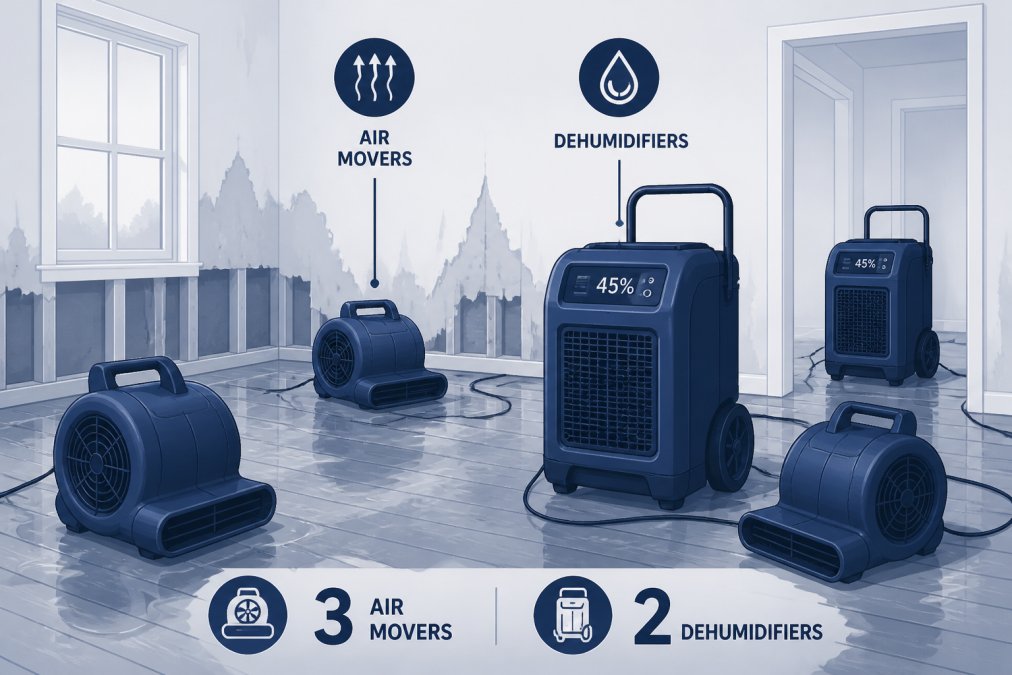
Air movers are industrial fans that create rapid air circulation and accelerate evaporation. Dehumidifiers remove moisture from the air by pulling humid air over cold coils, condensing water vapor, and collecting it in a tank. Professional water clean up teams use commercial-grade dehumidifiers that remove 100+ pints of water per day.
Air scrubbers filter the air and help prevent mold spores from spreading using HEPA filters. The combination of air movers, dehumidifiers, and air scrubbers creates an environment where water evaporates quickly and mold cannot establish.
Monitoring Moisture Content and Relative Humidity
Moisture content is measured as a percentage of the material’s weight. Wood that is normally 10-12% moisture content becomes unsafe if it reaches 20% or higher. Drywall starts developing mold risk at 16% moisture content. Relative humidity should drop below 50% in all affected areas.
Professional teams use moisture meters and hygrometers to track these metrics daily, adjusting equipment based on readings. If monitoring a minor water clean up situation yourself, touch drywall and wood to check for dampness and look for visible mold growth.
(/structural-drying-dehumidification/) and Dehumidification Techniques]
Best Tools for Water Removal and Cleanup
The right equipment makes water clean up faster, safer, and more thorough.
| Tool | Primary Use | Category 1 Water | Category 2+ Water | Rental Cost |
|---|---|---|---|---|
| Wet vacuum | Small water extraction | Yes | Not recommended | $30-50/day |
| Submersible pump | Large standing water | Yes | Professional only | $40-80/day |
| Air mover | Evaporation acceleration | Yes | Essential | $25-40/day |
| Dehumidifier | Moisture removal | Yes | Essential | $30-60/day |
| Moisture meter | Drying verification | Recommended | Professional | $200-400 purchase |
| Thermal imaging camera | Hidden moisture detection | Optional | Professional | $2,000+ purchase |
For a small Category 1 water situation, a few inches in a basement corner from a burst pipe, a wet vacuum, air movers, and a dehumidifier can handle the job. Rent these from a hardware store and run them continuously for 3-5 days. Check moisture levels daily and stop when humidity drops below 50% and materials feel dry.
For anything larger, or for any Category 2 or 3 water, professional water clean up is the only safe option. Aquaflame Restores it brings industrial-grade equipment and IICRC-trained technicians who identify hidden moisture, position equipment for maximum effectiveness, and verify that drying is complete before leaving your property.
Mold Prevention After Water Damage
Mold begins growing within 24-48 hours of water exposure if conditions are right. Preventing mold is the most critical phase of water clean up.
Mold Remediation and Antimicrobial Treatment
If mold has already begun growing, it must be removed before drying is complete. Small surface mold on drywall or wood can sometimes be cleaned with antimicrobial treatments and then dried. Larger mold colonies or mold that has penetrated into insulation or structural cavities requires material removal. The key to mold prevention is speed: extract water immediately, begin drying within hours, and maintain continuous air movement and dehumidification for days.
Sanitization and Cleaning Protocols
After water extraction and drying are complete, all affected surfaces must be cleaned and sanitized. For Category 1 water, cleaning with standard household cleaners is often sufficient. For Category 2 water, antimicrobial treatments are necessary. For Category 3 water, professional biohazard cleanup is required.
Mold prevention is about speed and continuous drying, not about waiting and hoping. If you’re handling water clean up yourself, your equipment must run 24/7 until moisture levels are safe. Most homeowner failures happen because people stop drying too early.
Safety Precautions and Health Considerations During Water Clean Up
Water damage creates health hazards beyond the water itself. Mold spores, bacteria, chemical contaminants, and electrical hazards all present risks during water clean up.
PPE Requirements and Biohazard Awareness
For Category 1 water clean up, basic precautions are sufficient: wear gloves, avoid touching your face, and wash your hands after handling wet materials. For Category 2 water, wear nitrile gloves, eye protection, and an N95 or higher-rated respirator mask. For Category 3 water, professional restoration is the only safe option.
Electrical hazards are serious during water clean up. If water has contacted electrical outlets, wiring, or appliances, turn off power to those circuits at the breaker immediately. Mold spores become airborne during water clean up activities, so wear a respirator mask rated for mold spores if removing wet drywall or carpet.
DIY vs. Professional Water Clean Up: When to Call Experts
The decision to handle water clean up yourself or call professionals depends on the category of water, the volume, and your comfort level.
DIY water clean up is realistic for Category 1 water in small volumes, a burst pipe that flooded a bathroom or a roof leak that soaked one corner of a basement. You can extract the water, run air movers and dehumidifiers, and monitor drying over several days. The total equipment rental cost will be $100-300.
DIY water clean up becomes risky and often fails for anything larger. A flooded basement from heavy rain, a burst water heater that saturated subflooring, or any Category 2 or 3 water requires professional expertise. Professional water clean up is faster, more thorough, and often covered by insurance.
Aquaflame Restores it offers 24/7 emergency response with a 30-minute arrival guarantee across metro Atlanta. Our IICRC-trained technicians assess your situation, extract water immediately, deploy drying equipment, and monitor progress until your property is safe. We handle direct insurance billing, so you’re not paying out of pocket while waiting for reimbursement.
Professional water clean up is essential for Category 2 or 3 water, for volumes exceeding a few inches, for situations where water has contacted electrical systems, or when drying will take more than a few days. If uncertain whether your situation qualifies for DIY handling, call professionals for an assessment.
Water Damage Cleanup Cost and Insurance Documentation
Water clean up costs vary widely based on the volume of water, the category, the materials affected, and the drying timeline. A small Category 1 situation might cost $500-1,500 in equipment rental and materials. A large basement flood or Category 2 damage can easily exceed $5,000-15,000 or more.
Insurance Claims Support and Direct Billing
Most homeowners insurance policies cover water clean up from sudden, accidental causes like burst pipes, roof leaks, or appliance failures. They typically do not cover water damage from flooding, poor maintenance, or gradual leaks. When you call professionals for water clean up, they can file a claim on your behalf and often handle direct billing with your insurance company.
Documentation is critical for insurance claims. Professional water clean up teams photograph damage, document the water category and volume, track equipment placement and runtime, record moisture readings, and provide detailed reports.
Post-Cleanup Verification and Clearance Documentation
Water clean up is not complete when equipment is removed. Your property must be verified as safe for occupancy through moisture testing, mold inspection, and air quality assessment.
Professional teams use moisture meters to verify that all materials have reached safe moisture content levels and conduct visual mold inspections to confirm that no mold growth has occurred. This verification process produces clearance documentation, a report stating that water clean up is complete and your property is safe.
Water damage is a crisis that demands immediate action. The first 24 hours determine whether you can manage the situation yourself or whether you need professional help. For Category 1 water in small volumes, DIY water clean up with rented equipment is possible. For anything larger or more contaminated, professional restoration is faster, safer, and more reliable.
Aquaflame Restores it provides 24/7 emergency response across metro Atlanta with a 30-minute arrival guarantee. Our IICRC-trained technicians handle complete water clean up, extraction, drying, mold prevention, sanitization, and clearance documentation. We manage direct insurance billing and provide the verification documentation your insurance company and future buyers require. When water damage strikes, call Aquaflame Restores it and get your home restored to its original condition with speed and professional expertise.
Frequently Asked Questions
What are the different categories of water damage and why does it matter for water clean up?
Water damage falls into three categories. Category 1 (clean water) comes from broken pipes or supply lines and poses minimal health risk. Category 2 (gray water) contains some contamination from appliances or roof leaks and requires careful handling. Category 3 (black water) involves sewage or floodwater with biohazard risks and demands professional remediation with proper PPE and antimicrobial treatment. Identifying the category determines your water clean up approach, safety requirements, and whether DIY work is appropriate.
How long does structural drying typically take after water extraction?
Drying timelines vary based on moisture content, humidity levels, and affected materials. Most residential water clean up takes 3-7 days with proper dehumidification and air movers running continuously. Drywall saturation and subfloor moisture may extend this to 2-3 weeks. A hygrometer measures relative humidity to confirm when materials reach safe moisture levels. Professional restoration teams use thermal imaging and moisture mapping to track progress and prevent secondary damage or mold growth.
Can I handle water clean up myself, or should I hire professionals?
Small, clean-water incidents (burst pipes, overflowed sink) in limited areas may be manageable with wet vacuums and fans. However, Category 2 or 3 water, extensive standing water, sewage contamination, or damage affecting multiple rooms requires professional water mitigation. Professionals have industrial-grade equipment, moisture detection tools, and IICRC training to prevent secondary damage and mold remediation issues. They also handle insurance documentation and provide clearance verification that lenders require.
What documentation do I need after water clean up for insurance and real estate transactions?
Keep detailed records including photos of damage, water extraction dates, drying equipment logs, and final moisture readings. For insurance claims, request an itemized invoice showing labor, equipment, and materials. If selling property, obtain clearance documentation from your restoration team confirming mold remediation completion and moisture levels are safe. This documentation satisfies buyer lender requirements and protects you from liability claims regarding hidden damage or unresolved mold.
This article was written using GrandRanker