Table of Contents
- Restoration 1 vs Servpro Reviews: How Both Franchise Models Work
- Franchise vs. Corporate Quality Control: What Reviews Actually Reveal
- Water Damage Restoration Cost: What Drives the Bill
- IICRC Certified Restoration Contractors: Why Certification Matters
- Average Restoration Project Timeline: Drying vs. Reconstruction
- Insurance Billing Advocacy: Why Some Companies Fight for You
- What to Look for in Restoration 1 vs Servpro Reviews
- Frequently Asked Questions
Last Updated: September 17, 2026
Restoration 1 vs Servpro Reviews: How Both Franchise Models Work
Restoration 1 vs Servpro reviews come down to one structural difference: both are franchise networks, but they run quality control in different ways. Servpro operates roughly 2,000 franchises nationwide, while Restoration 1 runs a smaller network of about 150 locations. That scale gap shapes everything a homeowner experiences, from who answers the phone at 2 a.m. to how fast a crew reaches your flooded basement.
Here’s what most review roundups skip: the brand on the truck tells you almost nothing about the crew standing in your kitchen.
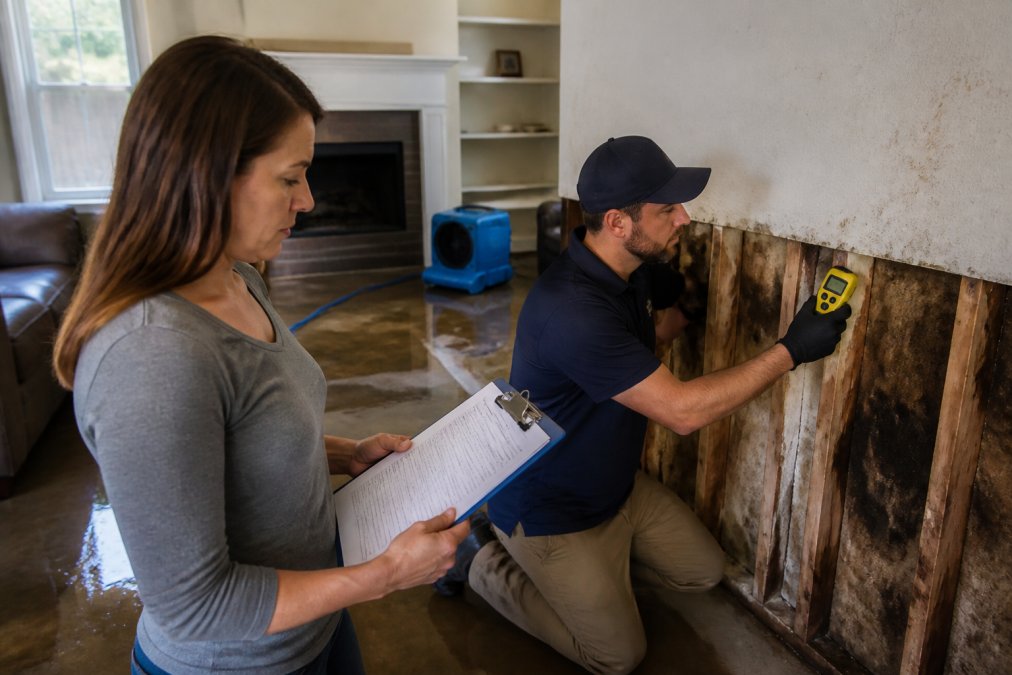
In practice, each franchise location is independently owned. Corporate sets training standards and brand rules, but the local owner hires the technicians, buys the equipment, and decides how quickly to dispatch after your call.
At Aquaflame Restores it, we watch this play out daily across metro Atlanta. The franchise model isn’t inherently good or bad. It just means your experience depends on the operator, not the logo.
That’s why reading reviews by brand name alone will mislead you. You need to read reviews by location.
Franchise vs. Corporate Quality Control: What Reviews Actually Reveal
Franchise quality control is the set of training, certification, and oversight rules a parent company imposes on independent local owners. Reviews reveal how well a specific location follows those rules, which varies far more than the brand’s marketing suggests.
A common mistake is treating a five-star review for one Servpro franchise as proof that every Servpro will perform the same way. It won’t. Each location has its own technicians, its own equipment, and its own standards for communication.
When you scan reviews, look for patterns rather than star averages:
- Response time mentions, did the crew arrive when promised?
- Communication complaints, did someone explain the drying process and timeline?
- Billing disputes, did the final invoice match the estimate?
- Repeat problems, did mold or moisture return after the job?
If three reviewers mention the same issue, that’s a location problem, not a one-off. A single angry review is noise. A pattern is signal.
Reading only the aggregate star rating hides the most important detail: which specific branch earned it. A 4.8-star average across a network says nothing about the franchise that will actually show up at your door.
Water Damage Restoration Cost: What Drives the Bill
Water damage restoration cost depends on four variables: how much water entered, what category of water it is, how far it spread, and how long the drying takes. No honest company quotes a flat price over the phone before seeing the property.
The category of water matters most. Clean water from a burst supply line is cheaper to handle than contaminated water from a sewer backup, which requires protective gear and disposal protocols. Water that sits for more than a day also pushes up the bill, because microbial growth changes the job from drying to remediation.
Most reputable companies structure the estimate around:
- Extraction and demolition of unsalvageable materials
- Structural drying with air movers and dehumidification
- Moisture mapping to confirm the structure is dry
- Antimicrobial treatment where contamination is likely
Ask for the estimate in writing and ask what triggers a change order.
Request moisture mapping readings before and after drying. A crew that can show you the numbers is documenting its work, and that documentation becomes evidence if you file an insurance claim later.
IICRC Certified Restoration Contractors: Why Certification Matters
IICRC certified restoration contractors have completed training through the Institute of Inspection, Cleaning and Restoration Certification, the nonprofit body that publishes the S500 (water), S520 (mold), and S700 (fire and smoke) standards most insurers and adjusters reference when they scope a loss. Certification is issued per technician and per discipline, not per brand, and it has to be renewed every two years with continuing education credits.
What to actually verify before the crew arrives
- Ask for the certification number of the technician who will supervise your job, not the company’s general certification. A supervisor’s number is verifiable in the IICRC directory.
- Match the discipline to the loss. A water-damage-certified tech is not automatically qualified for mold remediation. Mold work under the S520 standard requires a separate certification, and some states layer licensing on top of it.
- Ask who signs the drying report. The IICRC S500 standard expects documented moisture readings, psychrometric calculations, and a drying log. If nobody on site can explain what a psychrometric chart is showing, the documentation is likely being backfilled from the office.
- Confirm the certification is current. A lapsed credential looks identical to an active one on a business card.
Why this matters more in a franchise than at an independent shop
Before you authorize work, ask the dispatcher for the name and IICRC certification number of the on-site supervisor. A location that can answer that question in under a minute is a location that tracks its credentials. A location that can’t is telling you something too.
At Aquaflame Restores it, every technician is IICRC-trained, and the supervisor who signs your drying report is the same person who walks the job. We’re locally owned in Decatur, so the person answering to you is the person whose name is on the company.
Average Restoration Project Timeline: Drying vs. Reconstruction
The average restoration project timeline splits into two phases that most guides lump together, and that confusion is the single biggest source of homeowner frustration after a loss. Mitigation stops the damage from getting worse. Reconstruction puts the house back together. They are different scopes of work, often performed by different companies, and billed under different line items on your insurance claim.
Here’s the split most guides bury:
| Phase | Typical Duration | What Happens | Who Usually Does It |
|---|---|---|---|
| Emergency response | Same day | Water extraction, hazard assessment, emergency board-up or tarping | Restoration company |
| Structural drying | 3-5 days | Air movers, dehumidification, daily moisture checks, drying log | Restoration company |
| Mold remediation | 1-5 days | Containment, removal, air quality testing | Restoration company (mold-certified) |
| Reconstruction | 1-6 weeks | Drywall, flooring, cabinetry, painting, structural repairs | General contractor, sometimes the same company, often not |
The hand-off nobody warns you about
Most franchise restoration companies are set up to do mitigation. Their franchise agreement, insurance, and equipment investment are built around emergency response and drying. Reconstruction is a different trade, it requires a licensed general contractor, subcontractor relationships, and a construction schedule that has nothing to do with air movers.
Why the split matters for your insurance claim
Insurance policies typically treat mitigation and reconstruction as separate coverages under the same claim, but they’re adjusted on different timelines. Mitigation is usually billed and paid quickly because it’s an emergency expense. Reconstruction is a negotiated scope that can take weeks to settle, and if the mitigation company and the GC disagree about what the drying damaged, you become the messenger between them.
The question that prevents the hand-off problem
A restoration company that only does mitigation has no financial incentive to flag reconstruction issues early. The drying invoice gets paid either way. If you’re handed off, get the GC’s license number and a written scope before you sign the mitigation completion form.
At Aquaflame Restores it, one team owns both phases, drying and reconstruction, under a single contract. That means no hand-off, no re-negotiation of scope with a stranger, and no gap between the day the equipment leaves and the day the drywall goes back up.
Insurance Billing Advocacy: Why Some Companies Fight for You
Insurance billing advocacy means the restoration company documents the loss, communicates directly with your claims adjuster, and bills the insurer instead of handing you a large invoice. This is where franchise variability shows up most.
What to Look for in Restoration 1 vs Servpro Reviews
Read reviews for the specific local branch, not the brand. That’s the single most useful rule when comparing Restoration 1 vs Servpro reviews, because both networks let individual operators set their own service levels.
Use this checklist before you call either one:
- Search “[brand] + [your city]” and read the last 20 reviews, not the average
- Look for repeated mentions of late arrival, surprise charges, or returning mold
- Confirm the location is IICRC certified and ask who supervises the job
- Ask whether they handle both drying and reconstruction
- Ask if they bill your insurance directly
- Get the estimate and change-order policy in writing
The brand name on the truck matters less than the operator behind it. Vet the local branch, verify certification, and confirm who handles insurance before you sign anything.
Frequently Asked Questions
Is Restoration 1 a good company compared to Servpro?
Both are franchise-based restoration networks, so quality varies by local operator. Restoration 1 locations tend to be smaller and more locally focused, while Servpro has a larger national footprint and standardized training. Reviews for either brand should be read at the branch level, not the corporate level. Look for IICRC-certified technicians, clear pricing, and direct insurance billing before you commit.
Is Servpro overpriced for water damage restoration?
Servpro pricing reflects its national brand, franchise fees, and overhead, which can make it higher than independent local companies. However, water damage restoration cost depends on the scope: how much water was extracted, how many rooms need structural drying, and whether reconstruction is required. Always get a written estimate that separates mitigation from reconstruction before approving work.
Who is better than Servpro or Restoration 1 for emergency restoration?
The best restoration company is the one with IICRC certified restoration contractors, a documented response time, and the ability to handle both mitigation and reconstruction under one roof. Locally owned companies often provide faster 24/7 dispatch and more direct communication with your claims adjuster. Ask for proof of certification, a written scope of work, and a clear timeline before signing anything.
Does franchise ownership affect restoration service quality?
Yes. Franchise operators set their own hiring, training, and customer service standards within corporate guidelines. That means two locations of the same brand can deliver very different experiences. Check local branch reviews, ask how long technicians have been certified, and confirm whether the franchise handles insurance claims directly or leaves that to you.