
Table of Contents
- Does Homeowners Insurance Cover Roof Leaks?
- How to Document Roof Leak Damage for Your Claim
- What to Say to Your Insurance Adjuster About Roof Leaks
- Average Timeline for Roof Insurance Claims
- Why Roof Insurance Claims Get Denied
- Actual Cash Value vs. Replacement Cost in Roof Claims
- Steps to Take When You Discover a Roof Leak
- Frequently Asked Questions
Last Updated: September 30, 2026
Does Homeowners Insurance Cover Roof Leaks?
Whether homeowners insurance covers roof leaks depends on the cause: sudden, accidental damage is typically covered, while gradual wear and tear is not.
Most homeowners policies cover roof damage from sudden, unexpected events like falling tree branches, hail, or wind-driven rain. If your roof has deteriorated gradually over years, insurers will likely deny the claim.
According to the Insurance Information Institute’s guide on homeowners coverage, sudden and accidental damage represents the dividing line between covered and uncovered claims. Understanding this distinction before you file is critical.
Sudden and Accidental Damage vs. Wear and Tear
Sudden and accidental damage occurs without warning, windstorms tear shingles, hail punctures roofing, or falling tree limbs create openings. These events happen in a moment and are beyond your control.
Wear and tear develops gradually, roofs reaching end-of-life, sun-damaged shingles, or failing vent caulk. Insurance won’t cover damage from neglect or normal aging.
Adjusters investigate your roof’s condition during claims processing. If damage stems from pre-existing deterioration rather than a sudden event, they’ll deny your claim.
Common Causes of Roof Leaks Covered by Insurance
Windstorms (typically 40+ mph) and hail damage are the most common covered perils, though some insurers require hail to meet a minimum size threshold.
Falling objects (tree limbs, debris) are typically covered. Ice damming may be covered depending on policy language.
Water damage from a covered event is protected if it results from the covered peril, not from pre-existing leaks or poor maintenance.
How to Document Roof Leak Damage for Your Claim
Documentation is your strongest defense in roof leak insurance claims. Start gathering evidence immediately upon discovery.
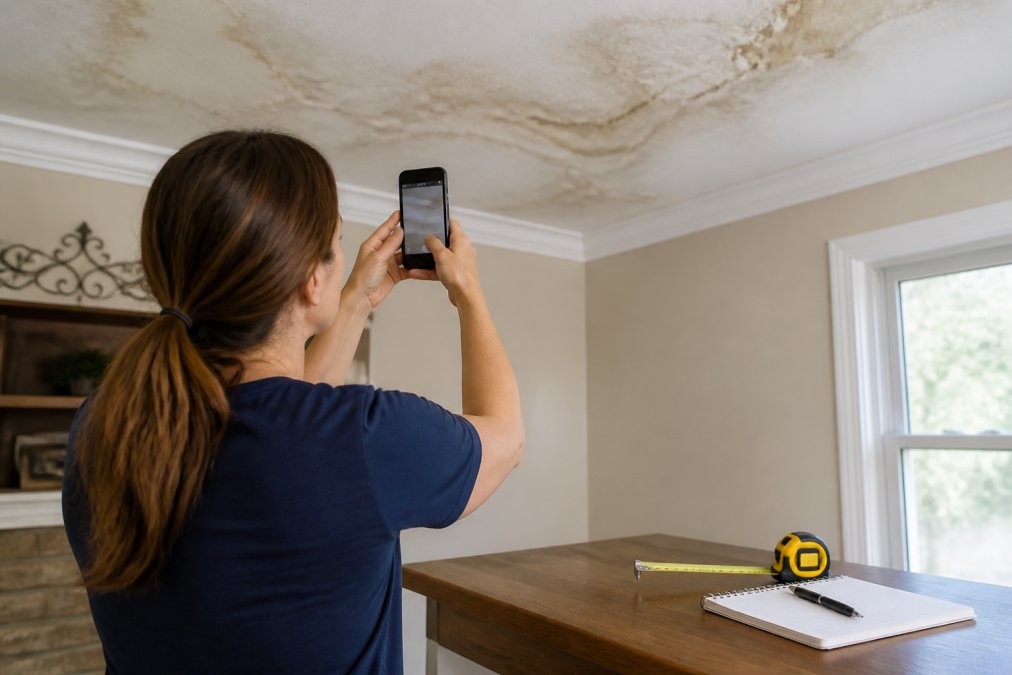
Photograph and video the damage from multiple angles: close-ups of holes and torn shingles, wide shots of overall condition, and interior damage like water stains and wet insulation.
Proof of Loss and Photographic Evidence
A proof of loss details what happened, when, and resulting damage. Include discovery date, likely occurrence date, and detailed description of observations.
Organize photographs chronologically with timestamps to establish when damage occurred relative to reporting.
Create a written inventory of damaged items with approximate replacement costs to support claim value and prevent overlooked secondary damage.
Working with Professional Inspectors
Hire a professional roof inspector before the adjuster arrives. An independent assessment identifies whether damage is from a sudden event or pre-existing deterioration and carries weight with adjusters.
Professional inspectors document roof age, condition, and damage with technical detail, determining whether damage is from sudden events or gradual deterioration.
Choose a certified inspector. The cost ($300-600) is worthwhile for substantial claims.
What to Say to Your Insurance Adjuster About Roof Leaks
How you communicate with your adjuster directly influences the outcome of your claim. Many homeowners inadvertently undermine their position through casual conversation or by conceding points they shouldn’t.
Key Points to Communicate
Present claims with specificity: “A windstorm on March 15 tore shingles from the east-facing slope, creating an opening where rain damaged insulation and framing.” Specific details establish credibility.
Emphasize the sudden nature of damage and that the roof functioned normally until the event. Mention recent inspections showing good condition.
Don’t speculate about roof age or condition. Provide documentation: purchase records, inspection reports, or maintenance receipts.
Avoiding Common Mistakes in Adjuster Conversations
Never admit to deferred maintenance or prior problems. Stick to facts of the current damage event.
If you disagree with the adjuster’s assessment, push back respectfully. Request a second inspection or ask them to review your documentation.
Avoid discussing previous claims unless directly asked.
Document every conversation: date, time, discussion, and adjuster statements. These notes become evidence if the claim is disputed.
Average Timeline for Roof Insurance Claims
Understanding the timeline helps you set realistic expectations and know when to follow up if progress stalls.
From Report to Settlement
After reporting damage, insurers assign an adjuster within 24-48 hours. Inspections typically occur within 7-14 days depending on claim volume and weather.
Inspections take 1-2 hours. The adjuster photographs damage, assesses condition and age, reviews documentation, and may interview you.
The adjuster’s report typically arrives within 7-14 days, determining approval and payment amount.
Factors That Affect Claim Duration
Several variables extend or compress this timeline. Weather delays inspections, if a storm damages many roofs simultaneously, adjusters become backlogged. Claims filed during hurricane season or after major hail events may wait weeks for an inspection. Proactive preparation remains the most effective way to mitigate these inevitable bottlenecks when you file storm damage claims.
The complexity of damage affects duration too. A straightforward wind tear might be assessed in one visit. Extensive damage requiring detailed documentation and multiple inspections takes longer. If the adjuster needs a second opinion or engineering assessment, add 2-3 weeks.
Your responsiveness matters as well. If the adjuster requests additional documentation and you delay providing it, the claim stalls. Conversely, having all documentation organized and ready accelerates the process.
Disputes extend timelines significantly. If you disagree with the adjuster’s assessment, the claim enters a negotiation phase that can last weeks or months. Some insurers offer appraisal processes where a neutral third party reviews disputed claims, which adds time but can resolve disagreements.
Why Roof Insurance Claims Get Denied
Denial is the outcome homeowners fear most. Understanding the common reasons claims are denied helps you avoid these pitfalls.
Policy Exclusions and Coverage Limits
Most denials stem from policy language rather than adjuster error. If your policy explicitly excludes water damage from certain causes, your claim won’t be covered regardless of merit. Some policies exclude damage from poor maintenance, pre-existing conditions, or water that enters through existing openings.
Coverage limits matter too. Your policy may cover roof damage up to a certain dollar amount or with a specific deductible. If the damage exceeds your coverage limit, you’ll be responsible for the difference. If your deductible is $5,000 and damage costs $8,000, you’ll receive $3,000, or nothing if the damage is deemed below your deductible threshold.
Roof age is a common reason for denial. Many insurers won’t cover roofs older than 20-25 years, and some have lower limits for older roofs (How Your Roof Influences Your Home and Business Insurance).
The Claims Denial Appeal Process
If your claim is denied, you have options. First, request a detailed written explanation of the denial. The insurer must specify which policy provision led to the denial and why they believe it applies. This explanation is your roadmap for appealing.
Actual Cash Value vs. Replacement Cost in Roof Claims
How your policy calculates payout determines whether you can fully repair your roof or face an out-of-pocket gap.
Understanding Depreciation in Your Payout
Actual Cash Value (ACV) policies pay based on the roof’s depreciated worth. If your 15-year-old roof would cost $15,000 to replace new but has depreciated 60% due to age, the insurer pays $6,000. You’re responsible for the remaining $9,000. Depreciation is the difference between what something costs new and what it’s worth now.
When to Request Replacement Cost Coverage
If you currently have ACV coverage, you can request an upgrade to RCV. This typically requires a policy amendment and may increase your premium slightly. Making this change before damage occurs is important, most insurers won’t upgrade coverage retroactively after a claim is filed.
Steps to Take When You Discover a Roof Leak
The actions you take immediately after discovering a leak set the trajectory for your entire claims experience.
Immediate Mitigation and Emergency Repairs
Your first responsibility is to prevent further damage. If water is actively entering your home, take steps to stop or redirect it. Place buckets under drips, move furniture and personal items away from the water source, and if safe, access the attic to assess the extent of water intrusion.
Filing Your Claim and What Happens Next
Prepare your documentation before the adjuster arrives. Organize photographs, videos, written descriptions, and any professional inspection reports. Create a timeline showing when the damage occurred and when you discovered it. Gather receipts for emergency repairs or temporary mitigation measures.
Frequently Asked Questions
Will homeowners insurance help with a roof leak?
Yes, homeowners insurance typically covers roof leaks caused by sudden and accidental damage, such as windstorm, hail, or falling objects. However, leaks from wear and tear, poor maintenance, or age are usually not covered. Your policy’s covered perils determine eligibility. Review your homeowners insurance policy or contact your agent to confirm what your coverage includes. Most standard policies have a deductible you’ll pay before insurance covers the remaining damage.
What should I avoid saying to my insurance adjuster about a roof leak?
Don’t admit fault, speculate about the cause, or downplay the damage. Avoid statements like ‘I should have maintained the roof better’ or ‘This might be my fault.’ Don’t discuss pre-existing damage or previous claims unless directly asked. Stick to facts: when you discovered the leak, what damage you’ve documented, and what mitigation steps you’ve taken. Let the adjuster investigate the cause independently. Anything you say can affect your claim settlement.
How long does a roof insurance claim typically take?
Most roof insurance claims take 30 to 90 days from initial report to settlement, though timelines vary. Simple claims with clear documentation may settle in 3-4 weeks. Complex claims involving structural damage, multiple contractors, or disputes over coverage can extend to 4-6 months or longer. The timeline depends on claim complexity, adjuster workload, and whether you’ve submitted complete documentation. Staying organized and responsive to adjuster requests helps accelerate the process.
What are common reasons insurance denies roof leak claims?
Insurance denies roof claims most often due to maintenance neglect, policy exclusions, or exceeding coverage limits. Wear and tear, ice damming caused by poor attic ventilation, and damage from deferred maintenance are typically excluded. Pre-existing damage, roof age beyond policy limits, and claims filed after the policy exclusion period may also result in denial. If your claim is denied, you can file an appeal with additional documentation or request a public adjuster to review the denial and advocate for coverage.