Table of Contents
- Safety First: Evacuation and Electrical Hazards
- Stop the Water Source and Turn Off Systems
- Identify the Water Type and Contamination Level
- How to Document Water Damage for Insurance Claims
- Remove Standing Water and Begin Initial Drying
- How to Remove Water from Carpet and Porous Materials
- Water Damage Restoration Timeline: What to Expect
- When to Call a Professional Restoration Company
- Frequently Asked Questions
Last Updated: August 31, 2026
Safety First: Evacuation and Electrical Hazards
Before assessing damage or salvaging belongings, evacuate anyone in immediate danger and shut off electricity to affected areas. Water conducts electricity, if it has reached outlets, appliances, or the main panel, touching wet surfaces could be fatal. Turn off the breaker to flooded rooms immediately; if water is rising or you cannot safely reach the panel, leave and call emergency services.
Wear personal protective equipment at all times: nitrile gloves, an N95 mask, and eye protection. Contaminated water carries pathogens, mold spores, and chemical residues. Change gloves frequently and wash your hands thoroughly after contact with water or wet materials.
Check for structural hazards before moving through the space. Soft drywall, weakened flooring, and unstable ceilings can collapse without warning. If you hear creaking, see sagging ceilings, or notice spongy walls, evacuate immediately and wait for professional assessment.
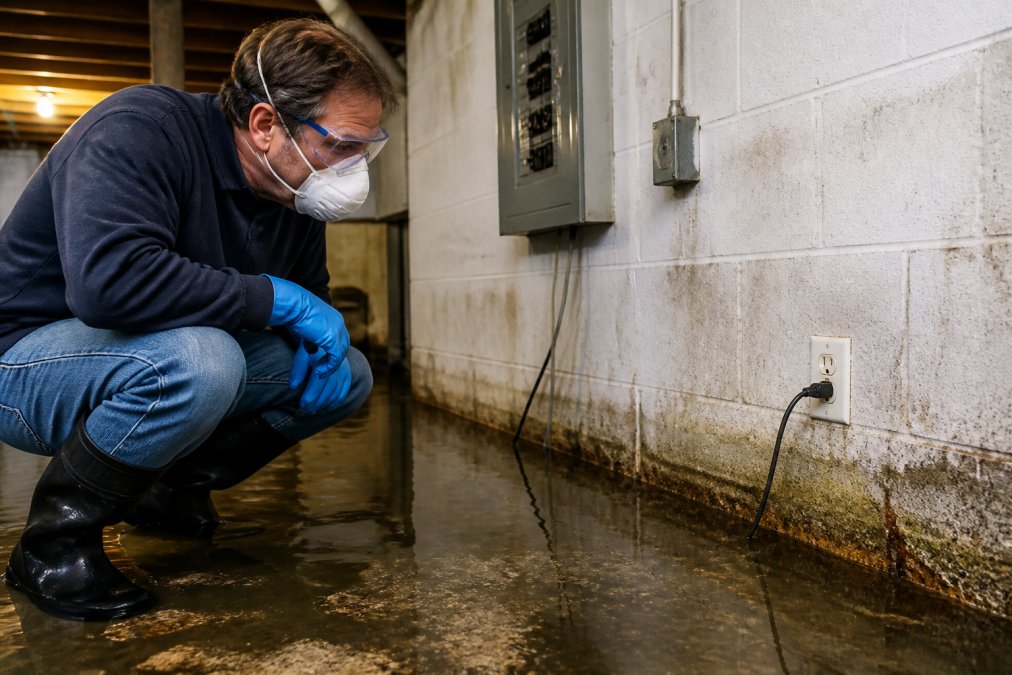
Document the condition with photos and video before touching anything, this evidence supports your insurance claim. Photograph water levels, damaged belongings, and visible mold or contamination.
Do not attempt to turn off electricity if you are standing in water or if water has reached the breaker panel. Call the fire department or your utility company instead. Electrocution is the leading cause of death in flooded homes ([the CDC](https://www.cdc.gov/floods/safety/floodwater-after-a-disaster-or-emergency-safety.html)).
Stop the Water Source and Turn Off Systems
Identify where the water is coming from: burst pipe, roof leak, failed sump pump, or outside flooding. You cannot stop damage from spreading until you stop the source.
For burst pipes, locate your main water shut-off valve and turn it clockwise until it stops. The valve is typically in the basement, crawlspace, or near the water meter. If you cannot find it or it will not turn, call your water company.
For roof leaks, move valuables away from dripping water. Place buckets or tarps to catch water and direct it away from electrical systems and structural areas.
Turn off your HVAC system immediately. Running air conditioning or heating circulates contaminated air and spreads mold spores throughout the property. Shut down the system at the thermostat and breaker panel. Do not restart until a professional confirms the system is free of water and mold.
Shut off gas if you smell gas or suspect gas lines are compromised. Do not use matches, lighters, or electrical switches. Leave the property and call your gas company or emergency services.
If you have a sump pump, check that it is working and the discharge line is not blocked. A failed sump pump is one of the most common reasons basement flooding accelerates. Have it replaced immediately if not running.
Identify the Water Type and Contamination Level
The source of water determines health risks and cleanup approach.
Clean water comes from broken water lines, roof leaks, or melting snow. It poses minimal health risk if dried quickly, though it can still cause structural damage and mold growth.
Grey water contains mild contamination from washing machines, dishwashers, or toilet overflow. It carries bacteria and viruses that cause illness if ingested or contact open wounds. Grey water requires sanitization during cleanup.
Black water is heavily contaminated sewage, floodwater, or stagnant water. It contains dangerous pathogens, chemicals, and hazardous waste. Black water requires professional remediation, do not attempt cleanup yourself.
Determine water type by observing the source. If water comes from a clean supply line or roof, it is clean water. If it comes from a toilet, washing machine, or outdoor flooding, treat it as grey or black water until proven otherwise.
The longer water sits, the more dangerous it becomes. Clean water becomes grey water within 24-48 hours as bacteria multiply and organic material decomposes (fema.gov). Rapid response is critical, waiting even one day increases contamination and health risk significantly.
How to Document Water Damage for Insurance Claims
Insurance companies require detailed documentation before approving payment. Incomplete documentation delays claims and often results in underpayment or denial. Start documenting immediately after evacuation.
Take photos and video of every affected area from multiple angles and distances. Include wide shots showing overall damage and close-ups showing specific details. Video should pan slowly so timestamp and scope are clear.
List every damaged item with approximate purchase date and replacement cost. For furniture, appliances, and electronics, note brand, model, and age. For clothing and personal items, estimate quantities and average values.
Preserve damaged items for the adjuster to inspect. Do not throw away wet drywall, carpet, or furnishings until the insurance company has reviewed them.
Keep all receipts, repair invoices, and contractor quotes. Save emails, text messages, and photos. Organize everything chronologically.
Notify your insurance company within 24 hours of discovering damage. Most policies require prompt notification. Provide the date, time, cause of damage, and a preliminary description of affected areas. preventing roof pooling.
Your documentation either supports your claim or gives the adjuster reason to question it. Thorough, timestamped evidence makes the difference between full reimbursement and partial payment.
Remove Standing Water and Begin Initial Drying
Standing water must be removed quickly. The longer it sits, the more damage spreads to subfloors, structural framing, and adjacent walls. Begin extraction within the first few hours if possible.
For small amounts of water (under 1 inch in a single room), use a wet/dry vacuum. For larger volumes or extensive flooding, call a professional restoration company. They have industrial-grade extraction equipment that removes water faster than consumer equipment.
After water extraction, begin air circulation immediately. Open windows if weather permits and outdoor humidity is lower than indoor humidity. Position fans to move air across wet surfaces toward open windows or doors.
Deploy dehumidifiers in closed spaces. Place them in the center of affected rooms and run continuously. Empty collection tanks frequently or connect to a drain line.
Monitor humidity levels with a moisture meter. Humidity should drop below 50% within 24-48 hours. If humidity remains above 60% after 48 hours, mold is likely growing, contact a professional immediately.
Do not use your home’s HVAC system for drying. Central air systems can spread mold spores throughout the property if contaminated. Use only portable fans and dehumidifiers until a professional confirms the HVAC system is safe.
How to Remove Water from Carpet and Porous Materials
Carpet absorbs water and retains moisture deep in backing and padding. Wet carpet becomes a mold breeding ground within 24-48 hours. Most water-damaged carpet cannot be saved and must be removed.
If carpet was exposed to clean water only and dried within 24 hours, it may be salvageable. Use a wet/dry vacuum to extract water from the carpet surface and backing. Remove the carpet padding, it cannot be dried and must always be discarded.
Lift the carpet and inspect the subfloor. If wet, it must dry completely before carpet replacement, typically requiring 5-7 days of continuous air circulation and dehumidification.
For grey water or black water exposure, remove the carpet immediately. Contaminated carpet poses serious health risks and cannot be fully sanitized.
Wet drywall loses structural integrity and becomes a mold growth medium. If drywall has been wet for more than 24-48 hours, remove and replace it (the EPA). Cut out wet drywall at least 12 inches above the water line to prevent mold growth in unseen areas.
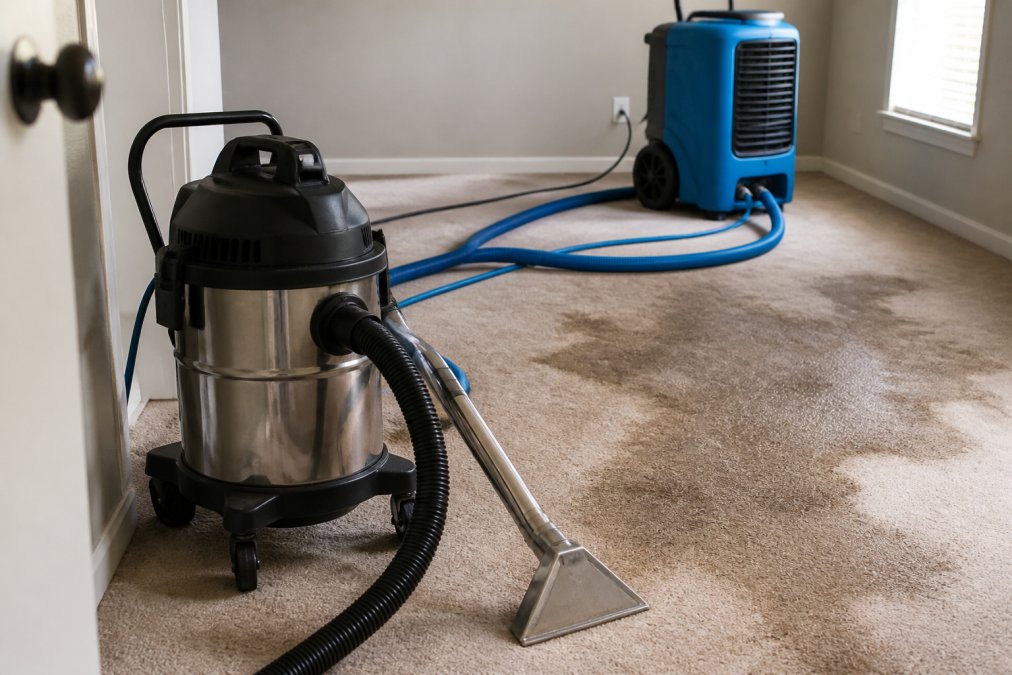
Wood flooring that absorbs water may warp permanently. If hardwood flooring is wet, remove baseboards to allow air circulation underneath. Run dehumidifiers and fans continuously for 7-10 days. If flooring remains warped after drying, it will need replacement.
Water Damage Restoration Timeline: What to Expect
Understanding the restoration timeline helps you plan recovery and manage expectations.
Hours 0-6: Evacuation, safety assessment, water source identification, and emergency extraction begin. This critical window prevents exponential damage spread.
Hours 6-24: Professional extraction removes remaining standing water. Air circulation and dehumidification equipment deploy. Initial drying begins. Wet materials are identified and removed. Insurance documentation is completed.
Days 2-5: Continued drying and dehumidification. Humidity levels drop steadily. Mold inspection may detect early growth. Structural drying continues. Unsalvageable materials are removed.
Days 5-10: Structural drying completes. Humidity reaches acceptable levels. Demolition of unsalvageable materials finishes. Subfloors and framing are inspected for mold and damage.
Days 10-30: Reconstruction begins. New drywall, flooring, insulation, and fixtures are installed. Painting and finishing work complete. HVAC systems are tested and restarted.
Aquaflame Restores it provides 24/7 emergency response with a 30-minute arrival guarantee, deploying extraction and drying equipment within hours, not days. This speed difference determines whether you lose one floor or your entire home to mold and structural damage.
| Restoration Phase | Timeline | Key Activities | Success Indicator |
|---|---|---|---|
| Emergency Response | 0-6 hours | Evacuation, water extraction, safety setup | Standing water removed, utilities shut off |
| Initial Drying | 6-48 hours | Dehumidification, air circulation, material removal | Humidity dropping, no visible mold |
| Structural Drying | 2-10 days | Deep drying of subfloors and framing | Moisture meter readings below 17% |
| Reconstruction | 10-30 days | Demolition, rebuilding, finishing | New materials installed, property restored |
When to Call a Professional Restoration Company
You can handle minor water damage yourself if the water is clean, volume is small (under 10 gallons), and you act within the first 2-4 hours. Beyond that, professional help is essential.
Call a professional immediately if water volume exceeds what you can extract with a wet/dry vacuum, water has stood for more than 4-6 hours, the source is grey or black water, water has reached electrical systems or HVAC equipment, humidity remains above 60% after 24 hours, visible mold growth or musty odor appears, structural damage is visible, or the property is commercial where downtime costs money.
Professional restoration companies have industrial extraction equipment, moisture detection technology, and mold prevention expertise that homeowners lack. They also manage insurance claims directly, eliminating negotiation burden.
Aquaflame Restores it responds within 30 minutes across metro Atlanta with IICRC-trained technicians who assess damage, extract water, deploy drying equipment, and coordinate with your insurance company. They handle the entire restoration process from emergency response through final reconstruction.
The cost of professional restoration is recovered through insurance reimbursement and prevention of secondary damage like mold growth and structural deterioration. DIY restoration on extensive damage often results in incomplete drying, hidden mold, and thousands in additional repairs.
Water damage requires immediate action. The first 24 hours determine whether you contain damage or watch it spread into walls, subfloors, and hidden cavities where mold grows unchecked. Safety comes first, evacuate, shut off utilities, and wear protective equipment. Then extract water, deploy drying equipment, and document everything for your insurance claim.
For extensive damage or contaminated water sources, professional help is essential to ensure complete drying, mold prevention, and structural integrity. Aquaflame Restores it provides 24/7 emergency response with the expertise and equipment to restore your property quickly while managing insurance claims so you can focus on recovery.
Frequently Asked Questions
Q: Should I turn off the electricity after water damage?
A: Yes, immediately. Water conducts electricity and creates severe shock and fire hazards. Turn off power at the main breaker panel before entering flooded areas. If water has reached electrical outlets, switches, or appliances, do not touch them. Electrical hazards persist even after water recedes, so have a licensed electrician inspect your system before restoring power. This is your first safety priority after water damage.
Q: How do I document water damage for insurance claims?
A: Take photos and videos of all affected areas, damaged items, and water lines on walls before cleaning or removing anything. Document the water source and note the date and time damage occurred. Create a detailed inventory listing damaged property with descriptions and estimated values. Save receipts for any emergency mitigation work. Contact your insurance company within 24-48 hours and provide all documentation. Keep records of all communication with your adjuster and restoration professionals, as this evidence supports your claim.
Q: How long does water damage restoration take?
A: Most residential water damage restoration spans 3-7 days for extraction and initial drying, though full restoration including repairs and reconstruction can take 2-4 weeks depending on severity. Clean water damage typically progresses faster than grey or black water situations. Structural drying of walls, subfloors, and insulation requires continuous dehumidification and air circulation. Mold remediation and final repairs extend the timeline. Professional assessment on day one determines your specific restoration timeline and prevents costly delays.
Q: What should I do if water damage comes back after restoration?
A: Recurring water damage signals an unaddressed root cause such as an active leak, poor drainage, or inadequate moisture detection during initial drying. Document the recurrence with photos and contact your restoration company immediately. A moisture meter assessment identifies hidden moisture in walls, subfloors, and insulation that wasn’t fully dried. You may need a structural inspection to locate ongoing water intrusion from roof leaks, foundation cracks, or HVAC system failures. Professional mitigation addresses the source, not just the symptom, preventing mold growth and permanent damage.
This article was written using GrandRanker