Table of Contents
- Act Within the First Hour: Water Extraction and Immediate Response
- How Long Does It Take for Mold to Grow After Water Damage
- Best Equipment for Drying Out a House
- Ventilation and Airflow: Accelerating Evaporation
- When to Call Professional Water Damage Restoration
- Safety Precautions During Water Damage Cleanup
- Conclusion
Last Updated: August 13, 2026
Act Within the First Hour: Water Extraction and Immediate Response
The first 60 minutes after a burst pipe are critical. Water continues spreading through your home, and mold can begin colonizing within 24 hours. Your immediate actions determine whether you contain the damage or watch it expand into structural problems.
Stop the source and assess the damage
Locate your main water shut-off valve, typically near the water meter or where the main line enters your home. Turn it clockwise until it stops. If you can’t locate it or it won’t shut off, call your water company’s emergency line immediately.
Once the water stops, walk through affected areas and note which materials are wet: carpet, drywall, insulation, subfloor. Take photos for insurance documentation. Open windows and exterior doors to begin air circulation. Check whether the water came from a clean source (burst supply line) or contaminated source (sewage backup, toilet overflow), as this determines your safety precautions and cleanup approach.
Remove standing water with wet-dry vacuums
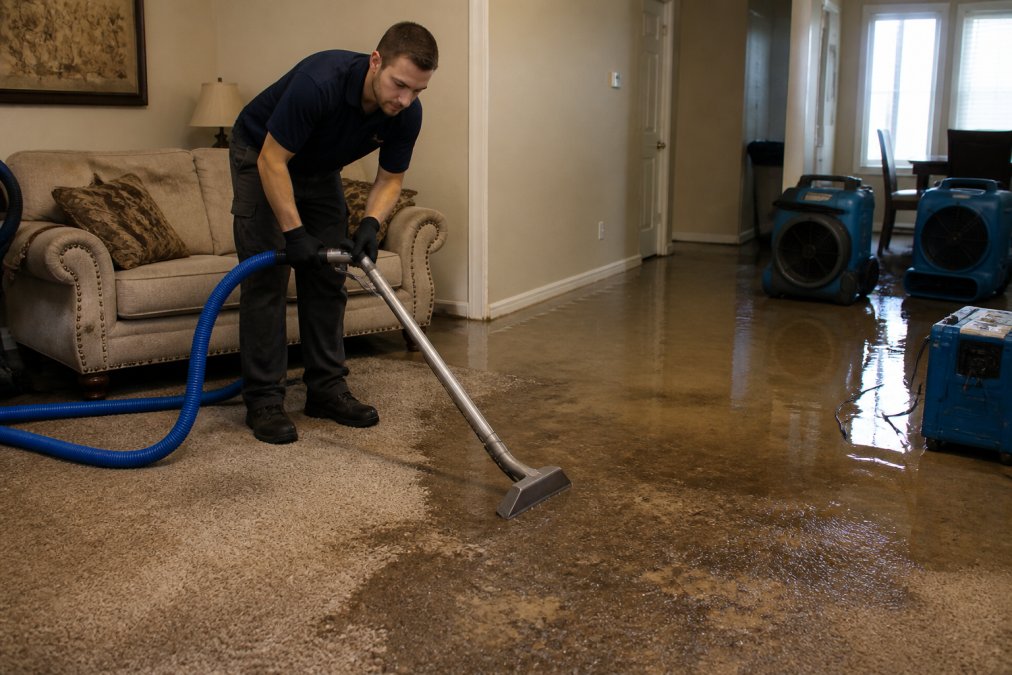
Standing water must be removed before evaporation begins. A wet-dry vacuum (shop vac) is your primary tool. Rent or borrow one with at least 5 horsepower. Start in the lowest-lying areas where water pools deepest, working systematically across the room with overlapping passes. Empty the tank frequently, as a full tank loses suction.
After wet-dry vacuuming, use towels to absorb remaining moisture from carpets and hard surfaces. Wring them out repeatedly and replace with dry ones. For hardwood floors, extract water immediately and dry the surface with towels, hardwood swells and buckles if not dried within hours. Significant hardwood saturation signals the need for professional help with specialized subfloor extraction equipment.
How Long Does It Take for Mold to Grow After Water Damage
Mold begins growing within 24 to 48 hours of water exposure. Mold spores exist everywhere in your home already. When moisture, oxygen, and organic material (drywall, wood, carpet) combine, mold activates and colonizes rapidly. If you dry your home aggressively within this period, you prevent mold from establishing. If you wait, mold begins visible growth and spreads into hidden spaces like wall cavities and subfloor areas.
Temperature accelerates this timeline. Warm conditions (70-80°F) support faster mold growth than cool conditions. Humidity above 50% relative humidity creates ideal conditions. Below 50% relative humidity, mold growth slows significantly. This is why dehumidifiers are essential, they drop humidity below the mold activation threshold.
Different materials dry at different rates. Carpet can hold water for days if not extracted properly. Drywall absorbs water and dries slowly from the inside out. Insulation, once wet, is nearly impossible to dry in place and should be removed and replaced. Subfloor materials like particle board or oriented strand board (OSB) absorb water like sponges and require days of aggressive drying to reach safe moisture levels.
Treat the first 24 hours as your mold prevention window. Every hour you delay extraction and drying increases the risk that mold is already colonizing. Aquaflame Restores it‘s 24/7 emergency response exists because this timeline is unforgiving, waiting until business hours means mold may already be establishing by the time technicians arrive.
Best Equipment for Drying Out a House
Professional-grade drying equipment does the work that fans and open windows cannot. Residential air conditioning and heating systems aren’t designed for water damage recovery.
Air movers and dehumidifiers: the core drying team
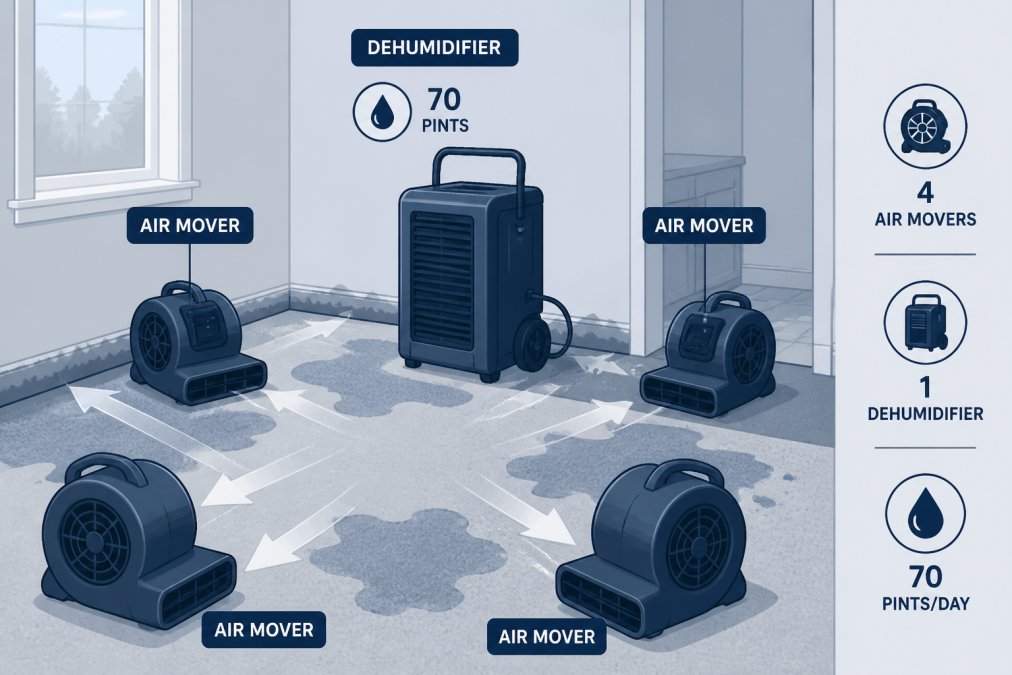
Air movers (high-velocity fans) force air across wet surfaces at speeds that accelerate evaporation. Professional air movers move 3,000-4,000 cubic feet per minute (CFM), compared to a household fan’s 500-1,000 CFM. Position air movers to direct airflow toward wet materials, low angles for carpet, toward wall surfaces for drywall.
Dehumidifiers extract moisture from the air. As air movers evaporate water from materials, that moisture enters the air. Without dehumidifiers, the air becomes saturated and evaporation stops. The combination matters: air movers evaporate moisture from materials, dehumidifiers extract that moisture from the air, and evaporation continues.
Monitoring progress with moisture meters and hygrometers
You cannot see when wood or drywall is dry. A moisture meter measures moisture content inside materials by inserting pins and displaying moisture percentage. Most materials are considered dry when moisture content drops below 15-17%. Wet materials typically measure 30-50% or higher. Track moisture levels daily in multiple locations to confirm drying is progressing.
A hygrometer measures relative humidity in the air. As humidity drops below 50%, mold growth risk decreases significantly. Most professionals target 30-40% relative humidity during water damage recovery. These tools cost $20-100 to purchase or rent and are the difference between guessing whether your home is dry and knowing it’s dry.
Ventilation and Airflow: Accelerating Evaporation
Ventilation creates the conditions for evaporation. Without it, moisture-laden air becomes saturated and evaporation stops. Open all windows and interior doors to maximize airflow. If weather permits, keep windows open even at night for continuous air exchange.
Your HVAC system can help if the air handler pulls air from affected areas and exhausts it outside. However, standard HVAC systems aren’t designed for water damage recovery and can be damaged by moisture. Before running your system, confirm the air intake isn’t drawing directly from wet areas.
Fans positioned to create directional airflow are more effective than random ventilation. Create a pattern where air movers push air from wet areas toward windows or exhaust points. Ventilation works best when combined with dehumidification, open windows alone won’t dry structural materials in humid conditions.
When to Call Professional Water Damage Restoration
DIY drying works for small, contained water damage affecting less than 100 square feet in a single room. Beyond that, the volume of water and complexity of drying exceeds what rental equipment and manual labor can accomplish.
DIY limits and structural drying complexity
Structural drying, removing moisture from wood framing, subfloors, and wall cavities, requires specialized equipment and expertise. Moisture trapped inside walls or under subfloors causes hidden mold growth and structural rot. Thermal imaging cameras detect moisture in hidden spaces. Structural drying equipment like injectidry systems or wall cavity drying rigs remove moisture from inside materials.
Contaminated water (from sewage, flooding, or unknown sources) is a biological hazard. Professional remediation includes antimicrobial treatment, proper containment, and disposal of contaminated materials. Visible mold indicates growth has begun and requires professional removal, antimicrobial treatment, and clearance testing.
Insurance documentation and clearance requirements
Insurance companies require documentation of the damage, remediation process, and final clearance. Professional restoration companies provide this documentation. Your insurance adjuster will want photos of the damage, extraction equipment used, drying timeline, and final moisture readings. A clearance report from a certified mold inspector confirms that moisture levels are safe and mold is not present.
Professional restoration companies like Aquaflame Restores it manage direct insurance billing, handle documentation requirements, and coordinate with adjusters. For real estate transactions, mold clearance documentation is non-negotiable. Buyers’ lenders require it. DIY drying without clearance documentation will stall the sale.
Safety Precautions During Water Damage Cleanup
Water damage cleanup involves hazards: contaminated water, electrical risks, mold exposure, and physical strain.
Wear appropriate PPE during cleanup. For clean water damage, wear gloves and eye protection. For potentially contaminated water, wear an N95 respirator, gloves, eye protection, and long sleeves. Turn off electricity to affected areas if water has reached outlets, appliances, or wiring, water conducts electricity and creates electrocution risk.
Mold exposure causes respiratory irritation, allergic reactions, and asthma aggravation. If you see visible mold or smell musty odors, stop cleanup and call professionals. Heavy equipment and wet materials create back injury risk. If you have back problems or are physically unable to do heavy lifting, hire help or call professionals. Ensure adequate ventilation while working and take breaks in fresh air.
Water damage recovery is a race against the mold growth timeline. The faster you extract standing water, establish airflow, and reduce humidity, the lower your risk of mold colonization and structural damage. For large-scale damage, contaminated water, or visible mold, professional remediation is essential.
Aquaflame Restores it’s 24/7 emergency response and 30-minute arrival guarantee exist because this timeline is unforgiving. When a burst pipe floods your home at 2 AM on a Sunday, waiting until Monday morning means mold may already be growing. IICRC-trained technicians arrive with professional-grade equipment, handle insurance documentation, and manage the entire drying and restoration process. Contact Aquaflame Restores it immediately after a burst pipe, the first hour determines everything.
| Step | Timeline | Equipment | Goal |
|---|---|---|---|
| Water extraction | 0-2 hours | Wet-dry vacuum, towels | Remove standing water |
| Initial drying setup | 2-6 hours | Air movers, dehumidifiers | Begin evaporation |
| Continuous monitoring | 24-48 hours | Moisture meters, hygrometers | Track drying progress |
| Structural drying | 2-7 days | Professional equipment | Remove hidden moisture |
| Mold clearance | Day 7+ | Thermal imaging, testing | Confirm safety |
Mold begins growing within 24-48 hours of water exposure. Delaying extraction and drying by even a few hours increases the risk that mold is already colonizing hidden spaces. Once mold is established, professional remediation becomes necessary.
Document everything with photos and moisture readings. Insurance adjusters require proof of the damage, equipment used, and drying timeline. Moisture meter readings showing progression from 40% down to 15% demonstrate you dried properly and followed industry standards.
Frequently Asked Questions
How do I know if mold is already growing in my walls?
Visible mold appears as black, green, or white discoloration on surfaces. Musty odors indicate mold growth even if you can’t see it. Thermal imaging cameras detect moisture patterns in walls that suggest hidden mold. If you suspect hidden mold, hire a professional mold inspector.
Can I use my air conditioning system to dry my home?
Standard residential air conditioning isn’t designed for water damage recovery. It circulates air but doesn’t extract moisture or create the aggressive evaporation needed. Professional-grade air movers and dehumidifiers are necessary for effective drying.
What’s the difference between a dehumidifier and an air mover?
Air movers create airflow that evaporates moisture from wet materials. Dehumidifiers extract moisture from the air by condensing it into water. You need both: air movers evaporate moisture, dehumidifiers remove that moisture from the air so evaporation continues.
How much does professional water damage restoration cost?
Costs depend on the extent of damage, materials affected, and whether mold remediation is needed. Contact Aquaflame Restores it for a free assessment and estimate.
Will my homeowner’s insurance cover water damage from a burst pipe?
Most homeowner’s insurance policies cover sudden, accidental water damage from burst pipes. Gradual leaks or water damage from lack of maintenance typically aren’t covered. Review your policy or contact your insurance agent for specifics.
Additional Resources
Learn more about water damage prevention and restoration from authoritative sources. The EPA’s guidance on mold and moisture control provides official recommendations for preventing mold growth in homes. For detailed information on water damage assessment, the Institute of Inspection, Cleaning and Restoration Certification (IICRC) standards establishes industry best practices for professional remediation. The American Society of Home Inspectors resource on water damage offers homeowner guidance on recognizing and addressing water damage risks.
Frequently Asked Questions
How long does it take for mold to grow after water damage?
Mold can begin growing within 24-48 hours of water exposure on porous materials like drywall, insulation, and carpet. The 24-hour rule is critical: if you extract standing water and begin drying immediately, you significantly reduce mold risk. However, if moisture remains trapped in walls, subfloors, or insulation beyond 48 hours, mold spores will colonize. Relative humidity above 55% and temperatures between 68-86°F accelerate growth. This is why immediate water extraction and continuous ventilation are non-negotiable.
Can I dry my home myself or do I need professional water damage restoration?
Small, contained water damage (a few square feet from a minor leak) may be manageable with rented equipment and careful monitoring. However, burst pipes typically affect multiple rooms, walls, and subfloors, areas you cannot see or reach. Professional restoration uses thermal imaging to locate hidden moisture, structural drying protocols for different materials, and moisture meters to verify dryness before reconstruction. Professionals also provide insurance documentation and clearance testing, which lenders and buyers require. If water touched drywall, insulation, or flooring, professional remediation is the safer choice.
What equipment do I actually need to dry out a house after water damage?
The core setup includes: a wet-dry vacuum for standing water, air movers (fans that push air across wet surfaces to accelerate evaporation), and a dehumidifier to remove moisture from the air. A moisture meter and hygrometer track progress, moisture content should drop below 17% in wood and drywall, with relative humidity below 55%. Larger jobs require multiple air movers and industrial-grade dehumidifiers. Renting equipment costs less than buying, but professional teams have the right equipment matched to your home's size and damage scope.
What signs indicate hidden mold is growing after water damage?
Visible mold appears as black, green, or white spots on surfaces, but hidden growth is more dangerous. Signs include musty odors (indicates active mold in walls or under flooring), discoloration on drywall that doesn't fade, soft spots in flooring, peeling paint or wallpaper, and respiratory irritation indoors. If moisture readings remain high after drying attempts, mold is likely colonizing hidden areas. Airborne spores can also trigger allergies. Thermal imaging and moisture meters reveal hidden moisture before visible mold appears, this is why professional assessment within 24-48 hours is critical.
This article was written using GrandRanker