Table of Contents
- Why Immediate Action is Critical for Water Damage
- How Long Does Water Extraction Take and Why Speed Matters
- Prevention of Mold and Mildew Growth After Water Damage
- Protecting Structural Integrity and Preventing Hidden Damage
- Health Risks of Standing Water and Contamination
- Professional Water Extraction Equipment and Process
- Insurance Documentation and Property Value Protection
- 7 Key Benefits of Immediate Emergency Water Extraction
- Benefit 1: Rapid Mold Prevention
- Benefit 2: Structural Stability and Long-Term Protection
- Benefit 3: Indoor Air Quality and Health Protection
- Benefit 4: Reduced Secondary Damage and Hidden Moisture
- Benefit 5: Lower Overall Restoration Costs
- Benefit 6: Insurance Claim Support and Documentation
- Benefit 7: 24/7 Emergency Response and Peace of Mind
Last Updated: July 10, 2026
When water damage strikes your home, every minute counts. Homes that receive extraction within the first 24 hours recover faster, suffer less secondary damage, and face significantly lower overall restoration costs. At Aquaflame Restores it, we’ve responded to hundreds of water emergencies across metro Atlanta. The first 24-48 hours are critical, this is when mold prevention is still possible, when hidden moisture can be detected before it spreads, and when professional intervention delivers the highest return on investment.
The 24-hour window is based on how quickly mold spores germinate in wet environments. Mold can begin growing within 24-48 hours of water exposure. Extraction within this window prevents most mold colonization before it starts.
Why Immediate Action is Critical for Water Damage
Water doesn’t stay in one place. It moves downward through gravity and laterally through capillary action, penetrating materials that may look dry on the surface. According to IICRC water damage restoration guidelines, the first 72 hours determine whether damage remains contained or spreads throughout the property.
Drywall loses structural integrity within 24 hours of saturation. Wooden subflooring starts swelling and warping. Insulation becomes useless and begins harboring bacteria. A burst pipe in your second-floor bathroom doesn’t just damage that room, water travels through wall cavities and into the crawlspace below. By the time visible damage appears on the first floor, saturation may already be extensive.
Professional moisture detection equipment (thermal imaging and moisture mapping) identifies hidden water before it causes permanent damage. A water damage claim that costs $5,000 to address on day one can balloon to $25,000 or more if extraction is delayed by a week. Aquaflame Restores it’s 30-minute arrival guarantee and IICRC-trained technicians ensure your claim gets the professional documentation insurers require.
How Long Does Water Extraction Take and Why Speed Matters
Professional water extraction removes standing water from a 2,000-square-foot home in 4-8 hours using commercial-grade pumps and wet vacuums. The remaining 24-40 hours involves positioning drying equipment, running dehumidifiers, and monitoring moisture levels to ensure water trapped in walls and subflooring is fully evaporated.
Water extraction within 6 hours of damage discovery typically results in 40% lower final restoration costs compared to extraction delayed by 24 hours. The drying phase requires continuous monitoring. Air movers and dehumidifiers work 24/7 to pull moisture from the air and materials. Technicians return daily to check moisture levels using moisture meters and thermal imaging, adjusting equipment placement to ensure complete drying.
A common mistake is turning off drying equipment too early. Hidden moisture in walls and subflooring can remain for weeks. Premature equipment shutdown leads to mold growth inside walls where you cannot see it until structural damage is severe.
Prevention of Mold and Mildew Growth After Water Damage
Mold prevention begins the moment water extraction starts. Mold spores are everywhere in the air and germinate within 24-48 hours when conditions are right: moisture, warmth, and organic material. Immediate water extraction eliminates the moisture component before mold colonies can establish.
Professional water extraction includes antimicrobial treatment in many cases. For category 1 water (clean water from burst pipes or roof leaks), extraction and drying alone prevent mold. For category 2 or 3 water (gray water or sewage), sanitization and disinfection follow extraction to kill pathogens and prevent mold growth.
The 24-48 Hour Window
Research from CDC guidance on mold in homes confirms that mold colonies require sustained moisture and time to establish. Extraction and drying within 48 hours prevents the vast majority of mold problems before they begin. After 48 hours without extraction, mold becomes increasingly likely. By day 5-7, mold colonies are usually visible and smell is detectable.
Mold remediation is significantly more expensive than water extraction because it requires containment, removal of affected materials, HEPA air filtration, and verification testing. Aquaflame Restores it’s 24/7 emergency response means extraction can begin within 30 minutes of your call, putting you well within the 48-hour mold prevention window.
Moisture Inspection and Thermal Imaging
Professional moisture detection is essential because water hides. Drywall can feel dry on the surface while remaining saturated behind the wall. Thermal imaging cameras detect temperature differences that indicate moisture. Moisture meters measure actual moisture content inside materials, confirming whether drying is complete.
Moisture mapping involves systematic testing across the entire affected area to identify all water intrusion points. IICRC-certified technicians know where water travels and what to test, preventing the scenario where visible water is removed but hidden moisture remains.
Protecting Structural Integrity and Preventing Hidden Damage
Water damage to structural elements compounds over time. Wet wood begins losing strength immediately. The longer water remains, the greater the structural compromise. Immediate extraction prevents deterioration before it requires material replacement.
Structural integrity impacts both safety and property value. A home with water damage history and structural compromise loses market value significantly. Homes that undergo rapid extraction and complete drying often receive clearance with minimal structural concern.
Secondary Damage and Subfloor Saturation
Secondary damage refers to problems that develop after the initial water event: mold, rot, structural warping, and material breakdown. The leading cause is incomplete water removal or inadequate drying. Water trapped in subflooring leads to wood rot, which weakens floor joists and can compromise structural support.
Subfloor saturation is particularly dangerous because it’s invisible. By the time sagging floors indicate subfloor damage, replacement is often necessary. Professional water extraction includes subfloor assessment and drying, with technicians positioning air movers and dehumidifiers to pull moisture from beneath the finished floor.
Drywall and Material-Specific Sensitivity
Standard drywall begins losing structural integrity after 24-48 hours of saturation and must be replaced if water exposure is significant. Insulation becomes permanently damaged. Hardwood flooring swells and warps. Professional technicians know which materials can be dried in place and which must be removed, preventing unnecessary replacement of materials that could have been saved.
The difference between a $5,000 restoration and a $25,000 one often comes down to whether materials were dried before they reached replacement threshold.
Health Risks of Standing Water and Contamination
Standing water becomes a breeding ground for bacteria, viruses, and pathogens. Stagnant water develops foul odors from bacterial growth. Prolonged exposure to water-damaged environments triggers respiratory issues, allergic reactions, and infections, particularly in children and people with compromised immune systems.
Pathogens and Sewage Back-up Risks
Category 3 water (sewage or heavily contaminated water) poses immediate health threats. Sewage contains harmful bacteria like E. coli, Salmonella, and Hepatitis A virus. A sewage backup addressed within 24 hours is significantly less hazardous than one that sits for a week. Professional extraction includes containment, removal, sanitization, and verification that pathogens have been eliminated.
Safety Hazards Checklist
Water damage creates multiple safety hazards. Standing water can hide electrical hazards, wet conditions increase electrocution risk. Structural weakening can create fall hazards. Mold growth produces airborne spores that trigger respiratory distress.
A safety checklist includes:
- Turn off electricity to affected areas
- Avoid contact with standing water if sewage backup is possible
- Check for structural sagging before walking on wet floors
- Use respiratory protection if mold odor is present
- Ensure proper ventilation to prevent mold spore accumulation
Professional water extraction eliminates these hazards by removing water and addressing contamination.
Professional Water Extraction Equipment and Process
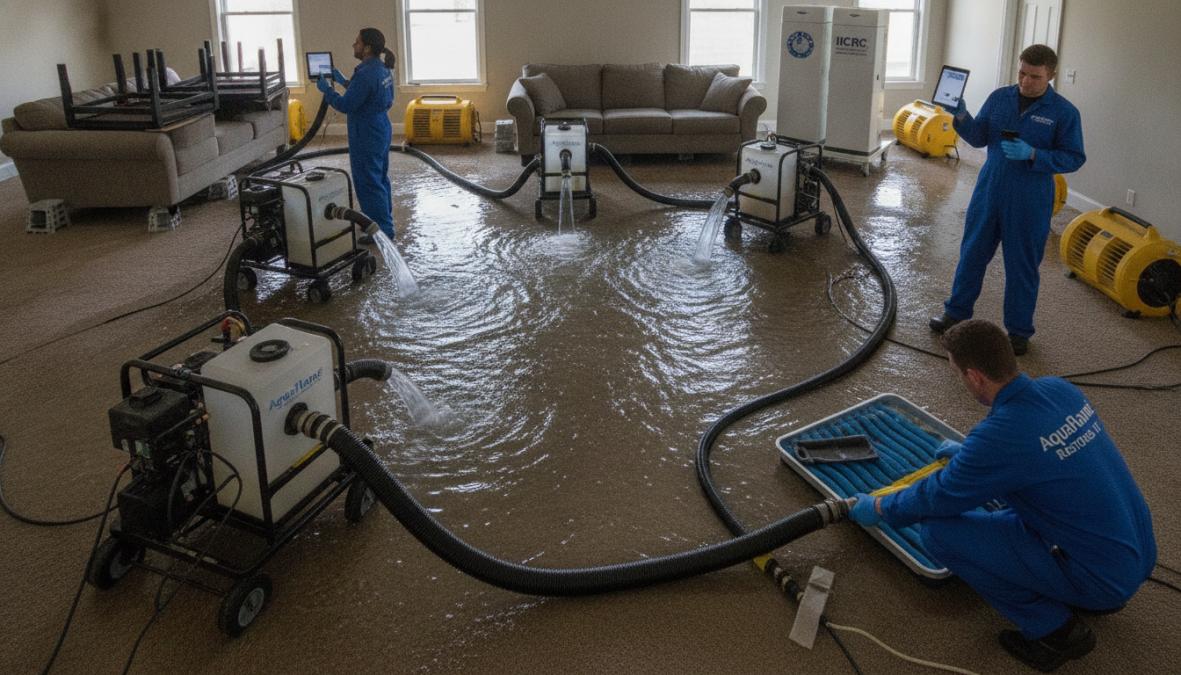
Commercial-grade extraction equipment moves water volumes that would take homeowners weeks to remove with shop vacuums. Professional drying equipment operates continuously for days or weeks. The professional water extraction process follows IICRC standards for water damage restoration.
Air Movers, Dehumidifiers, and Drying Technology
Air movers are large fans that accelerate evaporation by moving air across wet surfaces. A single air mover can cover a 1,000-square-foot area. Dehumidifiers remove moisture from the air, preventing saturation that would stop evaporation. The combination creates an environment where water is continuously pulled from materials and removed from the air.
Thermal imaging identifies moisture distribution and confirms that drying is progressing. Wet areas appear cooler on thermal cameras because water absorbs heat during evaporation. As drying progresses, thermal images show areas warming up, confirming moisture removal.
IICRC Certified Technicians and Industry Standards
IICRC (Institute of Inspection, Cleaning and Restoration Certification) sets the standard for water damage restoration. IICRC certification requires technicians to complete training in water damage assessment, equipment operation, and restoration procedures. Industry standards protect homeowners by ensuring consistent, professional service and protect insurance companies by establishing clear procedures for damage assessment.
Aquaflame Restores it employs IICRC-certified technicians who follow these industry standards in every restoration.
Insurance Documentation and Property Value Protection
Insurance claims require proper documentation of damage and restoration. Professional water extraction includes photographing damage, measuring affected areas, and documenting all water removal and drying activities. This documentation is essential for insurance approval and claim payment.
Homeowners who attempt DIY water removal often lack proper documentation. Insurance companies may deny or reduce claims if they cannot verify the extent of damage. Professional restoration companies provide detailed documentation that supports insurance claims and ensures full coverage.
Property value protection is a long-term benefit of immediate, professional water extraction. Homes with documented professional restoration recover market value more quickly. Aquaflame Restores it manages direct insurance billing, working with your insurance company to document damage, perform restoration, and ensure claims are properly processed.
7 Key Benefits of Immediate Emergency Water Extraction
Benefit 1: Rapid Mold Prevention
Mold remediation costs $2,000-$6,000 for average homes and significantly more for extensive infestations. Extraction within the 24-48 hour mold prevention window prevents mold growth in the vast majority of water damage scenarios.
Benefit 2: Structural Stability and Long-Term Protection
Immediate extraction stops deterioration before it requires material replacement. Homes restored quickly maintain structural integrity and avoid long-term stability concerns that plague homes with delayed restoration.
Benefit 3: Indoor Air Quality and Health Protection
Immediate extraction and drying restore indoor air quality quickly, reducing health risks for residents. Families can return to normal routines faster when water is removed and drying is complete.
Benefit 4: Reduced Secondary Damage and Hidden Moisture
Secondary damage is prevented through rapid extraction and complete drying. Professional moisture detection prevents hidden moisture from causing damage months later.
Benefit 5: Lower Overall Restoration Costs
Water damage restoration costs scale dramatically with time. A $5,000 extraction project can become a $25,000+ restoration if secondary damage develops. Rapid extraction often keeps costs below deductible thresholds, resulting in zero out-of-pocket costs.
Benefit 6: Insurance Claim Support and Documentation
Professional water extraction includes comprehensive documentation that supports insurance claims. Insurance companies are more likely to approve and fully pay claims that include professional documentation.
Benefit 7: 24/7 Emergency Response and Peace of Mind
Water damage doesn’t happen during business hours. 24/7 emergency response means extraction can begin immediately, regardless of when damage occurs. Peace of mind comes from knowing professional help is available within 30 minutes of your call.
Water damage is one of the most time-sensitive home emergencies. Every hour that passes increases the risk of mold, structural damage, and secondary complications. Aquaflame Restores it provides 24/7 emergency water extraction with IICRC-trained technicians, 30-minute arrival guarantee, and direct insurance billing. When water damage strikes, immediate professional extraction is the difference between manageable restoration and catastrophic loss.
| Benefit | Timeline | Cost Impact | Prevention Method |
|---|---|---|---|
| Mold Prevention | 24-48 hours | Prevents $2,000-$6,000 remediation | Rapid extraction and drying |
| Structural Protection | 24-72 hours | Prevents material replacement | Subfloor and wall drying |
| Secondary Damage Prevention | First week | Prevents $10,000+ additional costs | Complete moisture removal |
| Health Protection | Immediate | Prevents respiratory issues | Water removal and sanitization |
| Insurance Claim Support | Ongoing | Ensures full coverage approval | Professional documentation |
| Property Value Protection | Long-term | Maintains resale value | Professional restoration record |
| Peace of Mind | Immediate | Reduces stress and uncertainty | 24/7 emergency availability |
Frequently Asked Questions
What happens if you don't extract water immediately after damage occurs?
Delaying water extraction allows mold to begin growing within 24-48 hours, structural materials like drywall and subfloors to saturate and weaken, and hidden moisture to spread behind walls and under flooring. Standing water also poses health risks through pathogen growth and sewage contamination. The longer water remains, the more secondary damage occurs, dramatically increasing restoration costs and property damage. Immediate extraction stops these processes before they accelerate.
How long does water extraction take and when should it start?
Professional water extraction typically begins within 30 minutes to 1 hour of the emergency call. The actual extraction process can take 24-72 hours depending on water volume and affected area size. However, the critical factor is starting immediately, every hour of delay increases mold risk and structural damage. Rapid response with professional equipment like air movers and dehumidifiers dramatically reduces total drying time and prevents secondary damage that would otherwise extend restoration by weeks.
Does homeowners insurance cover emergency water extraction?
Most homeowners insurance policies cover sudden, accidental water damage from burst pipes, storms, or sewage back-ups. However, coverage depends on the damage category and policy specifics. Professional water damage restoration companies with IICRC-certified technicians provide detailed documentation and work directly with insurers to support your claim. They handle mitigation and restoration while managing the insurance billing process, ensuring you receive coverage for extraction, drying, sanitization, and reconstruction services.
Can I do water extraction myself, or do I need a professional?
While you can remove surface water with a wet/dry vacuum, professional emergency water extraction requires specialized equipment, industrial air movers, dehumidifiers, moisture mapping, and thermal imaging, that homeowners don't possess. Professionals identify hidden moisture in subfloors, walls, and cavities that lead to mold and structural failure if missed. IICRC-certified technicians follow industry standards for water removal, sanitization, and disinfection. Professional extraction prevents costly secondary damage and ensures your property is thoroughly dried and safe.
This article was written using GrandRanker