Table of Contents
- What Is Water Damage Restoration?
- Understanding Water Damage Categories
- Emergency Water Removal and Mitigation
- Mold Remediation and Prevention
- Filing a Water Damage Insurance Claim
- DIY vs. Professional Water Damage Restoration
- Post-Restoration Maintenance and Prevention
- Conclusion
Water Damage Restoration: Complete Guide to Recovery
Last Updated: July 21, 2026
Water damage restoration is one of the most critical services a homeowner can access during a property emergency. At Aquaflame Restores it, we’ve responded to thousands of water damage incidents across metro Atlanta, and we’ve learned that the first few hours determine whether a property recovers fully or faces months of complications. Standing water creates mold within 24-48 hours, structural damage accelerates daily, and insurance claims become harder to prove as time passes. Most homeowners don’t know the difference between emergency mitigation and true restoration, which means they often hire the wrong service at the wrong time.
What Is Water Damage Restoration?
Water damage restoration is the complete process of removing water, drying affected materials, preventing mold growth, and rebuilding damaged structures to their pre-loss condition. A professional restoration team assesses the extent of damage, identifies the water source, removes standing water using specialized equipment, dehumidifies the space, treats for mold, documents everything for insurance, and finally reconstructs damaged areas.
The difference between a quick extraction and true restoration is structural drying. Extraction removes visible water in hours. Drying takes days and requires continuous monitoring with moisture mapping equipment to ensure no water remains trapped in walls, subflooring, or insulation.
Water penetrates far beyond what’s visible, it wicks into drywall, soaks carpet padding, and settles in crawlspaces. Without professional moisture detection and dehumidification, hidden water becomes a mold factory. Water damage restoration typically takes 5-14 days depending on the extent of damage and materials involved.
Understanding Water Damage Categories
Not all water is equal. The restoration approach, safety precautions, and timeline depend entirely on what type of water damaged your property.
Category 1, 2, and 3 Water Explained
Category 1 water is clean water from a known, sanitary source: a burst supply line, overflowing bathtub, or roof leak. This water poses minimal health risk and affected materials can often be salvaged. However, Category 1 becomes Category 2 or 3 if it sits for more than 24-48 hours, as bacteria and mold begin colonizing immediately.
Category 2 water contains significant contamination and poses health risks. This includes water from washing machines, dishwashers, toilet overflow, or minor sewage backup. Category 2 requires professional sanitization and decontamination. Affected materials like drywall, carpet, and insulation often cannot be salvaged.
Category 3 water is grossly contaminated sewage or floodwater containing fecal matter or chemicals. Category 3 restoration is a specialized hazmat process requiring licensed professionals with proper training and equipment. All affected materials must be removed and disposed of according to regulations.
The water category determines costs: Category 1 mitigation runs $3,000-$5,000, while Category 3 restoration with reconstruction can exceed $25,000. It also affects insurance claim approval significantly.
If you suspect sewage or floodwater has entered your home, do not attempt cleanup yourself. Category 3 water exposure can cause serious illness. Professional sewage cleanup uses containment protocols, proper PPE, and decontamination methods that DIY approaches cannot match.
Emergency Water Removal and Mitigation
The first 24 hours after water damage occurs determine whether you contain the problem or watch it spread.
First Steps After Water Damage Occurs
Stop the water source if safe to do so. If a pipe burst, shut off the main water valve. If rain is entering through a roof leak, move furniture away and place buckets under drips. If sewage has backed up, evacuate immediately and call a professional.
Document everything with photos and video before anything is touched. Insurance adjusters require proof of damage, and immediate photos are your strongest evidence. Photograph the water line on walls, saturated furniture, affected flooring, and any visible mold.
Call Aquaflame Restores it or another IICRC-certified restoration company immediately. While you wait, remove salvageable items and move furniture to dry areas. Open windows only if outdoor humidity is lower than indoor humidity. Do not attempt to dry the property yourself with box fans, this often spreads moisture deeper into walls and worsens the situation.
Professional Extraction and Dehumidification
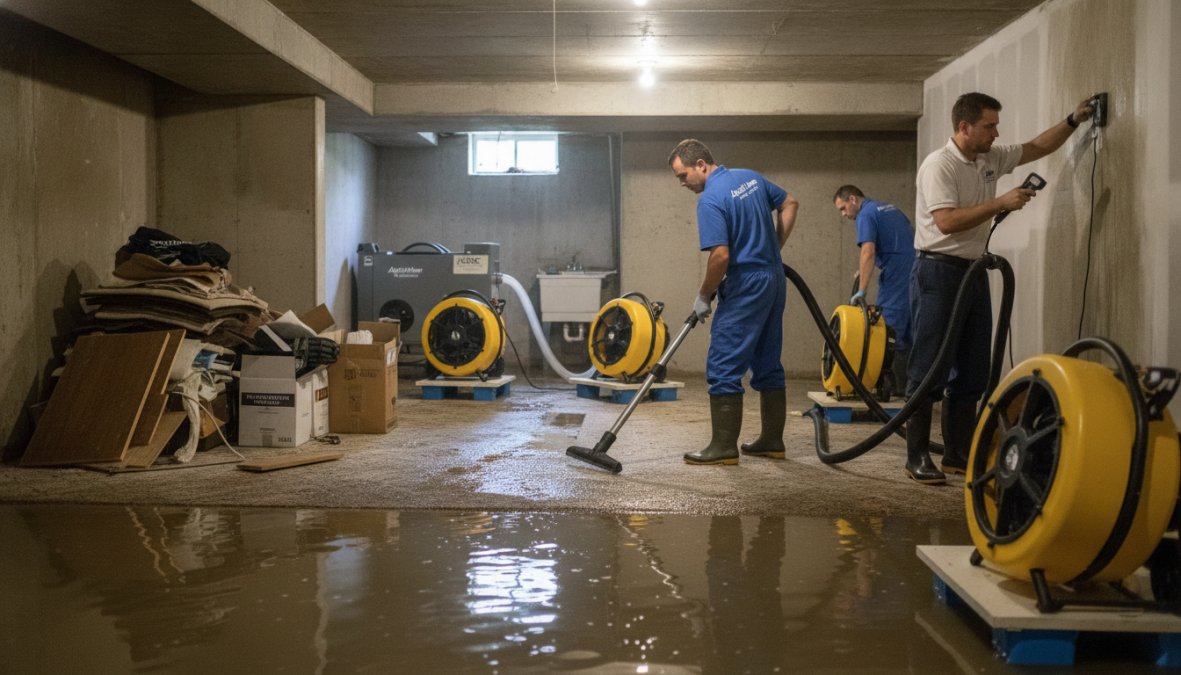
Industrial-grade submersible pumps and truck-mounted extractors remove standing water far faster than homeowner equipment. A typical living room with 2 inches of standing water can be extracted in 2-4 hours.
After extraction, structural drying begins. Air movers create circulation while dehumidifiers pull moisture from air and materials. Moisture mapping using thermal imaging and hygrometers identifies wet spots hidden inside walls, under flooring, and in crawlspaces. Materials are considered dry when moisture content returns to normal levels (typically 12-15% for wood). This process usually takes 5-7 days for typical residential water damage.
Professional dehumidification prevents mold remediation costs later. Many homeowners skip this step thinking they can dry naturally, then call back in 2 weeks when black mold appears. By then, remediation costs triple.
The difference between a $5,000 restoration and a $20,000 restoration often comes down to whether structural drying happened properly in the first week. Skipping professional dehumidification almost always leads to mold growth and costlier remediation later.
Mold Remediation and Prevention
Mold appears within 24-48 hours in wet environments and spreads rapidly through HVAC systems and wall cavities. Professional mold remediation involves identifying the extent of growth, containing the affected area, removing contaminated materials, treating surfaces with antimicrobial solutions, and verifying remediation with post-clearance testing. Mold embedded in drywall or insulation cannot be cleaned, it must be removed.
Health hazards include respiratory issues, allergic reactions, and infections, especially in people with compromised immune systems, children, and the elderly. Professional mold remediation uses negative air pressure systems and HEPA filtration to prevent spore spread throughout the home.
Remediation costs depend on material removal scope. A small localized mold colony might cost $1,500-$3,000. Widespread mold throughout a basement can exceed $10,000. Yet this cost is often avoidable if structural drying happens properly in the first week.
Filing a Water Damage Insurance Claim
Documentation and Direct Billing Support
Your insurance company requires detailed documentation: photos taken immediately after the incident, a written description of what happened, itemized lists of damaged property, and a professional damage assessment from the restoration company. More documentation means faster claim approval.
Working with a restoration company that handles direct billing is invaluable. When Aquaflame Restores it manages your claim, we document everything according to insurance standards, communicate directly with your adjuster, and bill the insurance company directly rather than requiring you to pay out of pocket. This eliminates cash flow burden during a stressful time.
Sudden water damage from a burst pipe is typically covered under homeowner’s policies. Gradual water damage from slow leaks is often excluded. Flood damage almost never is covered by standard homeowner’s insurance, it requires a separate flood policy. Sewage backup is sometimes covered but often requires an endorsement.
Take photos of the water source if possible: the burst pipe, roof damage, or overflowing toilet. These photos help your insurance company understand the cause and approve claims faster.
DIY vs. Professional Water Damage Restoration
When to Call a Professional
DIY water removal makes sense for minor incidents: a small toilet overflow, contained bathtub overflow, or small roof leak affecting only one room. If the affected area is less than 10 square feet and the water is Category 1 (clean), you can often manage cleanup yourself using a wet/dry shop vacuum and box fans.
Beyond that threshold, professional restoration becomes necessary. If water has spread beyond one room, reached the subfloor or crawlspace, is Category 2 or 3, or more than 48 hours have passed, professional restoration is the only approach that prevents costlier problems later.
The financial math is simple: professional mitigation costs $3,000-$8,000. Mold remediation for mold that grows because mitigation was skipped costs $10,000-$25,000. Full reconstruction costs $30,000-$100,000+. Professional mitigation is the cheapest option by far.
Professional restoration also provides liability protection and insurance documentation. Insurance companies trust documented professional work far more than homeowner DIY efforts.
| Damage Scenario | DIY Appropriate? | Why or Why Not |
|---|---|---|
| Small toilet overflow, one room, Category 1 | Yes | Water is clean, limited spread, quick drying possible |
| Burst pipe affecting multiple rooms | No | Water spreads to subfloor, walls, requires equipment |
| Roof leak in attic | No | Water reaches insulation, structural components, mold risk |
| Sewage backup | No | Category 3 water requires hazmat protocols |
| Flooding from external water | No | Volume and contamination require professional extraction |
Post-Restoration Maintenance and Prevention
Once your property is restored, preventing future water damage requires understanding common causes and taking preventive steps.
Burst pipes are the leading cause of water damage claims. Prevent them by insulating exposed pipes in cold areas, maintaining water pressure within normal ranges (40-80 PSI), and having plumbing inspected annually. If you have hard water, water softening reduces pipe corrosion.
Roof leaks cause significant damage over time. Inspect your roof annually, especially after storms. Look for missing shingles, damaged flashing, and pooling water. Clean gutters quarterly. Replace roof components showing wear before they fail.
Sump pump failures cause basement flooding. Test monthly by pouring water into the pit to verify activation and drainage. Have a backup power source in case of outage during heavy rain. Replace sump pumps every 5-10 years.
Foundation cracks allow groundwater infiltration. Seal cracks immediately. Ensure grading around your foundation slopes away from the house so water drains away rather than pooling.
If you’ve experienced water damage once, you’re at higher risk for it happening again in the same location. The original cause often persists unless specifically addressed. Ask your restoration company what caused your damage and what preventive measures to take.
Water damage doesn’t resolve itself. Every day without professional intervention increases the risk of mold, structural damage, and costlier repairs. If water has entered your home, contact Aquaflame Restores it immediately for a 30-minute emergency response. Our IICRC-trained technicians handle extraction, structural drying, mold remediation, and reconstruction. We manage direct insurance billing so you’re not out of pocket during recovery. Call 24/7 for emergency water damage restoration.
Frequently Asked Questions
What is the typical process for water damage restoration?
Water damage restoration follows a structured process: emergency assessment and water removal using specialized extraction equipment, followed by structural drying with air movers and dehumidifiers, moisture mapping to identify hidden moisture, mold remediation if needed, and finally reconstruction and sanitization. IICRC-certified technicians use thermal imaging and hygrometers to ensure all moisture is eliminated before restoration begins. The timeline depends on damage severity and category of water involved.
How do I know if water damage is DIY-fixable or requires professional restoration?
Small, clean water damage (Category 1) from a burst pipe affecting less than 24 hours' exposure may be manageable with extraction and dehumidification. However, category 3 water (sewage backup or contaminated flood water), structural damage, mold growth, or damage affecting more than one room requires professional water damage restoration. Professionals have thermal imaging, moisture mapping tools, and decontamination expertise to prevent hidden mold and ensure proper insurance documentation.
Does homeowner's insurance cover water damage restoration?
Coverage depends on your policy and the damage source. Sudden burst pipes or storm-related flooding are typically covered, but gradual leaks or sewage backups may not be. Direct billing with your insurance company streamlines the process, professional restoration services handle claims documentation, moisture assessment reports, and clearance certificates your adjuster requires. Always review your specific policy and consult your insurer before starting restoration work.
What makes professional water damage restoration different from DIY cleanup?
Professionals use IICRC-certified protocols, thermal imaging, hygrometers, and moisture mapping to locate and eliminate all moisture, preventing hidden mold growth and structural damage. They handle decontamination of category 3 water, provide insurance-required documentation and clearance certificates, coordinate full reconstruction, and offer 24/7 emergency response. DIY methods typically miss subsurface moisture, leading to mold returning months later, costly repairs, and potential health hazards from contaminated water exposure.
This article was written using GrandRanker