Table of Contents
- Water Extraction vs Water Mitigation Explained: What Each Term Actually Means
- Water Extraction: Removing the Water That’s Already There
- Water Mitigation: The Bigger Job of Stopping the Damage
- The Water Damage Restoration Process: Where Extraction and Mitigation Fit
- Flooded Basement Cleanup: A Real-World Example
- Structural Drying After Water Damage: The Step That Prevents Mold
- Your Water Damage Insurance Claim: What Gets Covered
- When to Call a Professional for Water Mitigation and Extraction
- Frequently Asked Questions
Last Updated: October 8, 2026
Water Extraction vs Water Mitigation Explained: What Each Term Actually Means
When a pipe bursts or a supply line fails, the words on the invoice matter almost as much as the drying equipment in your hallway. Water extraction vs water mitigation explained simply: extraction is the physical removal of standing water, while water mitigation is the broader work of stopping damage from spreading, drying the structure, and preventing mold. At Aquaflame Restores it, we see this confusion constantly. Homeowners call us mid-emergency, hear two different terms from two different contractors, and have no idea which service they actually need.
Here is the short answer. Extraction is one step inside mitigation. Mitigation is the whole job.
That distinction matters because it shapes your FEMA guidance on flood-damaged property claim, your timeline, and how quickly your home becomes livable again. Below, we break down what each term covers, how they fit into the water damage restoration process, and when you genuinely need a professional crew on site.
Water Extraction: Removing the Water That’s Already There
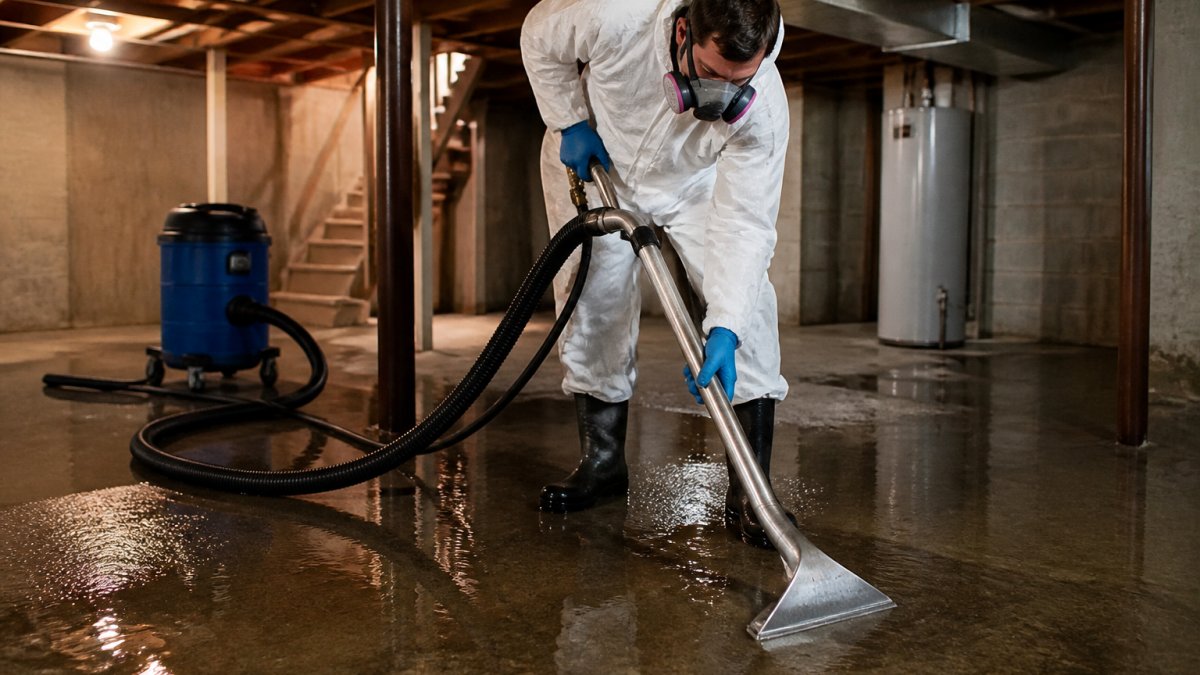
Water extraction is the mechanical removal of standing water from a property using pumps, wet vacuums, and extraction wands. It is the first physical action taken after water intrusion, and it targets the water you can see.
The equipment matters more than most people realize. Truck-mounted extractors pull water out of carpet and pad far faster than a shop vac ever could. In a flooded basement, that speed is the difference between saving drywall and replacing it.
What extraction does not do:
- It does not dry the materials water soaked into
- It does not address moisture trapped inside wall cavities
- It does not stop mold from forming in the days that follow
That is the gap where mitigation picks up.
Water Mitigation: The Bigger Job of Stopping the Damage
Water mitigation is the full set of actions taken to limit and prevent further damage after water intrusion, including extraction, drying, dehumidification, and moisture monitoring. Where extraction removes water, mitigation manages the entire aftermath.
A mitigation plan typically includes stopping the water source, extracting standing water, placing air movers and dehumidifiers, checking moisture levels in walls and floors, and documenting everything for your insurer. It also means knowing when materials like saturated drywall or insulation simply have to come out.
Extraction is a task. Mitigation is a strategy. Every mitigation job includes extraction, but extraction alone is never a complete mitigation job.
The practical difference shows up in your basement three days later. A crew that only extracted water leaves you with damp framing and a musty smell. A crew running full mitigation leaves you with verified dry readings.
The Water Damage Restoration Process: Where Extraction and Mitigation Fit
Restoration follows a sequence, and both terms occupy different points on that timeline. Understanding the order helps you ask better questions when a crew arrives.
- Emergency response and assessment – Identify the water source and categorize contamination
- Water extraction – Remove standing water with pumps and extractors
- Structural drying after water damage – Position air movers and dehumidifiers
- Moisture monitoring – Track readings until materials reach dry standard
- Cleaning and antimicrobial treatment – Address contamination and odors
- Repairs and reconstruction – Replace materials that could not be saved
Notice that extraction is step two of six. That is the cleanest way to hold the distinction in your head: extraction is a moment in time, mitigation is the arc that contains it.
Flooded Basement Cleanup: A Real-World Example
Picture a finished basement after a sump pump fails overnight. Two inches of water cover the carpet, and the bottom of the drywall is wet.
A crew arrives and extracts the standing water in under an hour. That is extraction, and it is done. But the carpet pad is saturated, the baseboards have absorbed water, and the relative humidity in the room is climbing. If the job stopped there, mold would likely begin colonizing within a day or two. Comprehensive drying requires addressing these hidden moisture reservoirs, often necessitating specialized techniques like hot water extraction to restore delicate materials safely.
Full mitigation continues: the pad comes out, air movers get positioned along the walls, a dehumidifier runs continuously, and a technician returns to take moisture readings until the framing hits its dry standard. Only then is the job finished.
For flooded basement cleanup, the extraction phase is fast. The mitigation phase is what takes days, and it is the phase that determines whether you are dealing with a repaired basement or a mold remediation project.
Structural Drying After Water Damage: The Step That Prevents Mold
Structural drying after water damage is the controlled process of removing moisture from building materials until they return to a normal moisture content. It is the longest and most important part of mitigation.
Water hides in places you cannot see: inside wall cavities, under hardwood, beneath tile, and in ceiling assemblies above the visible stain. Air movers keep air circulating across wet surfaces, while dehumidifiers pull that moisture out of the air so it does not settle back into the materials.
The most common mistake we see is homeowners running box fans and calling it drying. Fans move air but do not remove moisture from it. Without dehumidification, you are simply redistributing water through the room.
Drying is not finished when surfaces feel dry to the touch. It is finished when a moisture meter confirms the materials have reached their dry standard. That verification is also what protects you if mold shows up later and your insurer asks whether the drying was done properly.
Your Water Damage Insurance Claim: What Gets Covered
Most homeowner policies cover sudden and accidental water damage, and they typically cover both extraction and mitigation as part of a single claim. The catch is documentation.
Insurance carriers want to see what happened, what was wet, what was removed, and what readings confirmed the structure was dry. A crew that extracts water without logging moisture readings leaves you with a weak claim and a disputed invoice.
This is where direct insurance billing changes the experience. Instead of you collecting paperwork and chasing an adjuster while your floors are still wet, the restoration company documents the loss and bills the carrier directly. The Insurance Information Institute’s guidance on filing home claims recommends keeping records of every step, which is exactly what a proper mitigation file contains.
One honest caveat: coverage depends on your policy and the cause of the loss. Long-term seepage and neglected maintenance are commonly excluded, while a burst supply line usually is not.
When to Call a Professional for Water Mitigation and Extraction
Call a professional when water has reached wall cavities, when the affected area is larger than a few square feet, when the water is contaminated, or when the source is sewage or outdoor flooding. Those situations exceed what household equipment can handle safely.
Contaminated water deserves special caution. EPA guidance on sewage and floodwater cleanup treats sewage and outdoor floodwater as hazardous, requiring protective equipment and proper disposal. Category 3 water, sometimes called black water, should never be handled with bare hands and a shop vac.
There is also a timing argument. Mold can begin developing within roughly a day or two of water intrusion, so the window for a simple drying job closes quickly. Calling early keeps the job in the extraction-and-drying category instead of the mold remediation category.
For property managers, the calculus is different but the urgency is the same. A sprinkler discharge in a tenant space means coordinating extraction, drying, and reconstruction without leaving the tenant displaced for weeks. A single crew handling all three phases removes the scheduling gaps that stretch downtime.
Ask any restoration company two questions before you hire them: are your technicians IICRC-trained, and can you bill my insurance directly? Those two answers tell you more about the job you will get than any price quote.
Water damage rarely waits for a convenient moment, and the difference between a quick recovery and a months-long mold problem comes down to how fast a trained crew gets on site. Aquaflame Restores it handles the entire job with one team: 24/7 emergency response, a 30-minute arrival guarantee across metro Atlanta, IICRC-trained technicians, direct insurance billing, and full reconstruction once the structure is dry. Get started with Aquaflame Restores it and let one crew take your property from flooded to finished.
Frequently Asked Questions
Will homeowners insurance cover a flooded basement?
Homeowners insurance typically covers sudden and accidental water damage, such as a burst pipe or appliance failure, which includes flooded basement cleanup. However, damage from neglected maintenance or surface water flooding is usually excluded. Review your policy and document the cause immediately. A restoration company can help you file your water damage insurance claim and communicate directly with your adjuster to support coverage.
How long does it take for a flooded basement to dry out?
Drying time depends on the water category, the size of the affected area, and the materials involved. With professional structural drying after water damage, most basements dry within 3 to 5 days. Extraction removes the bulk of the water in hours, but hidden moisture in drywall, insulation, and framing requires air movers and dehumidifiers running continuously. Technicians monitor moisture levels daily to confirm when drying is complete.
Can water in the basement cause mold?
Yes. Mold can begin growing within 24 to 48 hours of water intrusion. That’s why water mitigation starts immediately, even if extraction is delayed. Removing standing water, drying structural materials, and controlling indoor humidity all reduce the chance of mold. If mold is already present, professional remediation is needed because disturbing mold without containment can spread spores to other parts of the home.
What is the difference between water extraction and water mitigation?
Water extraction is the physical removal of standing water using pumps and vacuums. Water mitigation is the broader process of limiting damage after a water event, which includes extraction, structural drying, moisture monitoring, and sometimes mold prevention. Extraction is one step within mitigation. Both are part of the water damage restoration process, but mitigation focuses on stopping further harm while extraction focuses on removing the water itself.
Is water extraction part of water mitigation?
Yes. Water extraction is a core component of water mitigation. Mitigation covers all actions taken to reduce loss, including emergency water removal, setting up drying equipment, and applying antimicrobial treatments. Once mitigation stabilizes the property, restoration repairs the damage. If you file a water damage insurance claim, your policy may cover both mitigation and restoration as separate line items.