
Last Updated: November 5, 2026
Quick Summary
Basement wall moisture is water finding a path into your foundation, so the fix depends on which path it takes: groundwater seepage, a plumbing leak, or condensation. Trace the source first, then match the repair to it, because sealing a condensing wall can trap moisture in the concrete.
- Seepage usually appears at the wall base or floor joint one to three days after rain.
- White powder called efflorescence is a reliable sign of moisture moving through concrete.
- Add downspout extensions and regrade soil so runoff slopes away from the foundation.
- Winter moisture is often condensation, so insulate cold pipes and the rim joist area.
- Patch only hairline cracks yourself; larger cracks, bowed walls, or floor joint water need a professional.
Table of Contents
- How to Fix Basement Wall Moisture Issues: Start With the Source
- Moisture in Basement After Rain: Tracking Surface Water and Seepage
- How to Fix Basement Wall Moisture Issues in Winter
- How to Fix Basement Wall Moisture Issues DIY: A Step-by-Step Repair
- How to Keep Basement Dry Without Dehumidifier
- Repair Options Ranked by Severity, Disruption, and Effort
- When to Call Aquaflame Restores It for a Free Assessment
- Frequently Asked Questions
How to Fix Basement Wall Moisture Issues: Start With the Source
Basement wall moisture is water finding a path into your foundation, and the fix depends entirely on which path it takes. Homeowners often seal a damp wall, then watch the stain return within a season. The sealant was never the problem. The source was.
Below, we’ll show you exactly how to trace that source before you spend a weekend on repairs. The sections here follow a diagnose-then-fix order.
Three Sources, Three Different Fixes
Most wet basements trace back to one of three sources:
- Groundwater and seepage pushing through cracks and porous concrete
- Plumbing leaks from supply lines, water heaters, or drains
- Condensation from warm, humid air meeting cold surfaces
Each one needs a different repair. Sealing a condensation problem traps moisture. Running a dehumidifier against a plumbing leak wastes power for months.
Here’s the diagnostic that separates them.
| Clue | Condensation | Plumbing Leak | Groundwater Seepage |
|---|---|---|---|
| When it appears | Humid days, summer | Constant or when fixture runs | After rain, 1-3 days later |
| Where it shows | Pipes, cold walls, floor edges | Near fixtures or water heater | Wall base, floor joint, cracks |
| What it looks like | Beaded droplets, no tide line | Steady drip, warm spot | Dark stain, white powder |
| Smell | Musty | None, or sulfur | Earthy, damp |
| Quick test | Dry a patch, check in 24 hours | Shut off water, watch meter | Check after next storm |
That white powder is efflorescence, salt pushed out as water moves through concrete. It’s a reliable sign of moisture penetration, not just surface damp.
Moisture in Basement After Rain: Tracking Surface Water and Seepage
Moisture in basement after rain almost always means surface water is pooling against the foundation instead of draining away. Georgia’s clay soil makes this worse.
Walk the outside of the house during the next storm. Watch where water goes:
- Gutters overflowing at the seams
- Downspouts dumping water within a few feet of the foundation
- Downspout extensions missing or too short
- Grading sloping back toward the house
- Surface drainage blocked by mulch, leaves, or settled soil
The fix is usually cheap and unglamorous. Add downspout extensions to move water several feet from the wall. Regrade soil so it slopes away. Clear gutters before storm season, not after.
If water still seeps in after that, the problem runs deeper than surface drainage. For a deeper walkthrough on keeping storm water out, see 7 ways to prevent basement flooding in Atlanta homes.
How to Fix Basement Wall Moisture Issues in Winter
Winter moisture looks different from summer seepage, and the cause is usually condensation rather than groundwater. Georgia cold snaps push outdoor temperatures down fast while basement air stays warm and humid.
A second winter mechanism is freeze-thaw. When saturated clay soil around the foundation freezes and expands, then thaws, it can shift slightly against the wall. That movement widens existing hairline cracks and opens the floor joint.
Watch for these signs:
- Wet pipes and sweating supply lines
- Damp patches near the rim joist
- Fogged windows in the basement
- A musty smell that appears only in cold months
- New white powder or a fresh stain line at the wall base after a thaw
Measure Before You Fix
Condensation and seepage need opposite responses, so measure first. A cheap hygrometer placed at mid-wall height tells you the basement’s relative humidity. Sustained humidity above roughly 50 to 60 percent is a common condensation risk in cool weather. A moisture meter pressed against the wall tells you whether the concrete itself is wet (seepage) or dry with surface droplets (condensation). Take both readings on a cold morning and again after a rain, and write them down.
The Winter Fix Sequence
- Insulate cold water pipes with foam sleeves so they stop acting as condensing surfaces.
- Insulate the rim joist area where warm interior air meets the cold foundation top.
- Keep basement vents and interior doors open so humid air does not stratify in one corner.
- Run a fan to move air across cold walls; still air condenses, moving air does not.
- Recheck the hygrometer after a week. If humidity stays high with the heat running, the source is likely air leakage from upstairs, not the wall.
- Watch outdoor faucets and exposed pipes during a freeze, because a burst pipe does far more damage than condensation ever will.
Watch out: sealing a condensing wall from the inside can trap moisture in the concrete and push the problem to the floor joint. Fix the cold surface and the air first, then reassess.
If a pipe does freeze and split, shut off the main and call for help before the thaw floods the space. Our guide to preventing frozen pipe bursting in winter covers the cold-snap checklist, and our professional water damage restoration and extraction service handles the cleanup if a line lets go.
How to Fix Basement Wall Moisture Issues DIY: A Step-by-Step Repair
Small seepage through hairline cracks is a reasonable DIY job. Larger cracks, bowed walls, or water coming through the floor joint need a professional assessment.
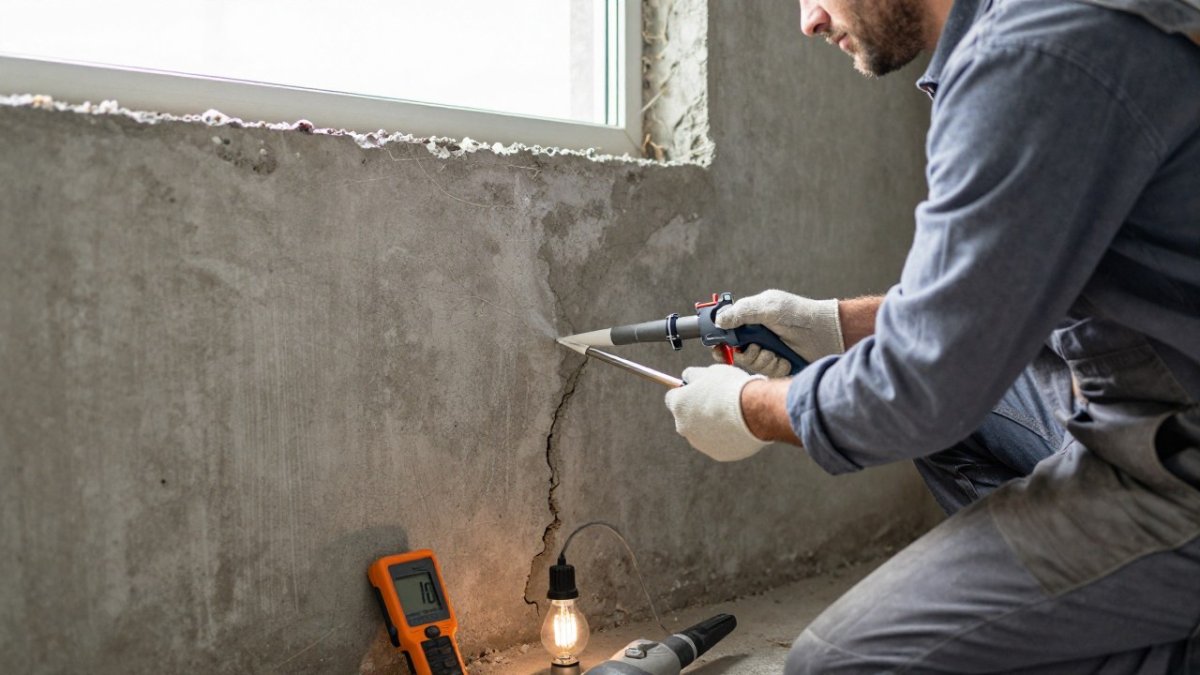
What you’ll need: safety glasses, gloves, a wire brush, a caulk gun, hydraulic cement or a concrete patching compound, and a moisture meter.
Total time: 2-4 hours, plus curing.
- Dry the area. Run a fan for a day so the crack is dry before you touch it.
- Widen the crack slightly with a chisel to create a key for the patch.
- Clean it out with a wire brush and remove loose material.
- Apply hydraulic cement into the crack, pressing firmly from the bottom up.
- Feather the edges smooth and let it cure per the label.
- Check with a moisture meter after the next rain to confirm the leak stopped.
Watch out: patching a crack from the inside while water is still active will fail. The patch pops out within weeks. Stop the water path first.
How to Keep Basement Dry Without Dehumidifier
You can keep a basement dry without a dehumidifier by controlling air movement, insulation, and outdoor drainage, but only if you measure the result. Without numbers, you are guessing, and damp basements rarely announce themselves until mold has already started.
Set a Target and Measure It
A hygrometer costs little and gives you a number instead of a feeling. Place one at mid-wall height, away from the door and any vent.
Pair the hygrometer with a moisture meter on the walls. A dry surface reading with high room humidity points to condensation. A wet wall reading with normal room humidity points to seepage. The two tools together do more diagnostic work than any single product.
The No-Machine Routine
- Vent the space on dry, cool days, and close it up when outdoor humidity is higher than indoor.
- Insulate cold pipes and walls to stop condensation at the surface.
- Seal gaps around windows and the rim joist so humid summer air stops leaking in.
- Move air with a box fan near damp corners; still air is where condensation collects.
- Manage humidity by keeping the basement door open to the conditioned part of the house when the AC is running, since that air is already dehumidified.
- Keep the floor joint dry by clearing debris and checking that outdoor grading still slopes away after settling.
- Monitor with the hygrometer so you catch swings before they become stains.
A common mistake is sealing the basement tight without ventilation. That traps humidity and feeds mold. Air circulation matters more than any single product, and a fan running on low is cheaper than replacing framing later.
Verify the Fix
After two weeks, compare your log to the starting readings. If humidity dropped into range and the walls read dry after a rain, the routine is working. If the hygrometer stays high with the fan running, the moisture is coming from somewhere the air cannot reach, a hidden leak, a wet floor joint, or groundwater the surface fixes did not address.
If you smell mold, check for it before you close things up. Keep DIY cleanup to small areas of about 10 square feet or less on a hard surface; anything larger, hidden behind drywall, or fed by contaminated water needs professional help.
Repair Options Ranked by Severity, Disruption, and Effort
Match the repair to the severity. Overspending on a minor leak wastes money. Underspending on a structural problem wastes the whole job.
| Severity | Typical Fix | Disruption | Effort |
|---|---|---|---|
| Minor seepage | Sealant and crack patching | Low | Weekend DIY |
| Surface water | Downspout extensions, regrading | Low | Weekend DIY |
| Condensation | Insulation, ventilation, air circulation | Low | Ongoing habit |
| Active plumbing leak | Repair or replace the line | Medium | Call a plumber |
| Persistent seepage | Professional drainage and wall sealing | High | Professional |
The pattern is simple. Start with the cheapest fix that matches the symptom, then escalate only if the water returns. Moisture problems come back when the root cause isn’t fixed, which is why fixing the root cause for good beats repeated patching.
When to Call Aquaflame Restores It for a Free Assessment
Call a professional when water is active, the affected area is large, or mold is present.
We handle the water damage itself, including emergency extraction and mold remediation, plus plumbing repairs.
If you’re in Cobb, Clayton, Henry, or Gwinnett and the stain keeps coming back, that’s your signal. See our professional water damage restoration and extraction service to get it handled.
Frequently Asked Questions
How can I tell whether basement wall moisture is condensation or a leak?
Tape a square of aluminum foil to the wall and leave it for a day. If moisture beads on the foil’s room-facing side, you have condensation from humid air hitting a cold surface. If the wall behind the foil is wet while the foil face stays dry, water is coming through the wall itself, which points to seepage or a leak. A cheap moisture meter confirms it: readings that climb after rain mean groundwater; readings that stay flat while indoor humidity spikes mean condensation.
What should I do if basement walls get damp after rain?
Note which walls get damp and how soon after the storm. Dampness within hours on the uphill side points to surface water running along the foundation. Check that gutters are clear and that downspouts discharge several feet away from the wall, then look for cracks and open joints where water enters. Dry the wall with fans, run a dehumidifier, and seal cracks once the wall is dry. If water still appears after the next storm, the problem is bigger than a sealant fix.
Can I remove mold from a basement wall myself?
Small patches, roughly 10 square feet or less, on a hard surface can be cleaned with a detergent solution, then dried completely. Wear gloves, eye protection, and an N95 respirator. Anything larger, mold behind drywall or paneling, mold on porous materials, or mold in a crawl space should go to a professional. Hidden mold usually means an unresolved moisture source, and cleaning without fixing that source just buys time. Aquaflame Restores It offers free assessments if you are unsure.
How do I keep a basement dry without a dehumidifier?
Move water away from the foundation first: clear gutters, extend downspouts, and grade soil so it slopes away from the walls. Keep the space ventilated when outdoor humidity is low, seal cracks and open joints, and insulate cold walls and pipes so humid air does not condense on them. Store items off the floor and away from walls to keep air circulating. In Atlanta’s humid summers, these steps reduce moisture load but rarely replace mechanical drying entirely.
Basement wall moisture rarely fixes itself, and a stain that returns after every storm is telling you the source was never addressed. If you’ve sealed, regraded, and still see damp concrete, it’s time to stop guessing. Aquaflame Restores It offers free damage assessments, direct insurance billing, and IICRC-certified technicians who trace the source before they touch a wall. Call 678-379-8000 and get a clear answer on what’s actually causing the moisture.
