Quick Summary
Signs of sewage contamination include a persistent rotten-egg or sewer odor, slow drains affecting several fixtures at once, and cloudy or discolored water in tubs or floor drains. Raw sewage carries bacteria, viruses, and parasites, so keep people and pets out of the area and call a professional for cleanup.
- A rotten-egg or sewer smell that persists after cleaning deserves attention.
- Slow drains affecting the tub, sink, and toilet together may point to the main sewer line.
- Sewage is classified as Category 3 water, the highest contamination level.
- Porous materials like carpet, drywall, and insulation that absorbed sewage are generally removed.
- Small spills under about 10 square feet on hard surfaces may be cleaned by a homeowner wearing gloves.
Table of Contents
- Why Sewage Contamination Is a Health Issue, Not Just a Plumbing Problem
- Sewer Odors and Slow Drains: The Early Warning Signs
- Raw Sewage Exposure Symptoms to Watch For
- How to Tell If You Have a Sewer Leak in Your House
- Sewage Overflow in House: Visible Water and Contaminated Surfaces
- What to Do If Exposed to Raw Sewage in Your House, in Order
- Booking a Free Assessment for Suspected Sewage Contamination
- Frequently Asked Questions
Signs of Sewage Contamination in Your Home and What to Do
Last Updated: November 6, 2026
Why Sewage Contamination Is a Health Issue, Not Just a Plumbing Problem
Sewage contamination is a health problem first and a plumbing problem second. Knowing the signs early helps you protect your family and your property.
Raw sewage carries bacteria, viruses, and parasites. These germs can cause illness through direct contact, through contaminated surfaces, and through the air when sewer gas and damp materials are present.
- Sewage can reach floors, walls, and personal belongings within minutes
- Contaminated water can soak into drywall, carpet pads, and subfloors
- Mold often starts within a day or two in wet building materials
Sewer Odors and Slow Drains: The Early Warning Signs
A rotten-egg or sewer smell is often the first clue. The odor usually grows stronger near floor drains, toilets, or the basement. Many homeowners mistake it for an ordinary drain smell, but a persistent odor that does not go away after cleaning deserves attention.
Slow drains that affect several fixtures at once are another warning sign. If the bathtub, sink, and toilet all drain slowly, the problem may be in the main sewer line rather than a single clog.
Cloudy or discolored water in a tub or floor drain can also point to a sewer problem. Water pooling in the yard near a cleanout can signal a blockage further down the line.
Raw Sewage Exposure Symptoms to Watch For
Sewage exposure can cause illness, and symptoms may appear within hours or take several days to develop. The germs in raw sewage, bacteria such as E. coli and Salmonella, viruses such as norovirus and hepatitis A, and parasites such as Giardia and Cryptosporidium, reach people through a few predictable routes. Knowing the route matters as much as knowing the symptom, because it tells you what to keep clean while you wait for help.
How people actually get exposed
- Direct contact: touching sewage, standing water, or a contaminated surface and then touching your mouth, eyes, or an open cut
- Hand-to-mouth transfer: handling contaminated items, toys, or pet bowls before washing up
- Aerosols: splashing from a running fixture, a wet-vac, or a hose sprayer can lift contaminated droplets into the air
- Contaminated food or water: preparing food in a kitchen where a backup occurred, or drinking from a fixture on an affected line
- Wound contact: a cut or scrape on the foot or hand that meets contaminated water
Symptoms to watch for
- Diarrhea, sometimes bloody
- Nausea or vomiting
- Abdominal cramps
- Fever
- Skin rashes, redness, or infections after contact with contaminated surfaces
- Eye irritation or respiratory irritation after breathing sewer gas or damp, contaminated air
Symptoms may start within hours for some illnesses and take several days for others, so a delay does not rule out exposure. Keep a simple written log of who was in the affected area, when, and what they touched, that record helps a doctor and helps your insurance file.
When to seek urgent medical attention
Mild stomach upset after brief contact may resolve on its own, but some situations warrant prompt care. Seek urgent medical attention if any of the following apply:
- Bloody diarrhea, or diarrhea that lasts more than a day or two
- Vomiting that prevents keeping fluids down, or signs of dehydration such as dizziness, dark urine, or a dry mouth
- High fever, or fever with severe abdominal pain
- Symptoms in a child, an older adult, a pregnant person, or anyone with a weakened immune system
- A cut or scrape that was exposed to sewage and becomes red, swollen, warm, or draining
- Yellowing of the skin or eyes, or dark urine, which can signal hepatitis
Tell the provider you were exposed to sewage, when, and where on the body, so they can consider the right tests. Do not assume a symptom confirms sewage exposure, and do not assume a lack of symptoms means the area is safe, the contamination is still there until it is cleaned and disinfected.
While you wait for professional help
Keep everyone out of the affected area, wash hands with soap and water after any contact with the space, and do not prepare food in a kitchen where a backup occurred. For steps on handling cleanup safely, see our step-by-step water clean up guide for homeowners. Anyone who handled contaminated items should change clothes and shower. Pets that walked through the area should be kept off furniture and bedding until they are cleaned. Our IICRC-certified technicians can assess the space and document conditions for your insurance claim.
How to Tell If You Have a Sewer Leak in Your House
Use this simple room-by-room check to see whether contamination is likely:
| Area | What to Look For | Why It Matters |
|---|---|---|
| Bathroom | Odor near toilet, water at base | Toilet or wax seal failure |
| Kitchen | Slow sink drains, gurgling | Main line or vent issue |
| Basement | Standing water, drain odor | Floor drain or sewer backup |
| Laundry | Water near the floor drain | Shared line blockage |
| Yard | Soggy spots near cleanout | Buried line damage |
Clean water leaks from supply lines often smell like nothing at all. Sewage almost always carries an odor and may look gray, brown, or cloudy. If you are unsure, do not touch the water and call a professional.
Document what you see with dated photos and notes. This record helps with both cleanup planning and insurance claims.
Sewage Overflow in House: Visible Water and Contaminated Surfaces
When sewage overflows into a home, it contaminates everything it touches, and the contamination does not stay where the water pooled. Sewage is classified as Category 3 water, the highest contamination level, because it carries pathogens that can cause illness on contact. That classification drives every cleanup decision that follows.
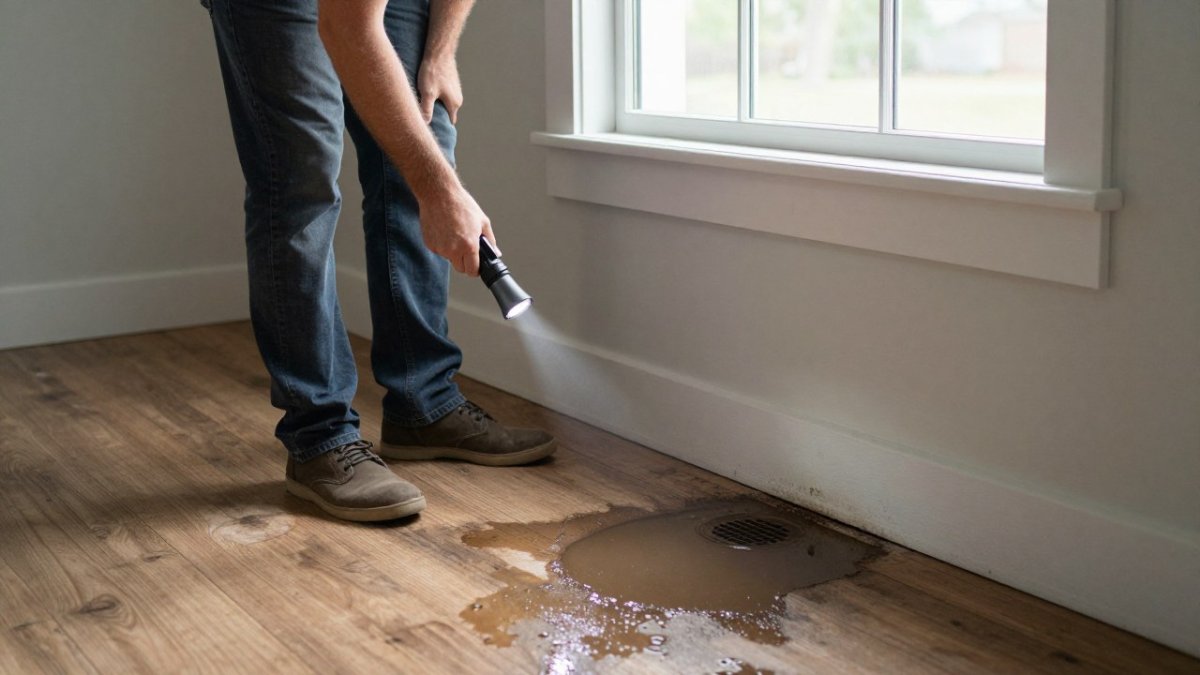
How contamination spreads beyond the puddle
- Capillary action pulls contaminated water up into drywall, trim, and the base of cabinets
- Carpet and padding wick moisture outward, so the wet spot you see is often smaller than the contaminated area
- Subfloor and framing absorb water and hold it, keeping the space damp long after the surface looks dry
- Sewer gas and damp air carry odors and contaminants into adjacent rooms through gaps and shared ductwork
- Georgia humidity can slow drying, giving mold a head start on damp materials
What usually cannot be saved
Porous materials that have absorbed sewage contamination are generally removed rather than dried in place:
- Carpet, carpet padding, and area rugs
- Drywall and insulation that were wet
- Upholstered furniture and mattresses that were contacted
- Cardboard, paper goods, and open food
- Ceiling tiles and other porous ceiling materials
What can often be saved with professional cleaning
Hard, non-porous surfaces and many belongings can be cleaned and disinfected when the contamination is addressed promptly:
- Tile, vinyl, and sealed concrete floors
- Metal and sealed wood furniture
- Appliances that did not take water into their internal components
- Dishes, utensils, and hard toys, after washing and sanitizing
- Clothing and linens, after a hot wash and dry cycle
When in doubt, treat an item as contaminated. A restoration technician can tell you which belongings are salvageable and which should be documented and discarded, and contents pack-out lets you get the rest of the house back in order while the affected area is cleaned.
Where DIY cleanup stops
A small spill on a hard surface, roughly 10 square feet or less, can be cleaned by a homeowner wearing gloves and eye protection, with the area kept off-limits until it is dry. Anything larger, any water that soaked into porous materials, any hidden contamination behind cabinets or under flooring, and any Category 3 water should be handled by trained technicians. Sewage cleanup is not a mop-and-bleach job; it requires extraction, removal of contaminated materials, disinfection, and controlled drying, and doing it incompletely leaves pathogens and moisture behind.
Staying safe until help arrives
Stay out of standing water that may be sewage. Keep children and pets away from the area. Turn off power to affected circuits only if you can do so safely without standing in water. Do not run a wet-vac or a box fan in a contaminated space, because both can spread contaminated droplets and odors.
Watch out: a space that smells clean after a surface wipe-down is not necessarily clean, because pathogens can persist on porous materials and in hidden cavities long after the visible water is gone.
Aquaflame Restores It responds 24/7 and is on site within one hour across metro Atlanta, including Decatur, DeKalb, Clayton, Cobb, and Henry counties. Our IICRC-certified technicians handle emergency water damage restoration, and we bill insurance companies directly. If moisture is spreading into the walls, our guide to mold remediation in Decatur, GA explains the health risks involved. Call 678-379-8000 for a free assessment.
What to Do If Exposed to Raw Sewage in Your House, in Order
- Keep people and pets out of the affected area.
- Wear gloves and avoid touching your face until you wash your hands.
- Ventilate the space by opening windows if weather allows.
- Shut off water sources feeding the problem if you can reach them safely.
- Take photos and notes for your insurance claim.
- Call a professional restoration company for cleanup and disinfection.
- Contact a doctor if anyone shows symptoms.
Small spills on hard surfaces may be cleaned by a homeowner, but large or hidden contamination, or any water involving Category 3 contamination, should be handled by trained technicians. Aquaflame Restores It is on site within one hour, 24/7, and works with IICRC-certified technicians to extract water, remove contaminated materials, and dry the structure.
Booking a Free Assessment for Suspected Sewage Contamination
If you suspect sewage contamination in your home, you do not have to sort it out alone. Aquaflame Restores It offers free damage assessments across metro Atlanta, including DeKalb, Clayton, Cobb, and Henry counties. We bill insurance companies directly and can pack out contents and handle plumbing repairs as part of the job.
Call 678-379-8000 now for a free assessment. Our team is available 24/7.
Frequently Asked Questions
How long does it take to get sick from sewage exposure?
Symptoms from sewage-borne pathogens can appear within hours to a few days after exposure, depending on the organism and how much contact there was. Gastrointestinal symptoms such as diarrhea, nausea, vomiting, abdominal cramps, and fever are the most common. Skin contact with contaminated water or surfaces can also cause rashes or infections. If symptoms are severe, persistent, or include blood in stool, seek medical care promptly and tell the provider about the sewage exposure. Call 678-379-8000 for a free damage assessment.
What are the symptoms of sewage sickness?
Common symptoms include diarrhea, nausea, vomiting, abdominal cramps, and fever. Some people develop skin rashes or infections after touching contaminated surfaces or water, especially if they have open cuts. Children, older adults, and people with weakened immune systems face higher risk. Any exposure to raw sewage should be treated seriously, and anyone with symptoms that worsen or do not improve should contact a healthcare provider. Keep the affected area closed off and call Aquaflame Restores It at 678-379-8000 for a free assessment.
Is it safe to stay in a house that smells like sewer?
A sewer smell is a warning sign, not something to ignore. It can come from a dry trap, a venting problem, or a leak in the sewer line, and some of those causes release gases into the home. If the odor is strong, comes with slow drains, or appears alongside standing water, limit time in the affected rooms, keep the area ventilated, and have it inspected before staying there long term. If anyone develops symptoms, seek medical advice. Call 678-379-8000 to have the source evaluated.
Who should you call about raw sewage in your home?
Call a professional restoration company rather than relying on a general repair service. Aquaflame Restores It is available 24/7 in metro Atlanta, responds on site within one hour, and offers free damage assessments. Our IICRC-certified technicians work directly with your insurance company. If you are in immediate danger or someone is seriously ill, call 911 first.
