
Last Updated: November 8, 2026
Quick Summary
Most property insurance claim delays come from late reporting, thin documentation, incomplete forms, further damage, and slow follow-up. Report the loss right away, photograph everything before cleanup, stop further damage, and log every call in writing to keep your claim moving.
- Report the loss to your insurer as soon as the damage is safe to inspect.
- Photograph and video each affected room before anything is moved, cleaned, or thrown away.
- Keep receipts for emergency protection and mitigation invoices in one claim folder.
- Log every call and send a short follow-up email confirming what was discussed.
- Do not start permanent repairs until the insurer approves the scope of loss.
Table of Contents
- Why Property Insurance Claims Stall and What Causes the Delay
- Report the Loss to Your Insurer Right Away
- Document the Damage Before Anything Is Moved or Cleaned
- Prevent Further Damage and Keep Your Receipts
- Track Every Call and Send a Clear Follow-Up Email
- How Long a Home Insurance Claim Takes and When to Escalate
- Home Insurance Claim Mistakes to Avoid and Your Next Step
- Frequently Asked Questions
Why Property Insurance Claims Stall and What Causes the Delay
A property insurance claim stalls for a few common reasons, and most of them are within your control. Late reporting, missing photos, and incomplete forms slow the process down more than anything else. Knowing these pitfalls early helps you avoid them.
Here is what usually causes the delay:
- Late reporting. The longer you wait to report water, fire, or mold damage, the more your insurer questions the cause and timing.
- Thin documentation. Vague notes and few photos give the adjuster little to approve.
- Incomplete claim forms. A missing signature or date can send the file back to you.
- Further damage. If the damage grows because no one stopped it, the insurer may dispute what it should cover.
- Slow replies. A claim goes quiet when no one follows up.
These problems come up often in metro Atlanta homes, especially after summer storms and winter pipe bursts. The good news is that each one has a simple fix.
Report the Loss to Your Insurer Right Away
Report the loss to your insurance company as soon as the damage is safe to look at. Speed matters because it shows the insurer you acted in good faith and gives them time to inspect.
Before you call, have these details ready:
- Your policy number
- The date and time you found the damage
- A short description of what happened
- The rooms and belongings affected
Ask for a claim number and write down the name of the representative you speak with. If you call a local restoration team, such as Aquaflame Restores It at 678-379-8000, we can help you get the mitigation started while you report the claim. You can also get a local response within one hour from a team that bills your insurer directly.
Document the Damage Before Anything Is Moved or Cleaned
Your photos, video, and notes are the foundation of your claim, and they are the part of the file you control most directly. Take them before you move, throw away, or clean anything, and organize them so the adjuster can follow the story without calling you back for clarification.
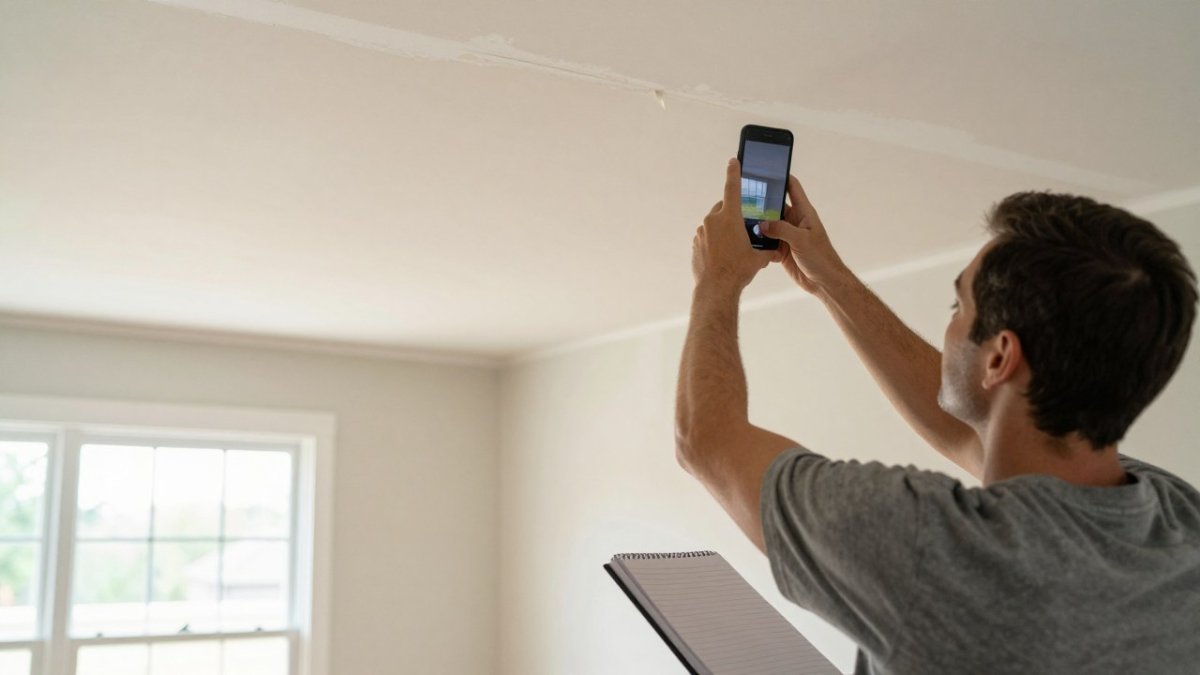
Start with a simple room-by-room routine:
- Take wide photos of each affected room from several angles, including a shot that shows the doorway so the adjuster can orient the room.
- Take close-up photos of water lines, staining, cracked or buckled materials, and any visible mold.
- Record a short video walking through the space and narrating what you see, including the date and the cause as you understand it.
- Write down the date, time, and cause of the damage, and note who was present.
- List damaged items with their age, brand, and approximate value, and photograph each item before it is moved.
Different loss types call for different evidence, and this is where most claim files fall short:
- Water damage. Photograph the source if it is safe to see it (a supply line, a failed fitting, a stained ceiling), the water line on walls and baseboards, and any swelling in cabinets or trim. For the immediate steps that come before cleanup, see what to do after water damage. Note the moisture you can feel, not just what you can see. In older homes with crawl spaces, ask the mitigation team to document moisture readings under the floor, because hidden moisture can be a reason a water claim gets reopened.
- Fire and smoke damage. Photograph charring, smoke staining on walls and ceilings, and the contents of each affected room before board-up or pack-out. Keep the board-up invoice and any contents inventory with your claim file.
- Storm damage. Photograph the interior damage and the point where water entered, and note the date and time of the storm. If water came in through a roof leak, document the ceiling stain and the path the water traveled; the mitigation team handles the water damage, and the documentation shows the adjuster what was affected inside.
- Hidden damage. If damage is found behind a wall or under a floor during mitigation, ask for photos and moisture readings before the area is closed up. This is the evidence that supports a supplement later.
- Contents. Photograph each item, note its condition, and keep a written inventory. If contents are packed out, keep the inventory list and the pack-out paperwork together.
A documentation and submission checklist keeps the file from bouncing back and forth. Keep these in one folder, digital or paper:
- Policy number and claim number
- Photos and video, labeled by room and date
- Written inventory of damaged contents with values
- Receipts for emergency supplies and any emergency services
- Mitigation invoices and moisture readings
- Contractor estimates and any scope notes
- A log of every call, email, and letter, with dates and names
- Copies of everything you send to the insurer
Watch out: Do not throw away damaged items until the adjuster has seen them or confirmed in writing that they can be discarded, unless they pose a health or safety risk. If you must remove something for safety, photograph it in place first and note why it was removed.
If you have water, fire, or mold damage in your Atlanta-area home or business, document it today and report it to your insurer. Then call Aquaflame Restores It at 678-379-8000 for a free assessment. We are on site within one hour, available 24/7, and we work directly with your insurance company to help keep your claim moving.
Prevent Further Damage and Keep Your Receipts
Your policy almost always requires you to prevent additional damage. Stop the water, cover broken windows, and run dehumidifiers or fans if it is safe to do so. Keep every receipt for supplies and emergency services. If mold is already showing up, professional mold removal in Decatur, GA can address it before it spreads further.
Good records to keep:
- Receipts for tarps, fans, or boards used for emergency protection
- Hotel or meal receipts if you cannot stay in your home
- Invoices from mitigation and repair companies
- Notes on the time you spent handling the loss
Watch out: Do not start permanent repairs before the insurer approves the scope. Emergency protection is expected, but full repairs usually need sign-off first.
Track Every Call and Send a Clear Follow-Up Email
A written trail keeps your claim moving. After each phone call, send a short email that confirms what was discussed.
Use a simple log with these columns:
| Date | Contact Name | What Was Discussed | Next Step | Due Date |
|---|---|---|---|---|
| Example: 3/4 | Jane, adjuster | Requested estimate | Send photos | 3/7 |
A follow-up email can be short:
“Hello [Name], thank you for speaking with me today about claim [number]. As discussed, I will send photos of the damage by [date]. Please let me know if you need anything else.”
Follow up every week if you have not heard back. Keep copies of all emails and letters in one folder.
How Long a Home Insurance Claim Takes and When to Escalate
The timeline for a property claim depends on the type of loss, the size of the loss, and how quickly you supply documents.
A practical way to think about the timeline is in phases rather than a single number:
- Report and acknowledgment. You report the loss; the insurer opens a claim and assigns an adjuster. Keep the claim number and the adjuster’s name and direct line.
- Inspection and scope. The adjuster inspects the damage and drafts a scope of loss. This is where missing photos, unclear cause, or unresolved moisture slow things down.
- Documentation and review. You submit estimates, receipts, and contents lists; the insurer reviews them and may request additional information.
- Decision and payment. The insurer issues a decision, and payment follows once the scope and any mortgagee details are confirmed.
- Supplement and close-out. If hidden damage is found during mitigation, a supplement is filed and reviewed before the claim closes.
Treat any timeline you see online as a general estimate rather than a rule, since the pace of a claim depends on the specifics of your loss. Ask your adjuster to confirm in writing the next milestone and the date they expect to reach it.
If the claim stalls, work through these steps in order:
- Ask the adjuster for the specific reason the claim is delayed and the next action they need from you.
- Request the decision or status in writing so you have a record.
- Ask your insurance agent to intervene; agents often have a channel to the claims team.
- If the response is still slow or you believe the claim is not being handled fairly, contact your state insurance regulator and file a complaint. Keep your claim number, correspondence, and a short timeline of events ready.
Watch out: Do not accept a verbal “we’re still reviewing it” as a status update. Ask for the specific missing item or the specific review step, and put your request in writing so the file reflects that you followed up.
Home Insurance Claim Mistakes to Avoid and Your Next Step
A few mistakes cause most avoidable claim problems:
- Waiting days to report the loss
- Throwing away damaged items too soon
- Accepting a first offer without reviewing the estimate
- Ignoring deadlines in the policy or insurer letters
- Hiring repair work before the scope is approved
Your next step is simple. If you have water, fire, or mold damage in your Atlanta-area home or business, document it today and report it to your insurer. Then call Aquaflame Restores It at 678-379-8000 for a free assessment. We are on site within one hour, available 24/7, and we work directly with your insurance company to help keep your claim moving.
Frequently Asked Questions
How long can an insurance company take to process a property claim?
There is no single timeline that applies everywhere, because the length depends on the size of the loss, how quickly documents are returned, and whether the insurer needs an inspection or an expert report. Georgia regulators expect insurers to acknowledge a claim and act on it within reasonable time limits. If your claim has gone quiet, request a written status update, ask for the specific item the insurer is waiting on, and keep a dated record of each request. Written requests create a paper trail that makes it easier to escalate to your state insurance regulator if the delay continues.
What documents help prevent delays in a property insurance claim?
Most delays come from missing paperwork rather than disputes over coverage. Gather your policy declarations page, a completed proof of loss form, dated photos and video of the damage, receipts for emergency repairs, and at least one written repair estimate. Keep copies of everything you send and everything you receive. If you hire a restoration company, ask for moisture readings, drying logs and an itemized invoice, since these records answer many questions an adjuster will raise before approving a payment.
What should I do if my insurer asks for more information?
Respond quickly and in writing, even if you are still gathering the material. Ask the adjuster to list exactly what they need, then send each item with a short cover note that references your claim number. If a requested document does not exist or you cannot obtain it, say so and explain why. Clear, complete responses shorten the review cycle more than any other step you control.
What is the biggest mistake people make when filing a home insurance claim?
The most common mistake is waiting to report the loss or to start mitigation. Reporting promptly starts the claim clock, and failing to dry out a wet area or board up a broken window can give the insurer grounds to dispute part of the loss. Another frequent error is throwing away damaged items before an adjuster has seen them. Photograph everything first, keep samples when practical, and call your insurer before discarding anything significant.
