Table of Contents
- Why Full Mold Removal Isn’t Always Your Only Option
- Selling a House As-Is With Mold
- Mold Disclosure Requirements for Home Sellers
- Pre-Listing Home Inspection Mold: What You Need to Know
- Negotiating Home Repairs After Inspection
- Partial Remediation and Moisture Control Solutions
- Professional Assessment vs. DIY Cleaning: Understanding Your Options
- Frequently Asked Questions
Last Updated: September 25, 2026
Why Full Mold Removal Isn’t Always Your Only Option
When you discover mold before listing, most sellers assume mold removal before listing requires complete remediation. But there are alternatives to full mold removal before listing that can save time, money, and stress.
Mold affects sales differently based on severity, location, and buyer expectations. Some sellers negotiate repairs after inspection, others disclose upfront and adjust pricing, and some use targeted moisture control. The best path depends on your situation, timeline, and finances.
Selling a House As-Is With Mold
Selling as-is with mold is legitimate if remediation costs would eat into profit. Cash buyers and investment firms purchase properties with environmental issues and handle remediation themselves.
This works best when mold is extensive, remediation would cost 10-15%+ of sale price, you need quick closing, or want to avoid liability. Expect offers 15-30% below market value. Platforms like Opendoor and HouseCashin connect sellers with cash buyers; closing often takes 2-4 weeks.
Mold Disclosure Requirements for Home Sellers
Mold disclosure requirements vary significantly by state and locality. Most jurisdictions require sellers to disclose known mold or water damage, but “known” is interpreted differently, and timing and format matter.
State-Level Disclosure Variation
Some states require specific mold disclosure forms before showing; others use general property condition statements. A few (California, New York) have statutory requirements with timelines; others rely on common law. Research your state’s real estate commission website or consult an attorney before listing.
What “Known” Actually Means
“Known” defects include visible mold, water damage evidence, prior water intrusion, previous remediation, and moisture problems you’ve noticed. If you’ve seen, smelled, or treated it, you must disclose. Claiming ignorance after a buyer discovers mold exposes you to fraud claims and post-closing liability.
Disclosure Timing and Format
Timing varies by state, some require disclosure before showing, others before contract, some allow 3-7 days after. Late filing can invalidate disclosure. Use your state’s official form or provide written documentation (email, signed statement, addendum) identifying the mold issue, location, cause, and history.
Strategic Disclosure Without Tanking the Sale
How you disclose affects negotiating power. Disclose upfront with professional assessment documentation, framing it as “seller investigated and understands the issue.” Pair disclosure with remediation evidence if possible. Disclose early in listing so buyers factor it into their offer rather than discovering it after inspection.
Post-Closing Liability
Post-closing liability is possible if buyers discover non-disclosed mold.
Pre-Listing Home Inspection Mold: What You Need to Know
A pre-listing inspection gives you control to discover problems before buyers and set expectations upfront. It covers visual mold, water damage, HVAC condition, moisture issues, and ventilation. Cost: $300-600 for inspection, plus $200-400 for air quality testing. It documents conditions and gives you time to decide: remediate, disclose and negotiate, or sell as-is.
Negotiating Home Repairs After Inspection
Negotiating home repairs after inspection is standard practice. When a buyer’s inspector finds mold, the buyer typically requests one of three things: seller remediation, seller credit at closing, or price reduction. Proactive sellers often mitigate these common points of contention by exploring home inspection alternatives that provide clarity on property condition before the formal offer stage.
Your negotiating position depends on:
- How serious the mold is (surface-level vs. structural damage)
- Local market conditions (buyer’s market favors buyers; seller’s market favors you)
- Whether you disclosed the issue upfront
- How motivated the buyer is
- What their lender requires
Common negotiation outcomes:
- Buyer requests $5,000-15,000 credit at closing to handle remediation themselves
- Seller agrees to remediate only the affected area, not the entire home
- Price reduction of 5-10% to account for the issue and buyer’s future costs
- Seller pays for professional assessment; buyer decides on remediation
Partial Remediation and Moisture Control Solutions
Partial remediation and moisture control solutions address the root cause without tearing out walls. This approach works when mold is limited to specific areas or driven by a fixable moisture problem.
Targeted moisture control includes:
- Installing vapor barriers in crawl spaces to block ground moisture
- Adding or upgrading dehumidifiers to reduce humidity in basements and attics
- Improving HVAC maintenance and ductwork sealing to reduce condensation
- Fixing roof leaks, gutter drainage, or foundation water intrusion
- Ensuring proper attic ventilation to prevent moisture buildup
- Sealing crawl space vents or installing encapsulation systems
Professional Assessment vs. DIY Cleaning: Understanding Your Options
The choice between professional assessment and DIY cleaning is not just about cost, it’s about understanding what type of mold you’re dealing with and whether it’s a “must-fix” issue or a “can-disclose” scenario. This distinction is the gap most articles skip, but it’s essential for sellers deciding whether to remediate or negotiate.
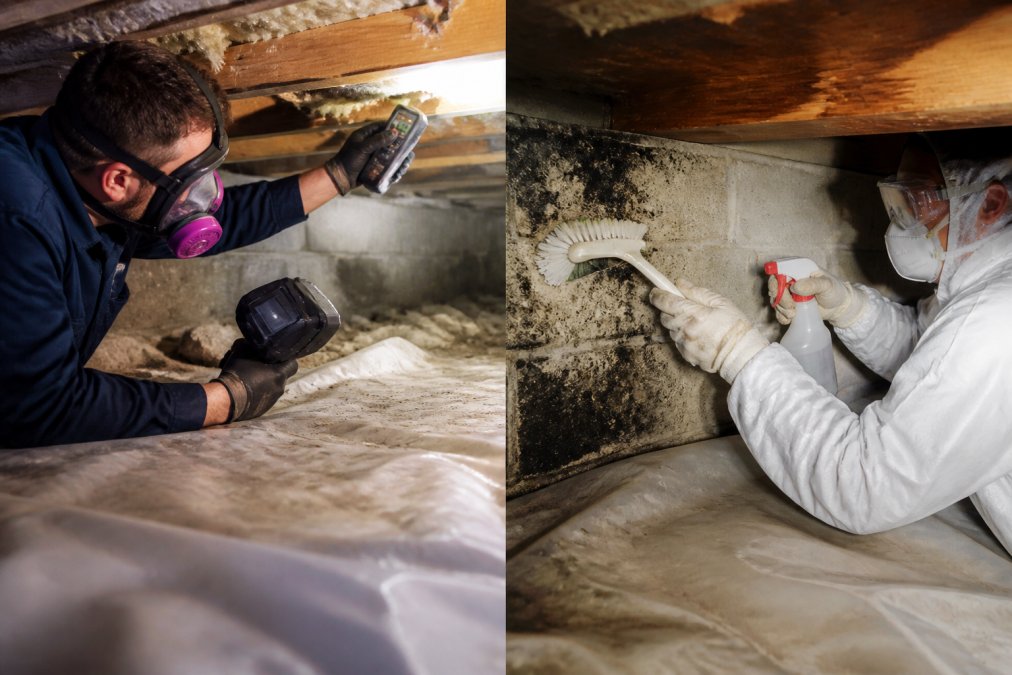
Visual vs. Hidden Mold: The Critical Distinction
Visual/Surface Mold:
- Appears on hard surfaces: tile, painted drywall, concrete, wood trim
- Often caused by condensation, humidity, or minor water splash
- Typically limited to the top layer of material
- Examples: bathroom tile mold, window sill mold, basement wall surface mold
- Remediation approach: cleaning, not removal
Hidden/Structural Mold:
- Grows inside walls, under flooring, in HVAC ducts, or within insulation
- Caused by water intrusion, plumbing leaks, or chronic moisture
- Requires material removal and replacement, not just cleaning
- Examples: mold in wall cavities after a roof leak, mold in crawl space insulation, mold in ductwork
- Remediation approach: professional removal and source elimination
When DIY Cleaning Is Sufficient
- Scope: Under 10 square feet of visible mold
- Location: Bathroom tiles, shower walls, window sills, basement concrete walls (surface only)
- Cause: Condensation or humidity, not water intrusion
- Materials: Hard surfaces only (not porous materials like drywall, insulation, or carpet)
DIY Process:
- Wear gloves, eye protection, and an N95 respirator mask (the CDC)
- Use detergent-based cleaners (diluted bleach, commercial mold cleaner, or white vinegar)
- Scrub the affected area thoroughly
- Ensure good ventilation during and after cleaning
- Dry completely to prevent regrowth
- Monitor the area weekly for 4-6 weeks
Cost: $20-100 in supplies
When to Stop DIY and Call a Professional:
- Mold covers more than 10 square feet
- Mold is on porous materials (drywall, insulation, carpet, wood framing)
- You suspect water intrusion or a hidden moisture source
- Mold returns within weeks of cleaning
- You’re selling the home and need documentation
- The area is difficult to access safely (attic, crawl space, inside walls)
Visual Inspection:
- Examination of all accessible areas (attic, crawl space, basement, walls, HVAC)
- Identification of visible mold and water damage indicators
- Assessment of moisture sources and ventilation
Moisture Measurement:
- Moisture meter readings in walls, crawl spaces, and basements
- Identification of areas with elevated moisture that may harbor hidden mold
- Documentation of humidity levels and condensation patterns
Air Quality Testing (optional but recommended for sales):
- Spore count analysis to determine if mold levels are normal for your region or elevated
- Identification of mold species (some are more concerning than others)
- Comparison to outdoor baseline to assess indoor contamination
Written Report:
- Detailed findings with photos and measurements
- Identification of moisture sources and causes
- Recommendations for remediation or moisture control
- IICRC certification or equivalent professional credential
Why This Matters When Selling:
A professional assessment report serves multiple purposes:
- Legal protection: It documents what existed before you sold, protecting you from post-closing liability claims
- Buyer confidence: A written report from a certified professional reduces buyer anxiety and often prevents them from inflating repair requests
- Lender approval: Many lenders require professional assessment and remediation documentation before approving financing
- Negotiating anchor: A certified estimate for remediation gives you factual ground for negotiating repairs or credits, rather than letting the buyer’s inspector set the narrative
- Insurance implications: If the buyer later files a mold claim with their insurance, the pre-sale assessment documentation protects you from liability
The Hidden Mold Scenario: Why Professional Assessment Is Non-Negotiable
Hidden mold almost always requires professional remediation, not DIY cleaning. The process includes:
- Identifying and fixing the moisture source (roof leak, plumbing issue, foundation water intrusion)
- Removing contaminated materials (drywall, insulation, flooring)
- Replacing with new materials
- Verification testing to confirm remediation success
Cost: $2,000-10,000+ depending on scope
Decision Framework: Assessment → Remediation or Negotiation
- Get professional assessment ($400-800), this is the lowest-cost, highest-value step
- Review findings: Is mold visual/surface or hidden/structural?
- If visual/surface: Clean it yourself or hire a cleaner ($100-500), then disclose and sell
- If hidden/structural: Choose between full remediation ($2,000-10,000+) or disclosure with negotiated credit/price reduction
- Document everything: Keep assessment reports, remediation estimates, and any work completed
Frequently Asked Questions
Do I have to disclose mold to a buyer?
Yes. Federal and state disclosure laws require sellers to reveal known mold or water damage. Failure to disclose can expose you to legal liability and lawsuits after closing. The specific disclosure forms vary by state, but most require written acknowledgment of any mold or moisture issues discovered before listing. Your real estate agent or attorney can clarify your jurisdiction’s exact requirements. Honest disclosure protects you legally and allows buyers to make informed decisions.
What are the legal risks of selling a home as-is with mold?
Selling as-is does not eliminate your disclosure obligation. You must still inform buyers of known mold or water damage. If you fail to disclose, buyers can sue for fraud or breach of contract even after closing. However, as-is sales shift inspection and repair responsibility to the buyer. Many lenders require mold remediation before financing, which limits your buyer pool. Cash investors and specialized buyers are more willing to purchase as-is properties, but they typically offer below-market prices to account for remediation costs they’ll handle.
What devalues a house the most when mold is present?
Mold reduces property value primarily through three mechanisms: lender refusal (many won’t finance homes with active mold), buyer hesitation (health concerns and hidden structural damage), and remediation cost deduction (buyers subtract estimated fix costs from their offers). Structural mold affecting framing or crawl spaces causes steeper devaluation than surface mold. A pre-listing professional assessment quantifies the actual damage, which helps you price realistically and attract serious buyers. Transparent disclosure with documentation of remediation efforts, moisture control upgrades, or professional assessment reports can partially offset value loss.
What’s the difference between professional mold remediation and DIY cleaning for selling purposes?
DIY cleaning removes visible mold from surfaces but doesn’t address the moisture source or hidden growth behind walls and in crawl spaces. Professional remediation identifies and eliminates the root cause (water intrusion, humidity), uses IICRC-certified techniques, and provides clearance documentation that satisfies lender requirements. For listing, professional assessment determines whether full remediation is necessary or whether targeted moisture control and disclosure suffice. Many buyers’ lenders require professional clearance certificates, making DIY cleaning insufficient for traditional sales.