Table of Contents
- What Is a Certificate of Mold Remediation?
- Understanding Post-Remediation Verification Report Requirements
- Step 1: Hire a Licensed Remediation Contractor
- Step 2: Request a Remediation Work Plan Before Work Begins
- Step 3: Hire a Third-Party Mold Inspector for Post-Remediation Testing
- Step 4: Obtain Your Mold Remediation Certificate Template and Clearance Letter
- Required Documentation for Real Estate Closings
- Legal Disclosure Requirements and Liability Protection
- Frequently Asked Questions
Last Updated: September 26, 2026
What Is a Certificate of Mold Remediation?
A certificate of mold remediation is an official document proving a licensed contractor has completed mold removal work to industry standards. Lenders and buyers require this documentation before approving a sale. Without it, your transaction can stall or fall apart. The certificate includes details about work performed, areas treated, and contractor credentials, protecting you legally and demonstrating professional standards compliance.
Understanding Post-Remediation Verification Report Requirements
A post-remediation verification report is the inspection performed after mold removal by an independent inspector (not the remediation contractor). It documents air quality and surface testing results, confirming mold spore levels have returned to normal. Most lenders require this report before funding a purchase.
What the Report Should Contain
Key elements in a post-remediation verification report include:
- Air sampling data from treated areas (measured in colony-forming units per cubic meter, or CFU/m³)
- Surface sampling results showing no active fungal growth
- Photos of the cleaned space with date stamps
- Comparison of before and after test results with baseline outdoor air samples
- Inspector’s professional certification, license number, and state of licensure
- Date of inspection and testing
- Statement of compliance with industry standards (typically IICRC guidelines or EPA guidance)
- Specific mold species identified (if any remain) and their concentration levels
How to Verify the Report Is Legitimate
Fraudulent or inflated remediation documentation is a known issue in real estate transactions. Before accepting a post-remediation report, take these verification steps:
Verify the inspector’s credentials independently. Look up the inspector’s license number directly through your state’s licensing board, don’t rely on contact information in the report. Confirm the license is current and has no disciplinary history.
Confirm the inspector has no financial relationship with the remediation contractor. Ask directly if they’ve worked with this contractor before or have any ongoing business relationship. If the same company performed both remediation and verification, the report has no credibility to a lender.
Request the raw lab data. Ask for the certified laboratory’s name and accreditation number, then contact them directly to confirm they processed samples from your property on the stated dates. Fraudulent reports often cite labs that don’t exist or won’t confirm the work.
Check for specific test methodology. The report should state which testing method was used (e.g., “AIHA-accredited lab using ERMI testing”). Vague language like “mold levels are acceptable” without methodology or numbers is a red flag that lenders will reject.
Compare results to baseline standards. The report should show post-remediation mold levels compared to outdoor air samples collected the same day. Acceptable clearance means indoor mold levels are equal to or lower than outdoor levels for the same species.
Look for the inspector’s signature and seal. Many states require licensed inspectors to sign and seal reports. Verify the signature matches the name and license number cited.
Understanding Clearance Test Results
Clearance test results are reported as spore counts or CFU/m³. A result of “0 CFU/m³” does not mean the space is sterile, that’s impossible. Instead, clearance means mold levels are within normal ranges for an uncontaminated building.
Most lenders accept clearance when:
- Indoor mold spore counts do not exceed outdoor counts for the same species
- No water-damaged materials remain in the treated area
- No visible mold growth is present
- The inspector certifies the work meets industry standards
If the report shows indoor mold levels higher than outdoor levels, remediation is incomplete. Your lender will not approve the transaction, and you’ll need additional work before closing.
Independence Is Non-Negotiable
This independent verification is what makes the report credible to lenders and title companies. An inspector with no financial stake in the remediation outcome provides the assurance that work was done correctly. The inspector must be certified and licensed in your state, and their credentials must be verifiable through official channels.
Step 1: Hire a Licensed Remediation Contractor
Find a qualified remediation contractor with IICRC (Institute of Inspection, Cleaning and Restoration Certification) training, valid state license, insurance coverage, recent references, and a written scope of work. Ask directly: “Will you provide a detailed remediation work plan and final documentation for closing?” Reluctance is a red flag.
Verify IICRC Certification and Credentials
IICRC certification means the contractor has completed formal training in mold remediation protocols. It’s the industry standard. Don’t accept vague claims like “we’re certified” without proof.
Request to see the actual certificate. Verify it’s current (not expired). Check the contractor’s name matches the certificate.
Ask about their specific training areas:
- Water damage restoration
- Mold remediation
- Post-remediation verification procedures
- Documentation and reporting standards
A contractor who hesitates to show credentials or discuss their training is not someone you want handling this work. Your closing depends on their competence.
Step 2: Request a Remediation Work Plan Before Work Begins
Before work starts, demand a written remediation work plan including specific mold locations, containment methods, removal techniques, material disposal, timeline, post-remediation testing procedures, and cost breakdown. Get this in writing and sign it. If the contractor resists, find someone else. The work plan becomes part of your closing documentation.
Step 3: Hire a Third-Party Mold Inspector for Post-Remediation Testing
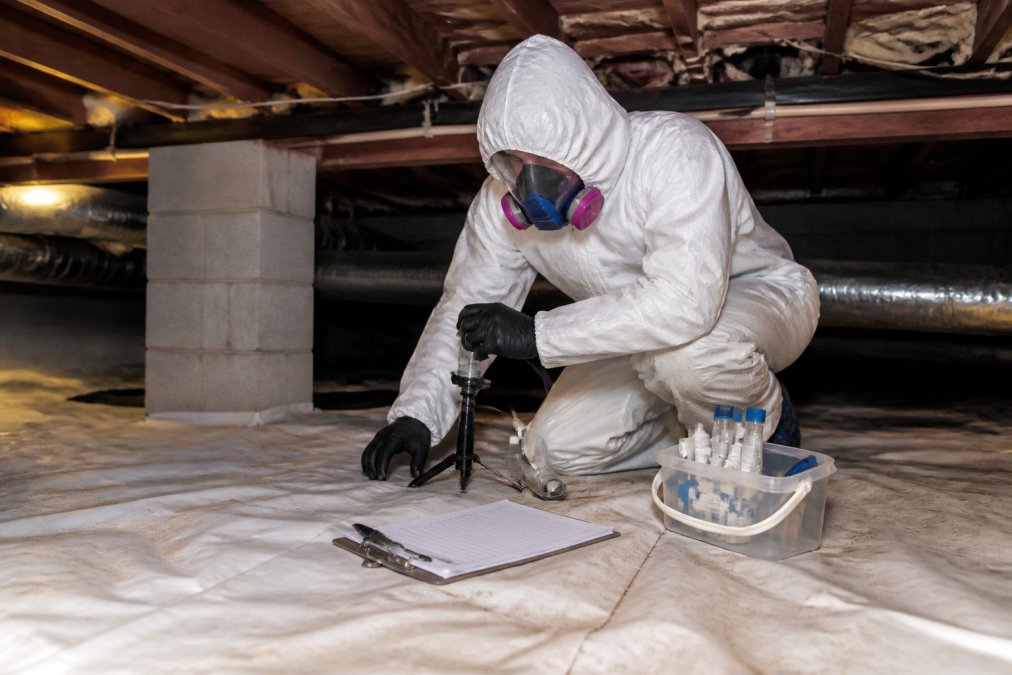
Hire an independent inspector NOT affiliated with the remediation contractor to verify the work. They’ll collect air and surface samples, compare results to baseline mold levels, and provide a clearance letter if standards are met. Look for IICRC certification in mold inspection with no financial relationship to the contractor. Get quotes from at least two inspectors.
Step 4: Obtain Your Mold Remediation Certificate Template and Clearance Letter
Once testing is complete with acceptable results, the inspector provides a clearance letter stating the property has been properly remediated, post-remediation testing shows acceptable mold levels, the work meets industry standards, and including the inspector’s credentials and inspection date. Request the letter in writing and ask for at least five copies for your lender, buyer, and title company. Verify state-specific language requirements with your real estate attorney.
Required Documentation for Real Estate Closings
Your closing attorney or title company will request specific mold-related documents. Here’s what you need to gather:
Core Documentation Required at Closing
Essential documents include:
- Original mold inspection report (the one that identified the problem)
- Remediation work plan with contractor details and scope of work
- Remediation invoice and proof of payment
- Post-remediation verification report with clearance letter
- Contractor’s state license number and current license status
- Contractor’s liability insurance certificate (showing coverage limits)
- IICRC certification copies for key workers who performed remediation
- Photographs of affected areas before, during, and after remediation
- Any air quality or surface testing data (both pre- and post-remediation)
- Written disclosure of the mold issue and remediation performed
Organize these in a folder before closing. Missing documents can delay closing by weeks. In some cases, missing documentation kills the deal entirely.
State-Specific Documentation Requirements
Several states impose additional documentation requirements beyond the standard checklist. Verify your state’s specific rules before finalizing remediation work:
Texas: Disclose known mold on the TREC OP-H form with documentation that work was completed by a licensed contractor. New York: Disclose known material defects with contractor license number (available through the New York Department of State). California: Use the California Residential Purchase Agreement form; some counties have local mold ordinances requiring additional permits. Florida: Disclose on the Seller’s Disclosure with contractor license number (verify through the Florida Department of Business and Professional Regulation). Contact your real estate attorney to confirm current state-specific requirements.
If your state is not listed here, contact your real estate attorney or local title company to confirm state-specific requirements. Requirements change frequently, and your closing attorney should verify current rules before closing.
How Documentation Affects Future Insurability and Premiums
Mold remediation documentation is not just for closing, it affects the buyer’s ability to obtain homeowners insurance and the premiums they’ll pay.
Insurance companies use mold history to assess risk. When a buyer applies for homeowners insurance, insurers conduct title searches and may request disclosure of past mold issues.
- Deny the application entirely
- Exclude mold damage from coverage (a “mold exclusion”)
- Require a re-inspection before issuing a policy
- Charge a mold-related premium surcharge (typically 10-25% higher than standard rates)
Organize and Deliver Documentation Professionally
Your real estate attorney should review all documents before closing. They’ll flag any missing pieces or language issues that could create liability later. Request a final checklist from your attorney confirming all required documents are present and in acceptable format.
Legal Disclosure Requirements and Liability Protection
Most states require sellers to disclose known mold issues. Failure to disclose creates serious legal liability. Even after remediation, you must be honest about what happened.
Your disclosure statement should mention:
- That mold was found
- When it was discovered
- What remediation work was performed
- The contractor’s name and license number
- That post-remediation testing was completed
- Results of the clearance testing
Frequently Asked Questions
What documents are required to prove professional mold remediation was completed?
You need four key documents: a signed remediation work plan outlining the scope, before-and-after mold inspection reports, the remediation invoice from a licensed contractor, and a post-remediation clearance letter from an independent third-party assessor confirming indoor air quality meets acceptable standards. Your lender and buyer will require these to verify the mold remediation documentation meets closure requirements.
How do I verify if a mold remediation company is IICRC-certified?
Check the contractor’s IICRC credentials directly on the IICRC website’s certified professional directory. Verify they hold current Water Damage Restoration (WRT) and Applied Microbial Remediation Supervisor (AMRS) certifications. Ask for proof of insurance and licensing from your state’s regulatory body. Request references from previous clients with similar mold remediation work completed within the last two years.
Does a mold remediation certificate expire?
Clearance letters and post-remediation verification reports don’t technically expire, but most lenders and title companies require testing completed within 30-90 days of closing. If remediation was done months earlier, you may need fresh air sampling to confirm mold hasn’t returned. Check your purchase agreement and lender requirements for specific timelines before closing.
What should be included in a mold remediation post-remediation verification report?
The report must include air and surface sampling results with specific mold spore counts, comparison to baseline outdoor levels, the inspector’s professional credentials and IICRC certification, the property address and inspection date, detailed methodology, and a clear statement confirming remediation success or failure. This documentation becomes part of your permanent property record and satisfies lender requirements for mold remediation certification.