Table of Contents
- What Mold Remediation Clearance Documentation Includes
- Post-Remediation Verification Report Template and Structure
- Air Quality Sampling and Lab Analysis Requirements
- Visual Inspection and Chain of Custody Documentation
- Mold Remediation Documentation Best Practices
- How Long Does Mold Clearance Testing Take
- Regulatory Compliance and State Requirements for Clearance
- Conclusion
Last Updated: August 15, 2026
What Mold Remediation Clearance Documentation Includes
Mold remediation clearance documentation is the comprehensive record of all work performed to remove mold contamination and verify that indoor air quality meets safe standards. This documentation serves as proof that remediation was completed properly and that the property is safe for occupancy.
The core components of mold remediation clearance documentation include visual inspection records, air quality sampling results, lab analysis reports, chain of custody forms, containment setup photographs, and the final clearance certificate. Each piece of documentation plays a specific role in proving that remediation was thorough and that post-remediation verification standards were met.
Think of this documentation as your property’s health record. Just as a medical clearance proves you’re healthy enough to return to work, mold remediation clearance proves your property is healthy enough to occupy. Without it, insurance companies won’t pay claims, buyers won’t close transactions, and lenders won’t approve mortgages.
Missing or incomplete documentation is a common reason [insurance claims are denied](/how-to-handle-insurance-water-claims/). Even if mold was properly removed, inadequate records can mean the difference between full coverage and out-of-pocket costs.
The documentation must follow specific regulatory standards set by your state and sometimes by local health departments. At Aquaflame Restores It, our IICRC-trained technicians ensure every document meets these requirements from the start, preventing costly delays or rejections later.
Post-Remediation Verification Report Template and Structure
A post-remediation verification report template provides the standardized format that contractors, environmental professionals, and regulators expect to see. This report synthesizes all testing, inspection, and remediation data into a single authoritative document.
The report structure typically includes: property identification (address, owner, date of remediation), scope of work performed, remediation protocol followed, containment methods used, air sampling locations and methodology, lab results with spore counts, visual inspection findings, chain of custody documentation, and the final clearance determination.
The opening section identifies the property and the responsible parties. This includes the property owner’s name and contact information, the environmental professional who conducted the verification, the contractor who performed remediation, and the dates work began and ended. Clear identification prevents confusion if questions arise later.
The scope of work section describes exactly what was removed or treated. This might include: square footage of affected drywall removed, number of HVAC ducts cleaned, linear feet of insulation replaced, or specific areas treated with antimicrobial agents. Specificity matters because it shows the work was comprehensive and documented.
The remediation protocol section explains the methodology used. Did the contractor use containment with 6-mil poly sheeting? Was HEPA vacuuming performed? Were moisture mapping and hygrometer readings taken to confirm the area was dry before final testing? This section demonstrates that industry-standard practices were followed.
Include photographs of the containment setup and [remediation work](/mold-removal-step-by-step-guide/) in progress. Visual evidence strengthens the report and provides a clear record if disputes arise later.
The air sampling methodology section details where samples were taken, how many samples were collected, and which lab analyzed them. This transparency allows anyone reviewing the report to understand the testing approach and verify its adequacy.
Air Quality Sampling and Lab Analysis Requirements
Air quality sampling is the most critical component of mold remediation clearance documentation. This testing measures whether indoor air quality has returned to safe levels after remediation work.
Sampling typically involves collecting air from multiple locations: the remediation zone (the area where mold was removed), adjacent areas, and an outdoor control sample for comparison. The outdoor sample establishes baseline spore counts in the surrounding environment. Indoor samples should match or be lower than outdoor levels, indicating that mold remediation was successful.
Lab-certified analysis examines the collected samples for fungal ecology, the types and concentrations of mold spores present. The lab provides a certificate of mold analysis that identifies specific fungal species and quantifies spore counts. This data becomes the objective measure of whether clearance criteria have been met.
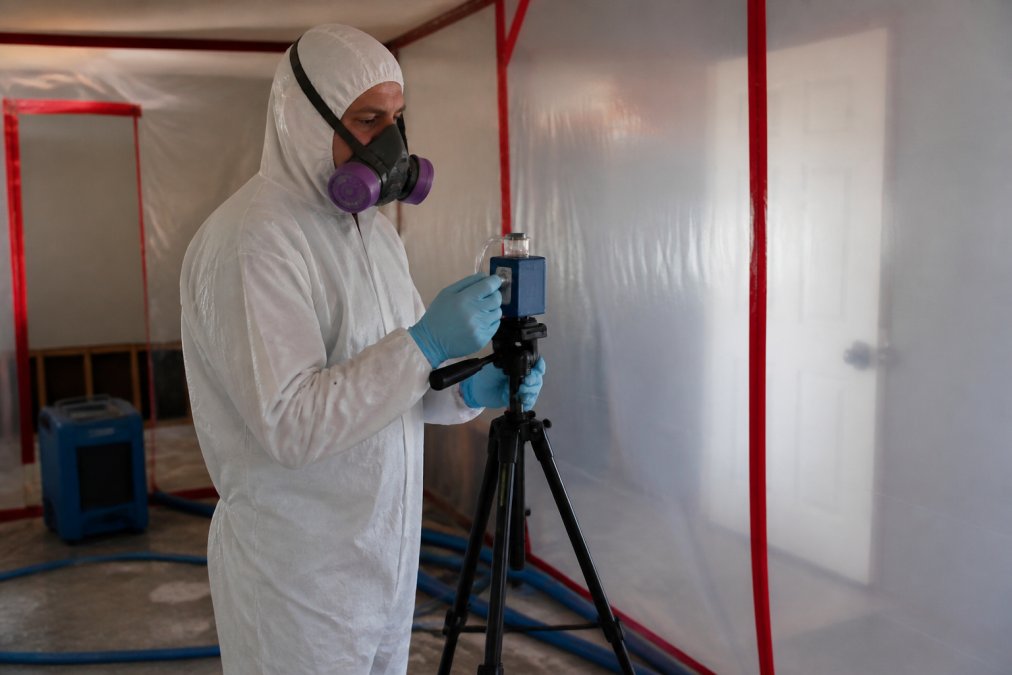
The number of samples required depends on the size of the affected area and local regulations. A small bathroom might require 2-3 samples, while a large commercial space might require 5-10 or more. The environmental professional determines the appropriate sampling strategy based on the remediation scope.
Timing is critical. Sampling should not occur immediately after remediation work ends. The area must be allowed to stabilize, typically 24-48 hours after final cleanup. Premature sampling can produce false positives from dust still settling in the air.
Chain of custody documentation must accompany every sample from collection through lab analysis. This record shows who collected the sample, when it was collected, how it was stored and transported, and who received it at the lab. Proper chain of custody prevents questions about sample integrity or contamination during transport.
Visual Inspection and Chain of Custody Documentation
Visual inspection is the first and most straightforward verification that remediation was completed. An environmental professional or qualified inspector walks through the remediated area and documents what they observe.
The inspection looks for several indicators: absence of visible mold growth, proper drywall removal where contamination extended into wall cavities, complete removal of contaminated insulation, clean HVAC ducts if they were affected, and dry conditions throughout the remediation zone. The inspector photographs all key areas and documents findings in a detailed report.
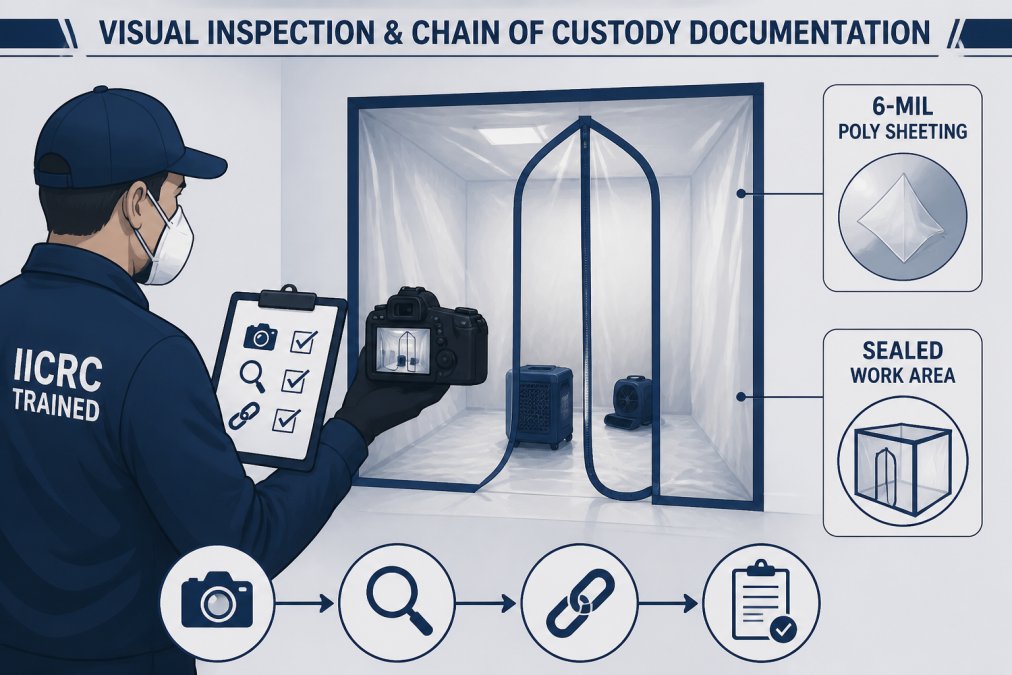
Chain of custody documentation creates an unbroken record of who handled evidence and when. For mold remediation, this applies to air samples, surface samples, and any physical evidence of contamination. Each person who handles a sample must sign and date the chain of custody form, noting the time of transfer.
This documentation serves multiple purposes. It proves samples were not contaminated or switched during transport. It shows samples were handled according to protocol. It creates accountability if questions arise about lab results. Insurance companies and regulatory agencies require proper chain of custody before accepting lab results as valid.
Surface sampling, using swab tests or tape lift methods, may be required in some cases, particularly if contamination is suspected in hidden areas. These samples also require chain of custody documentation from collection through lab analysis.
Mold Remediation Documentation Best Practices
Documentation best practices begin with starting the record before remediation work begins. Take baseline photographs of the affected area, document the extent of visible mold, and record moisture levels with a hygrometer. This baseline becomes the reference point for proving that remediation was necessary and successful.
Assign a single point person to manage all documentation. This prevents gaps, duplicates, or conflicting records. One person should collect air samples, maintain chain of custody forms, coordinate lab testing, and compile the final report. This consistency strengthens the credibility of the entire documentation package.
Use standardized forms for every step. Chain of custody forms, air sampling logs, visual inspection checklists, and lab result templates should follow industry standards. Aquaflame Restores It uses IICRC-certified documentation protocols, ensuring consistency and regulatory compliance.
Maintain organized records from day one. Store all documents in a central location, physical or digital, where they’re easily accessible. When the final clearance report is compiled, all supporting documentation should be immediately available to attach or reference.
Communicate with your insurance company about documentation requirements early. Some insurers have specific forms or procedures they require. Aligning your documentation process with their expectations prevents delays when you submit the final clearance report for claim approval.
The best documentation strategy is simple: follow industry standards, use certified professionals, keep detailed records, and maintain clear organization from start to finish.
How Long Does Mold Clearance Testing Take
The timeline for mold clearance testing spans from the end of remediation work through final lab results and report compilation. Understanding this timeline helps property owners plan their return to normal occupancy.
Immediately after remediation work is complete, the area must be cleaned and allowed to stabilize. This typically takes 24-48 hours. During this period, HEPA vacuuming removes dust and debris from surfaces. Moisture levels are monitored with a hygrometer to ensure the area is dry. The containment barriers (6-mil poly sheeting) remain in place until stabilization is confirmed.
Air sampling occurs after stabilization, usually 24-48 hours after remediation ends. The environmental professional collects samples from multiple locations and immediately places them in sealed containers with proper chain of custody documentation. Sample collection itself takes 1-3 hours depending on the number of samples required.
Lab analysis typically requires 5-10 business days. The lab must process samples, identify fungal species, count spores, and prepare a detailed report with the certificate of mold analysis. Rush testing is sometimes available but may cost significantly more.
Report compilation happens after lab results are received. The environmental professional integrates air sampling results, visual inspection findings, remediation documentation, and chain of custody records into the final post-remediation verification report. This synthesis typically takes 2-5 business days.
The total timeline from remediation completion to final clearance certificate is generally 10-20 business days under normal circumstances. Delays can occur if lab results are inconclusive, if additional sampling is required, or if the area is not properly stabilized before initial testing.
Regulatory Compliance and State Requirements for Clearance
Regulatory requirements for mold remediation clearance documentation vary by state and sometimes by local jurisdiction. Understanding your specific state’s requirements is essential because non-compliance can invalidate your documentation and delay insurance claims or property sales.
Most states require that remediation work be performed by licensed contractors and that clearance testing be conducted by a qualified environmental professional. Some states mandate that the environmental professional be independent, not employed by the remediation contractor, to avoid conflicts of interest. This independence ensures objective verification that standards have been met.
State regulations typically specify clearance criteria: the standard against which air samples are evaluated. Many states use the "clearance level" approach, where indoor spore counts should not exceed outdoor levels by more than a specified margin, often 1.5 times the outdoor count. Other states use absolute thresholds, requiring indoor counts to fall below specific numbers regardless of outdoor conditions.
Documentation requirements often include specific forms or report formats mandated by state health departments or environmental agencies. Some states require that reports be submitted to local health authorities. Others require them to be maintained by the property owner but not filed with government agencies.
Insurance and lending requirements sometimes exceed state minimums. Your insurance company or mortgage lender may require additional documentation, higher clearance standards, or specific certifications from the environmental professional. These requirements should be clarified before remediation work begins.
At Aquaflame Restores It, our team stays current with state and local requirements across the metro Atlanta area. We ensure documentation meets or exceeds all applicable standards, protecting you from regulatory issues and claim denials.
Assuming your state’s requirements are the same as a neighboring state is a common mistake. State regulations differ significantly. Verify your specific state’s requirements before beginning remediation work.
Conclusion
Proper mold remediation clearance documentation is your proof that remediation was thorough, testing was rigorous, and your property is safe. Without it, insurance companies won’t pay claims, buyers won’t close transactions, and you’ll carry liability for any future mold issues.
The documentation process requires coordination between the remediation contractor, the environmental professional, the testing lab, and sometimes your insurance company. When these parties follow standardized protocols and maintain clear communication, the result is a comprehensive record that satisfies all stakeholders.
Aquaflame Restores It manages this entire process for you. Our IICRC-trained technicians perform remediation using industry-standard containment methods, coordinate independent environmental testing, maintain proper chain of custody documentation, and compile the final clearance report. We handle direct insurance billing so you’re not caught between contractors and insurers. Get started with Aquaflame Restores It and move from damage to documented restoration with speed and confidence.
Frequently Asked Questions
What is the difference between a mold assessment and post-remediation verification?
A mold assessment identifies mold contamination and documents the scope before remediation begins. Post-remediation verification confirms that mold remediation clearance testing shows spore counts have returned to normal levels after work is complete. Assessment guides the remediation plan; verification proves the remediation succeeded and the property is safe to occupy again.
Who is qualified to issue a mold remediation clearance certificate?
A certified environmental professional, typically holding IICRC certification or equivalent credentials from a state-approved body, must issue clearance documentation. The professional must be independent, not employed by the remediation contractor, to avoid conflicts of interest. Lab-certified results from an accredited testing facility strengthen the clearance certificate's validity for insurance and real estate transactions.
How long does mold clearance testing take from start to final report?
Air sampling typically takes 24-48 hours after remediation work ends to allow dust to settle. Lab analysis of samples requires 5-7 business days. Chain of custody documentation and final clearance report compilation add 2-3 business days. Total timeline from end of remediation to cleared clearance certificate is usually 10-14 days, though expedited lab services can reduce this to 7-10 days.
What documents do I need for my insurance claim and real estate sale?
Collect the post-remediation verification report with lab-certified results, visual inspection photos, containment documentation, chain of custody records, and the remediation plan showing scope of work. For real estate sales, your buyer's lender typically requires the clearance certificate and lab analysis showing spore counts within normal ranges. Insurance claims require the same documentation plus contractor licenses and proof of IICRC training.
This article was written using GrandRanker