Table of Contents
- Common Signs of Mold Behind Drywall
- Musty Smell in Walls: What It Means
- Non-Invasive Detection Methods for Hidden Mold
- Mold Inspection Tools and Air Quality Testing
- Health Effects of Mold Exposure Behind Walls
- Preventing Mold Growth in Drywall Cavities
- When to Call a Professional for Mold Behind Drywall
- Conclusion
Last Updated: July 16, 2026
Common Signs of Mold Behind Drywall
Identifying signs of mold behind drywall early can prevent costly structural damage and health complications. At Aquaflame Restores it, we’ve helped hundreds of Atlanta homeowners catch hidden mold before it spreads. Mold thrives in the dark, moisture-rich environments inside wall cavities where it can grow undetected for months. The challenge is that most mold colonies hide completely out of sight, making detection difficult without knowing what warning signals to watch for.
Visual indicators and discoloration
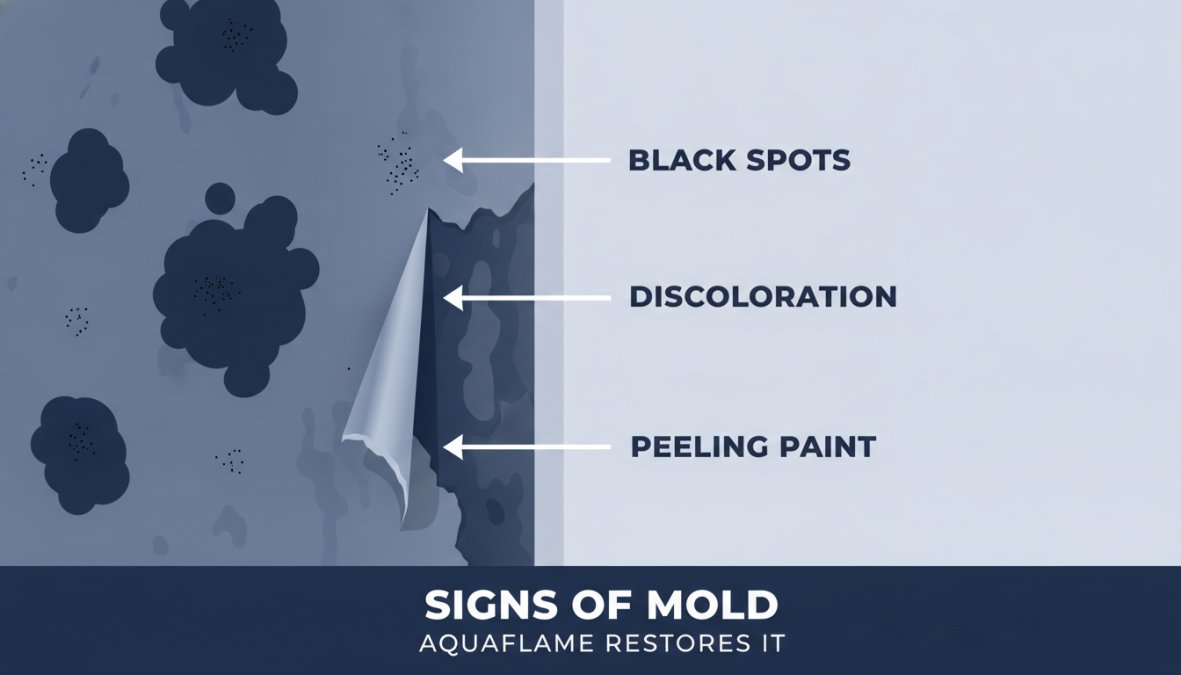
Discoloration on drywall surfaces is one of the earliest visual clues that mold may be growing inside the wall. Look for dark brown, green, or black spots that appear in irregular clusters. These aren’t always the mold itself, sometimes they’re stains from water damage that indicate the moisture conditions mold needs to survive.
Peeling paint and bubbling wallpaper signal that moisture has penetrated the drywall. When water moves through the wall cavity, it pushes outward, separating paint from the surface. This happens before the actual mold becomes visible. If you notice paint peeling in a specific area, especially near windows, bathrooms, or areas with previous water damage, investigate immediately.
Yellowing or browning patches on walls suggest prolonged dampness. These discolored areas often appear first on lower portions of walls or in corners where air circulation is poorest. The discoloration spreads slowly, which means catching it early gives you a narrow window to address the problem before structural integrity becomes compromised.
Physical wall damage and deterioration
Soft or spongy drywall indicates advanced mold damage. Press gently on suspicious areas, healthy drywall feels solid and firm. If the surface gives way or feels mushy, fungal growth has likely compromised the structural integrity of the material. This type of damage requires professional remediation rather than simple cleaning.
Warping or bulging walls suggest significant moisture accumulation behind the surface. Drywall expands when saturated, creating visible waves or bowing. This physical deformation means water intrusion has been occurring for weeks or longer. Don’t attempt to repair warped drywall yourself, the underlying mold colonies need professional removal first.
Crumbling or cracking drywall edges indicate mold has fed on the material itself. Mold colonies consume cellulose in drywall, weakening it structurally. When edges crumble easily or cracks expand rapidly, the wall cavity likely contains extensive fungal growth. This stage requires complete drywall replacement along with mold remediation.
Musty Smell in Walls: What It Means
A persistent musty odor is often the first sign homeowners notice, sometimes before any visible indicators appear. This distinctive smell comes from volatile organic compounds (VOCs) released by mold colonies as they break down organic material. The odor typically intensifies in humid weather or after rain, when moisture levels spike.
Musty smells concentrated in specific rooms rather than throughout the house suggest localized mold behind walls in that area. A bedroom that smells musty but the rest of the house doesn’t points to moisture intrusion in that wall cavity. Pay attention to which rooms develop the smell and whether it appears seasonally or year-round.
The smell often precedes visible mold by weeks. If you notice a musty odor but see no discoloration or damage, don’t assume you’re safe. The mold colonies are likely already established inside the wall, growing in the hidden cavity space. This is your opportunity to catch the problem early before it becomes visible and more extensive.
Stachybotrys, commonly called "toxic mold," produces a particularly strong, unpleasant musty odor. While not all musty smells indicate toxic mold specifically, any persistent musty odor warrants professional investigation. The smell itself indicates significant mold growth that needs remediation regardless of the specific species present.
Non-Invasive Detection Methods for Hidden Mold
Moisture meter testing and relative humidity checks
A moisture meter is your first line of defense for detecting hidden mold. These handheld devices measure the moisture content in drywall and other materials. Healthy drywall typically measures 8-13% moisture content. Readings above 16% indicate the material is retaining too much water and mold risk is elevated.
Take moisture readings in multiple spots, especially around areas where you suspect water intrusion. Compare readings from suspicious areas to readings from dry areas of the same wall. A significant difference confirms that localized moisture accumulation is occurring. Record your readings and monitor them weekly, rising moisture levels indicate an active leak or condensation problem.
Relative humidity testing reveals whether the air itself in your home is too damp. A hygrometer measures relative humidity, which should stay between 30-50% for optimal indoor air quality. When relative humidity exceeds 60%, mold spores have ideal conditions to germinate and colonize. High humidity in specific rooms suggests that area has moisture intrusion or inadequate ventilation.
Check humidity levels at different times of day and in different seasons. Morning humidity tends to be higher. Bathrooms and kitchens naturally have higher humidity than bedrooms. If one bedroom consistently shows 70%+ humidity while others measure 45%, that room likely has a moisture problem behind the walls.
Thermal imaging cameras for wall cavity inspection
Thermal imaging cameras detect temperature differences in walls that indicate moisture presence. Wet materials conduct heat differently than dry materials, creating visible temperature variations on the thermal image. This technology reveals moisture hidden deep inside wall cavities without requiring invasive drilling or cutting.
Professional thermal imaging requires experience interpreting the images correctly. Cold spots on a thermal image often indicate moisture, but they can also result from air leaks, insulation gaps, or exterior temperature differences. Many professionals combine thermal imaging with moisture meter readings to confirm findings before recommending remediation.
Rental thermal cameras are available, but they require training to use effectively. If you decide to rent one, take images of both suspect areas and known-dry areas for comparison. Look for distinct temperature patterns that align with areas where you suspect water intrusion. If patterns are subtle or unclear, professional interpretation is worth the cost.
Mold Inspection Tools and Air Quality Testing
Professional air quality testing measures mold spore concentration in your home’s air. Testing involves collecting air samples that are analyzed in a laboratory. Results show whether mold spore counts are elevated compared to outdoor baseline levels. If indoor spore counts are significantly higher than outdoor levels, active mold growth is likely occurring inside your home.
Surface sampling involves collecting samples directly from suspected mold areas. A professional swabs or scrapes the surface and sends the sample for laboratory analysis. This identifies the specific mold species present and confirms whether visible discoloration actually contains mold or is just a stain. Species identification helps determine health risks and appropriate remediation methods.
Moisture mapping combines multiple detection methods to create a comprehensive picture of where water is entering your home. Professionals use moisture meters, thermal imaging, and visual inspection to identify all affected areas. This comprehensive approach prevents missing hidden moisture pockets that could continue feeding mold growth even after visible remediation.
HVAC system inspection often reveals mold in ductwork and on the evaporator coil. When mold colonies grow in your air handling system, spores spread throughout the house every time the system runs. This explains why some homes have widespread air quality issues even when wall cavities appear dry. Professional duct cleaning and HVAC inspection should accompany wall remediation.
Don’t rely on a single detection method. Combine visual inspection, moisture meter readings, and humidity checks for the most accurate assessment. A moisture meter reading of 18% combined with a musty smell and peeling paint creates a much stronger case for mold than any single indicator alone.
Health Effects of Mold Exposure Behind Walls
Respiratory issues develop when mold spores accumulate in your home’s air. People with asthma, allergies, or compromised immune systems are most vulnerable. Symptoms include persistent coughing, wheezing, shortness of breath, and chest tightness. These symptoms often worsen in humid weather when mold spore release increases.
Allergic reactions to mold exposure range from mild to severe. Common symptoms include sneezing, nasal congestion, itchy eyes, and skin rashes. Some people develop severe reactions including anaphylaxis-like symptoms. If allergic reactions intensify when you’re home and improve when you leave, mold exposure is a likely cause.
Prolonged mold exposure can trigger or worsen chronic respiratory conditions. People with COPD, chronic bronchitis, or emphysema often experience acute flare-ups when mold spore concentrations spike. Children and elderly individuals face elevated risks from prolonged mold exposure due to developing or declining immune function.
Mycotoxins produced by certain mold species cause neurological symptoms in sensitive individuals. Symptoms include brain fog, memory problems, headaches, and mood changes. While mycotoxin effects are debated in the medical community, many patients report symptom improvement after mold remediation. Professional testing can identify whether your mold contains toxin-producing species.
If household members develop unexplained respiratory symptoms, allergic reactions, or neurological issues that improve when away from home, mold exposure should be investigated. Don’t delay testing and remediation, prolonged exposure increases health risks and makes remediation more complex.
Preventing Mold Growth in Drywall Cavities
Moisture control is the foundation of mold prevention. Address water intrusion immediately, fix leaking pipes, seal cracks in exterior walls, and ensure gutters drain water away from your foundation. Even small leaks create the moisture conditions mold needs. Most mold problems start with water that should have been prevented or stopped quickly.
Ventilation reduces the humidity levels that mold requires to grow. Bathrooms need exhaust fans that run during showers and for 20-30 minutes afterward. Kitchens need ventilation when cooking. Bedrooms and living spaces benefit from regular air circulation. Open windows when weather permits to exchange humid indoor air with drier outside air.
Insulation selection affects moisture accumulation in wall cavities. Closed-cell foam insulation resists moisture absorption better than fiberglass or open-cell foam. If you’re replacing insulation or building new walls, closed-cell foam reduces mold risk in damp climates or high-moisture areas like bathrooms and basements.
Vapor barriers installed during construction prevent moisture from migrating into wall cavities. These barriers should face the warm side of the wall (interior in winter climates, exterior in hot-humid climates). Proper vapor barrier installation is critical, incorrectly installed barriers can trap moisture and accelerate mold growth.
Dehumidifiers reduce relative humidity in problem areas. If one room consistently measures above 55% humidity despite ventilation and moisture control, a dehumidifier can bring levels down to the 30-50% range. Run dehumidifiers continuously during humid seasons and monitor their effectiveness with a hygrometer.
Regular inspection catches moisture problems before mold develops. Check basement walls, crawl spaces, and attic areas seasonally. Look for water stains, musty odors, or visible moisture. Early detection of water intrusion prevents the weeks-long moisture accumulation that mold colonies need to establish.
When to Call a Professional for Mold Behind Drywall
Call a professional when moisture meter readings exceed 16% or when you detect a persistent musty smell without obvious water damage. These situations indicate hidden mold that requires professional-grade detection and remediation. Attempting to address hidden mold without proper equipment and expertise often spreads spores throughout your home.
Professional mold remediation requires containment protocols that prevent spore dispersal during removal. Professionals seal affected areas, use negative air pressure systems, and follow IICRC guidelines for safe removal. DIY attempts often fail because homeowners lack the equipment and training to prevent cross-contamination.
Insurance claims for mold damage require professional documentation. Photographs, moisture readings, and laboratory test results from certified professionals support insurance claims. Self-conducted inspections lack the credibility insurers require for claim approval. Professional assessment protects your coverage and ensures proper remediation.
Extensive mold damage affecting multiple wall cavities or structural components requires professional reconstruction. After mold removal, damaged drywall, insulation, and framing must be replaced. Aquaflame Restores it handles complete remediation and reconstruction, managing insurance billing and ensuring your home is fully restored. Their IICRC-trained technicians provide 24/7 emergency response with a 30-minute arrival guarantee across metro Atlanta.
The difference between a $2,000 remediation and a $20,000 reconstruction often comes down to how quickly you address the problem. Early professional detection catches mold before it spreads to structural components. Waiting for visible damage to become obvious means the mold has already been growing for weeks.
Conclusion
Recognizing signs of mold behind drywall requires understanding that visible damage represents advanced growth. Musty odors, elevated moisture readings, and humidity spikes are earlier warning signs. Non-invasive detection methods like moisture meters and thermal imaging reveal hidden problems before they become structural emergencies.
When mold is suspected, professional assessment prevents costly mistakes. Aquaflame Restores it provides comprehensive mold detection and remediation with IICRC-trained technicians who handle everything from initial inspection through complete reconstruction. Their direct insurance billing and 24/7 emergency response ensure you’re not managing recovery alone. Contact Aquaflame Restores it today for professional mold assessment and fast remediation across metro Atlanta.
Hidden mold damages homes silently, growing behind walls where moisture accumulates. Early detection through moisture testing and professional inspection prevents structural failure and health complications. According to CDC guidance on mold remediation, prompt professional removal stops active mold growth and prevents recurrence. Aquaflame Restores it combines advanced detection technology with proven remediation protocols to eliminate mold completely. Their team manages the entire process, from identifying moisture sources to rebuilding affected areas, so your home is fully restored and protected against future mold growth. Call 24/7 for emergency mold assessment in metro Atlanta.
Frequently Asked Questions
What are the early signs of mold behind drywall?
Early signs of mold behind drywall include a musty odor, visible discoloration or black dots on walls, peeling paint, bubbling wallpaper, and soft or spongy drywall texture. Water stains, condensation on windows, and elevated humidity levels are also warning indicators. These signs often appear before mold becomes widespread, making early detection critical to prevent structural damage and health risks from mold spores.
Can mold grow behind walls without visible signs of mold behind drywall?
Yes, mold can grow in wall cavities without visible external signs for extended periods. This hidden fungal growth thrives in moist environments within drywall and insulation. Detection requires non-invasive methods like moisture meters, thermal imaging cameras, or air quality testing to identify elevated humidity and spore levels. Professional inspection using these tools can reveal mold colonies before they cause structural damage or significant health effects from mold exposure.
What causes mold to grow behind drywall?
Mold behind drywall develops when moisture accumulates in wall cavities from leaking pipes, water intrusion, condensation, or poor ventilation. High relative humidity above 60% creates ideal conditions for fungal growth. Water damage from floods or roof leaks can lead to rapid mold development. HVAC system issues and inadequate ventilation also contribute to dampness. Addressing moisture sources quickly is essential to prevent mold colonies from establishing in drywall and insulation.
How do professionals detect mold behind drywall?
Professionals use multiple non-invasive detection methods including moisture meters to measure dampness levels, thermal imaging cameras to identify temperature anomalies indicating water damage, and air quality testing to detect elevated mold spore concentrations. They assess relative humidity, inspect for water damage patterns, and evaluate HVAC system performance. In some cases, they may perform limited invasive inspection to sample wall cavities. This comprehensive approach ensures accurate identification and proper remediation planning.
This article was written using GrandRanker