Last Updated: November 19, 2026
Quick Summary
The cost of professional carpet water extraction depends on the water category, the wet square footage, and the labor and equipment required. Clean supply-line leaks cost less than sewage backups, which need protective gear, disposal, and disinfection. Most estimates itemize a service call fee, labor, and equipment charges.
- The water source is the single biggest cost factor in any extraction estimate.
- Category 3 black water costs more because contaminated carpet and pad are bagged and hauled away.
- Drying equipment running for several days is often the largest line item on a water-damage invoice.
- Extraction itself usually takes a few hours, but full drying takes several days.
- Photograph the damage before anything is moved or removed, for your claim.
Table of Contents
- What Drives the Cost of Professional Carpet Water Extraction Services
- The Cost of Professional Carpet Water Extraction Services per Square Foot
- Routine Hot-Water Extraction vs Emergency Water-Damage Extraction
- How to Read a Carpet Water Extraction Estimate Line by Line
- How Long Does Carpet Water Extraction Take?
- What to Do When Carpet Gets Wet: First 24 Hours
- Insurance, Documentation, and Direct Billing for Water Extraction
- Get a Free Water Extraction Assessment in Metro Atlanta
- Frequently Asked Questions
What Drives the Cost of Professional Carpet Water Extraction Services
The cost of professional carpet water extraction services depends on the category of water involved, how much carpet is soaked, and how much labor and equipment the job requires. Our water mitigation guide explains the emergency response steps, damage categories, and professional restoration process behind those cost factors.
That distinction is where most estimates go wrong.
Below, we break down what actually moves the price, how to read an estimate line by line, and what to do in the first 24 hours.
Water Source and Contamination Category
The water source is the single biggest cost factor. The industry sorts water into three categories, and the category determines protective gear, disposal method, and materials required.
- Category 1: clean water from a supply line, a water heater, or rainwater entering through a failed seal. Extraction is straightforward and drying is usually enough.
- Category 2: gray water from a washing machine, dishwasher, or toilet overflow without solid waste. It carries some contamination and needs antimicrobial treatment.
- Category 3: black water from sewage backups, outdoor flooding, or standing water that has sat for days. This water is grossly contaminated and the affected materials usually cannot be saved.
Category 3 work costs more because technicians wear full protective equipment, contaminated carpet and pad are bagged and hauled away rather than dried in place, and the area needs disinfection. If you suspect sewage is involved, our guide to signs of sewage contamination in your home explains how to recognize it and what to do before help arrives.
How Pricing Is Built: Labor, Equipment, and Minimum Charges
Carpet water extraction estimates from most providers typically include a service call fee, labor, and equipment charges.
A common mistake is comparing only the extraction line on two quotes. Drying equipment running for several days is often the largest line item on a water-damage invoice, and a quote that leaves it out is not cheaper, it is incomplete.
The Cost of Professional Carpet Water Extraction Services per Square Foot
Some providers estimate carpet water extraction per square foot, and the affected area is one factor in the total cost. Ask any provider you contact to explain how its quote is calculated.
Because pricing depends on the quantity of affected material, the water category, and the scope of the work, we recommend requesting a written quote for your specific situation.
Square footage refers to the wet area, not the size of the home. Ask any technician to measure the affected area and to state whether the measurement includes the pad and subfloor or only the carpet face.
How the Per-Square-Foot Rate Is Applied
Watch out: a quote that gives one per-square-foot number with no statement of what it covers, carpet only, or carpet plus pad plus subfloor drying, is not comparable to another quote, even if the number looks lower.
Why the Same Square Footage Can Price Differently
Two rooms of identical size can produce different estimates because drying conditions differ. Georgia humidity, crawl space moisture, and the source of the water all affect how long drying takes. Compare the full itemized estimate, extraction, labor, equipment days, disposal, and treatment, line by line.
Routine Hot-Water Extraction vs Emergency Water-Damage Extraction
These are two different services, and confusing them is the most expensive mistake homeowners make. Routine hot-water extraction is a cleaning method that uses heated water and cleaning solution to lift soil from carpet fibers.
Emergency water-damage extraction is a restoration service: the goal is stopping damage, not cleanliness. Technicians remove standing water, extract what is trapped in the carpet and pad, set drying equipment, and verify moisture levels over several days. It is unscheduled, scope-driven, and priced from the damage rather than a room count. For a fuller explanation, see our breakdown of water extraction versus water mitigation.
How to Read a Carpet Water Extraction Estimate Line by Line
A carpet water extraction estimate should itemize every charge so you can see what you are paying for. Here is what to check on each line.
- Extraction: measured in square feet or rooms, with the water category stated and whether pad and subfloor are included.
- Labor: technician-hours or a flat scope rate, with the number of technicians and expected hours on site.
- Equipment: air movers and dehumidifiers listed by unit and by day, with the expected drying period.
- Disposal: a line for bagging and hauling contaminated carpet and pad, if applicable.
- Treatment: antimicrobial application or odor treatment, itemized rather than bundled.
- Add-ons: furniture moving, contents handling, or protectant, each priced separately.
- Minimum charge or service call fee: the floor price that applies even to a small job.
Watch out: an estimate with one lump-sum number and no breakdown is nearly impossible to compare or submit to an insurer, and it usually hides the equipment charge that grows the final bill.
What a Worked Estimate Looks Like
Picture a Category 1 supply-line leak in a Decatur home that soaked one carpeted bedroom of roughly 200 square feet, with water reaching the pad but not the subfloor. A transparent estimate would be built in layers rather than as one number:
- Minimum charge / service call: a floor price covering mobilization and setup, applied once.
- Extraction: the measured wet area multiplied by the Category 1 per-square-foot rate.
- Labor: two technicians for the extraction visit, billed as hours or a flat scope rate.
- Equipment: a set number of air movers and one dehumidifier, each billed per day for the expected drying period.
- Furniture moving: a separate line if the crew moved furniture off the wet carpet.
- Monitoring visits: return trips to take moisture readings, either included in the equipment days or listed separately.
Nothing on that estimate should be a mystery, and every line should tie back to a measurement the technician took in your home. Ask for the equipment count and expected drying days in writing, and ask what happens to the price if drying takes longer than expected, a well-built estimate states whether equipment days are capped or open-ended.
The Same Job With a Different Water Category
Water category affects which estimate lines apply. Contaminated water generally requires protective equipment, disposal of affected materials, and disinfection. Check that the disposal and treatment lines on any estimate match the water category identified for your loss.
Questions to Ask Before You Sign
- Which water category is this priced as, and what did the moisture readings show?
- Is the per-square-foot rate applied to carpet only, or to carpet, pad, and subfloor drying?
- How many equipment days are included, and how is an extension billed?
- Are monitoring visits included or separate?
- Will the estimate be submitted to my insurer as itemized documentation?
Getting those answers in writing before work begins is what turns a quote into something you can compare and something your adjuster can process.
A transparent estimate itemizes every charge, and here is what each line should show.
| Estimate line | What it should state |
|---|---|
| Extraction | Square feet or rooms, water category, whether pad and subfloor included |
| Labor | Technician-hours or flat scope rate, number of technicians, expected hours |
| Equipment | Air movers and dehumidifiers by unit and by day, expected drying period |
| Disposal | Bagging and hauling contaminated carpet and pad, if applicable |
| Treatment | Antimicrobial application or odor treatment, itemized not bundled |
| Add-ons | Furniture moving, contents handling, protectant, each priced separately |
| Minimum charge | Floor price or service call fee that applies even to a small job |
How Long Does Carpet Water Extraction Take?
Carpet water extraction itself usually takes a few hours, but the full drying process takes several days. Extracting standing water and trapped moisture is the fast part; drying the carpet, pad, and subfloor to a verified moisture level is what takes time, and it cannot be rushed without risking mold growth.
Georgia humidity works against you here. A carpet that would dry in three days in dry winter air can take longer in a humid Atlanta summer, which is why dehumidifiers matter as much as air movers. Technicians should return to check moisture readings and remove equipment only when readings confirm the structure is dry, not when the carpet feels dry to the touch.
What to Do When Carpet Gets Wet: First 24 Hours
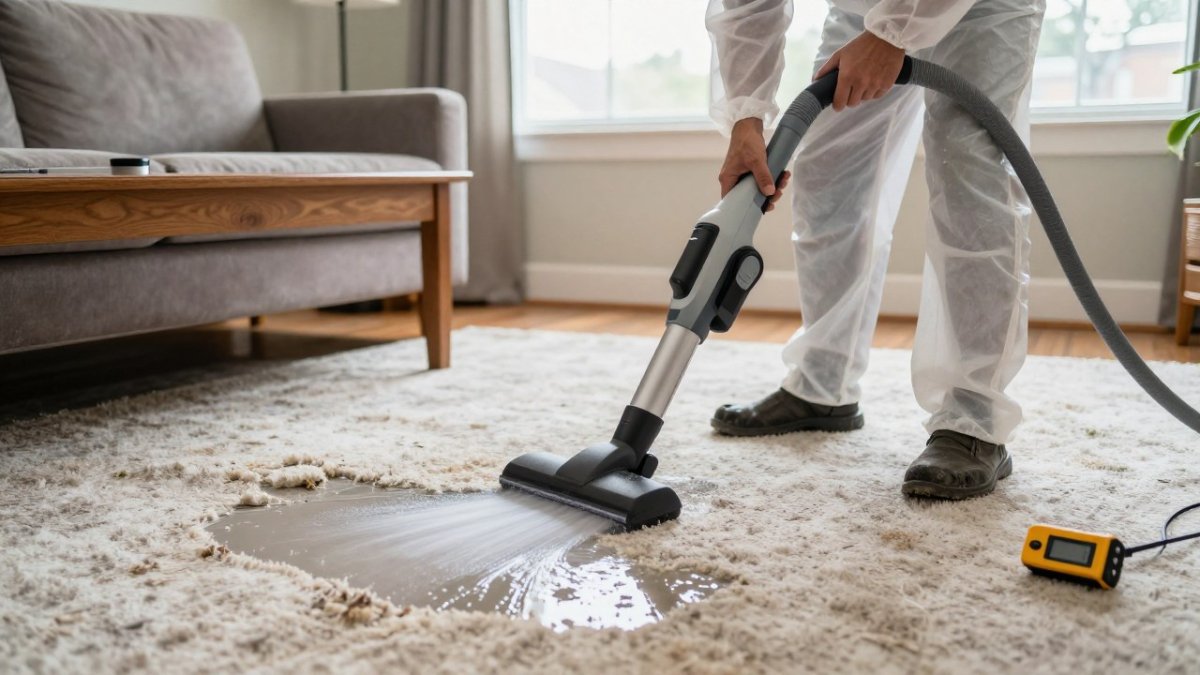
Act within the first 24 hours, because mold can begin to establish in a wet carpet and pad well before the end of the week. The steps below are general guidance while you wait for help.
- Shut off the water source if you can safely reach the valve.
- Cut power to any outlets or fixtures in the wet area at the breaker.
- Move furniture and belongings off the wet carpet.
- Lift the edges of any loose rugs so they can dry.
- Photograph the damage before anything is moved or removed, for your claim.
- Call for professional extraction rather than waiting to see if it dries.
Do not run a household shop vac on a large area and call it done. Surface water comes up easily, but water trapped in the pad and subfloor does not, and that is where secondary damage starts.
Insurance, Documentation, and Direct Billing for Water Extraction
Most homeowners insurance policies cover sudden water damage, such as a burst pipe or a failed water heater, but not long-term seepage the owner ignored. Documentation decides the claim: photograph everything before cleanup, keep damaged materials available for the adjuster if possible, and get an itemized estimate rather than a verbal number.
This is where direct billing changes the experience. At Aquaflame Restores It, we document the loss, work directly with your insurance company, and bill them directly, so you are not fronting the full cost and chasing reimbursement. Our guide to handling insurance water claims walks through the documentation step by step.
Get a Free Water Extraction Assessment in Metro Atlanta
Wet carpet gets more expensive the longer it sits, and the price of waiting is usually mold remediation on top of extraction. You can also see how our one-hour emergency response works before you call.
Water on your carpet will not dry out on its own, and every hour it sits raises the odds of mold and a bigger bill. Aquaflame Restores It is locally owned in Decatur, rated 5.0 on Google, and offers free damage assessments with direct insurance billing. Get started with Aquaflame Restores It and stop the damage before it spreads.
Frequently Asked Questions
How much does water extraction from carpet cost?
There is no single price because carpet water extraction depends on the affected area, the water category, how long the water has been sitting, and how much drying equipment is needed. Request a written, itemized estimate before work starts. Aquaflame Restores It offers free damage assessments in metro Atlanta, so you can see the scope before committing.
How is professional carpet water extraction priced per square foot?
Some providers quote by square foot, which covers the carpeted area treated rather than the whole house. Ask whether any quote separates extraction from drying equipment, and how each is billed.
Does homeowners insurance cover carpet water extraction?
Homeowners policies often cover sudden, accidental water damage, such as a burst supply line or a failed water heater, while gradual leaks and long-term neglect are commonly excluded. Document everything with photos before work begins and keep the itemized estimate. Aquaflame Restores It works directly with insurance companies and bills them directly.
How long does carpet water extraction take?
Extraction itself is typically fast, often completed in a few hours for a single room. Full drying usually takes several days, and moisture readings should return to normal before equipment is removed. If the water was contaminated or the pad is soaked through, expect additional time for removal and disposal. Ask for moisture checks so you know when the room is actually dry.
