Table of Contents
- Mold vs Mildew: The Core Differences That Matter
- Common Signs of Mold in a House
- What Does Mildew Look Like on Walls and Ceilings?
- Where to Check for Mold After Water Damage
- Mold Inspection vs Mold Testing: Which Do You Need?
- DIY Cleanup vs Calling a Professional: Where to Draw the Line
- Why Atlanta’s Humidity Makes Moisture Control Non-Negotiable
- Frequently Asked Questions
Last Updated: October 21, 2026
Mold vs Mildew: The Core Differences That Matter
Learning how to identify mold vs mildew in metro Atlanta homes starts with one key fact: mildew is a surface problem, while mold is a structural one. According to the U.S. Environmental Protection Agency’s mold guidance, mold can begin growing indoors within 24 to 48 hours of water exposure.
The core distinction is simple. **Mildew is a type of mold that stays on surfaces and looks powdery or fluffy.
Color and Texture at a Glance
Color and texture are the fastest tells. Mildew shows up as flat, powdery patches that are usually white, gray, or pale yellow. It sits on top of surfaces like shower grout or window frames.
Mold is darker and thicker. Look for green, black, or brown blotches with a fuzzy or slimy texture. It often grows in irregular patches that creep outward.
| Feature | Mildew | Mold |
|---|---|---|
| Color | White, gray, pale yellow | Black, green, brown, dark gray |
| Texture | Powdery, flat, fluffy | Fuzzy, slimy, raised |
| Growth pattern | Small surface patches | Spreading, irregular blotches |
| Smell | Mild musty odor | Strong, heavy musty odor |
| Depth | Surface only | Sinks into porous materials |
| Best fix | Household cleaner | Often requires remediation |
Smell and Spore Behavior
Mildew gives off a light, damp smell. Mold’s musty odor is heavier and harder to ignore. Both release spores, but mold spores are the bigger concern. They go airborne easily and can trigger allergic reactions and respiratory irritation.
Mold also produces hyphae, root-like threads that dig into drywall, wood, and insulation. That is why mold keeps coming back when you only wipe the surface. The growth is still inside the material.
If you clean a spot and the stain returns within a week or two, you are dealing with mold, not mildew. The hyphae are still embedded in the material and need more than a surface wipe.
Common Signs of Mold in a House
The clearest signs of mold in a house are dark discoloration, a persistent musty odor, and allergy-like symptoms that get worse indoors. Spotting two or more of these together usually means active fungal growth, not just a stain.
Visual Cues: Discoloration, Powdery or Slimy Texture
Start with your eyes. Check for discoloration on walls, ceilings, and baseboards. Powdery texture points toward mildew. Slimy or fuzzy texture points toward mold.
Also look for warped paint, bubbling drywall, and peeling wallpaper. These often mean moisture is trapped behind the surface where mold grows out of sight.
Musty Odor and Respiratory Irritation
Your nose is a reliable detector. A musty odor in one room usually means moisture and microbial growth nearby. If family members sneeze, cough, or get itchy eyes only at home, airborne contaminants may be the cause.
Painting over mold does not fix it. The growth continues underneath, the stain bleeds back through, and the trapped moisture can damage the drywall further. Find and fix the water source first.
What Does Mildew Look Like on Walls and Ceilings?
Mildew on walls and ceilings looks like a thin dusting of white or gray powder. It usually appears in small, flat patches near windows, in bathrooms, and along ceiling edges where condensation collects.
Mold on the same surfaces looks different. It forms dark, fuzzy patches that spread and may look slimy. On ceilings, brown or yellow water rings around the growth point straight to a leak, which needs fixing before any cleanup.
Where to Check for Mold After Water Damage
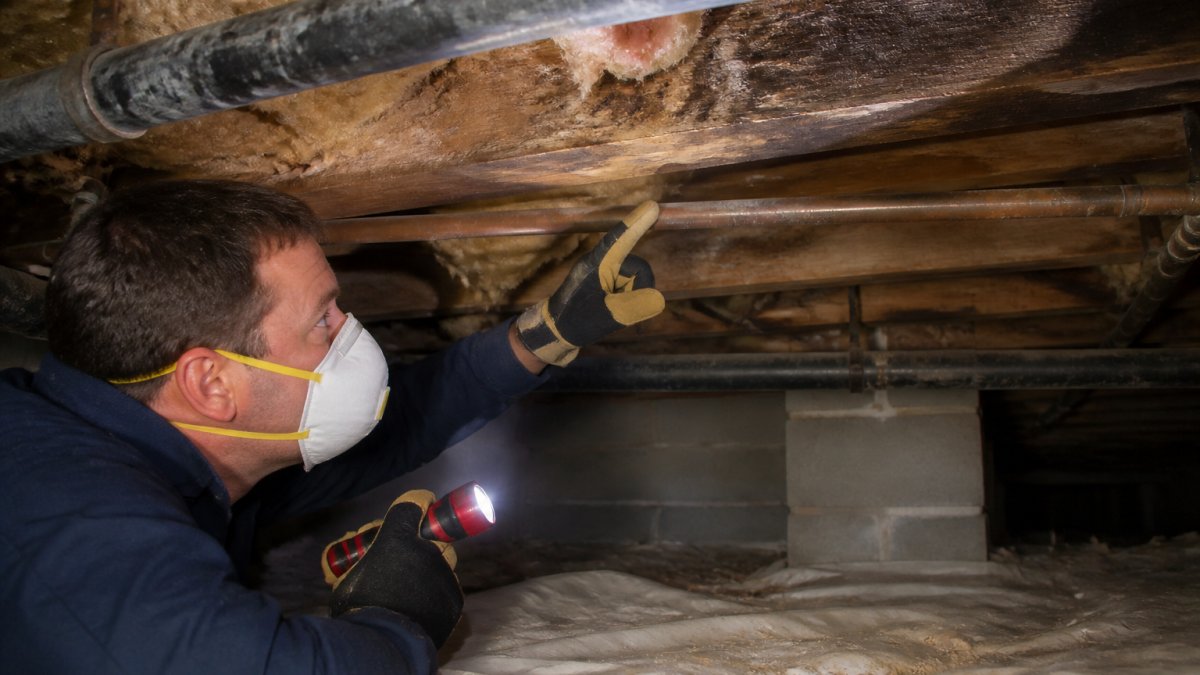
After water damage, check the spots that stay damp longest: crawl spaces, basements, HVAC systems, under sinks, behind appliances, and inside wall cavities. These areas trap moisture and block airflow, which is exactly what fungal growth needs.
High-Risk Spots: Crawl Spaces, Basements, and HVAC Systems
Crawl spaces and basements are mold’s favorite rooms. Relative humidity climbs there, condensation forms on cool pipes, and ventilation is poor. Check wooden joists, insulation, and stored boxes for discoloration and musty odor.
HVAC systems deserve their own inspection. Moisture can collect in drip pans and ductwork, then spores spread through the whole house every time the system runs. If the musty smell gets stronger when the air turns on, the HVAC system is a likely source.
The most overlooked sign of hidden mold is a musty odor that appears only when the HVAC system runs. That points to growth inside the ductwork or air handler, not in the room itself.
Mold Inspection vs Mold Testing: Which Do You Need?
A mold inspection is a visual assessment of the property to find moisture sources and visible growth. Mold testing is lab analysis of air or surface samples to confirm what is present. Most homeowners need an inspection first; testing only answers specific questions an inspection cannot.
Here is how we would decide:
- Choose an inspection when you can see or smell growth and need to find the source.
- Choose testing when you need documentation for a real estate sale, a lender, or an insurance claim.
- Choose both when the source is hidden or a health concern exists.
Surface testing and air quality assessment both have limits. A single sample can miss growth in another room. That is why a thorough inspection comes first.
DIY Cleanup vs Calling a Professional: Where to Draw the Line
Clean it yourself when the patch is small, dry, and sitting on a non-porous surface like tile or glass. Call a professional when growth covers a large area, sits on porous materials, or keeps returning after cleanup. The EPA’s mold remediation guidance recommends professional help when the affected area is large or the work involves contaminated HVAC systems.
The Square-Footage Rule Most Homeowners Never Hear
Most remediation practitioners use a practical threshold: if the visible patch is smaller than about 10 square feet, roughly a 3-by-3-foot area, or the size of a standard shower stall floor, a careful homeowner can usually clean it.
That is also why the EPA’s guidance ties the threshold to the HVAC system. If growth has reached ductwork or the air handler, every time the system runs it distributes spores through the whole home.
A Decision Checklist That Actually Decides
Use this checklist to decide:
- Patch is smaller than roughly 10 square feet
- Growth is on tile, glass, or metal, not drywall, wood, or insulation
- No musty odor elsewhere in the house
- No one in the home has worsening allergy symptoms
If you checked every box, DIY cleanup with a fungicide or household cleaner is reasonable. If you missed two or more, get professional eyes on it. If you missed the HVAC box, treat it as a professional job regardless of patch size.
What Professional Remediation Actually Involves
When a job crosses the threshold, the work follows a defined sequence rather than a single cleaning pass. Expect source correction first (fixing the leak, drying the cavity), then containment, then HEPA vacuuming and removal of porous materials that cannot be saved, then antimicrobial treatment of framing, then verification, often with moisture readings and, in some cases, post-remediation air sampling.
For larger jobs in metro Atlanta, our IICRC-trained technicians at Aquaflame Restores it handle containment, HEPA filtration, and full reconstruction. We also bill your insurance directly, so you are not stuck managing paperwork mid-cleanup.
Cleaning mold without fixing the moisture source guarantees a repeat visit. Water damage, condensation, and roof leaks must be repaired first, or the growth returns within weeks.
Why Atlanta’s Humidity Makes Moisture Control Non-Negotiable
Atlanta’s humid summers push indoor relative humidity high enough to feed mold without any visible leak. When indoor humidity stays elevated, condensation forms on cool surfaces and fungal growth starts on its own. Moisture control is not optional here; it is the whole game.
The Regional Factors Most Guides Skip
Generic mold articles treat humidity as a background condition. In this climate it is the primary driver, and it interacts with how homes here are built. Three factors matter most:
- Long humid season. Relative humidity outdoors stays high for much of the year, and indoor levels track it unless the air conditioning or a dehumidifier removes the moisture. The shoulder seasons, spring and fall, are the sneaky ones, because homeowners stop running the A/C while outdoor humidity is still high, and indoor levels climb unnoticed.
- Crawl space vs. slab construction. Homes on crawl spaces trap ground moisture under the floor, and that moisture wicks up into joists and insulation. Homes on slabs avoid the crawl space problem but push moisture to the perimeter, where it shows up as damp baseboards and musty carpet edges. The inspection checklist differs by foundation type, which is why a one-size-fits-all prevention list misses half the risk.
- Seasonal pollen and HVAC behavior. Spring pollen loads coat outdoor coils and clog filters, which reduces airflow and lets the system run warmer and wetter. A dirty filter or coil is a moisture problem in disguise, because the system removes less humidity when it is struggling.
A Moisture-Control Routine That Fits the Climate
The fix is practical:
- Run a dehumidifier in crawl spaces and basements, and check the drain line monthly
- Keep indoor relative humidity in check with a hygrometer, aim for the range the U.S. Consumer Product Safety Commission associates with mold prevention, generally below about 50 percent
- Vent bathrooms and kitchens properly, and run the exhaust fan during and after showers
- Fix roof leaks and leaking A/C lines fast
Small habits beat big cleanups. A $15 hygrometer and a filter calendar prevent more mold than any cleaner.
When water damage does happen, fast drying protects structural integrity. Aquaflame Restores it offers 24/7 emergency service and on-site arrival within one hour across metro Atlanta, plus full reconstruction when materials need replacing. If you are selling a home and need mold remediation with clearance documentation, our team provides that too.
Frequently Asked Questions
How can you tell the difference between mold and mildew?
Mildew usually grows flat and powdery, often white, gray, or light yellow, and stays on surfaces like shower tile or window sills. Mold tends to be fuzzy or slimy, comes in darker colors like black, green, or brown, and sinks into porous materials such as drywall and wood. Both are fungal growth that needs moisture, but mold often signals a deeper water problem. If the patch keeps returning after cleaning, treat it as mold and investigate the moisture source before it spreads.
Where should you look for mold after a leak?
Check the spots water reaches but sunlight does not: under sinks, behind baseboards, inside crawl spaces, around HVAC systems, and on ceiling drywall below roof leaks. A leaking A/C unit or sprinkler system often leaves condensation and discoloration on nearby porous materials. Use a flashlight and smell for a musty odor. If you find soft drywall, bubbling paint, or a powdery texture, stop and get a professional assessment before disturbing it, since airborne contaminants can spread quickly.
Can mold grow even if you cannot see a water leak?
Yes. High relative humidity alone, common in metro Atlanta summers, can feed fungal growth on cool surfaces through condensation. Crawl spaces, basements, and closed HVAC closets are frequent culprits because ventilation is poor. A dehumidifier and better airflow help, but if you notice a musty odor or allergic reactions with no visible leak, an inspection can trace the moisture source. Hidden water damage behind walls often shows up as discoloration or peeling paint long before a visible drip appears.
When should you call a mold remediation professional?
Call a professional when the affected area is larger than roughly 10 square feet, when mold is inside HVAC systems or crawl spaces, or when anyone in the home has respiratory irritation or allergic reactions. Also call if the growth returns after cleaning, since that points to unresolved water damage. A trained technician can find the moisture source, contain airborne contaminants with HEPA filtration, and provide clearance documentation, which matters for real estate sales and insurance claims.
Mold and mildew both start with moisture, and Atlanta’s climate gives them plenty of chances. Fix the water source, control indoor humidity, and act fast when damage happens. If growth has spread beyond a small patch, Aquaflame Restores it can inspect, remediate, and rebuild with one locally owned team, backed by a 5.0 Google rating and direct insurance billing. Call our 24/7 emergency line and get your home back to dry, clean, and safe.