Last Updated: November 12, 2026
Quick Summary
Rebuilding a home after severe flooding starts with safety: cut power and gas only from dry space, wear boots, gloves, eye protection, and an N95 mask, and photograph every room before touching anything. Then extract standing water, remove wet drywall, insulation, carpet, and padding, and start air movers and dehumidifiers within the first 48 hours.
- Never enter a home with sagging ceilings, bowed walls, or water touching outlets.
- Cut drywall about a foot above the visible water line to confirm studs are dry.
- Document every room, item, and water line before the adjuster arrives.
- Keep damaged materials in place until the adjuster has seen them or you have logged them.
- Ask your local building department about floodplain rules and required inspections before demolition is complete.
Table of Contents
- Safety First: Before You Re-Enter a Flooded Home
- Your Flood Cleanup Checklist for the First 48 Hours
- How to Dry Out a Flooded House Without Making It Worse
- What to Remove: Damaged Belongings, Drywall, and Wet Insulation
- Filing a Flood Damage Insurance Claim That Gets Results
- The Flood Damage Repair Timeline: What Happens and When
- Call Aquaflame Restores It for a Free Flood Damage Assessment
- Frequently Asked Questions
Safety First: Before You Re-Enter a Flooded Home
Rebuilding a home after severe flooding starts with one hard rule: nobody walks back inside until the structure and the utilities are checked. Floodwater can carry sewage, chemicals, and bacteria, so the first hours are about protecting people, not property.
At Aquaflame Restores It, we tell every homeowner the same thing: the house can wait, your lungs and skin cannot.
Before you step through the door:
- Cut power at the breaker only if you can reach the panel while standing in dry space.
- Shut off gas and water at the main valves if you smell gas or hear running water.
- Wear boots, gloves, eye protection, and an N95 mask.
- Photograph every room from the doorway before touching anything.
- Keep children and pets out until the house is cleared.
Never enter a home with sagging ceilings, bowed walls, or water touching outlets. Georgia’s summer storms and aging plumbing can leave hidden structural damage that looks minor and fails fast. The CDC guidance on floodwater safety is blunt about this: floodwater is contaminated, and skin contact alone can cause infection.
If water is still rising or the damage looks heavy, call for professional help instead of wading in.
Your Flood Cleanup Checklist for the First 48 Hours
The first two days decide how much of your home survives. A flood cleanup checklist keeps you moving in the right order so you do not spread contaminated water into dry rooms.
Here is the sequence we use:
- Document everything. Photos and video of every room, every item, and the water line on the walls.
- Stop the source. If a pipe failed, close the valve or call a plumber.
- Remove standing water. Pump or extract it before it soaks deeper into subfloors.
- Pull wet belongings out. Furniture, rugs, and clothing go to a dry, covered area.
- Start air movement. Open windows if the weather is dry and run fans and dehumidifiers.
- Call your insurer. Report the loss and ask what documentation they need.
Speed matters because mold can begin growing on wet materials quickly, especially in humid conditions. Our emergency water removal guide walks through extraction methods, health hazards, and what to document for your claim.
For storm-driven flooding, professional storm and flooding cleanup is the faster and safer route, especially when water has entered crawl spaces or wall cavities.
How to Dry Out a Flooded House Without Making It Worse
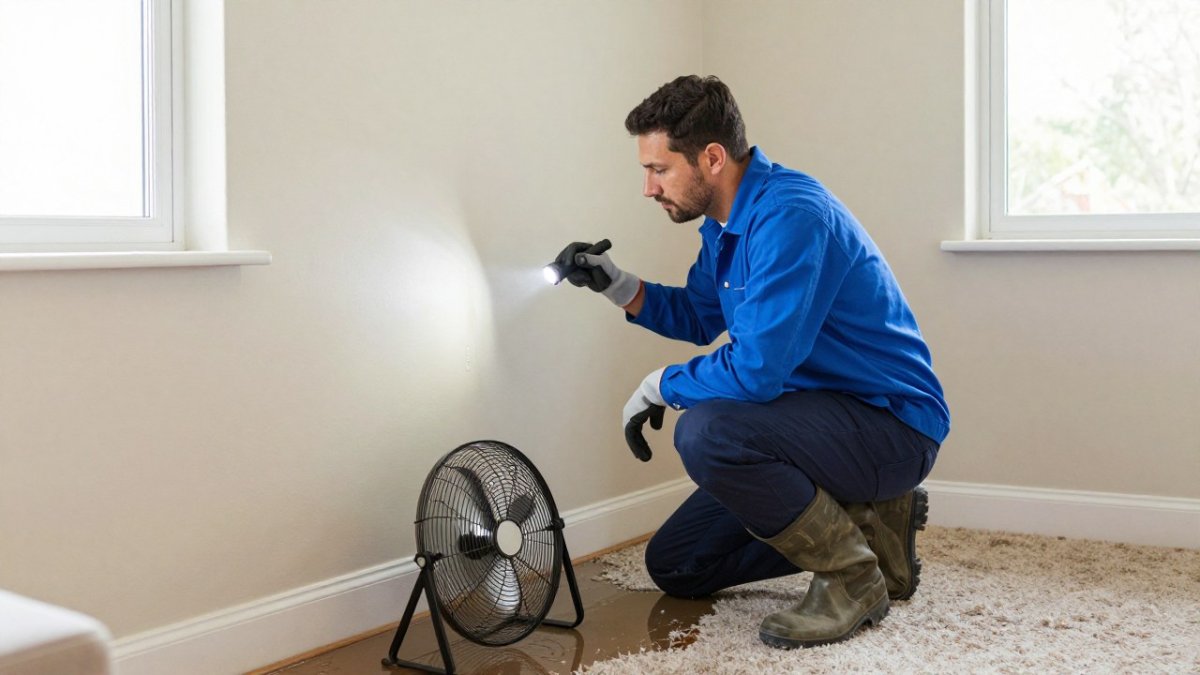
Drying a flooded house is about moving air and pulling moisture out, not just opening a window. Most homeowners make it worse by sealing the house up or running fans over wet drywall without removing the wet material first.
What actually works:
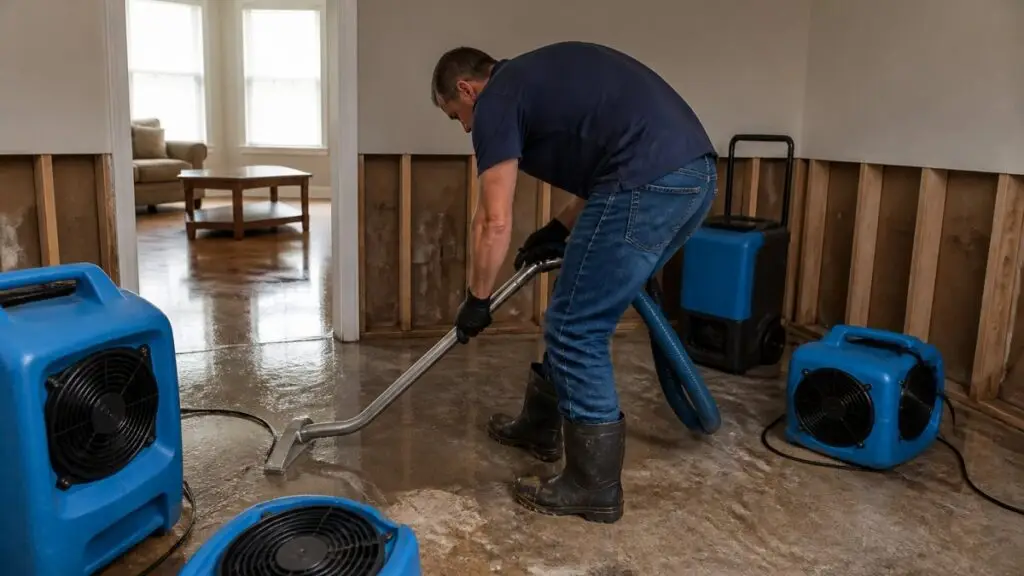
- Remove wet drywall and insulation so air can reach the studs.
- Use air movers aimed along walls and floors, not straight down.
- Run dehumidifiers to pull moisture from the air, not just circulate it.
- Check moisture levels with a meter before you call anything dry.
- Keep the AC running in dry mode to help lower humidity.
The common mistake is assuming a room feels dry and stopping. Wood framing and concrete slabs hold moisture long after surfaces feel cool and dry to the touch. Left wet, that hidden moisture feeds mold inside wall cavities where you cannot see it.
For a deeper look at what actually stops mold growth after flooding, read what kills mold after a flood.
What to Remove: Damaged Belongings, Drywall, and Wet Insulation
Anything that soaked up floodwater and cannot be cleaned and dried quickly has to go. That includes carpet, padding, soaked drywall, wet insulation, upholstered furniture, and mattresses.
What usually stays:
- Solid wood furniture that can be cleaned and dried
- Hard surfaces like tile, concrete, and metal
- Clothing and linens that can be washed in hot water
What usually goes:
- Carpet and carpet padding
- Wet drywall below the flood line
- Fiberglass insulation that touched floodwater
- Particleboard furniture and soaked mattresses
Cut drywall about a foot above the visible water line so you can confirm the studs are dry. Bag debris and haul it out rather than letting it sit in the garage, where it keeps feeding moisture and odor.
For valuables, ask about contents pack-out. We inventory, clean, and store salvageable items off site so they are not lost to secondary damage while the house dries.
Filing a Flood Damage Insurance Claim That Gets Results
A strong flood damage insurance claim starts with documentation you build on day one, not after the adjuster arrives.
Build your file with:
- Time-stamped photos and video of every room, every item, and the water line on the walls
- A written inventory of damaged belongings with receipts, model numbers, or photos where you have them
- Receipts for emergency purchases like pumps, fans, or a hotel stay
- Notes on the date, cause, and duration of the loss
- Contractor reports and daily moisture readings
- Any correspondence with your agent or adjuster, kept in one folder
Know what your policy actually covers. Coverage for sudden water damage often differs depending on the cause, and flood coverage is usually a separate policy with its own terms. Ask your agent to explain how your policy treats each type of water loss.
Coordinate with the adjuster instead of waiting on one. A common pattern is a homeowner who photographs everything, keeps damaged materials in place until the adjuster has seen them, and provides a written inventory up front.
Budget for the gap between the claim and the rebuild. Many policies settle claims in stages, so plan for possible out-of-pocket costs during the rebuild. Keep every receipt for emergency mitigation and ask your insurer what it will cover.
If you want to strengthen your position, our guide on how to maximize your water damage insurance payout covers documenting damage and working with adjusters. We work directly with insurance companies and bill them directly.
Watch out: a public adjuster or contractor who promises a specific payout before reading your policy, or who asks you to sign over your claim rights, is a reason to pause and get a second opinion before signing anything.
The Flood Damage Repair Timeline: What Happens and When
A realistic flood damage repair timeline moves in phases, and each phase has to finish before the next one starts. Rushing the order is how homes end up with mold behind fresh paint and how a claim gets trimmed after the fact.
| Phase | What Happens | Typical Timing |
|---|---|---|
| Emergency response | Safety check, water extraction, documentation, board-up if needed | Day 1 |
| Demolition | Removal of wet drywall, insulation, carpet, and debris | Days 1-3 |
| Drying | Air movers, dehumidifiers, daily moisture readings | Days 3-7 |
| Cleaning | Disinfection of studs, plates, floors, and hard surfaces | Days 5-8 |
| Utility and structural inspection | Licensed trades check electrical, plumbing, HVAC, and framing | Days 5-10 |
| Permit and inspection window | Local building department review before structural or utility work | Varies by jurisdiction |
| Finish work | Drywall, paint, trim, and fixtures by licensed trades | Week 2 onward |
| Final inspection and clearance | Moisture verification and, where required, municipal sign-off | After finish work |
Drying time depends on how deep the water went and how humid the weather stays. Long humid stretches in the metro can add days to drying, especially in older homes with crawl spaces that trap moisture.
Permits and inspections are the step most homeowners underestimate. Rebuild work often requires permits and inspections from your local building department. Two points matter most:
- Substantial-damage determinations. If a home sits in a mapped floodplain, local floodplain rules may apply when damage is significant. Ask your local floodplain administrator how those rules affect your rebuild.
- Scope of the permit. A permit pulled for one trade does not cover another. Electrical, plumbing, and mechanical work each need their own sign-off in most metro jurisdictions, and the final inspection is what closes the file.
Ask your local building department three questions before finish work starts: does this address sit in a mapped floodplain, does the damage trigger a substantial-damage review, and which inspections are required for the trades involved. Get the answers before demolition is complete, because the answers shape what can be rebuilt and how.
Choosing a contractor carefully protects the timeline and the claim. Get a written scope that lists what will be removed, what will be dried, and what will be rebuilt, plus proof of insurance and a schedule before anyone swings a hammer.
Watch out: a contractor who asks for a large upfront payment in cash, offers to “handle the adjuster for you,” or pressures you to sign before you have read the scope is showing the classic warning signs of disaster-recovery fraud. Slow down and get a second written estimate.
Aquaflame Restores It handles the water damage side of this timeline, extraction, drying, cleaning, contents pack-out, and plumbing repairs, and documents moisture readings you can hand to your insurer and your contractor.
Call Aquaflame Restores It for a Free Flood Damage Assessment
The fastest way to stop guessing is to get a trained set of eyes on the damage. Aquaflame Restores It is locally owned in Decatur, GA, with 24/7 emergency response and IICRC-certified technicians on site within one hour.
Here is what a free assessment gives you:
- A clear read on what can be saved and what has to go
- Moisture readings that show how far water traveled
- Documentation you can share with your insurer
- Direct insurance billing
- Contents pack-out for belongings worth saving
You can also review our water damage restoration service to see how emergency response, mold work, and insurance support fit together. No pressure, no guesswork, just a straight answer about your home.
Flood damage gets worse with every hour it sits, and the decisions you make in the first two days shape the whole recovery. If you are standing in a wet house in Decatur, Lithonia, Marietta, or anywhere across metro Atlanta, do not wait for the smell to tell you something is wrong. Call Aquaflame Restores It at 678-379-8000 for a free assessment, and let IICRC-certified technicians handle the extraction, drying, and insurance paperwork while you focus on your family.
Frequently Asked Questions
How long does it take for a flooded house to dry out?
Drying time depends on how much water entered, the materials affected, and Georgia’s humidity. Drying time varies with the materials affected and conditions, and wet insulation and wall cavities can take longer. Mold can begin growing quickly on wet materials, so starting water removal and drying promptly is important. A moisture meter helps confirm when materials are truly dry, not just dry to the touch.
What should I do first after severe flooding?
First, make sure everyone is safe and the power is off if water reached outlets or electrical panels. Do not wade through standing water. Call your insurance company to start a flood damage claim, then document everything with photos and video before moving anything. Contact a professional restoration team for a damage assessment. Avoid entering rooms with sagging ceilings or structural damage until an expert confirms it is safe.
Can a house be repaired after a flood?
Most flood-damaged homes can be repaired, but the extent depends on water depth, contamination, and how quickly drying began. Materials like drywall, insulation, and carpet often need removal, while concrete slabs and studs can usually be cleaned and dried. A professional assessment determines what can be saved. In metro Atlanta, older homes with crawl spaces may need extra moisture checks to prevent hidden mold.
Does FEMA pay to rebuild homes after a flood?
Document your flood damage thoroughly and work with your insurance adjuster to understand what your policy covers. For questions about government disaster assistance, check with the official agency directly.