Last Updated: October 25, 2026
Quick Summary
Emergency flood cleanup starts with safety: shut off power only from dry ground, then document every room before moving anything. Next, stop the water source, extract standing water, remove wet materials, clean and sanitize, and dry the structure completely.
- Treat every flood involving rising or storm water as Category 3 black water.
- Restoration crews commonly cut drywall 12 to 24 inches above the visible waterline.
- Disinfectant often needs about 10 minutes of contact time to be effective.
- Photograph the damage before cleanup to protect your flood damage insurance claim.
- Aquaflame Restores it offers on-site arrival within one hour across metro Atlanta.
Table of Contents
- Your First 24 Hours: Emergency Flood Cleanup Safety and Priorities
- Your Flood Cleanup Checklist: What to Do First, Second and Third
- Emergency Water Extraction: Removing Standing Water Fast
- Removing Debris, Silt and Damaged Materials
- Cleaning, Sanitizing and Disinfecting After a Flood
- Structural Drying After a Flood: Air Movers, Dehumidifiers and Moisture Monitoring
- Building Your Flood Damage Insurance Claim
- Call for 24/7 Emergency Flood Cleanup Before the Damage Spreads
- Frequently Asked Questions
Your First 24 Hours: Emergency Flood Cleanup Safety and Priorities
Standing water can destroy a home within a day.
The first rule: do not walk into floodwater until you have shut off the power and confirmed the structure is safe.
Below is the exact sequence our IICRC-trained technicians use, from the first minute you spot water to the day your home is dry and rebuilt.
Homeowner Safety Checklist Before You Enter a Flooded Property
Run through this list before you step inside. Skipping it is the most common mistake we see, and the one that gets people hurt.
- Shut off electricity at the breaker only if you can reach the panel while standing on dry ground
- Turn off the gas supply if you smell gas or hear hissing
- Wear rubber boots, gloves, and eye protection
If the panel is in the flooded zone, call a professional. Water and live electricity do not mix, and no possession is worth that risk.
Floodwater Contamination Categories and Health Precautions
Not all floodwater is equally dangerous. The EPA’s guidance on floodwater contamination separates it into three categories, and knowing which one you are dealing with changes how you clean.
Treat every flood involving rising water or storm water as Category 3. Wash your hands after contact, keep open cuts covered, and throw away any food that touched the water.
Your Flood Cleanup Checklist: What to Do First, Second and Third
A flood cleanup checklist keeps you from making expensive mistakes in the wrong order. Here is the sequence we recommend.
| Order | Action | Why It Comes Here |
|---|---|---|
| 1 | Make the property safe | Prevents injury and electrical shock |
| 2 | Document everything | Protects your insurance claim |
| 3 | Stop the water source | Prevents further damage |
| 4 | Remove standing water | Limits soaking and mold risk |
| 5 | Remove wet materials and debris | Opens walls to airflow |
| 6 | Clean and sanitize | Removes contamination |
| 7 | Dry the structure | Prevents hidden mold growth |
Most guides jump straight to water removal, but documentation has to happen while the damage is still visible. Once you haul out wet carpet, your adjuster loses the ability to see the full picture.
Emergency Water Extraction: Removing Standing Water Fast
Emergency water extraction is the physical removal of standing water using pumps, wet vacuums, and truck-mounted equipment. Speed matters: every hour of standing water weakens flooring, soaks drywall, and feeds mold.
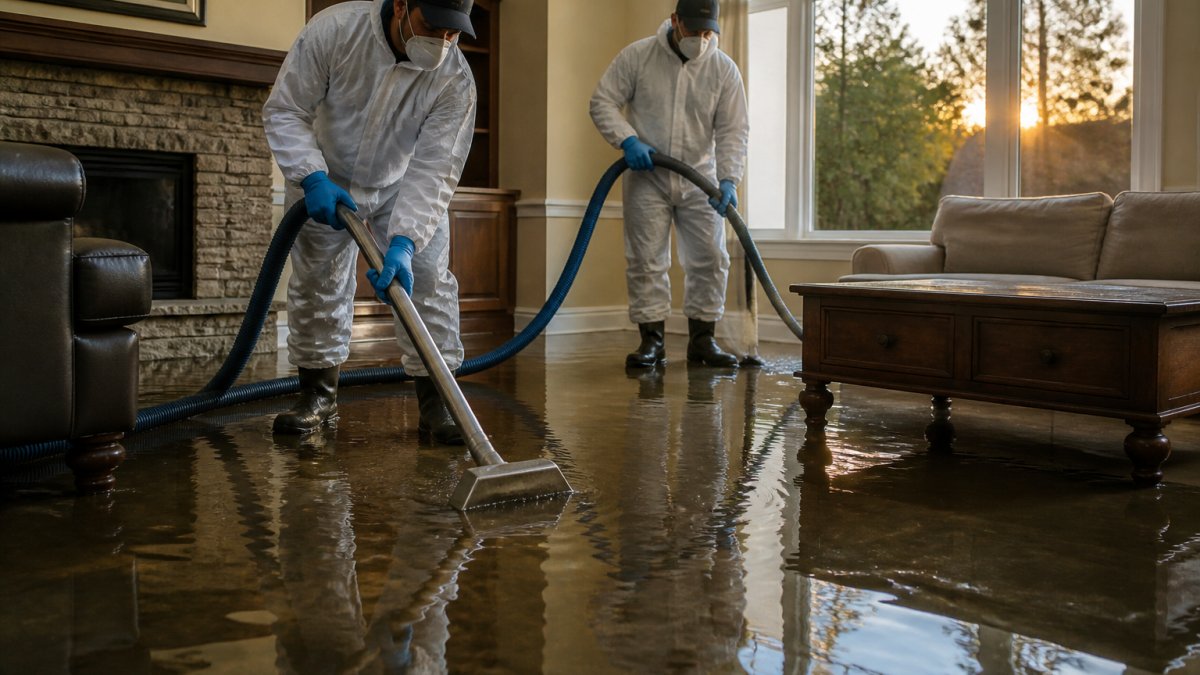
We start with the deepest water and work outward. For the techniques involved, our guide on water removal techniques and when to call experts walks through the methods step by step.
DIY Cleanup Versus Calling a Professional Team
DIY cleanup works for small, clean-water spills caught within minutes. It does not work for rising water, sewage, or anything soaked into walls and subfloors.
If the water is clean, covers a small area, and you caught it fast, a wet vacuum and a fan may be enough. Our breakdown of water extraction versus water mitigation explains the difference clearly.
Removing Debris, Silt and Damaged Materials
Floodwater leaves behind silt, mud, and debris in every corner, and soaked materials that cannot be saved have to go. This is where homeowners most often throw away salvageable items or keep materials that will grow mold within days. A disciplined approach protects both your health and your insurance claim.
What to Remove and What to Keep
Use the water line and material type as your guide:
- Remove: carpet and carpet padding, saturated insulation, drywall that has absorbed water above the visible waterline, particleboard and MDF furniture, mattresses, upholstered furniture that was submerged, and any porous item that contacted Category 3 (black) water.
- Evaluate: solid wood furniture, metal appliances, and hardwood flooring may be salvageable if dried within 24-48 hours and cleaned properly. Appliances with insulation or electronics that were submerged usually should be replaced.
- Keep: structural framing, concrete, and solid masonry can typically be dried and cleaned rather than removed.
Restoration crews commonly cut drywall 12 to 24 inches above the visible waterline to expose wet framing and insulation. This “flood cut” gives air movers and dehumidifiers access to the wall cavity and lets you confirm the framing is dry before closing it back up.
Silt and Mud Removal Comes First
Silt removal comes before cleaning, because you cannot sanitize a surface still covered in mud. Scoop out heavy mud while it is wet, pressure-wash or hose down hard surfaces, and extract the dirty water with a wet vacuum. Work from the cleanest areas toward the most contaminated so you do not track contamination back through the house, and bag debris as you go.
Do not use a standard shop vacuum to pick up water unless it is rated for wet pickup. Standard dry vacuums can short out and create a shock hazard. Use a wet/dry vacuum or call a professional with truck-mounted extraction equipment.
Protective Equipment and Handling
Wear rubber boots, gloves, eye protection, and an N95 respirator when handling debris that may contain mold, sewage, or asbestos. Older homes (pre-1980) may have asbestos in floor tile, insulation, or joint compound; if you suspect it, stop and have it tested before disturbing it. Double-bag sharp items and keep bags away from children and pets.
Disposal Rules and Curbside Pickup
Most municipalities treat flood debris as construction and demolition waste, which may not be accepted in regular curbside trash. Common rules:
- Separate household trash, construction debris, and hazardous waste (paint, chemicals, electronics).
- Place debris at the curb in bags or bundles according to local pickup rules.
- Do not mix debris with regular recycling.
Keep receipts for any dumpster rental or disposal fees; those costs are often reimbursable under a flood insurance claim.
Be Honest About What Is Salvageable
Waterlogged particleboard furniture, mattresses, and stuffed items rarely come back, and keeping them invites mold. Replacing a mattress almost always costs less than remediating the mold that spreads from it. When in doubt, photograph the item, note it on your claim inventory, and discard it.
Cleaning, Sanitizing and Disinfecting After a Flood
Cleaning removes dirt, sanitizing reduces bacteria, and disinfecting kills what remains. All three are needed after contaminated water; skipping any one leaves a home that looks clean but is not safe. Match your effort to the water category rather than treating every flood the same.
Match the Protocol to the Water Category
- Category 1 (clean water): from a broken supply line, rainwater, or a tub overflow. Dry within 24-48 hours. Clean hard surfaces with detergent and water, then sanitize. Porous materials that dry quickly may be salvageable.
- Category 2 (gray water): from washing machines, dishwashers, or toilet bowls without waste. Treat as contaminated. Remove and discard porous materials that soaked up the water, clean hard surfaces with detergent, then disinfect.
- Category 3 (black water): sewage, ground surface water, and rising storm water. This carries bacteria, viruses, and parasites. Discard all porous materials that contacted the water, including carpet, padding, drywall, and insulation. Hard surfaces require detergent cleaning followed by disinfection, and some porous structural materials may need removal rather than cleaning.
Treat every flood involving rising water or storm water as Category 3. When in doubt, call a professional team rather than handling contaminated water yourself.
A Step-by-Step Cleaning Sequence
- Remove debris and silt first. You cannot disinfect a surface that is still covered in mud.
- Wash with detergent and water. Use a stiff brush on hard surfaces and pay attention to corners, seams, and the backs of cabinets.
- Rinse and extract. Remove dirty wash water with a wet vacuum or mop before applying disinfectant; disinfectant stops working when it is diluted by dirt.
- Apply disinfectant and respect dwell time. Follow the label. Common products require the surface to stay wet for the labeled contact time (often around 10 minutes) to be effective. Do not wipe it off immediately.
- Allow to dry completely. Disinfectant residue can be left to air-dry unless the label says otherwise.
What to Use
Use a disinfectant labeled for the surface and organism you are targeting, and follow the EPA-registered label directions exactly. Diluted household bleach works on hard, non-porous surfaces but must be mixed fresh, used with ventilation, and never mixed with ammonia or other cleaners. For porous materials after Category 3 water, replacement is safer than cleaning.
Pay special attention to areas that stay damp, like crawlspaces, the backs of cabinets, and the seams where walls meet floors. Those are the places mold takes hold first, and they are the places a quick wipe-down misses.
Health Precautions During Cleaning
Wash your hands after contact, keep open cuts covered, and wear gloves and eye protection. Throw away any food that touched the water, including sealed packages that were submerged. Do not run central HVAC until the system has been inspected and cleaned; contaminated air can spread through the house.
Verify Before You Rebuild
Cleaning is not finished when surfaces look clean. Use a moisture meter to confirm materials are dry before closing up walls or reinstalling flooring, and check for discoloration or musty odors in the days after. If you find mold, our comparison of professional mold removal versus DIY methods covers the EPA guidelines and when to bring in experts.
Structural Drying After a Flood: Air Movers, Dehumidifiers and Moisture Monitoring
Structural drying after a flood is the controlled removal of moisture from walls, floors, and framing until the building is dry. It decides whether your home stays mold-free, and it is the step most DIY efforts get wrong.
Air movers push air across wet surfaces to speed evaporation. Dehumidifiers pull that moisture out of the air so it does not resettle.
Building Your Flood Damage Insurance Claim
A flood damage insurance claim lives or dies on documentation. Photograph the damage before cleanup, keep receipts, and write down what was damaged and when.
Your adjuster works for the insurance company. That is not a knock on them, it is just how the roles work, and understanding the difference between a public adjuster and an insurance adjuster helps you negotiate fairly. Our guide on public adjuster vs insurance adjuster explains who pays and when to hire help.
Call for 24/7 Emergency Flood Cleanup Before the Damage Spreads
Every hour you wait, water spreads further into your walls and mold gets a stronger foothold. That is the challenge with flood damage: the damage you can see is only half the story.
Aquaflame Restores it responds 24/7 with IICRC-trained technicians and on-site arrival within one hour across metro Atlanta. We handle extraction, structural drying, and full reconstruction from one team, and we bill your insurance directly so the process stays simple. If you need help now, call for 24/7 emergency flood cleanup before the water does more damage.
Frequently Asked Questions
What should I do first after a flood in my home?
Get everyone out and stay out until you can confirm the power is off and the structure is sound. From a dry spot, shut off electricity at the breaker only if you can reach it without touching water. Then photograph every affected room before you move anything, call your insurer, and start emergency flood cleanup by extracting standing water. Porous items soaked by contaminated floodwater should be bagged and discarded rather than dried and reused.
Can I clean up flood damage myself?
You can handle a small, clean-water spill with towels, a shop vac and fans. Flood cleanup is different: rising water and storm water usually carry silt, sewage and bacteria, and a flooded house needs fast extraction plus controlled structural drying to stop mold. If water reached wall cavities, flooring or insulation, or the flooded area is larger than roughly a single room, a professional crew with moisture monitoring and drying equipment will finish faster and document the loss for your claim.
How long does emergency flood cleanup take?
Water extraction is usually finished the same day, often within hours of arrival. Structural drying after a flood typically runs three to five days, depending on materials, humidity and how long the water sat. Technicians confirm completion with moisture readings rather than by touch. Rebuilding damaged drywall, flooring or trim comes after drying is verified, so the full timeline depends on the scope of the flood damage.
Does homeowners insurance cover emergency flood cleanup?
It depends on the source of the water. Sudden events such as a burst pipe, failed water heater or leaking A/C are commonly covered under homeowners policies, while rising water from flash flooding usually requires separate flood insurance through the National Flood Insurance Program or a private carrier. Photograph damage before cleanup, keep receipts and ask your adjuster which category applies before you throw anything away.
When water is rising and the clock is against you, you need a team that shows up fast and handles everything from extraction to rebuilding. Aquaflame Restores it offers 24/7 emergency response, on-site arrival within one hour, and direct insurance billing, all from one locally-owned team. Get started with Aquaflame Restores it and get your home dry, clean, and restored.

