Table of Contents
- Public Adjuster vs Insurance Adjuster: Core Differences
- Who Pays for Each Type of Adjuster
- When to Hire a Public Adjuster for Water Damage
- Public Adjuster Fee Percentage and Compensation
- How to Appeal a Denied Water Damage Insurance Claim
- Pros and Cons of Hiring a Public Adjuster
- When to Avoid a Public Adjuster
- Conclusion
Last Updated: August 23, 2026
Public Adjuster vs Insurance Adjuster: Core Differences
When water damage strikes your home, you’re facing insurance paperwork, damage assessments, and settlement negotiations at the worst possible time. Understanding the difference between a public adjuster and an insurance company adjuster is critical because they work for opposing sides.
An insurance company adjuster is employed by your insurance carrier to investigate and value claims on the insurer’s behalf. They assess damage, review policy provisions, and determine what the insurer will pay. A public adjuster is a licensed professional hired by you to represent your interests exclusively, negotiating directly with insurance companies to maximize your settlement.
This distinction matters enormously. An insurance company adjuster has no obligation to you and is trained to identify coverage gaps and limit payouts. A public adjuster has a fiduciary duty to act in your best interest, not the insurer’s.
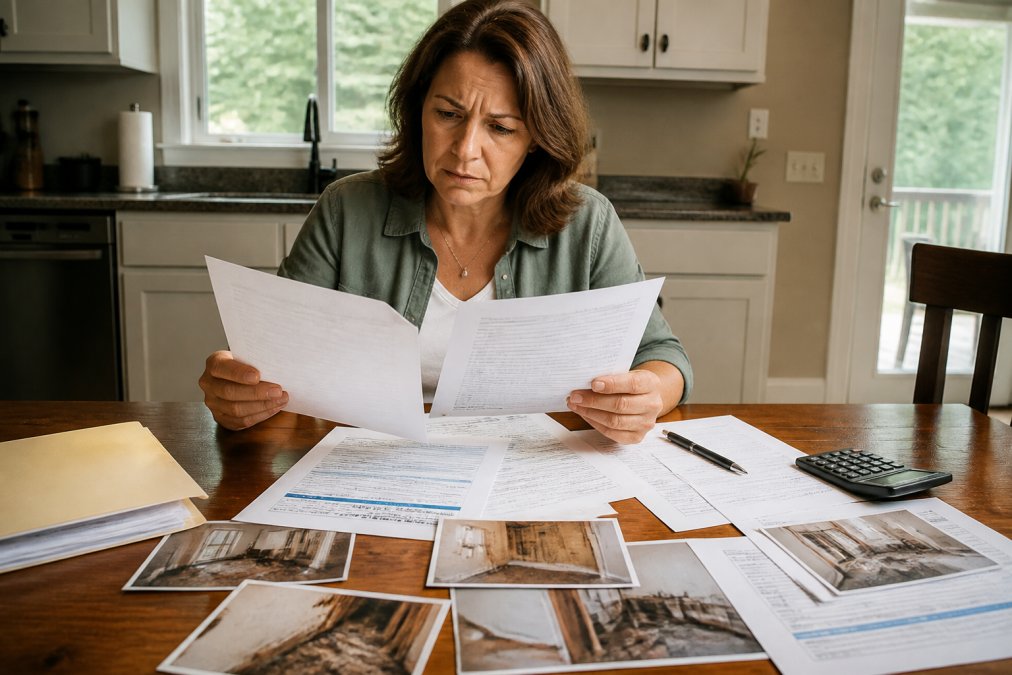
Insurance company adjusters process dozens of claims monthly within parameters set by the insurer. Public adjusters typically handle fewer claims and invest significant time in each one, documenting damage comprehensively and building stronger cases for maximum recovery.
Who Pays for Each Type of Adjuster
The funding model behind each adjuster type reveals their fundamental alignment with your interests, or lack thereof.
Insurance company adjusters are paid by the insurance company. This creates an inherent incentive structure: the less the insurer pays out, the better the bottom line. The adjuster works within a system designed to control costs.
Public adjusters operate on contingency fees, meaning they’re paid only if your claim succeeds. Typically, they take 5% to 10% of the settlement increase they negotiate above the insurer’s initial offer. This aligns their financial incentive directly with yours: the higher your settlement, the higher their fee.
Some public adjusters charge flat fees or hourly rates, though contingency arrangements are far more common. The contingency model eliminates upfront costs and ensures the public adjuster has skin in the game.
An insurance company adjuster’s paycheck comes regardless of your outcome. A public adjuster’s income depends entirely on recovering more money than you’d receive alone. That structural difference influences how thoroughly each professional investigates your claim and how aggressively they negotiate.
Aquaflame Restores It handles direct insurance billing for restoration services, meaning you’re not paying out of pocket while your claim processes. This integrated approach means one team coordinates both restoration work and insurance claim process, eliminating the complexity of juggling multiple vendors.
When to Hire a Public Adjuster for Water Damage
Water damage claims are among the most complex insurance disputes because damage can be hidden, progressive, and difficult to quantify.
Hire a public adjuster when your initial settlement offer seems significantly lower than your documented damage. Insurance company adjusters sometimes underestimate water damage because they don’t conduct the same depth of investigation a public adjuster would. Hidden moisture behind walls, structural damage, or mold remediation costs often get undervalued.
A public adjuster becomes essential when your claim involves multiple coverage areas. Water damage from a burst pipe might involve property damage, business interruption, and additional living expenses. Navigating these overlapping coverages requires expertise most homeowners lack.
Consider hiring a public adjuster if your claim was denied or partially denied. The claims denial appeal process is where public adjusters provide the most value. They understand how to challenge denial letters, identify policy language the insurer misinterpreted, and build a legal case for reconsideration.
Large claims justify public adjuster fees more easily. If your settlement should be $50,000 but the insurer offers $35,000, a public adjuster’s fee of $2,500 to $5,000 is worth paying if they recover an additional $10,000. On smaller claims under $10,000, the fee percentage might consume most of the settlement increase.
Water damage from natural disasters often involves supplemental claims and policy complexities that favor professional representation. Public adjusters know how to navigate hurricane deductibles, water exclusions, and coverage limits that insurance company adjusters apply strictly.
Public Adjuster Fee Percentage and Compensation
Most public adjusters work on contingency, receiving a percentage of the settlement increase, the difference between what the insurer initially offered and what they recover. This percentage typically ranges from 5% to 10%, though some charge up to 15% for complex claims (naic.org). In Georgia, public adjuster fees are capped at 33.3% of the settlement (georgia.gov).
Some public adjusters charge flat fees ($500 to $3,000) or hourly rates ($150 to $300 per hour). Contingency arrangements are more common because they align incentives: the public adjuster profits only if you profit.
Before hiring a public adjuster, request a written fee agreement specifying the percentage, how it’s calculated, and any additional costs. Some adjusters charge for supplemental claims separately or add administrative fees.
On a $50,000 claim where the insurer initially offered $35,000, a public adjuster recovering $48,000 would earn $1,300 to $2,600 (5-10% of the $13,000 increase). You’d net $45,400 to $46,700, substantially better than the initial offer. On a $12,000 claim where the insurer offered $8,000, a public adjuster recovering $10,500 would earn $525 to $1,050 (5-10% of the $2,500 increase). Your net would be $9,450 to $9,975, an improvement, but the fee consumes more of the gain.
Many states regulate public adjuster fees by statute, capping them at specific percentages. Check your state’s insurance commissioner’s office for fee limits in your jurisdiction.
How to Appeal a Denied Water Damage Insurance Claim
When your insurance company denies your water damage claim, understanding the appeals process improves your chances of overturning the denial.
Start by requesting the insurer’s detailed denial letter, which must explain the specific reason for denial, whether it’s a coverage exclusion, policy limit issue, or determination that the damage isn’t covered. Common denial reasons include water damage exclusions, failure to mitigate damage, or determination that damage predates your policy. insurance adjuster negotiations.
Gather comprehensive documentation: photograph all damage from multiple angles, collect receipts for emergency mitigation, obtain written estimates from licensed restoration contractors, and document the timeline of discovery and reporting. This documentation becomes your appeal evidence.
Review your insurance policy carefully, focusing on the specific coverage section cited in the denial. Insurance policies often contain overlapping provisions, and the insurer may have applied a narrow interpretation when broader coverage exists.
Prepare a written appeal letter addressing the insurer’s denial reason point-by-point, including all supporting documentation: photographs, contractor estimates, timeline documentation, and expert assessments. Send your appeal via certified mail with return receipt, creating a paper trail.

If the insurer denies your appeal, escalate to your state’s insurance commissioner’s office. Most states have complaint procedures allowing policyholders to file formal complaints against insurers for bad faith claims handling. Filing a complaint often prompts the insurer to reconsider. In Georgia, you can file a complaint with the Office of Commissioner of Insurance and Safety Fire.
Consider hiring a public adjuster at the appeal stage if you haven’t already. Public adjusters understand bad faith claim handling and know how to frame appeals effectively. Their involvement often signals serious intent and sometimes prompts settlement before formal proceedings.
Pros and Cons of Hiring a Public Adjuster
Pros of hiring a public adjuster:
Public adjusters bring specialized expertise in claims negotiation and policy interpretation. Industry experience suggests they recover 10-30% more than policyholders receive without representation, though results vary by claim complexity (peer-reviewed research).
They handle the emotional burden of negotiating with your insurer, allowing you to concentrate on rebuilding. They document claims comprehensively, often identifying damage the insurance company adjuster missed. They negotiate aggressively on your behalf without the emotional friction that comes with direct negotiation.
Cons of hiring a public adjuster:
The contingency fee reduces your final recovery. A 10% fee on a $20,000 settlement increase costs you $2,000. On smaller claims, this percentage can be substantial relative to the recovery.
Some public adjusters operate with less integrity than others. Verify licensing and check complaint histories with your state’s insurance commissioner before hiring.
Public adjusters add time to the claims process. While they often recover more, they may extend negotiations longer than you’d prefer. They also work selectively, declining claims they believe unlikely to succeed.
When to Avoid a Public Adjuster
Not every water damage claim justifies hiring a public adjuster.
Avoid a public adjuster for minor claims under $5,000. The contingency fee will consume a significant percentage of any settlement increase.
Skip representation if your insurance company adjuster has already conducted a thorough investigation and provided a detailed, itemized settlement offer that aligns with contractor estimates.
Avoid representation if you lack documentation of the damage. Public adjusters can’t manufacture evidence; they work with what exists.
Don’t hire a public adjuster if your claim falls under a clear policy exclusion that courts have consistently upheld. You’d pay a fee for an unwinnable claim.
Skip representation if your insurer has already denied the claim and your state’s insurance commissioner has upheld that denial. Once regulatory review concludes against you, a public adjuster’s use diminishes significantly.
Avoid a public adjuster if you’ve already hired a restoration company like Aquaflame Restores It that manages direct insurance billing and claim coordination. Adding separate representation creates redundancy and potential conflicts. Aquaflame’s integrated approach eliminates the need for separate public adjuster representation in many cases.
Conclusion
The choice between relying on your insurance company’s adjuster and hiring a public adjuster comes down to claim complexity, settlement risk, and financial math. Insurance company adjusters work for your insurer’s interests; public adjusters work exclusively for yours.
For complex water damage claims, especially those involving denial appeals, multiple coverage areas, or significant settlement gaps, professional representation pays for itself. For straightforward claims with fair initial offers, the contingency fee may outweigh the benefit.
If you’ve experienced water damage and face insurance claim navigation, Aquaflame Restores It handles restoration and insurance coordination directly, eliminating the need to juggle multiple vendors. Our IICRC-trained technicians manage direct insurance billing, handle claim documentation, and coordinate with your insurance adjuster, providing comprehensive support from emergency response through final restoration. Call 24/7 for emergency service and let our team manage the complexity while you focus on recovery.
=== FAQ ANSWERS (audit these too, same rules) ===
[1] Q: What is the difference between a public adjuster and an insurance company adjuster?
A: An insurance company adjuster works for the insurance company and investigates claims to determine what the insurer owes. A public adjuster works for you, the policyholder, and advocates to maximize your settlement. Insurance adjusters assess damage to protect the insurer’s interests; public adjusters negotiate on your behalf to ensure fair claim payout. Public adjusters are licensed professionals who specialize in claim advocacy, while company adjusters are employees managing claims for multiple policyholders.
[2] Q: Are public adjusters worth the cost for water damage claims?
A: Public adjusters can be worth the cost if your water damage claim is complex, denied, or significantly undervalued by the insurance company. They typically work on contingency, meaning you pay only if they recover additional settlement money. For straightforward, small claims, the fee may outweigh the benefit. However, for major water damage involving structural drying, mold remediation, or policy disputes, a public adjuster’s expertise often results in settlements that exceed their fee, making them a worthwhile investment.
[3] Q: Can a public adjuster help if my insurance claim was denied?
A: Yes. A public adjuster can review your denial, identify coverage gaps or policy misinterpretations, and file an appeal on your behalf. They gather additional documentation, damage estimates, and evidence to support your case and present it to the insurance company. Many denials are overturned when a public adjuster challenges them with thorough documentation and knowledge of policy provisions. If the denial stands after appeal, they can advise you on further legal action or negotiation options.
[4] Q: How are public adjusters compensated for their services?
A: Most public adjusters work on a contingency fee basis, typically earning 5-15% of the final settlement amount. This means you pay nothing upfront, and the adjuster only gets paid if they recover additional money for you. The exact percentage varies by state regulations and the complexity of your claim. In Georgia, public adjuster fees are capped at 33.3% of the settlement. Some adjusters may charge flat fees or hourly rates for specific services, but contingency is the most common model, aligning the adjuster’s incentive with maximizing your settlement.
Frequently Asked Questions
What is the difference between a public adjuster and an insurance company adjuster?
An insurance company adjuster works for the insurance company and investigates claims to determine what the insurer owes. A public adjuster works for you, the policyholder, and advocates to maximize your settlement. Insurance adjusters assess damage to protect the insurer's interests; public adjusters negotiate on your behalf to ensure fair claim payout. Public adjusters are licensed professionals who specialize in claim advocacy, while company adjusters are employees managing claims for multiple policyholders.
Are public adjusters worth the cost for water damage claims?
Public adjusters can be worth the cost if your water damage claim is complex, denied, or significantly undervalued by the insurance company. They typically work on contingency, meaning you pay only if they recover additional settlement money. For straightforward, small claims, the fee may outweigh the benefit. However, for major water damage involving structural drying, mold remediation, or policy disputes, a public adjuster's expertise often results in settlements that exceed their fee, making them a worthwhile investment.
Can a public adjuster help if my insurance claim was denied?
Yes. A public adjuster can review your denial, identify coverage gaps or policy misinterpretations, and file an appeal on your behalf. They gather additional documentation, damage estimates, and evidence to support your case and present it to the insurance company. Many denials are overturned when a public adjuster challenges them with thorough documentation and knowledge of policy provisions. If the denial stands after appeal, they can advise you on further legal action or negotiation options.
How are public adjusters compensated for their services?
Most public adjusters work on a contingency fee basis, typically earning 5-15% of the final settlement amount. This means you pay nothing upfront, and the adjuster only gets paid if they recover additional money for you. The exact percentage varies by state regulations and the complexity of your claim. In Georgia, public adjuster fees are capped at 33.3% of the settlement. Some adjusters may charge flat fees or hourly rates for specific services, but contingency is the most common model, aligning the adjuster's incentive with maximizing your settlement.
This article was written using GrandRanker