Table of Contents
- Why Hidden Water Damage Matters
- Musty Odors and Dampness: Early Warning Signs
- Visual Signs: Discoloration, Peeling Paint, and Warping
- How to Detect Water Leaks Behind Walls
- Utility Bills and Water Meter Clues
- Signs of Mold from Water Damage
- How to Remove Water from Carpet and Prevent Further Damage
- What to Do When You Discover Hidden Water Damage
Last Updated: August 18, 2026
Why Hidden Water Damage Matters
Water damage doesn’t always announce itself. The most destructive leaks are the ones you can’t see, the ones working quietly behind your walls, under your floors, and inside your crawlspaces for weeks or months before you notice anything wrong. By then, the damage compounds. Structural integrity deteriorates. Mold colonies establish themselves. Your repair costs triple.
At Aquaflame Restores it, we’ve responded to countless emergencies where homeowners discovered hidden water damage far too late. The common thread: they missed the early warning signs. The musty smell that seemed minor. The slight discoloration on a ceiling corner. The water bill that jumped without explanation. Each of these signals points to something serious developing behind the scenes.
This guide walks you through the specific signs of hidden water damage that demand immediate attention. You’ll learn how to spot them, where to look, and what to do the moment you suspect a leak. The goal is simple: catch problems early, before they become catastrophic.
Musty Odors and Dampness: Early Warning Signs
A musty odor is often the first sign that moisture accumulation is occurring somewhere in your home. This smell comes from mold spores and mildew growth thriving in damp environments. If you notice it in a specific room or area, that’s your cue to investigate.
Dampness itself is harder to detect visually, but it’s equally telling. Run your hand along walls, especially in basements, crawlspaces, and around plumbing fixtures. Does the surface feel clammy or slightly wet? Press your palm against drywall in suspicious areas. Saturated drywall feels noticeably different from dry material, it’s softer, heavier, and sometimes tacky to the touch.
Pay special attention to corners, baseboards, and areas near HVAC systems. These spots collect moisture naturally and are common entry points for water intrusion. If you detect dampness, don’t assume it’s temporary. Moisture that persists indicates an ongoing water source, not just humidity.
Ignoring musty odors can lead to hidden mold colonies spreading through wall cavities. By the time the smell becomes overwhelming, the contamination is often extensive and expensive to remediate.
Visual Signs: Discoloration, Peeling Paint, and Warping
Water stains appear as dark patches or rings on walls and ceilings. They start subtle, a faint brown or yellowish mark you might dismiss as age or dust. Over time, they darken and expand. These stains indicate water has passed through that material, either actively or in the past.
Peeling paint and bubbling wallpaper signal that moisture is pushing from behind the surface. Paint adheres poorly to damp substrates. When water saturates the drywall underneath, the paint loses its grip and begins to separate. Bubbling wallpaper works the same way, the adhesive fails as moisture weakens the bond.
Warping and buckling of flooring, baseboards, or wall sections are advanced signs. Wood absorbs water and swells. When multiple boards swell simultaneously, they push against each other, creating visible waves or buckles. Laminate and vinyl flooring can bubble or lift at seams when moisture penetrates underneath.
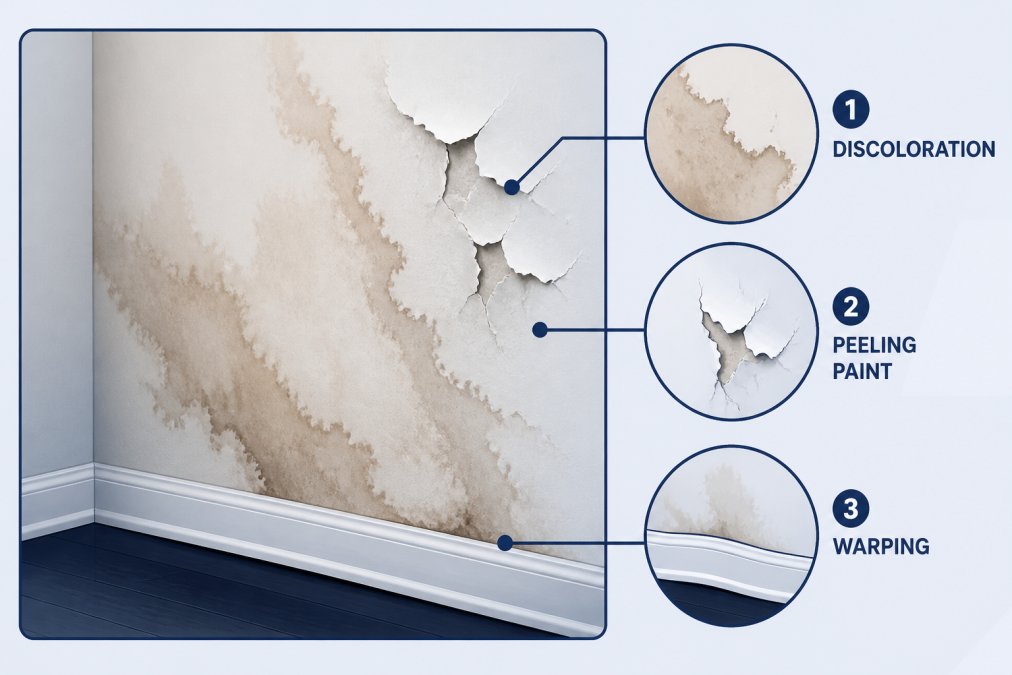
Check these areas first: around windows and doors, basement walls, around bathtubs and shower enclosures, and anywhere a roof leak could drip down. If you spot any of these visual signs, the water damage is no longer hidden, it’s announcing itself loudly.
Water stains don’t always mean active leaking right now. Old stains indicate past water events that may have already dried. But they mark the path water took, which helps identify where future leaks might occur. Address the root cause (roof damage, foundation cracks, plumbing issues) to prevent recurrence.
How to Detect Water Leaks Behind Walls
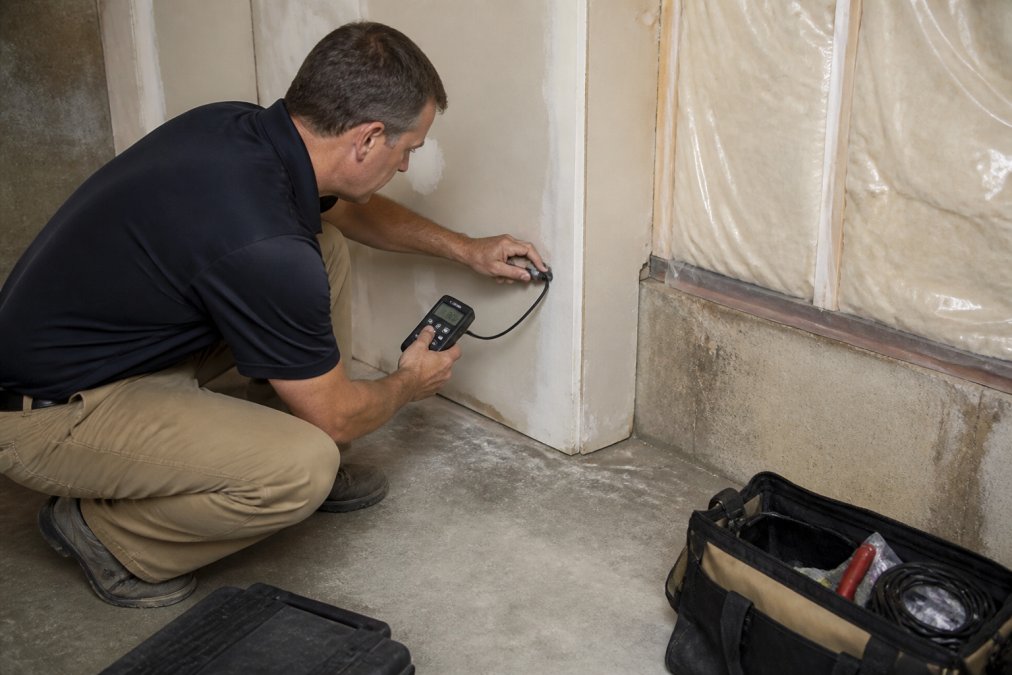
Detecting leaks behind walls requires systematic checking. Start with a moisture meter, an inexpensive tool available at most hardware stores. This device measures the moisture content in materials. Press it against walls, baseboards, and subflooring in areas where you suspect water intrusion. Readings above 20% moisture content indicate saturation.
Thermal imaging offers a more advanced approach. Wet materials register at different temperatures than dry ones. A professional-grade thermal camera can reveal moisture patterns invisible to the naked eye. Many restoration companies use thermal imaging as part of their diagnostic process to locate hidden water damage before it spreads further.
Listen for running water sounds inside walls. Turn off all water-using appliances and listen carefully near suspected leak areas. A faint hissing or trickling sound suggests active water movement inside the wall cavity. This is a strong indicator of a plumbing leak that needs immediate professional attention.
Check your water meter as a diagnostic tool. Turn off all water-using fixtures in your home. Write down the meter reading. Wait 30 minutes without using any water. Check the meter again. If it changed, you have an active leak somewhere in your plumbing system.
Inspect crawlspaces and attics with a flashlight. Look for standing water, wet insulation, or discolored wood joists. These spaces are where many hidden leaks develop unnoticed. Mold growth often establishes itself in these areas first because they’re rarely visited and poorly ventilated.
Utility Bills and Water Meter Clues
An unexplained increase in your water utility bill is one of the most reliable indicators of hidden water damage or active leaking. If your water usage hasn’t changed but your bill jumped, investigate immediately. A sudden spike often means water is escaping somewhere you can’t see.
Compare your current bill to the same month last year. A difference of 20-30% or more warrants investigation. Track your usage over several months. If the spike is consistent and unexplained, a hidden leak is likely the cause.
Your water meter provides concrete data. Most meters have a small dial or digital display. Check it regularly. If you’re not actively using water but the meter is advancing, water is flowing through your system somewhere. This diagnostic method catches leaks that might otherwise go undetected for months.
A single small leak, even just a pinhole-sized opening in a water supply line, can waste thousands of gallons annually. Detecting it through a utility bill spike often saves money compared to the damage that develops if the leak goes unaddressed.
Signs of Mold from Water Damage
Mold growth follows water damage predictably. Where moisture accumulates and lingers, mold colonies establish themselves within 24-48 hours. Visible mold appears as dark spots, fuzzy growth, or discoloration on surfaces. Colors range from black to green to orange depending on the mold species.
Mold doesn’t need visible water to thrive. It grows inside walls, under flooring, and in crawlspaces where humidity stays elevated. This is why hidden water damage is so dangerous, it creates ideal conditions for mold to spread unseen.
Mold spores trigger allergic reactions and respiratory issues in many people. If household members experience unexplained coughing, sneezing, or respiratory symptoms that worsen indoors, mold contamination may be present. These symptoms often improve when people leave the home for extended periods.
Look for mold in these high-risk areas: bathroom walls and ceilings, basement corners, crawlspaces, attic spaces, and around plumbing penetrations. If you find visible mold growth, the underlying moisture problem needs immediate attention. Professional mold remediation removes the contamination, but the root cause, the water intrusion or moisture source, must be fixed to prevent recurrence.
How to Remove Water from Carpet and Prevent Further Damage
Acting quickly after water exposure minimizes damage. If water has saturated carpet, extraction equipment removes standing water within hours of the event. Professional-grade extractors pull water from carpet fibers and the padding underneath far more effectively than consumer equipment.
Drying follows extraction. Industrial dehumidifiers and air movers circulate air through the carpet, evaporating remaining moisture. This process typically takes 24-72 hours depending on humidity levels and carpet thickness. Incomplete drying allows mold to establish itself, so professional monitoring is essential.
Carpet padding often cannot be salvaged if saturated. The padding absorbs water like a sponge and retains moisture even after extraction. Replacement padding prevents mold growth in the subfloor beneath. This is why professional restoration companies recommend padding replacement after significant water exposure.
For minor water exposure (small spills or brief contact), immediate action prevents permanent damage. Blot the area with towels. Open windows and run fans to promote air circulation. Use a wet vacuum to extract as much water as possible. If the carpet dries within 24-48 hours, it may be salvageable.
Leaving wet carpet in place for more than 48 hours almost guarantees mold growth and permanent odor. The longer moisture remains trapped, the more likely the carpet will require complete replacement rather than restoration.
What to Do When You Discover Hidden Water Damage
The moment you suspect hidden water damage, stop the water source if possible. Shut off the main water supply if a plumbing leak is involved. For roof leaks, place buckets to catch dripping water and move valuables away from the affected area. Immediate action prevents additional damage from occurring while you arrange professional help.
Document everything. Take photos and videos of affected areas. Note when you first noticed the problem and what signs alerted you. This documentation supports insurance claims and helps restoration professionals understand the scope of damage.
Call a professional restoration company immediately. Hidden water damage requires expert assessment to determine the full extent of the problem. Professionals use moisture meters, thermal imaging, and other diagnostic tools to locate all affected areas. What appears to be a small leak might extend into wall cavities or crawlspaces where major damage is developing unseen.
Aquaflame Restores it offers 24/7 emergency response with a 30-minute arrival guarantee. Their IICRC-trained technicians assess hidden water damage comprehensively, handle direct insurance billing, and manage the complete restoration process from extraction through reconstruction.
Do not attempt to dry the property yourself. Professional equipment removes moisture far more effectively than consumer tools. Incomplete drying creates conditions for mold growth and structural deterioration that multiply repair costs significantly.
| Detection Method | What It Reveals | When to Use |
|---|---|---|
| Visual inspection | Surface stains, discoloration, peeling paint | Initial assessment |
| Moisture meter | Moisture content in materials | Confirm suspected problem areas |
| Thermal imaging | Temperature variations indicating wet spots | Locate hidden moisture behind walls |
| Water meter check | Active leaks in plumbing system | Monthly monitoring |
| Utility bill analysis | Unexplained water usage increase | Quarterly review |
| Mold inspection | Visible mold growth and contamination | Areas with persistent dampness |
| Thermal/acoustic listening | Running water sounds in walls | Pinpoint active plumbing leaks |
Prevention is always more cost-effective than restoration. Inspect your home regularly for the early warning signs covered in this guide. Address small problems before they become hidden catastrophes. Maintain your plumbing system, keep gutters clear, and ensure proper grading around your foundation to direct water away from the structure.
If you discover signs of hidden water damage, contact a professional immediately. The longer water sits inside your home, the more expensive the recovery becomes. Early intervention saves money, protects your family’s health, and preserves your home’s structural integrity.
Hidden water damage spreads silently and compounds quickly. The musty smell, the subtle stain, the unexplained utility bill spike, these are your home’s warning signals. Ignoring them transforms manageable problems into expensive disasters. Aquaflame Restores it’s IICRC-trained technicians specialize in identifying and remediating hidden water damage before it threatens your home’s structural integrity. With 24/7 emergency availability and a 30-minute response guarantee, they provide the rapid professional assessment and comprehensive restoration your property needs. When water damage strikes, professional expertise makes the difference between recovery and ruin.
Frequently Asked Questions
How do I check for hidden water damage in my home?
Start by inspecting areas prone to moisture accumulation: basements, crawlspaces, under sinks, and around HVAC systems. Look for musty odors, visible mold spores, damp patches, and water stains on walls or ceilings. Use a moisture meter to detect dampness inside walls or subfloors. Check your water meter for unexplained increases. Listen for sounds of running water when no fixtures are in use. If you suspect extensive hidden damage, a professional with thermal imaging equipment can detect water intrusion that's not visible to the naked eye.
How long can a water leak go unnoticed?
Small leaks in walls or under flooring can go undetected for weeks or months, sometimes longer. During this time, moisture accumulation causes mold growth, pipe corrosion, and structural integrity damage to drywall saturation and subfloor materials. The longer a leak persists, the more expensive the water damage restoration becomes. Early detection through regular inspections and attention to warning signs like utility bill spikes or musty odors is critical. Professional leak detection services can identify hidden water damage before it causes major structural problems.
What should I do immediately if I discover signs of hidden water damage?
Stop the water source if it's safe to do so. Document the damage with photos for insurance claims. Call a professional water damage restoration company immediately, they can assess the extent of water intrusion, begin extraction and drying, and prevent mold growth. Do not delay, as water damage mitigation requires quick action. Notify your insurance company and keep records of all communications and receipts. Avoid walking on wet carpets or flooring, as this can spread contamination. Professional teams with IICRC certification have the equipment and training to handle complete restoration from extraction through structural drying.
Can water damage go away on its own?
No. Water damage does not resolve without intervention. Untreated moisture leads to mold spores, pipe corrosion, structural rot, and foundation cracks. What starts as minor water damage becomes expensive if left alone. Even if standing water dries, moisture remains trapped in walls, carpets, and subfloors, creating an ideal environment for mildew and mold. Professional water damage restoration removes all moisture through proper extraction, dehumidification, and structural drying. Attempting DIY cleanup without professional equipment often misses hidden moisture, allowing damage to worsen silently.
This article was written using GrandRanker