Table of Contents
- 1. White Vinegar and Water Solution
- 2. Baking Soda Application for Upholstery and Wood
- 3. Activated Charcoal for Deep Odor Absorption
- 4. Steam Cleaning and Hot Water Extraction
- How to Clean Smoke Damage From Walls Yourself
- Best Odor Neutralizer for Smoke: Fabric Sprays and Ozone Treatment
- Professional Smoke Odor Removal Services for Severe Damage
- Long-Term Maintenance and Prevention
Last Updated: August 28, 2026
7 Ways to Remove Smoke Smell From Furniture
Smoke damage seeps into furniture fibers, wood grain, and settles at a molecular level, persisting for months without proper treatment. Whether you’re dealing with cigarette smoke or fresh fire damage, removing smoke smell requires more than opening a window.
At Aquaflame Restores It, we’ve helped countless homeowners in metro Atlanta tackle smoke odor. While some situations demand professional intervention, many respond well to targeted DIY approaches. Below are seven proven methods, from simple household solutions to advanced techniques that eliminate stubborn, embedded odors.
The methods you choose depend on three factors: odor severity, furniture material, and time investment. Some approaches take hours; others work over several days.
1. White Vinegar and Water Solution
White vinegar chemically breaks down smoke particles through acetic acid, neutralizing odor-causing compounds at the source rather than masking them (peer-reviewed research).
How to apply it:
Mix equal parts white vinegar and water in a spray bottle. For upholstered furniture, spray lightly and work the solution into the material with a damp cloth, then air dry completely. For wood furniture, apply the solution to a cloth first, then wipe following the wood grain to avoid damaging the finish.
The initial vinegar smell dissipates within 24-48 hours as it neutralizes the smoke odor beneath. Open windows to speed the process.
When it works best: Mild to moderate smoke odors on hard surfaces and lightly affected upholstery, particularly for recent smoke exposure where particles haven’t deeply penetrated fibers.
What to watch for: Test on a hidden area first, especially on delicate fabrics or finished wood. Excessive moisture can damage some upholstery or cause water stains. For antique or valuable pieces, consult a professional before applying any liquid solution.
2. Baking Soda Application for Upholstery and Wood
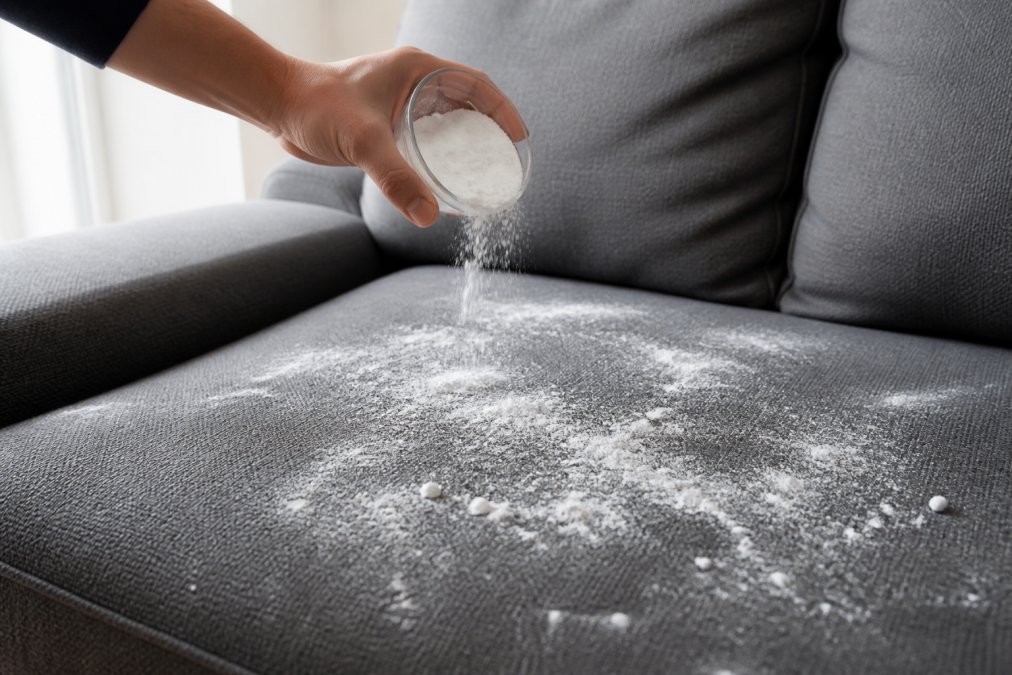
Baking soda absorbs odor molecules rather than neutralizing them, pulling them out of materials over time. It’s particularly effective for upholstered furniture where smoke particles have settled deep into cushion fibers.
Application steps:
- Sprinkle baking soda liberally over all affected upholstered surfaces, cushions, armrests, and the back.
- Let it sit for 12-24 hours for maximum absorption.
- Vacuum thoroughly using an upholstery attachment, making multiple passes.
- For wood furniture, create a paste with baking soda and water, apply to problem areas, let dry 4-6 hours, then wipe clean with a damp cloth.
Effectiveness timeline: Noticeable improvement appears within 24 hours, with maximum results after 48 hours. For stubborn odors, repeat 2-3 times over a week.
Best for: Upholstered sofas, chairs, mattresses, and wooden dressers or nightstands. This method is safe for nearly all fabric types and won’t damage wood finishes.
Important safety note: Ensure all baking soda is completely vacuumed up before using the furniture to prevent transfer to clothing and avoid accidental ingestion by pets or children.
3. Activated Charcoal for Deep Odor Absorption
Activated charcoal’s porous structure contains millions of tiny spaces that trap odor molecules far more effectively than regular charcoal or baking soda, making it ideal for deeply embedded smoke smells (peer-reviewed research).
How to use it:
Place activated charcoal in open containers, mesh bags, or commercial odor-absorber pouches near or inside affected furniture. For drawers and enclosed spaces, place charcoal directly inside. For upholstered pieces, surround the furniture with multiple containers.
The charcoal works passively, absorbing odors over several days without requiring direct application to delicate pieces.
Timeline: Noticeable improvement appears within 3-5 days. For severe odors, leave charcoal in place for 1-2 weeks. Recharge by placing in direct sunlight for 4-6 hours to extend its useful life.
Where it excels: Enclosed spaces like dresser drawers and cabinet interiors, plus furniture with complex upholstery difficult to treat directly. A small bag can treat a room or multiple pieces and is reusable, making it economical long-term.
4. Steam Cleaning and Hot Water Extraction
Steam cleaning penetrates deep into fabric fibers and kills odor-causing particles through heat and moisture. Professional-grade steam cleaners use hot water extraction to inject hot water under pressure and extract it along with dissolved smoke particles.
DIY steam cleaning approach:
Rent a carpet and upholstery steam cleaner from a hardware store. Fill with hot water and recommended cleaning solution. Work in sections using the upholstery attachment, moving slowly to allow penetration. Make a second pass to extract maximum moisture.
After cleaning: Open windows and use fans to accelerate drying. Wet upholstery can develop mildew if damp for more than 24 hours. Direct sunlight speeds evaporation and provides UV odor-killing exposure. cleaning biological odors.
Effectiveness: Highly effective for smoke odors trapped in upholstery fibers. Combined with baking soda or activated charcoal afterward, it provides comprehensive odor removal.
Material caution: Steam can damage certain fabrics and delicate synthetics. Check the furniture’s care label first and avoid steam cleaning antique upholstery or pieces with wooden frames that could warp.
How to Clean Smoke Damage From Walls Yourself
Smoke particles on walls continue releasing odor into the air, making it harder to permanently eliminate furniture smells. Cleaning walls prevents reodorization.
Wall cleaning process:
- Wipe all wall surfaces with a magic eraser or TSP (trisodium phosphate) solution to remove soot residue and visible smoke staining.
- Use a damp cloth with white vinegar solution for lighter exposure, or warm water with mild detergent for heavier residue.
- Pay special attention to corners and ceiling areas where smoke accumulates most heavily.
- Allow walls to dry completely before moving furniture back.
For severe fire damage, professional cleaning is more efficient. Cleaned walls plus treated furniture prevent odor regeneration.
Best Odor Neutralizer for Smoke: Fabric Sprays and Ozone Treatment
Commercial fabric sprays and ozone generators provide professional-grade odor elimination when DIY methods aren’t delivering results.
Fabric spray approach:
Products like Smoke Odor Exterminator Fabric Spray and FunkAway Smoke Odor Eliminator neutralize rather than mask odors. These alcohol-based sprays penetrate fabric fibers and break down odor-causing compounds at the molecular level.
Spray affected areas lightly and allow to dry. Most products are pet-safe and won’t stain fabric when used as directed. Apply in the evening and allow overnight drying. Repeat after 2-3 days if odor persists.
Ozone treatment considerations:
Ozone generators produce ozone gas that oxidizes and destroys odor molecules throughout an entire room. A unit can cover spaces and can eliminate deeply embedded smoke smells in 4-8 hours.
Critical safety requirement: Ozone treatment must occur in an unoccupied space. People and pets must leave during treatment and for 2-4 hours afterward. Ozone is a respiratory irritant. After treatment, open all windows and allow complete air-out before re-entry.
Ozone is most effective for severe, long-term smoke odors that other methods haven’t resolved, particularly for fire-damaged homes where smoke has penetrated every surface.
When to choose sprays over ozone: Use fabric sprays if you need to treat furniture while remaining in the home. They’re safe for occupied spaces and show results within hours. For unoccupied properties or severe whole-home odor, ozone treatment is more comprehensive.
Professional Smoke Odor Removal Services for Severe Damage
When smoke damage is extensive, from house fires, years of cigarette smoke, or severe water damage followed by smoke exposure, professional restoration delivers results DIY methods can’t match.
What professionals do differently:
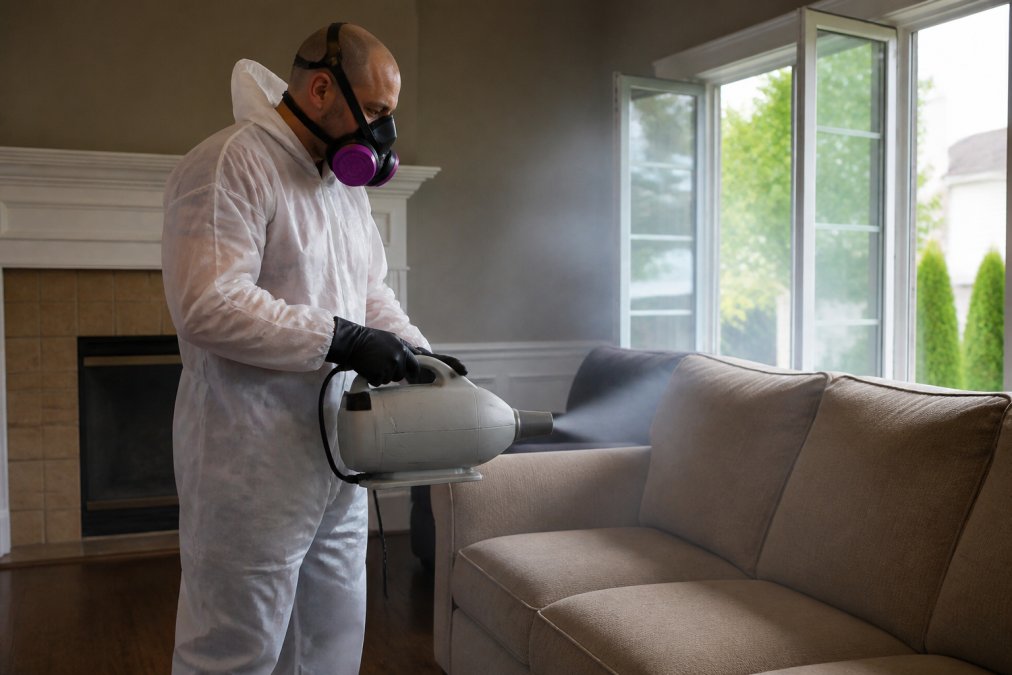
Aquaflame Restores It uses thermal fogging, ozone treatment, and activated charcoal systems designed for fire and smoke damage. Thermal fogging disperses a fine mist of odor-neutralizing solution throughout the entire home, reaching surfaces manual cleaning can’t access. This combines with structural drying to ensure moisture doesn’t trap odors or create secondary damage like mold.
Professional technicians assess smoke penetration extent, identify which furniture can be restored versus replaced, and coordinate directly with insurance companies, eliminating out-of-pocket expenses and coverage disputes.
Key advantages:
- Speed: Comprehensive treatment takes 1-3 days versus weeks of DIY effort
- Equipment: Professional-grade thermal foggers and industrial ozone generators far exceed consumer versions
- Expertise: IICRC-trained technicians identify hidden smoke damage in crawlspaces, attics, and wall cavities
- Guarantees: Professional services typically guarantee odor elimination with follow-up treatments if needed
- Insurance coordination: Direct billing eliminates out-of-pocket costs for most homeowners
When to call professionals: If smoke odor persists after 2-3 weeks of DIY treatment, if damage resulted from an actual fire, or if an entire home is affected, professional restoration is most cost-effective. Aquaflame Restores It’s 24/7 emergency response and 30-minute arrival guarantee means you don’t wait to begin restoration. For fire damage, every hour matters as smoke particles continue settling and bonding to surfaces.
Long-Term Maintenance and Prevention
After removing smoke smell, preventing reodorization is critical. Smoke particles can reactivate and release odor when humidity increases or air circulation is poor.
Maintenance strategies:
-
Maintain air circulation: Use ceiling fans and open windows regularly. Stagnant air allows smoke odors to concentrate and reappear.
-
Control humidity: Keep indoor humidity between 30-50% using a dehumidifier if necessary (the EPA). Smoke odors intensify in humid environments.
-
Refresh treatments seasonally: Reapply baking soda or activated charcoal every 3-6 months as preventive maintenance.
-
Seal wood surfaces: For heavily exposed wooden furniture, apply odor-sealing primer before refinishing to prevent smoke smell from re-emerging through the finish.
-
Monitor enclosed spaces: Check dresser drawers and cabinet interiors periodically. These areas trap odors most easily and benefit from occasional charcoal refreshing.
-
Address water damage immediately: Dry furniture completely within 24 hours. Damp materials trap smoke odors and can develop mold.
After professional restoration, maintain improvements by ensuring proper ventilation and humidity control. Smoke damage restoration is only permanent if the environment causing the odor is corrected.
Removing smoke smell from furniture is achievable with the right approach. Light cigarette odors respond to baking soda and vinegar within days. Moderate smoke exposure typically requires steam cleaning plus activated charcoal over 1-2 weeks. Severe fire damage or years of accumulated smoke demands professional intervention.
If you’re in metro Atlanta dealing with fire damage, water damage followed by smoke exposure, or odors that won’t budge after weeks of treatment, Aquaflame Restores It provides comprehensive smoke odor removal with IICRC-trained technicians, 24/7 emergency response, and direct insurance billing. Our thermal fogging, ozone treatment, and structural drying eliminate odors at their source while managing your insurance claim from start to finish. Contact us for a free assessment of your furniture and home restoration needs.
Frequently Asked Questions
Q: What is the best odor neutralizer for smoke on wood furniture?
A: White vinegar and activated charcoal are highly effective for wood furniture. Vinegar neutralizes smoke particles through its acidic properties, while activated charcoal absorbs odors without damaging finishes. For severe smoke damage, professional odor neutralizers use molecular-level technology to eliminate stubborn odors. Always test any solution on a hidden area first to ensure it won't harm the wood grain or surface finish.
Q: Can baking soda remove smoke smell from upholstery?
A: Yes, baking soda is highly effective for upholstered furniture. Sprinkle it generously over the affected areas, let it sit for 24-48 hours, then vacuum thoroughly. The baking soda absorbs smoke particles and odors naturally. For faster results on upholstery, combine baking soda with fabric sprays, which neutralizes odors on contact while the baking soda continues working beneath the surface.
Q: Does smoke smell ever go away from furniture on its own?
A: Smoke smell rarely disappears without intervention. Volatile organic compounds from smoke embed deeply into porous surfaces like upholstery, wood grain, and cushion filling. Without active treatment using methods like vinegar solutions, activated charcoal, or professional ozone treatment, the odor can persist for months or years. The longer smoke sits, the harder it becomes to remove, so early action produces better results.
Q: How do professionals remove smoke odor from furniture?
A: Professional services like Aquaflame Restores It use multiple approaches: thermal fogging to penetrate deep into fabric and wood, ozone generators to oxidize odor molecules, and activated charcoal systems for absorption. IICRC-certified technicians assess the damage severity and material type, then apply targeted treatments. For severe fire damage, professionals also handle soot residue removal and may apply odor-sealing primers to prevent odors from returning through surface finishes.
Q: Is it possible to get cigarette smell out of antique wood furniture?
A: Yes, but antique furniture requires careful handling. Avoid harsh chemicals or excessive moisture that can damage delicate finishes. Use white vinegar diluted with water on a damp cloth, wiped gently along the wood grain. Activated charcoal placed near the furniture works without direct contact. For valuable antiques with stubborn odors, professional restoration services can apply specialized treatments that preserve the finish while eliminating cigarette smoke odor completely.
This article was written using GrandRanker