Table of Contents
- What Is Fire Damage Restoration?
- The Fire Damage Restoration Process
- Smoke Damage Cleanup and Soot Removal
- Content Cleaning After Fire Damage
- Filing a Fire Damage Insurance Claim
- Understanding the Cost of Fire Damage Restoration
- DIY vs. Professional Fire Damage Restoration: Risks and Reality
- Mold Prevention and Long-Term Air Quality After Fire
Fire Damage Restoration: Complete Recovery Guide
Last Updated: July 23, 2026
When a fire tears through your home or business, the first 24 hours determine whether recovery becomes manageable or a months-long nightmare. Fire damage restoration requires specialized knowledge of structural integrity, corrosive byproducts, dehumidification protocols, and insurance documentation. At Aquaflame Restores it, we’ve guided hundreds of property owners through this process. The difference between rushed recovery and thorough restoration often comes down to understanding what needs to happen first.
This guide covers the complete fire damage restoration process from emergency response through final reconstruction, what IICRC-certified professionals do at each stage, how to document everything for your insurance claim, and critical mistakes that turn recoverable properties into total losses.
What Is Fire Damage Restoration?
Fire damage restoration is the systematic process of returning a fire-damaged property to its pre-loss condition through emergency mitigation, structural assessment, content cleaning, and full reconstruction. It’s not just removing burned materials, it’s stabilizing the structure, eliminating toxic residue and smoke odor, preventing secondary damage like mold, and managing recovery in coordination with your insurance company.
Scope varies dramatically by fire intensity. A small kitchen fire might require smoke remediation and HVAC cleaning. A structural fire demands emergency board-up services, water removal from suppression systems, complete soot removal from every surface, thermal fogging for odor neutralization, and potentially months of reconstruction.
Most property owners underestimate how far smoke and soot penetrate. These aren’t surface problems, smoke particles embed themselves in insulation, HVAC systems, wall cavities, and content items. Professional fire damage restoration requires thermal fogging equipment, HEPA filtration, and systematic content cleaning, not just opening windows and wiping surfaces.
The first call after a fire should be to your insurance company, then immediately to an IICRC-certified restoration contractor. Many homeowners wait days to call professionals, allowing mold to begin growing in wet areas and smoke odor to set deeper into materials. The 24-hour window is critical.
The Fire Damage Restoration Process
Effective fire damage restoration follows a structured sequence: emergency response and property stabilization, detailed damage assessment, board-up and mitigation, water removal and drying, smoke and soot remediation, content cleaning, and reconstruction.
Emergency Response and Property Stabilization
The first hours after a fire are about preventing secondary damage, not beginning restoration. Your property is now exposed to weather, further fire spread, and water damage from firefighting efforts. Professional restoration teams arrive with extraction equipment, tarps, dehumidifiers, and expertise to identify which areas need immediate attention. If your roof has burned through, water is pouring into upper floors, extraction starts immediately. If windows are broken, emergency board-up services seal the structure against weather. Property stabilization prevents a $50,000 fire from becoming a $200,000 disaster through water damage and exposure.
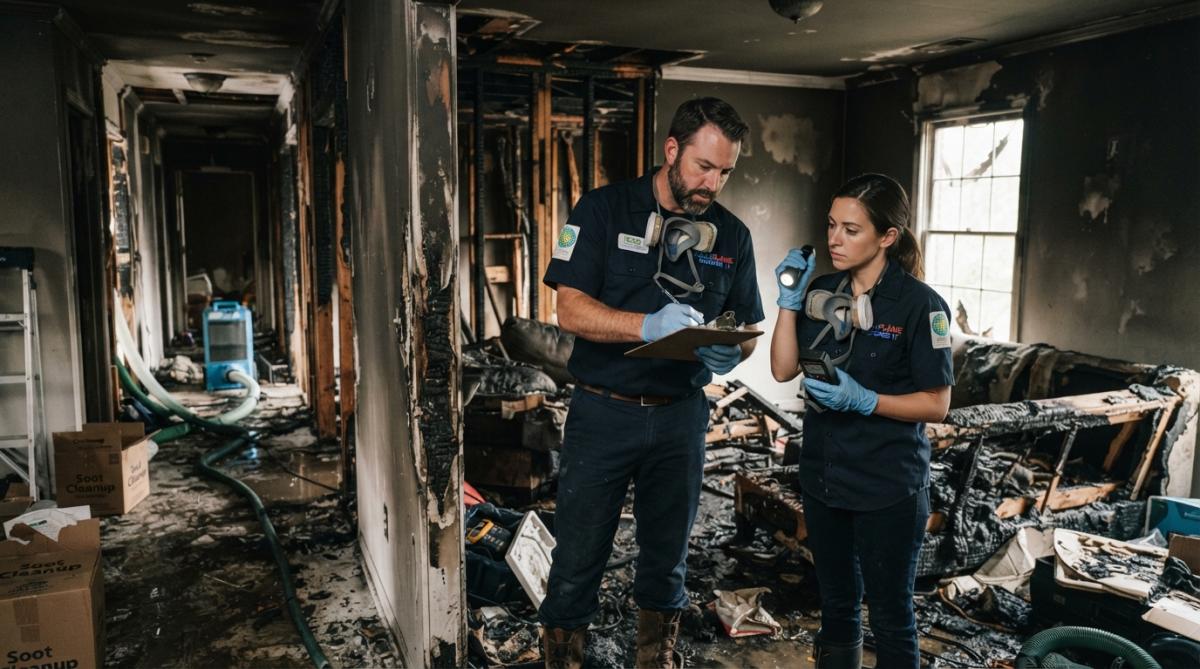
Aquaflame Restores it’s 30-minute arrival guarantee means your property isn’t sitting exposed for hours while you’re dealing with shock and displacement.
Fire Damage Assessment and Structural Inspection
Once the property is stabilized, a detailed damage assessment determines what can be salvaged, what requires replacement, and what structural issues exist. This systematic evaluation uses moisture meters, thermal imaging, and structural analysis to identify damage that isn’t visible.
Fire damage assessment examines:
- Structural integrity: Beams, joists, and load-bearing walls are checked for heat damage that weakens materials. Charred materials may look stable but have lost load capacity.
- Moisture levels: Firefighting water, sprinkler systems, and hoses create secondary damage. Moisture meters identify wet areas that will develop mold without proper drying.
- HVAC system contamination: Smoke travels through ductwork, coating the entire system with soot and corrosive residue. Contaminated HVAC systems spread smoke odor and toxic particles when turned back on.
- Electrical and gas systems: Fire damage often affects hidden utilities. Full inspection prevents safety hazards during reconstruction.
- Content salvageability: Personal items are photographed and evaluated for cleaning versus replacement.
The assessment report becomes your insurance claim foundation. Professional documentation with photos, measurements, and detailed descriptions is what insurance adjusters use to approve payment.
Board-Up and Emergency Mitigation
Board-up services protect the property from weather exposure, secure the structure against unauthorized entry, and prevent further deterioration while restoration proceeds. Professional board-up includes securing all openings with weather-resistant materials, installing temporary tarps over roof damage, removing debris safely, and establishing work zones for restoration teams.
Without proper board-up and mitigation, rain, wind, and temperature fluctuations continue damaging the structure.
Water Removal and Dehumidification
Firefighting creates massive water damage. Sprinkler systems flood entire floors. Fire hoses pour thousands of gallons into structures. This water sits in walls, insulation, and subflooring, perfect conditions for mold growth within 24-48 hours. Professional water removal uses industrial-grade equipment: submersible pumps extract standing water, air movers create airflow to accelerate drying, and dehumidifiers remove moisture from air and materials.
Dehumidification is the overlooked step. Water trapped in walls, insulation, and concrete continues creating moisture for weeks. Professional dehumidification systems run continuously, extracting moisture until readings return to pre-loss levels. This prevents mold that plagues properties months after fire damage restoration appears complete.
If dehumidification stops too early, mold begins [growing in](/mold-remediation-decatur-ga/) hidden wall cavities. By the time you smell it, contamination has spread extensively. Proper drying takes 2-4 weeks depending on damage extent. Rushing this phase is the single biggest cause of post-restoration mold problems.
Smoke Damage Cleanup and Soot Removal
Smoke damage is the most underestimated part of fire damage restoration. Soot particles are microscopic carbon and ash that travel through the entire structure, coating surfaces, embedding in fabrics, and creating persistent smell. Professional cleanup uses specialized techniques: dry soot removal with HEPA-filtered vacuum systems that capture particles without spreading them, wet cleaning of hard surfaces to remove embedded soot, and content cleaning of salvageable items using ultrasonic cleaning, dry cleaning, or specialized washing.
The key difference between amateur cleanup and professional soot removal is equipment and method. A standard vacuum spreads soot particles into the air where they resettle. HEPA filtration captures 99.97% of particles, preventing recontamination.
Identifying Corrosive Byproducts and Toxic Residue
Fire creates more than soot. Burning synthetic materials, insulation, wiring, and finishes produces corrosive byproducts that damage remaining materials and create health hazards. Common corrosive byproducts include hydrochloric acid from burning PVC plastics, sulfuric acid from burning rubber, and ammonia compounds from burning nitrogen-containing materials. These residues accelerate corrosion of metals, degrade paint and finishes, and create respiratory irritation. Professional fire damage restoration includes chemical analysis to identify which byproducts are present, then targeted removal using appropriate cleaning agents.
Thermal Fogging and Odor Neutralization
After soot removal and corrosive byproduct elimination, thermal fogging addresses smoke odor embedded in materials and air. Thermal fogging uses heat and specialized deodorizing agents to penetrate porous materials, drywall, insulation, and subflooring where smoke particles have settled. The fogging process heats deodorizing compounds to create a fine mist, allows the mist to penetrate walls and cavities, and neutralizes odor-causing compounds at the molecular level.
The difference between a property that smells fresh and one that still carries smoke odor comes down to whether deodorization targeted the actual source (embedded particles in materials) or just the air. Professional restoration addresses both.
Content Cleaning After Fire Damage
Personal items, furniture, clothing, books, electronics, and decorative items require specialized cleaning after fire exposure. Professional content cleaning includes dry cleaning for fabrics that can’t tolerate water, wet cleaning for items that benefit from submersion, ultrasonic cleaning for delicate items like jewelry and electronics, and specialized restoration for valuable items like art and antiques.
Content cleaning is labor-intensive and requires expertise in material science, knowing which cleaning methods work for leather versus fabric, electronics versus wood, painted surfaces versus natural finishes. Many items that appear damaged can be salvaged through proper professional cleaning, which directly increases your insurance recovery and reduces replacement costs.
Filing a Fire Damage Insurance Claim
Your insurance claim determines how much of the restoration you pay for versus what the insurance company covers. A thorough, well-documented claim can mean the difference between full recovery and significant out-of-pocket costs.
Documentation and Evidence Collection
Insurance adjusters make decisions based on documentation. Photos, measurements, receipts, damage reports, and professional assessments determine claim approval and settlement amounts.
Immediately after fire damage occurs:
- Take photos and video of all damage from multiple angles
- List damaged items with approximate purchase dates and values
- Save receipts for any emergency repairs or temporary accommodations
- Document your timeline of events and first responder actions
- Keep records of all conversations with insurance and restoration companies
Professional restoration contractors handle most of this documentation. They photograph damage systematically, create detailed damage reports with measurements and assessments, and provide documentation that meets insurance requirements. Aquaflame Restores it manages direct insurance billing, handling claim coordination and documentation on your behalf.
Working With Your Insurance Adjuster
Your insurance adjuster is an expert in claims, not necessarily in fire damage restoration. Professional restoration contractors have seen hundreds of fires. When working with your adjuster:
- Have the restoration contractor present during the adjuster’s inspection to explain damage and necessary repairs
- Request a detailed written assessment that specifies what the adjuster is approving and what’s excluded
- Ask questions about exclusions if anything seems underestimated
- Get second opinions on major assessments if you disagree with the adjuster’s evaluation
Professional restoration contractors often identify damage that adjusters initially miss. Moisture in wall cavities, HVAC contamination, structural damage, these aren’t always visible during a quick adjuster inspection. A thorough professional assessment typically results in higher claim settlements because it documents damage the adjuster didn’t initially see.
Understanding the Cost of Fire Damage Restoration
Fire damage restoration costs vary enormously depending on fire extent, property size, structural damage, and necessary reconstruction. A small fire contained to one room might cost $15,000-30,000. A major structural fire affecting multiple rooms can exceed $300,000. Insurance typically covers most or all of these costs. Major cost factors include structural damage requiring replacement, water damage from suppression, HVAC system replacement, reconstruction scope, content restoration, and timeline. Professional restoration contractors provide detailed estimates that break down costs by service.
Paying for thorough fire damage restoration now prevents expensive problems later. Incomplete restoration leads to mold growth, persistent odor, structural deterioration, and health issues that cost far more to address afterward.
DIY vs. Professional Fire Damage Restoration: Risks and Reality
The temptation to handle fire damage restoration yourself is understandable, but DIY restoration creates far more problems than it solves. Most property owners end up hiring professionals anyway after wasting time and money on incomplete work.
Incomplete soot and smoke removal. Soot embeds in insulation, wall cavities, and ductwork. Wiping surfaces removes visible soot but leaves particles that continue creating odor and health issues. Professional HEPA filtration and thermal fogging actually eliminate the problem.
Mold growth from inadequate drying. Dehumidification requires industrial equipment running continuously for weeks. Most homeowners stop drying too early because they can’t see moisture. Mold begins growing in hidden cavities, and by the time it’s visible, contamination has spread extensively.
Corrosive byproduct damage. Acidic residues from burned materials continue corroding metals and degrading finishes. Without proper chemical analysis and targeted removal, these byproducts damage materials that appear restored.
Insurance claim complications. Adjusters require professional documentation to approve claims. DIY work without proper assessment often isn’t covered by insurance, leaving you to pay out of pocket.
Health and safety hazards. Fire-damaged properties contain asbestos in older insulation, lead paint, and other hazardous materials. Professional contractors know how to identify and safely handle these materials.
Attempting content cleaning without proper equipment often damages items further. Wet cleaning the wrong fabric causes permanent damage. Using the wrong cleaning agents on electronics or finishes ruins them. Professional content cleaning is specialized work requiring training and experience.
Mold Prevention and Long-Term Air Quality After Fire
Mold prevention after fire damage is the most neglected aspect of restoration, and it’s where most property owners encounter problems months after the fire appears resolved. Mold thrives in damp conditions, and fire damage creates exactly those conditions, wet materials from suppression, moisture trapped in walls and insulation, and inadequate drying that stops too early.
Proper mold prevention requires complete dehumidification until moisture readings return to normal (typically 2-4 weeks), air quality monitoring to ensure HVAC systems and air pathways are clean, moisture barriers in reconstructed areas to prevent future moisture intrusion, and ventilation improvements to maintain air circulation. Professional restoration includes post-restoration testing to verify that air quality has returned to normal.
Many properties experience mold problems 6-12 months after fire damage restoration because dehumidification stopped too early or moisture continued from hidden sources. Professional contractors understand that mold prevention requires sustained effort throughout the drying process and verification after restoration is complete.
Fire damage recovery is a marathon, not a sprint. The difference between a property that’s truly restored and one that appears restored but carries hidden problems comes down to professional expertise, thorough documentation, and systematic execution of each restoration phase. When your property faces fire damage, choosing a professional restoration contractor with IICRC certification and direct insurance billing determines whether recovery is seamless or becomes a years-long struggle with lingering problems.
Aquaflame Restores it provides comprehensive fire damage restoration across metro Atlanta with 24/7 emergency response, IICRC-trained technicians, and direct insurance coordination. Their 30-minute arrival guarantee means your property is stabilized immediately, preventing secondary damage while documentation begins. Rather than managing multiple contractors and insurance disputes, you have one team handling emergency mitigation, damage assessment, restoration, and reconstruction, all coordinated with your insurance company to maximize coverage and minimize your out-of-pocket costs. Contact Aquaflame Restores it immediately after fire damage to begin the recovery process with professionals who understand every phase of restoration.
Frequently Asked Questions
What does the fire damage restoration process involve?
Fire damage restoration is a multi-phase process starting with emergency response and property stabilization, followed by detailed fire damage assessment, water removal, soot removal and smoke odor neutralization, content cleaning, and finally reconstruction. IICRC-certified professionals handle structural integrity evaluation, dehumidification, HVAC cleaning, sanitization, and mold prevention to return your property to pre-loss condition. The timeline varies based on damage severity but typically spans weeks to months.
How should I document fire damage for my insurance claim?
Document everything immediately: take photos and videos of all damaged areas, charred materials, and structural damage before anything is touched. Create a detailed inventory of lost or damaged belongings with model numbers and purchase dates. Keep receipts for emergency mitigation services and temporary repairs. Request a formal fire damage assessment from your restoration contractor, this report becomes key evidence for your insurance adjuster. Maintain all communication with your insurance company in writing and provide your adjuster with the restoration contractor's scope of work and estimates.
Can I handle fire damage cleanup myself, or do I need professionals?
While minor smoke odor issues might seem manageable, professional fire damage restoration is strongly recommended. Toxic residue and corrosive byproducts from fire require specialized equipment like HEPA filtration, thermal fogging, and commercial-grade deodorization. Improper handling risks spreading soot deeper into HVAC systems and walls, causing long-term mold and air quality problems. Professionals provide the documentation and sanitization certification your insurance company requires. DIY attempts often cost more in the long run due to incomplete mitigation and secondary damage.
How long does fire damage restoration typically take?
Timeline depends on damage extent. Emergency mitigation (board-up, water removal, initial stabilization) happens within 24-48 hours. Complete fire damage restoration, including soot removal, content cleaning, dehumidification, and reconstruction, typically takes 2-6 weeks for residential properties. Larger commercial restoration or severe structural damage may extend to several months. Your IICRC-certified restoration contractor will provide a detailed timeline after the initial fire damage assessment and can coordinate directly with your insurance adjuster to avoid delays.
EXTERNAL SOURCES CITED:
[EXTERNAL_LINK: IICRC Standards and Certifications for Fire and Smoke Damage Restoration | iicrc.org]
[EXTERNAL_LINK: National Fire Protection Association Fire Safety Guidelines | nfpa.org]
[EXTERNAL_LINK: EPA Guidelines on Indoor Air Quality After Fire Damage | epa.gov]
This article was written using GrandRanker