Table of Contents
- What a Public Adjuster Does for Water Damage Claims
- Public Adjuster vs. Insurance Company Adjuster: Key Differences
- Understanding Public Adjuster Fee Percentage and Cost Structure
- When a Public Adjuster Pays for Itself: Settlement ROI
- How to Appeal a Denied Water Damage Insurance Claim
- What Not to Say to Insurance Adjuster During Water Damage Claims
- Pros and Cons: Should You Hire a Public Adjuster for Water Damage?
- How to Vet and Hire a Public Adjuster
Last Updated: August 27, 2026
What a Public Adjuster Does for Water Damage Claims
A public adjuster is a licensed professional who represents policyholders in property damage insurance claims, working exclusively on the homeowner’s behalf rather than the insurance company’s. When water damage strikes your home, a public adjuster investigates the full scope of loss, documents all damage (including hidden damage behind walls and under flooring), and negotiates with your insurance carrier to secure a fair settlement.
The role differs fundamentally from the insurance company’s own adjuster. While a company adjuster works to minimize the insurer’s payout, a public adjuster works to maximize yours. They handle technical documentation, policy interpretation, and negotiations that most homeowners find overwhelming after a water event. They understand how water migrates through building materials, quantify losses like mold remediation and temporary housing, and challenge underpayments.
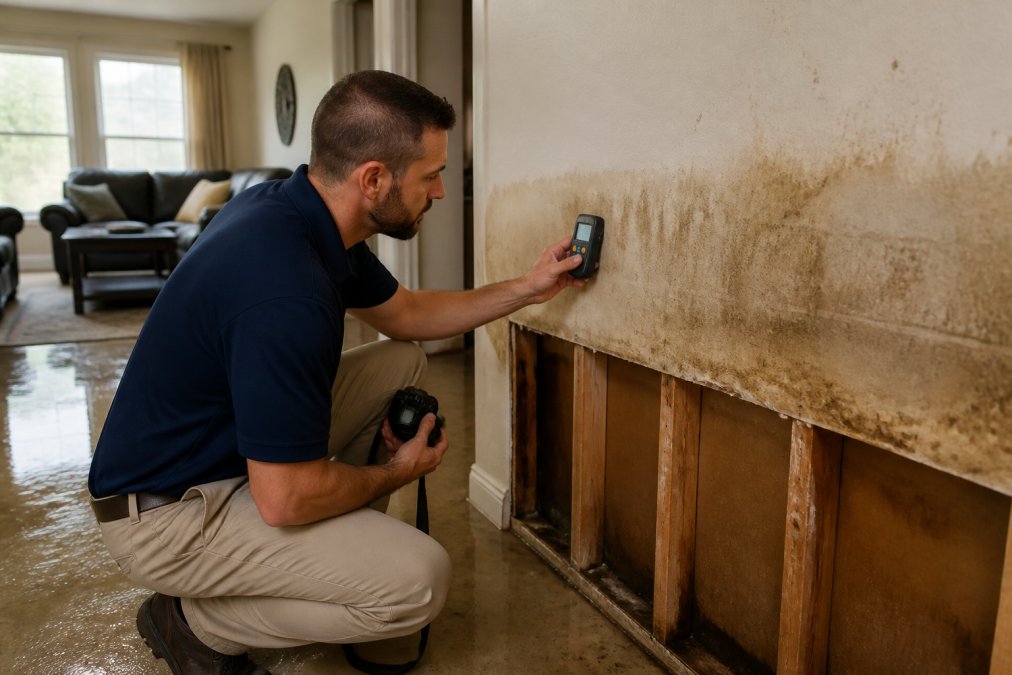
At Aquaflame Restores It, we work alongside public adjusters when clients choose to hire them, coordinating restoration while the adjuster handles claim negotiation. The typical process involves property inspection, detailed damage assessment with photographs and measurements, policy review, preparation of a formal claim estimate, and negotiation with the insurance company. If disputes arise, public adjusters can escalate to appraisal or litigation.
Public Adjuster vs. Insurance Company Adjuster: Key Differences
An insurance company adjuster is employed by the insurer and has a financial incentive to keep payouts low. A public adjuster is hired by you and earns a percentage of the settlement increase, so their incentive aligns with yours.
Insurance company adjusters follow a standardized process: visit the property, assess damage against policy language, calculate depreciation, and issue an estimate. Many homeowners accept this first offer without realizing it’s often below actual replacement cost, especially for complex water damage involving structural drying, mold remediation, and contents restoration.
Public adjusters challenge these estimates using construction industry standards, manufacturer specifications, and local labor rates. They also identify overlooked coverage, like loss of use coverage, which reimburses temporary housing while your home is restored.
| Aspect | Insurance Company Adjuster | Public Adjuster |
|---|---|---|
| Works for | Insurance company | Homeowner (you) |
| Financial incentive | Minimize payout | Maximize your settlement |
| Cost to you | Included in your policy | Contingency fee (5-20% of increase) |
| Expertise | General property damage | Specialized in your claim type |
| Negotiation | Company’s position | Your position |
Both adjusters visit your home and write estimates, but for different clients with opposite financial interests.
Understanding Public Adjuster Fee Percentage and Cost Structure
Public adjusters work on a contingency fee basis, meaning they’re paid only if you receive a settlement increase. They take a percentage of that increase, typically between 5% and 20%, depending on claim complexity and local market rates.
Here’s how the math works. If the insurance company offers $50,000 but a public adjuster secures $70,000, your settlement increased by $20,000. At a 10% contingency fee, the adjuster receives $2,000. You net $68,000 instead of $50,000, an $18,000 gain after fees.
If a public adjuster increases your settlement by $30,000 and charges 10%, you pay $3,000 in fees but gain $27,000. Without the adjuster, you’d have $50,000. With the adjuster, you receive $77,000. The fee is only a cost if the adjuster fails to increase your settlement, and if they can’t, they don’t get paid.
Fee percentages vary by state regulations and claim size. Larger, complex claims often negotiate lower percentages. Always ask upfront what percentage the adjuster charges and confirm it in writing before signing any agreement.
When a Public Adjuster Pays for Itself: Settlement ROI
A public adjuster pays for itself when the settlement increase exceeds their fee. Most claims that hire public adjusters see increases above the initial insurance company offer.
Water damage claims are particularly well-suited for public adjuster involvement because they’re complex and frequently undervalued. Insurance companies often underestimate structural drying costs, mold remediation, and contents replacement, or apply depreciation too aggressively.
Consider a realistic scenario: your home suffers $100,000 in water damage. The insurance company’s adjuster estimates $65,000. You hire a public adjuster charging 10% contingency. The adjuster identifies additional covered losses and negotiates a final settlement of $85,000. The increase is $20,000. The adjuster’s fee is $2,000. Your net gain is $18,000 compared to accepting the initial offer.

The timing matters. Hire a public adjuster early to maximize time for building a comprehensive case.
Not every claim justifies hiring a public adjuster. Small claims may not generate enough increase to justify the fee. Straightforward claims where the insurance company is already paying fairly also don’t need one. But for complex water damage involving structural issues, mold, or significant contents loss, the ROI typically favors hiring one. working with insurance agents.
How to Appeal a Denied Water Damage Insurance Claim
If your insurance company denies your water damage claim, request a written explanation. Insurance companies must provide clear reasoning. Review your policy carefully against their stated reason. Common denials include policy exclusions (like flood coverage, which requires separate insurance), lack of coverage for the specific peril, or claims the damage was pre-existing.
File a formal appeal by submitting additional documentation, expert assessments, or legal arguments challenging the denial. Many states require insurers to acknowledge appeals within specific timeframes. A public adjuster is invaluable here, they know how to structure appeals and argue policy interpretation.
Some denials can be challenged through the state insurance commissioner’s office. If you believe the insurance company acted in bad faith, denying a legitimate claim without reasonable justification, file a complaint with your state’s insurance regulator.
For water damage, document everything immediately: photograph damage, preserve damaged materials, keep receipts for emergency mitigation, and maintain records of temporary housing and living expenses. This documentation becomes critical if you need to appeal.
What Not to Say to Insurance Adjuster During Water Damage Claims
Your words during the claims process can affect the outcome. Avoid these common mistakes:
Don’t admit fault or speculate about cause. If you say "I think the pipe burst because I didn’t maintain it properly," you’re giving the adjuster ammunition to deny or reduce your claim. Stick to facts: "Water appeared in the basement on Tuesday morning."
Don’t exaggerate or inflate damage. Honesty is essential. If you overstate damage, the adjuster will notice during inspection, and your credibility evaporates.
Don’t discuss settlement amounts or expectations. Avoid saying "I think this should be worth $100,000." Let the adjuster form their own estimate first.
Don’t volunteer information about prior damage or claims. If asked directly, answer honestly, but don’t bring it up unprompted.
Don’t sign anything without reading it carefully. Some adjusters ask you to sign forms releasing them from liability or acknowledging their estimate as final. Read every document before signing.
Do provide factual information about what happened. "Water entered through the basement window during heavy rain" is appropriate. Be clear, concise, and honest.
Pros and Cons: Should You Hire a Public Adjuster for Water Damage?
Pros of hiring a public adjuster:
Public adjusters increase settlement amounts in most cases. For complex water damage, the increase typically exceeds the contingency fee, resulting in net gains. They handle tedious documentation and negotiation, saving you time and stress. They identify overlooked coverage and know when to escalate claims to appraisal or litigation. They’re especially valuable if the insurance company denies your claim or offers a suspiciously low estimate.
Cons of hiring a public adjuster:
The contingency fee reduces your final settlement. For small claims, the fee might not be justified. Some public adjusters are less experienced or ethical than others. The claims process takes the same time whether you hire an adjuster or not. If your claim is straightforward and the insurance company is already offering fair value, a public adjuster adds unnecessary cost.
When to hire a public adjuster:
- Settlement offer seems significantly below repair estimates
- Claim involves structural damage, mold, or contents loss
- Insurance company denies your claim
- Claim exceeds $25,000
- You lack time or expertise to negotiate
When to skip a public adjuster:
- Claim is under $10,000
- Insurance company’s estimate aligns with independent repair quotes
- Damage is straightforward and clearly covered
- You’re comfortable negotiating yourself
The decision hinges on whether you believe the insurance company’s offer is fair. If you suspect underpayment, a public adjuster’s expertise usually justifies the cost.
How to Vet and Hire a Public Adjuster
Every public adjuster must be licensed in your state. Check your state insurance commissioner’s website or the National Association of Public Insurance Adjusters directory to confirm licensing and disciplinary history.
Ask about experience with water damage specifically. Request references from previous water damage clients and call them to ask whether the adjuster increased their settlement and whether they’d hire them again.
Understand their fee structure in writing. Confirm the contingency percentage, whether it applies to the entire settlement or just the increase, and whether there are additional costs. Get this in a signed contract before work begins.
Interview multiple adjusters. Compare their approach, experience, and fee structures. Check references with your state’s insurance commissioner using the NAIC Producer Database.
Ask how they’ll coordinate with your restoration contractor. If you’re using Aquaflame Restores It or another company, the public adjuster should communicate to ensure the scope of work aligns with the insurance estimate.
Request a timeline. When will they inspect the property? When will they submit the estimate? When do they expect the insurance company to respond?
Avoid adjusters who guarantee specific settlement amounts or pressure you to sign quickly. Red flags include reluctance to provide references or vague fee explanations.
Once you’ve selected an adjuster, sign a detailed engagement letter specifying their responsibilities, fee structure, timeline, and communication expectations.
Hiring a public adjuster for water damage is a financial decision that depends on claim complexity and the insurance company’s initial offer. For most significant water damage claims, the settlement increase justifies the contingency fee. The key is vetting your adjuster carefully and ensuring they have specific experience with water damage. When your home suffers water damage, Aquaflame Restores It handles the restoration while a public adjuster handles the claim negotiation. Contact Aquaflame Restores It’s 24/7 emergency team for immediate water mitigation and restoration support.
=== FAQ ANSWERS (audit these too, same rules) ===
[1] Q: What is the main difference between a public adjuster and an insurance company adjuster?
A: An insurance company adjuster works for the insurance carrier and aims to minimize what the company pays out. A public adjuster works exclusively for you, the policyholder, and is motivated to maximize your settlement since they’re paid a contingency fee based on what they recover. This creates a fundamental conflict of interest: the company adjuster protects the insurer’s bottom line, while the public adjuster protects your claim.
[2] Q: How much does a public adjuster typically charge as a fee percentage?
A: Public adjusters typically charge between 5% and 20% of your final settlement amount as a contingency fee (naic.org). The exact percentage depends on claim complexity, your location, and the adjuster’s experience. Simpler claims may be on the lower end, while complex water damage claims with hidden damage often fall in the 10-15% range. Always negotiate the fee upfront and get it in writing before signing an agreement.
[3] Q: When is it worth hiring a public adjuster for water damage?
A: A public adjuster is worth hiring when your water damage claim is substantial (typically $10,000 or more), involves hidden damage, or has been underpaid or denied by your insurance company. If your claim is straightforward and your insurer is responding fairly, the fee may outweigh the benefit. Public adjusters excel at uncovering damage you might miss, documenting scope of loss thoroughly, and negotiating with carriers who initially lowball settlements.
[4] Q: What should I avoid saying to my insurance adjuster during a water damage claim?
A: Never minimize your damage, admit fault, or speculate about the cause without evidence. Avoid saying you’ve already started repairs or obtained estimates without documenting the original damage first. Don’t mention previous claims or water issues, as this can trigger coverage denials. Never agree to a settlement on the spot or sign documents you don’t fully understand. Keep conversations factual, documented, and focused on the current loss only.
[5] Q: Can I appeal a denied water damage insurance claim, and how?
A: Yes, you can appeal a denial by requesting a formal review from your insurance company within the timeframe specified in your policy (typically 30-60 days). Submit a written appeal with additional documentation, photographs, and expert assessments that counter the denial reason. If the denial was based on underpayment rather than non-coverage, a public adjuster or independent adjuster can provide a detailed scope of loss to challenge the carrier’s valuation. If the carrier continues to deny, you may pursue appraisal or legal action.
Frequently Asked Questions
What is the main difference between a public adjuster and an insurance company adjuster?
An insurance company adjuster works for the insurance carrier and aims to minimize what the company pays out. A public adjuster works exclusively for you, the policyholder, and is motivated to maximize your settlement since they're paid a contingency fee based on what they recover. This creates a fundamental conflict of interest: the company adjuster protects the insurer's bottom line, while the public adjuster protects your claim.
How much does a public adjuster typically charge as a fee percentage?
Public adjusters typically charge between 5% and 20% of your final settlement amount as a contingency fee. The exact percentage depends on claim complexity, your location, and the adjuster's experience. Simpler claims may be on the lower end, while complex water damage claims with hidden damage often fall in the 10-15% range. Always negotiate the fee upfront and get it in writing before signing an agreement.
When is it worth hiring a public adjuster for water damage?
A public adjuster is worth hiring when your water damage claim is substantial (typically $10,000 or more), involves hidden damage, or has been underpaid or denied by your insurance company. If your claim is straightforward and your insurer is responding fairly, the fee may outweigh the benefit. Public adjusters excel at uncovering damage you might miss, documenting scope of loss thoroughly, and negotiating with carriers who initially lowball settlements.
What should I avoid saying to my insurance adjuster during a water damage claim?
Never minimize your damage, admit fault, or speculate about the cause without evidence. Avoid saying you've already started repairs or obtained estimates without documenting the original damage first. Don't mention previous claims or water issues, as this can trigger coverage denials. Never agree to a settlement on the spot or sign documents you don't fully understand. Keep conversations factual, documented, and focused on the current loss only.
Can I appeal a denied water damage insurance claim, and how?
Yes, you can appeal a denial by requesting a formal review from your insurance company within the timeframe specified in your policy (typically 30-60 days). Submit a written appeal with additional documentation, photographs, and expert assessments that counter the denial reason. If the denial was based on underpayment rather than non-coverage, a public adjuster or independent adjuster can provide a detailed scope of loss to challenge the carrier's valuation. If the carrier continues to deny, you may pursue appraisal or legal action.
This article was written using GrandRanker