Table of Contents
- Immediate Safety and Re-Entry After Fire Damage
- Secure the Property and Shut Off Utilities
- How to Document Fire Damage for Insurance
- Contact Your Insurance Provider and File a Claim
- Fire Damage Cleanup Timeline: What to Expect
- Preventing Lingering Smoke Odors in Living Rooms
- Finding Temporary Housing and Disaster Relief Resources
- Supporting Mental Health and Navigating Tax Relief
- Frequently Asked Questions
Last Updated: September 10, 2026
Immediate Safety and Re-Entry After Fire Damage
The first rule after a house fire is simple: do not go back inside until the fire department says it is safe. Steps to take after fire damage begin with a professional safety clearance, not a salvage mission.
Fire leaves behind hazards that are invisible. Structural integrity can be compromised, and toxic residue from burned synthetics settles on every surface. The U.S. Fire Administration’s fire safety guidance is clear that re-entry should only happen once officials confirm the building is sound.
A common mistake is rushing in to grab documents or valuables. That is how injuries happen. Wait for clearance, then follow these priorities:
- Confirm the fire department has formally released the property
- Check for downed power lines, gas odors, or standing water
- Wear a mask and gloves if you must enter briefly
- Keep children and pets away until cleanup is complete
If you are in metro Atlanta and unsure whether your home is safe to enter, the Aquaflame Restores it team can complete an emergency assessment before you set foot inside.
Secure the Property and Shut Off Utilities
Securing the property comes next, because an open, damaged home invites theft, weather damage, and further deterioration. Board-up services and roof tarping are the standard first moves.
Utility shut-off procedures matter just as much. If the fire department has not already done it:
- Gas: Do not flip switches or use anything that sparks. Leave and call the utility provider.
- Electricity: Have a qualified professional confirm the main breaker is off before any work begins.
- Water: Shut the main valve if pipes were damaged and are leaking.
Documentation of the property’s condition before board-up helps your insurance claim later. Take photos of every opening, then have a restoration contractor secure it properly.
How to Document Fire Damage for Insurance
Knowing how to document fire damage for insurance is what separates a smooth claim from a disputed one. Thorough records protect your payout.
Start with wide shots of each room, then move to close-ups of damaged items. Create an inventory list of personal property, noting what was destroyed versus what might be salvageable. The Insurance Information Institute’s claims guide recommends keeping receipts, serial numbers, and photos in one organized file.
| Documentation Task | Why It Matters | When to Do It |
|---|---|---|
| Photograph every room | Supports property damage claim | Before cleanup begins |
| List personal property | Proves value of lost items | Within first week |
| Save receipts | Verifies ownership and cost | Ongoing |
| Get the fire department report | Official cause and origin record | As soon as available |
Photograph the inside of closets, cabinets, and drawers before touching anything. Adjusters often need proof of contents that smoke damage destroyed, and those small spaces are the ones homeowners forget.
Contact Your Insurance Provider and File a Claim
Filing the claim should happen within days, not weeks. Most policies require prompt notice of a loss, and delays give the policyholder fewer options.
When you call, have your policy number and a summary of the damage ready. Ask directly about your deductible, temporary housing coverage, and whether a public adjuster is worth hiring for a complex claim.
This is where many homeowners get stuck. The claims process involves an adjuster visit, a scope of loss, and often a negotiation over what counts as covered damage. A restoration contractor who handles direct insurance billing removes that back-and-forth. Aquaflame Restores it manages the paperwork and communicates with your provider so you are not the one fighting over line items.
Fire Damage Cleanup Timeline: What to Expect
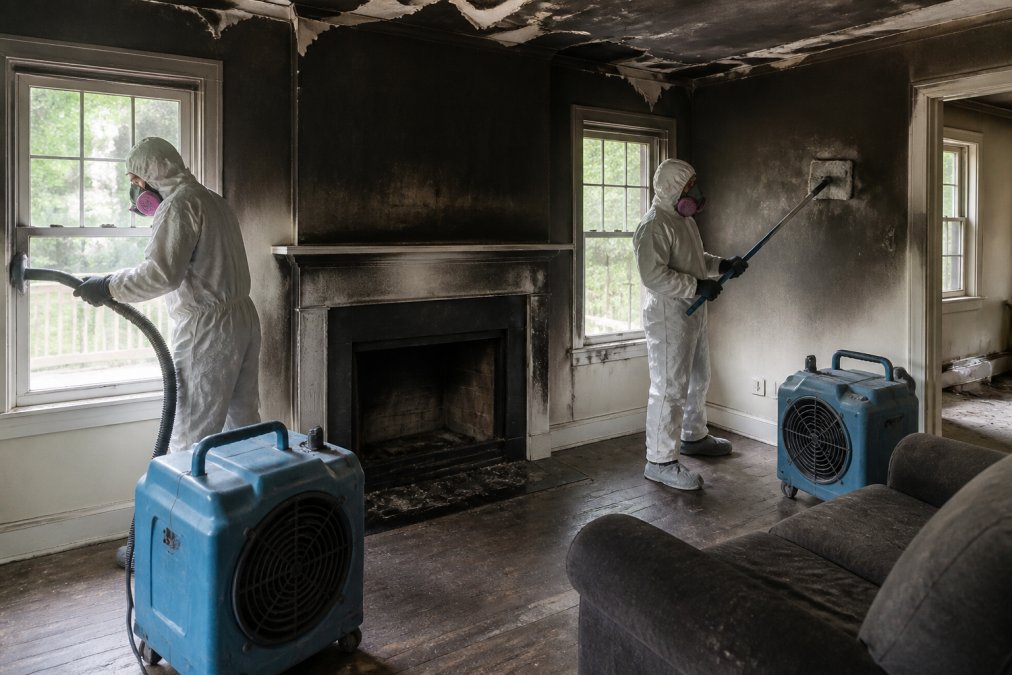
A realistic fire damage cleanup timeline runs from a few days for minor smoke damage to several months when reconstruction is involved. The scope of the fire, not the calendar, sets the pace. What most timelines leave out is why each phase exists and what happens if you compress it.
Most projects move through these phases:
- Emergency assessment and board-up (same day)
- Water extraction if firefighting left standing water (first 24-48 hours)
- Soot removal and smoke damage treatment (days to weeks)
- Structural drying and air quality control (several days)
- Reconstruction (weeks to months)
Why Soot and Smoke Are a Different Problem Than Fire or Water
Soot is not ash you can sweep up. It is a fine, acidic residue that forms when synthetic materials, foam cushions, carpet backing, PVC wiring, laminate, burn incompletely. That residue is what drives most of the long-term damage and most of the health complaints after a fire.
Three mechanisms matter:
- Corrosion. Soot residue is acidic and continues etching metal, glass, and appliances for weeks after the flames are out. A refrigerator or HVAC unit that looks fine on day one can be pitted and failing by day thirty if residue is not neutralized.
- Protein and grease films. Kitchen fires leave an invisible protein film that smells worse over time and is nearly impossible to remove with household cleaners. It requires alkaline or enzyme-based agents, not soap and water.
- Off-gassing. Porous materials, drywall paper, insulation, carpet padding, upholstery foam, absorb smoke particles and release them back into the air for months. Painting over them traps the odor temporarily and it returns.
Health Risks That Change the Cleanup Approach
Smoke residue contains fine particulates and combustion byproducts that irritate lungs, eyes, and skin, and can worsen asthma or cardiovascular conditions. That is why remediation crews work in respiratory protection and why re-entry without a mask is a bad idea even after the fire department clears the structure.
A common pattern practitioners see: homeowners clean one room themselves, feel sick for days, then call a professional anyway, having already spread soot into unaffected areas. Cross-contamination is the most expensive mistake in fire cleanup. handling insurance claims.
What Professional Remediation Actually Involves
- Containment. Plastic sheeting and negative air pressure keep soot from migrating into clean rooms.
- HEPA vacuuming. Standard shop vacuums blow fine particles back into the air; HEPA filtration captures them.
- Chemical sponge and dry cleaning. Soot is removed dry first, before any wet cleaning, or it smears into surfaces.
- Air scrubbing. HEPA and carbon-filter air scrubbers run continuously to pull particulates and odors out of the air.
- Duct and HVAC cleaning. Otherwise the system recirculates odor and residue every time it runs.
- Sealing or removal. Porous materials that cannot be cleaned are sealed with shellac-based primer or removed and replaced.
What Slows a Timeline Down
- Waiting on the fire department’s cause-and-origin report before the insurance scope is finalized
- Hidden water damage behind walls from firefighting efforts
- Asbestos or lead paint in older homes, which triggers regulated abatement before demolition
- Backordered materials during reconstruction
If the smell persists after professional cleaning, the contamination reached deeper than surface level. Aquaflame Restores it uses IICRC-trained technicians to trace odor sources rather than masking them, which is the difference between a fix and a temporary cover-up.
Preventing Lingering Smoke Odors in Living Rooms
Preventing lingering smoke odors in living rooms takes more than air fresheners. Smoke particles embed in drywall, upholstery, and ductwork, and they keep releasing odor until the source is removed.
The mistake most homeowners make is painting over stained walls. That traps the odor and it returns within weeks. Proper treatment means:
- Sealing or replacing porous materials like insulation and carpet padding
- Cleaning hard surfaces with specialized agents, not household sprays
- Running air scrubbers with HEPA and carbon filters
- Cleaning HVAC ducts so odors do not recirculate
If the smell persists after professional cleaning, the contamination likely reached deeper than surface level. Aquaflame Restores it uses IICRC-trained technicians to trace odor sources rather than masking them, which is the difference between a fix and a temporary cover-up.
Finding Temporary Housing and Disaster Relief Resources
Temporary housing is often covered under your policy, but you have to ask for it. Most homeowners policies include loss of use coverage that pays for a hotel or rental while your home is uninhabitable.
Keep receipts for every night of lodging and every meal, since insurers reimburse these against your coverage limits. Beyond insurance, local disaster relief organizations and FEMA’s disaster assistance resources can help with immediate needs after a declared emergency.
For pets and livestock, plan ahead. Many shelters do not accept animals, so line up boarding or a pet-friendly rental before you need it. A simple pet checklist includes food, medications, vaccination records, and a carrier.
Supporting Mental Health and Navigating Tax Relief
The emotional toll of a house fire outlasts the physical cleanup, and most guides ignore it entirely. Trauma support is not optional; it is part of recovery. So is the financial paperwork that most homeowners do not learn about until months later.
Mental Health and Trauma Support
Displacement, loss of possessions, and the sound of sirens can trigger acute stress, sleep disruption, and anxiety that show up weeks after the fire. A few practical steps:
- Talk to your primary care doctor about sleep, appetite, and stress symptoms. They can refer you to a counselor and, if needed, discuss short-term medication.
- Use the Disaster Distress Helpline (call or text 1-800-985-5990), a free, 24/7 service run by the Substance Abuse and Mental Health Services Administration for anyone affected by a disaster.
- Lean on community and faith organizations that offer counseling, meals, and childcare during displacement.
- Keep children in routines as much as possible, same bedtime, same school, same comfort items, because predictability reduces trauma responses in kids.
- Watch for delayed reactions. Symptoms often peak after the adrenaline fades, not during the emergency itself.
Pets and Livestock: The Logistics Most Guides Skip
Many emergency shelters do not accept animals, and that gap forces split-second decisions that owners later regret. Plan before you need it:
- Identify pet-friendly hotels and boarding kennels in advance, and confirm vaccination requirements.
- Build a go-bag for each animal: food, medications, vaccination records, a carrier or leash, and a photo of you with the pet to prove ownership.
- For livestock, contact your county’s emergency management office or local agricultural extension for evacuation and temporary housing options; large-animal rescue is usually coordinated at the county level, not by the fire department.
- Microchip and tag animals now, not after a fire, since panicked pets often bolt during evacuation.
Casualty Loss Tax Relief: What to Document
The IRS allows taxpayers to deduct certain unreimbursed personal casualty losses from a federally declared disaster. The mechanics matter more than the concept:
- Keep every receipt for repair, replacement, lodging, and meals during displacement.
- Document fair market value of destroyed items before and after the loss, photos, purchase receipts, appraisals, and bank or credit card statements all help.
- Get the fire department report and any insurance claim documentation; the deduction is generally reduced by insurance reimbursements.
- Note the event date and the federal disaster declaration number if one applies to your area, since different rules apply to declared versus non-declared events.
- Work with a CPA or enrolled agent who has handled casualty losses; the calculation involves basis, fair market value, and a percentage-of-income floor that is easy to get wrong.
IRS disaster loss guidance explains the forms and the declaration lookup. FEMA’s disaster assistance resources covers grants and low-interest loans for uninsured needs.
Do not discard damaged items until your adjuster has seen them or you have photographed and inventoried everything. Throwing out “obvious trash” before documentation can reduce both your insurance payout and your casualty loss deduction.
Frequently Asked Questions
When is it safe to re-enter my home after a fire?
Do not re-enter until the fire department declares it safe. Even after flames are out, hazards like structural instability, toxic residue, and hidden hot spots can remain. Wait for official clearance, and if you must enter briefly, wear an N95 mask and limit time inside. Contact a professional restoration company for an emergency assessment before staying in the home.
How do I document fire damage for insurance claims?
Take clear photos and videos of all damaged areas and items before moving anything. Create an inventory list of damaged personal property with descriptions, ages, and estimated values. Keep receipts for emergency expenses like temporary housing. Obtain a copy of the fire department report. This documentation supports your insurance claim and helps your public adjuster or restoration contractor advocate for you.
How long do toxins stay in the air after a fire?
Toxins from smoke and soot can linger for weeks or months if not properly remediated. Fine particles and volatile organic compounds (VOCs) penetrate porous materials and recirculate through HVAC systems. Professional remediation with HEPA filtration and air quality testing is necessary to confirm safe levels. Without treatment, occupants may experience respiratory issues, headaches, and allergic reactions.
Is anything salvageable after a fire?
Many items can be salvaged, depending on the extent of fire, smoke, and water damage. Non-porous materials like metals, glass, and hard plastics often respond well to cleaning. Porous items such as upholstered furniture, mattresses, and paper products may be unsalvageable if contaminated by toxic residue. A restoration contractor can assess salvageable items and use specialized cleaning methods to restore them.
What should I do immediately after a fire?
First, ensure everyone is safe and call 911 if the fire is still active. Once the fire department permits re-entry, avoid touching damaged items and do not attempt to clean soot yourself. Contact your insurance company to report the loss and schedule an emergency assessment with a restoration professional. Secure the property with board-up services if needed and arrange temporary housing.
How can I prevent lingering smoke odors in living rooms?
Smoke odors persist because soot particles embed in walls, carpets, and upholstery. Ventilate the room, replace HVAC filters, and wash hard surfaces with a degreaser. For deep odors, professional ozone or hydroxyl treatments are needed. Do not mask odors with air fresheners; they won’t eliminate the source. A restoration company can identify and remove odor-causing residues.