
Table of Contents
- Why Mold Keeps Returning: The Moisture Source You Missed
- Signs of Hidden Mold Growth: How to Find the Source
- How to Control Indoor Humidity Levels to Stop Mold
- Is Bleach Effective for Mold Removal?
- Material-Based Solutions for Porous Surfaces
- When to Call a Professional for Recurring Mold
- Preventative Maintenance and Long-Term Monitoring
- Frequently Asked Questions
Last Updated: September 13, 2026
Why Mold Keeps Returning: The Moisture Source You Missed
Mold keeps returning because the moisture source feeding it was never fixed. Cleaning the visible growth removes the symptom; the colony survives as dormant spores waiting for the next damp spell. At Aquaflame Restores it, our IICRC-trained technicians are familiar with this scenario across metro Atlanta: a homeowner scrubs a bathroom ceiling three times, and the black staining is back within weeks.
Mold spores are microscopic reproductive cells that settle on surfaces and stay inactive until moisture returns. Surface cleaning kills what you can see, not the colony inside the material. Below, we break down how to find the actual moisture source, when to dry it yourself, and when to call a professional.
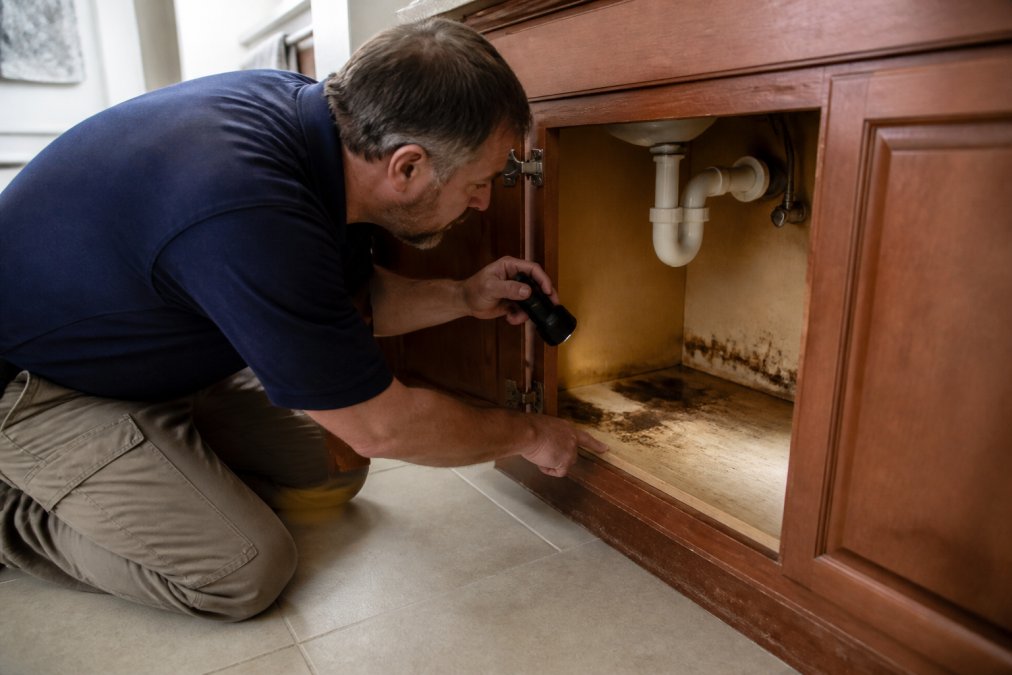
If mold has returned more than twice in the same spot, stop cleaning. Your job now is finding the water, not killing the growth.
The Science of Mold Spores and Why Surface Cleaning Fails
Mold spores exist in nearly every indoor environment. They only become a mold colony when three conditions align: moisture, organic material, and time. Remove any one and growth stops.
Spraying a cleaning agent on visible growth kills surface spores but leaves the fungal growth inside drywall, grout, and wood untouched. The biofilm layer many molds form also resists light cleaning. When humidity rises again, the surviving spores reactivate. That is why surface cleaning alone almost never solves a recurring problem.
Signs of Hidden Mold Growth: How to Find the Source
The clearest signs of hidden mold growth are a musty odor, unexplained allergy symptoms in one room, and discoloration on walls, ceilings, or grout. Visible growth is often the smallest part of the problem.
A common mistake is assuming mold only grows where you can see it. Check these locations:
- Under sinks and behind appliances
- Attic sheathing and roof decking
- Crawlspace joists and insulation
- Behind baseboards and under flooring
- Around HVAC system drip pans
Hidden Leaks and Plumbing Issues
Leak detection is the first step when mold keeps returning near plumbing. Slow seepage from a supply line, drain joint, or roof flashing can feed a colony for months without pooling water.
Where to look first:
- Check under every sink for staining on the cabinet floor
- Inspect the water heater pan and nearby drywall
- Look for bubbling paint on ceilings below bathrooms
- Check the A/C condensate line and drain pan
- Examine roof penetrations after heavy rain
A thermal imaging camera helps here: it shows cool, damp areas behind finished surfaces that look dry to the eye.
Poor Ventilation and Airflow Problems
Poor air circulation traps moisture in bathrooms, kitchens, and laundry rooms. Without an exhaust fan venting outdoors, steam condenses on cool surfaces and feeds growth.
Check that your bathroom fan actually moves air. Hold a tissue to the grille while it runs; if the tissue barely moves, the fan is undersized or the duct is blocked. Confirm the duct terminates outside the house, not in the attic. Condensation on windows and cold pipes is a reliable early warning sign.
How to Control Indoor Humidity Levels to Stop Mold
The best way to control indoor humidity levels is keeping relative humidity between 30% and 50% (the EPA). A hygrometer costs little and tells you exactly where you stand room by room.
Steps to bring humidity down:
- Run a dehumidifier in basements and crawlspaces
- Fix water intrusion at the source before drying
- Vent clothes dryers and exhaust fans outdoors
- Use air conditioning during humid months, not just fans
- Open interior doors to improve airflow between rooms
If humidity stays above 60% after these steps, the building has a ventilation or drainage problem that needs professional evaluation.
Is Bleach Effective for Mold Removal?
Bleach is not an effective long-term mold treatment on porous surfaces. It kills surface growth on tile and glass, but it cannot penetrate drywall, wood, or grout where the colony lives.
Bleach also leaves behind water, which feeds new growth once it dries. A fungicide or dedicated mold cleaner formulated for the material works better on non-porous surfaces. On porous materials, removal and replacement is often the only reliable fix.
Never mix bleach with ammonia-based cleaners (the CDC). The reaction produces toxic chloramine gas, which can cause serious respiratory injury in a closed bathroom.
Material-Based Solutions for Porous Surfaces
Porous materials hold moisture and mold spores deep inside, so treatment depends on the material itself. The table below is the fast answer; the sections after it explain the mechanism, because “can it be saved” depends on how fast the material releases water.
| Material | Can It Be Saved? | Typical Approach |
|---|---|---|
| Glossy tile, glass, metal | Yes | Clean, then dry fully |
| Grout and caulk | Sometimes | Scrub, reseal, or re-grout |
| Painted drywall | Rarely | Cut out and replace |
| Wood framing | Often | Sand, treat, and dry |
| Carpet and pad | No | Remove and discard |
| Insulation | No | Remove and replace |
The rule of thumb: if a material cannot be dried within 24 to 48 hours, replace it. That window comes from how quickly mold colonizes a wet surface, growth can begin within a day or two of sustained moisture, so a material that stays damp past that point is already a lost cause even if it looks fine. Persistent dampness often signals deeper structural vulnerabilities that require proactive maintenance to prevent roof mold from establishing a permanent foothold in your home.
Tile and Grout
Glossy tile itself is non-porous and wipes clean. The problem is the grout lines and the caulk at the tub or shower edge. Grout is cementitious and porous; it wicks water behind the tile, and caulk fails at the joint where two planes meet. Scrub grout with a stiff brush and a mold-specific cleaner, let it dry completely, then seal it. If the grout is crumbly or the caulk pulls away when you press it, remove and replace both, resealing over failing caulk traps moisture and guarantees a return.
Painted Drywall
Drywall is paper-faced gypsum, and the paper face is food for mold. Once growth reaches the paper, the board cannot be cleaned back to a safe state. Cut out the affected section at least a few inches past the visible staining, inspect the cavity behind it for moisture, and replace with new board after the framing dries. Painting over stained drywall with a mold-resistant primer hides the discoloration but does not stop the colony inside.
Wood Framing and Subfloor
Solid wood and framing lumber can often be saved because they dry slowly but thoroughly. Sand the affected surface to remove surface growth, treat with a mold-specific product, then dry the member with air movement and a dehumidifier until a moisture meter reads normal for the species and climate. Do not seal or paint framing until it is dry, trapping moisture under a coating restarts the problem. If the wood is soft, crumbly, or shows white rot, it has lost structural capacity and should be replaced.
Carpet, Pad, and Insulation
These are the materials where replacement is the only answer. Carpet backing and pad act like a sponge, and insulation, whether fiberglass batt or blown-in, holds water in the gaps between fibers where air cannot reach. Both should be removed, bagged, and discarded, not dried in place. Attempting to dry them leaves moisture deep in the material that feeds a new colony the moment humidity rises.
Match the treatment to the material, not the stain. Non-porous surfaces get cleaned; porous surfaces get evaluated against the 24-to-48-hour drying window; saturated soft materials get removed.
When to Call a Professional for Recurring Mold
Call a professional when mold returns after two proper cleanings, when the affected area exceeds roughly 10 square feet, or when you smell a musty odor with no visible source. Those three signals point to hidden moisture you cannot reach with household tools.
That 10-square-foot figure is not arbitrary (the EPA). The Environmental Protection Agency’s guidance for mold remediation in homes and schools draws the DIY line there: patches smaller than roughly a 3-foot by 3-foot area can usually be handled by a careful homeowner, while anything larger calls for a contractor who can build containment and manage spore spread. Above that threshold, disturbing the colony releases spores into the rest of the house, and you can end up with growth in rooms that were previously clean.
What Professional Remediation Actually Involves
Remediation is not “cleaning harder.” It is a defined sequence:
- Assessment and moisture mapping, thermal imaging and pin-type moisture meters locate every wet zone, including areas behind finished surfaces.
- Containment, plastic sheeting and negative air pressure isolate the work area so spores cannot migrate.
- HEPA filtration, air scrubbers run continuously, trapping particles down to 0.3 microns.
- Removal, contaminated drywall, insulation, and carpet are bagged and disposed of, not dried in place.
- Structural drying, commercial dehumidifiers and air movers bring framing and subfloor back to normal moisture content.
- Verification, post-remediation moisture readings and, when required, third-party clearance testing confirm the work.
You cannot verify what you cannot measure, and a homeowner with a box fan has no way to document that framing dried to an acceptable level.
The Threshold Checklist
Hire a professional if any of these are true:
- The affected area is larger than about 10 square feet
- Mold returns after two cleanings done correctly
- The growth is inside a wall cavity, ceiling, or HVAC ductwork
- You have had a sewage backup, flood, or long-running leak
- Anyone in the home has asthma, a compromised immune system, or is pregnant
- You are selling the home and a lender or buyer wants documentation
Do not run a standard box fan or household dehumidifier inside a contaminated area before containment is set. Air movement spreads spores to unaffected rooms and can turn a small job into a whole-floor project.
Documentation, Insurance, and Resale
If you are selling a home, a lender often wants clearance documentation proving the work was done correctly, which a professional remediation report provides. Many homeowner insurance policies cover mold only when it traces back to a covered peril such as a burst pipe or appliance failure, not to long-term neglect or high humidity. That distinction matters: photograph the moisture source before repairs begin, keep every receipt, and get the cause documented in writing. A remediation report that names the water source is far more useful to a claim than a receipt for cleaning supplies.
If you rent, put every request in writing and keep dated photos. Most leases and state landlord-tenant rules put structural repairs on the landlord, but only once you have documented notice. Send the request by email or certified mail, describe the moisture source if you can identify it, and give a reasonable deadline. If the landlord stalls, a written record is what supports a repair-and-deduct claim or a call to your local code enforcement office.
Preventative Maintenance and Long-Term Monitoring
Preventative measures are cheaper than any remediation. Build these into a seasonal routine:
- Test bathroom and kitchen exhaust fans every six months
- Check under sinks and around the water heater monthly
- Replace HVAC system filters on schedule
- Inspect the attic and crawlspace after heavy storms
- Log relative humidity readings weekly with a hygrometer
- Re-caulk tubs, showers, and countertops annually
Long-term monitoring tools make this easier: smart leak sensors near water heaters and under sinks alert you the moment water appears, before microbial growth starts.
Recurring mold is almost never a cleaning problem. It is a moisture problem wearing a disguise. If you have scrubbed the same spot twice and it is back, the water is still there, and finding it is the whole job. Aquaflame Restores it handles that work end to end: IICRC-trained technicians, a 30-minute arrival guarantee, 24/7 emergency response, direct insurance billing, and full reconstruction so you are not coordinating three contractors. Call for 24/7 emergency service and get the moisture source found, dried, and closed out for good.
Frequently Asked Questions
How do you stop mold from reappearing?
Stop mold from reappearing by eliminating the moisture source. Fix leaks, reduce indoor humidity to 30-50% with a dehumidifier, improve ventilation, and clean thoroughly. If you only clean the surface without addressing the underlying moisture, mold will return. For recurring mold, a professional can use thermal imaging and moisture meters to find hidden sources.
What kills mold and keeps it from coming back?
Fungicides and cleaning agents like hydrogen peroxide or commercial mold removers can kill mold on non-porous surfaces, but they do not prevent regrowth if moisture persists. The key is to remove the moisture source. For porous materials like drywall, removal and replacement may be necessary. After remediation, control humidity and monitor for leaks to keep mold from returning.
What humidity level prevents mold growth in homes?
Keep indoor relative humidity between 30% and 50% to prevent mold growth. Use a hygrometer to monitor levels, run a dehumidifier in damp areas like basements and crawlspaces, and ensure proper ventilation with exhaust fans in bathrooms and kitchens. If humidity consistently exceeds 60%, mold can grow within 24-48 hours.
When should you call a professional for recurring mold?
Call a professional if mold returns after you have fixed obvious leaks and controlled humidity, if the affected area is larger than 10 square feet, or if you smell a musty odor without visible mold. Professionals have tools like thermal imaging and moisture meters to locate hidden moisture sources and can provide clearance documentation for real estate transactions.