Table of Contents
- How to Fix a Damp Crawl Space Step by Step
- Step 1: Find the Source of the Moisture
- Step 2: How to Dry Out a Crawl Space
- Step 3: Fix Crawl Space Water Drainage
- Step 4: Install a Crawl Space Vapor Barrier
- Step 5: Choose the Right Crawl Space Dehumidifier
- When to Call a Professional for a Damp Crawl Space
- Frequently Asked Questions
Last Updated: October 6, 2026
How to Fix a Damp Crawl Space Step by Step
A damp crawl space is a below-floor area under a home that stays wet or humid from groundwater, poor drainage, or outside air, and it quietly damages the house above it. This guide walks you through how to fix damp crawl space step by step, from finding the source to drying it out for good. Addressing the moisture at its origin often requires homeowners to fix backyard drainage to ensure that surface water is directed safely away from the foundation.
Here’s the part most guides skip: crawl space moisture rarely comes from one place. It usually comes from three or four at once.
That’s why one fix alone almost never works.
Below, we’ll show you an effective order to fix the cause instead of chasing the symptom. The steps follow a sequence IICRC-trained technicians often use.
How to Tell Your Crawl Space Is Damp
The clearest signs of a damp crawl space are a musty smell, visible condensation on pipes and joists, and soft or stained wood. If you notice any of these, moisture has likely been building for months.
Check for these warning signs:
- A damp, earthy smell inside the house
- Foggy or dripping pipes and ductwork
- Dark stains or white fuzz on floor joists
- Bowed or sagging subfloor
- Rust on nails, hangers, and metal straps
- Higher heating and cooling bills
One important note: mold often shows up before you ever see standing water. A musty odor is your first clue.
If you spot mold, don’t just spray it. The moisture feeding it has to go first, or it comes right back.
Step 1: Find the Source of the Moisture
A damp crawl space almost always has more than one moisture source, so find every one before you fix anything. Skipping this step is the single biggest mistake we see.
Look for these common culprits:
- Groundwater seepage through the soil or foundation walls
- Poor grading that slopes water toward the house
- Clogged or missing gutters dumping water at the foundation
- Downspouts that empty too close to the home
- Plumbing leaks in supply lines or drains
- Air leaks pulling humid outside air into the space
Here’s how to test it. Tape a sheet of plastic to the floor and check it the next day. Moisture under the plastic points to groundwater. Moisture on top points to humid air.
Fix the water sources before you dry anything. Drying a space that still takes on water wastes time and money.
Step 2: How to Dry Out a Crawl Space
To dry out a crawl space, remove standing water first, then move air and pull humidity down with a dehumidifier. Drying is a process, not a single action.
Start with these moves:
- Pump or wet-vac out any standing water
- Open vents only if outside air is drier than the space
- Set up fans to move air across the floor and joists
- Run a dehumidifier sized for the square footage
- Check wood moisture with a meter until it reads dry
Expect this to take days, not hours. Thick joists and saturated soil hold water a long time.
Closing the vents and sealing the space while the floor is still wet traps moisture and feeds mold. Dry first, then seal.
Step 3: Fix Crawl Space Water Drainage
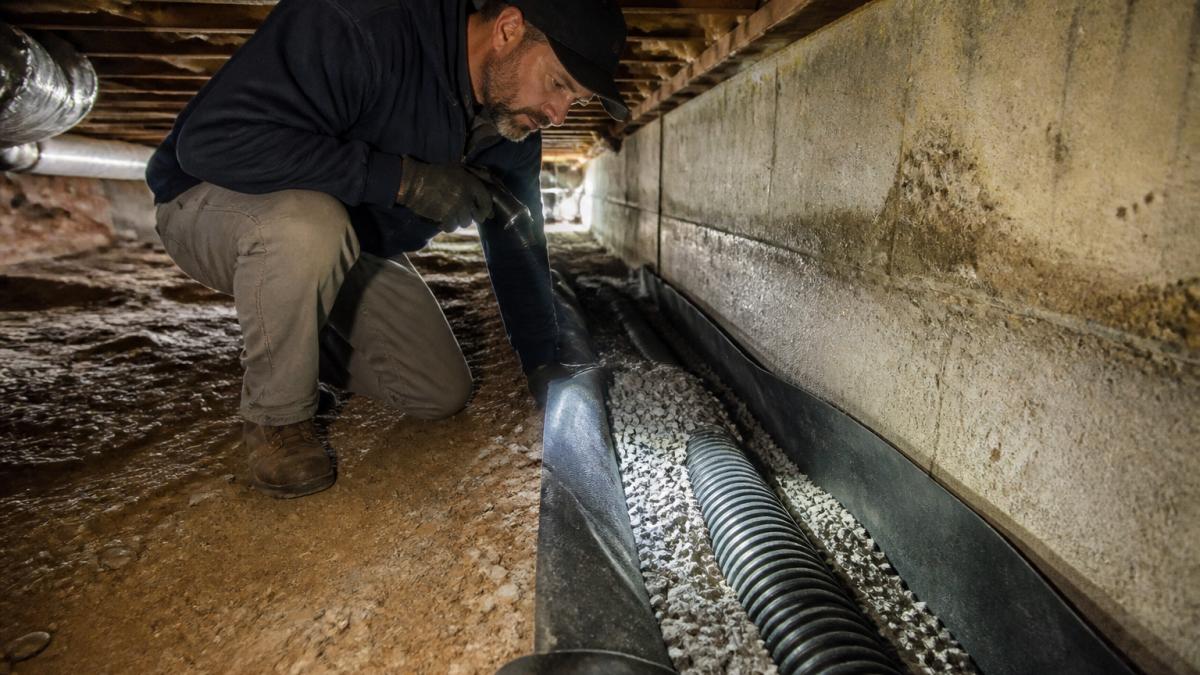
Crawl space water drainage moves water away from the foundation so it never reaches the space again. This is the step that makes the fix permanent.
Focus on these fixes:
- Clean gutters and extend downspouts well away from the house
- Regrade soil so it slopes away from the foundation
- Add a French drain or perimeter drain if water still seeps in
- Repair any plumbing leaks feeding the soil
The U.S. EPA guide to managing moisture and mold notes that controlling water at the source is the most reliable way to prevent mold growth.
Get the water moving away first. Everything after this step depends on it.
Step 4: Install a Crawl Space Vapor Barrier
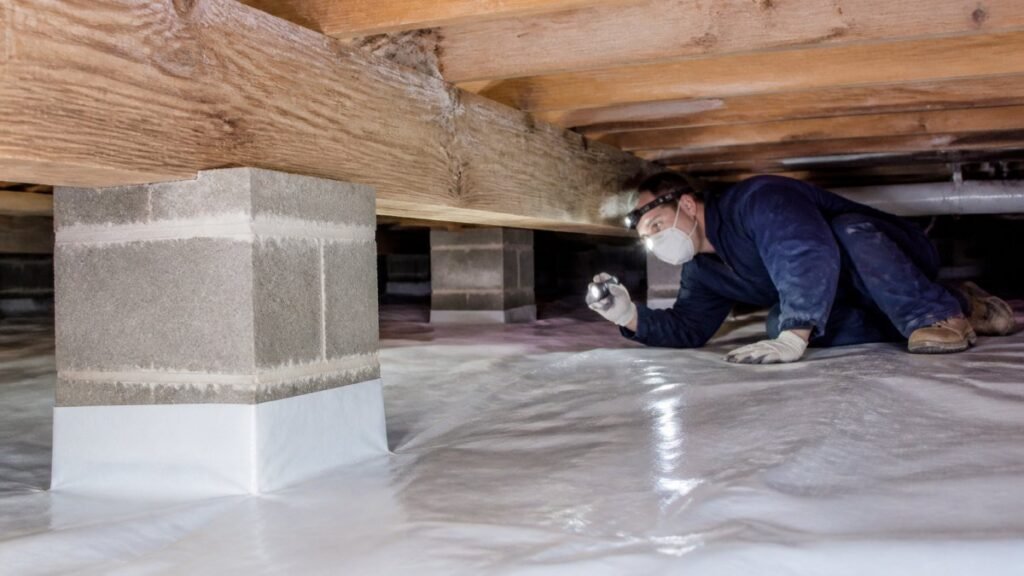
A crawl space vapor barrier is a heavy plastic sheet that covers the soil to block ground moisture from rising into the home. It’s one of the highest-value fixes you can make.
Do it right with these steps:
- Clear the floor of debris and level the soil
- Lay a thick, puncture-resistant plastic sheet
- Overlap seams and seal them with tape
- Run the barrier up the walls and seal the edges
- Seal around piers, pipes, and posts
A thin sheet tears and fails fast. Use a heavy-duty product built for crawl spaces.
Seal the barrier to the walls and piers, not just the floor. Gaps at the edges let moisture sneak right back in.
Step 5: Choose the Right Crawl Space Dehumidifier
A crawl space dehumidifier is a unit built to pull moisture from the air in a tight, low space. A standard basement unit usually won’t keep up.
Pick one based on these factors:
- Size: match capacity to the square footage
- Low-temperature operation: units that keep working in cool air
- Drainage: a hose to a drain beats emptying a bucket
- Humidity control: a built-in humidistat to run only when needed
Set it to hold the space around 50% relative humidity. Check it monthly and clear the drain line.
Pair the dehumidifier with the vapor barrier and drainage fixes. Alone, it fights a losing battle.
When to Call a Professional for a Damp Crawl Space
Call a professional when the moisture keeps coming back, when you find mold, or when the damage reaches the structure. Some problems are too big for a weekend fix.
Reach out if you see:
- Mold covering joists, insulation, or subfloor
- Sagging or rotted structural wood
- Standing water that returns after you pump it out
- A musty smell that won’t go away
At Aquaflame Restores it, our IICRC-trained technicians handle drying, mold work, and full reconstruction from one team.
Frequently Asked Questions
How can I tell if my crawl space has a moisture problem?
Look for musty odors rising into the living space, condensation on pipes and ductwork, efflorescence (white chalky deposits) on foundation walls, sagging or bouncy floors, and visible mold growth on joists or insulation. A moisture meter reading above 20% on wood framing confirms a problem. Standing water, damp soil, and rusted fasteners are also clear signs. If you notice any of these, address the damp crawl space before mold spreads to the home’s structure.
How long does it take to dry out a crawl space?
Drying time depends on how wet the space is and how much ventilation or mechanical drying you use. A damp crawl space with no standing water typically takes 3 to 5 days with commercial-grade dehumidifiers and air movers running continuously. If standing water is present, extraction comes first, then drying can take 5 to 10 days. Humidity above 60% will slow the process, so sealing vents and running a crawl space dehumidifier speeds things up considerably.
Should I use a dehumidifier in my crawl space?
Yes, if the crawl space stays above 55% relative humidity after drainage and vapor barrier work. A crawl space dehumidifier sized for the square footage keeps moisture from condensing on joists and insulation. Look for a unit rated for the space’s cubic footage, with a condensate pump or drain line so you don’t have to empty a bucket. Running it continuously during humid months prevents the damp crawl space from returning.
Does a damp crawl space need a vapor barrier?
Yes. A crawl space vapor barrier blocks ground moisture from evaporating into the air and condensing on wood framing. Use at least a 10-mil polyethylene liner, overlap seams by 12 inches, and seal them with mastic or tape. Run the barrier up the foundation walls and secure it with adhesive. Combined with crawl space water drainage and a dehumidifier, a vapor barrier is the most cost-effective way to keep a crawl space dry long-term.
A damp crawl space rarely fixes itself, and the damage above it grows quietly. If the moisture keeps returning or you spot mold, the smart move is to bring in a team that finds the cause. Aquaflame Restores it offers 24/7 emergency service, a 30-minute arrival guarantee, direct insurance billing, and full reconstruction from one crew. Get started with Aquaflame Restores it and dry out your crawl space for good.