Last Updated: October 22, 2026
Quick Summary
Water damage requires immediate action within the first 24 hours to prevent mold and structural problems. Turn off electricity if water is near outlets, stop the water source if safe, and call a professional restoration company right away. Professional equipment removes hidden moisture in walls and under flooring that household tools cannot reach.
- Turn off electricity at the breaker if water is near outlets or appliances to ensure safety.
- Professional water damage restoration companies should arrive within one hour to begin extraction and assessment.
- Small water damage dries in 2-3 days with professional equipment, while severe damage takes 2-4 weeks.
- Mold grows within 24-48 hours in wet environments, so professional drying must begin immediately.
- Homeowner’s insurance typically covers sudden water damage from burst pipes, roof leaks, and storms.
Table of Contents
- What to Do Immediately After Water Damage
- Water Damage Cleanup: The Essential Steps
- Water Damage Insurance Claims: Getting Coverage
- Water Damage Drying Time: What to Expect
- Signs of Mold After Water Damage
- Can You Stay in Your Home During Restoration?
- Why Professional Water Damage Restoration Matters
- Frequently Asked Questions
What to Do Immediately After Water Damage
Water damage moves fast. The first hours after a pipe bursts, a roof leaks, or a storm floods your home determine whether you save your belongings or lose them.
Your first priority is safety. Turn off the electricity at the breaker if water is near outlets or appliances. Never touch wet electrical equipment.
Next, stop the source of water if it’s safe to do so. Close the main water valve if a pipe burst. Move to higher ground if flooding is occurring. Document everything with photos and video for your insurance claim.
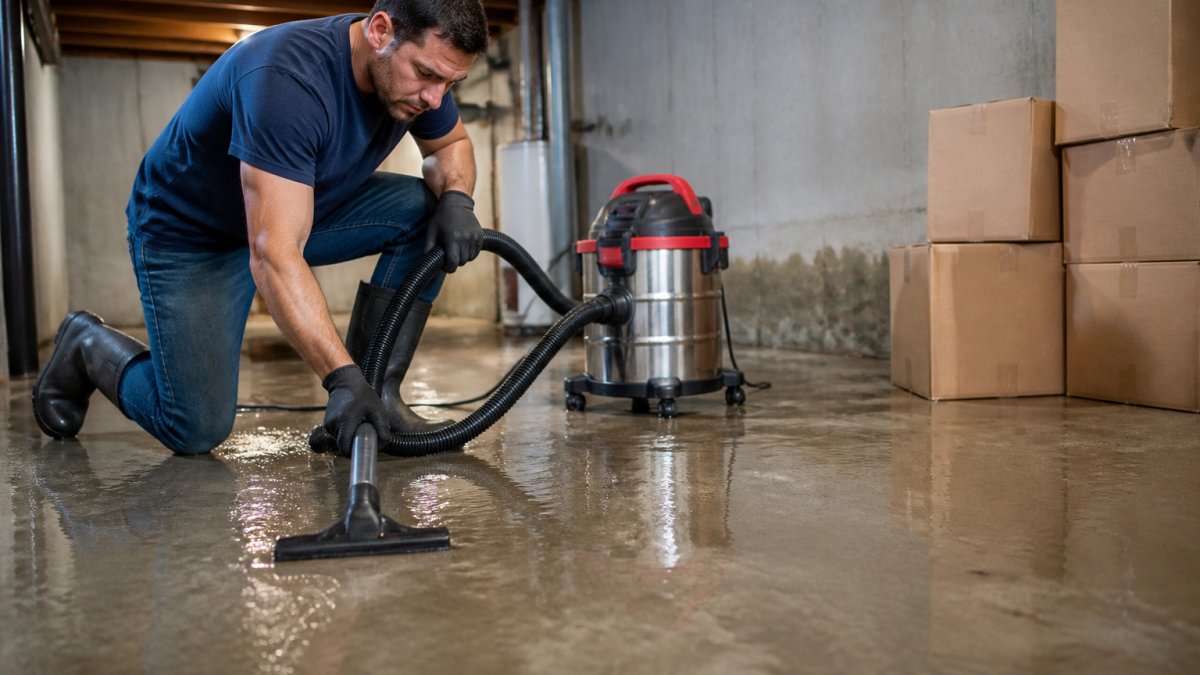
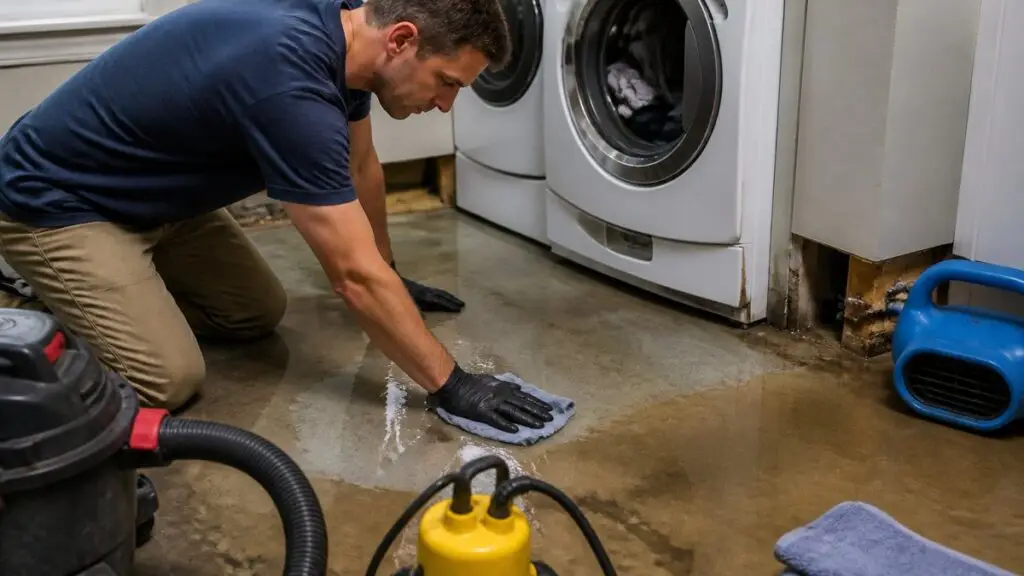
Start removing standing water as soon as it’s safe. Use a wet/dry vacuum, mop, or pump to extract water from floors and low areas. Open windows and doors to improve air circulation. Move furniture and belongings to dry areas if possible.
Call a professional water damage restoration company right away. Water damage spreads through walls, under flooring, and into crawlspaces where you can’t see it. Professional equipment and trained technicians can reach these hidden areas before mold takes hold.
Water Damage Cleanup: The Essential Steps
Proper cleanup requires more than removing visible water. Hidden moisture trapped in walls, insulation, and subflooring causes structural damage and mold growth if not addressed correctly.
Step 1: Water Extraction
Remove all standing water using pumps, wet/dry vacuums, and extraction equipment. Professional-grade extractors remove far more water than household equipment. This step must happen within the first 24 hours to prevent secondary damage.
Step 2: Dehumidification
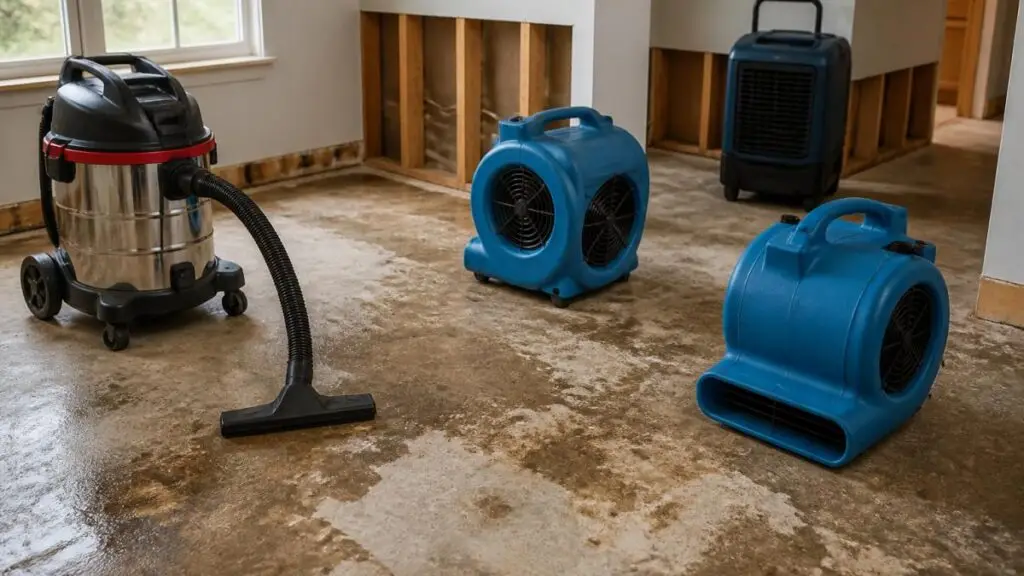
Industrial dehumidifiers pull moisture from the air and materials. This process runs for days or weeks depending on the severity of water damage.
Step 3: Air Movement
Strategic placement of air movers creates airflow through wet areas. Fans alone don’t remove water, but they accelerate evaporation when combined with dehumidifiers. Technicians position equipment to dry the most affected zones first.
Step 4: Structural Assessment
Professionals inspect framing, subflooring, and insulation for damage. Some materials must be removed if water damage has compromised their integrity. Wet drywall often needs replacement to prevent mold.
Step 5: Cleaning and Sanitization
All surfaces touched by water get cleaned with antimicrobial solutions. This prevents bacterial growth and odors.
Step 6: Restoration
Once drying is complete and mold has been ruled out, reconstruction begins. This includes replacing damaged drywall, flooring, insulation, and fixtures. Professional restoration ensures your home returns to its original condition.
Water Damage Insurance Claims: Getting Coverage
Your homeowner’s insurance typically covers sudden water damage from burst pipes, roof leaks, or storms (Which disasters are covered by homeowners insurance?). However, gradual leaks, foundation seepage, and flood damage are usually excluded. Understanding your policy before water damage occurs saves frustration later.
File your claim immediately. Contact your insurance company within 24-48 hours of discovering water damage. Provide photos, video, and a detailed description of what happened. Your insurer will assign an adjuster to assess the damage.
Many homeowners struggle with insurance adjusters who underestimate repair costs or deny legitimate claims. This is where professional documentation matters. Aquaflame Restores it manages direct insurance billing, meaning we communicate with your adjuster on your behalf. We document all water damage with photos, measurements, and detailed reports that support your claim.
Keep receipts for any emergency cleanup you do yourself. Insurance may reimburse you for equipment rental, supplies, or temporary repairs. However, professional water damage restoration typically costs far less than the damage that occurs if you wait or attempt cleanup without proper equipment.
Don’t accept a low settlement without pushback. If the adjuster’s estimate seems too low, request a second opinion or hire a public adjuster to negotiate on your behalf. Your insurance company has a legal obligation to pay for reasonable repairs related to covered water damage.
Water Damage Drying Time: What to Expect
How long water damage takes to dry depends on several factors: the amount of water, the materials affected, humidity levels, and whether professional equipment is used.
Small water damage (minor leak, wet carpet in one room) typically dries in 2-3 days with professional equipment. Without dehumidifiers and air movers, this same damage could take 1-2 weeks.
Moderate water damage (flooded basement, major roof leak affecting multiple rooms) usually requires 5-7 days of continuous drying. Structural materials like subflooring and framing take longer to dry than surface materials. Neglecting these hidden moisture pockets often leads to rot or mold growth, making the process of preventing structural damage essential for maintaining the long-term integrity of your home.
Severe water damage (whole-home flooding) can take 2-4 weeks depending on the volume of water and materials affected. Crawlspaces and attics may take even longer because air circulation is limited in these areas.
Several factors speed up or slow down drying time:
- Humidity levels: High outdoor humidity slows evaporation. Professional dehumidifiers overcome this by removing moisture from the air.
- Temperature: Warm air holds more moisture than cold air. Drying happens faster in warm conditions.
- Materials: Concrete dries faster than wood. Insulation and carpet hold water longer than hard surfaces.
- Equipment: Professional-grade dehumidifiers and air movers dry homes 3-5 times faster than passive air drying.
Never assume your home is dry just because surfaces feel dry. Hidden moisture in walls and under flooring continues to cause problems for weeks. Professional moisture testing confirms when drying is complete. Aquaflame Restores it uses moisture meters to verify that all water damage has been properly dried before we leave your home.
Signs of Mold After Water Damage
Mold grows within 24-48 hours in wet environments (the CDC). After water damage, mold can develop in walls, insulation, crawlspaces, and under flooring where you can’t see it. Catching mold early prevents health problems and expensive remediation.
Visual signs of mold:
- Black, green, or white spots on surfaces
- Fuzzy or slimy growth on walls, ceilings, or wood
- Discoloration of drywall or insulation
- Growth in corners, around windows, or in crawlspaces
Smell: A musty, earthy odor often indicates mold growth even if you can’t see it. This smell means moisture is present and mold is likely developing.
Health symptoms: Mold exposure causes allergic reactions, respiratory issues, and asthma attacks in sensitive people (the CDC). If household members develop coughing, sneezing, or breathing problems after water damage, mold may be present.
High-risk areas after water damage:
- Crawlspaces and basements (moisture collects here naturally)
- Attics (roof leaks trap moisture in insulation)
- Inside walls (water seeps into cavities and stays hidden)
- Under flooring (water wicks into subflooring and doesn’t dry properly without professional equipment)
Professional mold inspection and testing identifies mold before it becomes a serious problem. If mold is found, we remove affected materials and treat the area with antimicrobial solutions.
Don’t attempt mold removal yourself. Disturbing mold releases spores into the air, making the problem worse. Professional mold remediation involves containment, removal, and verification that the mold is gone.
Can You Stay in Your Home During Restoration?
This depends on the extent of water damage and the stage of restoration. Minor water damage with professional drying equipment may allow you to stay home. Extensive damage requiring structural repairs typically means temporary relocation.
When you can stay:
- Water damage is limited to one room or small area
- Electrical systems are safe and operational
- Heating and cooling systems work properly
- Professional drying equipment is in place but doesn’t require evacuation
When you should leave:
- Structural damage compromises safety
- Mold remediation is underway (mold spores spread through the home)
- Major reconstruction work is happening
- Electrical or gas systems are damaged
Your homeowner’s insurance may cover temporary housing if you must leave. This is called “loss of use” coverage. Document your hotel stays and meal expenses. Keep receipts to submit to your insurer.
Staying in a home during water damage restoration can be uncomfortable. Dehumidifiers are loud. Air movers create constant noise. Contractors working during the day disrupt your routine. Many homeowners choose to stay with family or in a hotel even if it’s technically safe to remain home.
Aquaflame Restores it minimizes disruption by working efficiently and completing restoration as quickly as possible. Our team coordinates with your insurance company to manage timelines and keep you informed of progress. We understand that your home is your sanctuary, and we treat it with respect while restoring it to safe, livable condition.
Why Professional Water Damage Restoration Matters
DIY water damage cleanup often fails because homeowners lack professional-grade equipment and expertise. Moisture hidden inside walls and under flooring continues to cause damage long after visible water is gone.
Problems with DIY cleanup:
- Household equipment removes only surface water
- Hidden moisture causes structural damage and mold
- Improper drying leads to warped wood and ruined flooring
- Mold develops in walls where you can’t see it
- Insurance may not cover damage from improper cleanup
Professional water damage restoration includes extraction, dehumidification, mold prevention, and structural repair. Aquaflame Restores it handles the entire process from emergency response through final reconstruction. Our IICRC-trained technicians follow industry standards for water damage restoration.
What professional restoration includes:
- 24/7 emergency response with on-site arrival within one hour
- Complete water extraction using commercial equipment
- Moisture testing to verify drying is complete
- Mold prevention and remediation if needed
- Direct insurance billing to reduce your out-of-pocket costs
- Full reconstruction to restore your home to pre-damage condition
Water damage spreads quickly and causes problems you won’t see until it’s too late. Professional intervention in the first 24 hours prevents most secondary damage.
Your home is one of your most valuable assets. Water damage threatens that investment. Aquaflame Restores it protects your home by responding immediately, drying thoroughly, and restoring everything to safe, livable condition. Call us 24/7 for emergency water damage restoration. We arrive within one hour and begin protecting your home right away.
When water damage strikes, you need a team that responds immediately and handles everything from extraction through reconstruction. Aquaflame Restores it’s IICRC-trained technicians arrive within one hour with professional-grade equipment to extract water, prevent mold, and restore your home. We manage your insurance claim directly, coordinate all restoration work, and keep you informed every step of the way. Don’t let water damage become a bigger problem, call Aquaflame Restores it now for 24/7 emergency restoration services.
Frequently Asked Questions
What should I do first after discovering water damage in my home?
Stop the source of water if it’s safe to do so, then move to higher ground and turn off electricity to affected areas. Call a water damage restoration professional immediately—every hour matters. Do not delay cleanup, as water begins damaging materials within hours and mold can start growing within 24-48 hours. Document the damage with photos for your insurance claim, but avoid touching contaminated water or materials.
How long does water damage drying time typically take?
Standard water damage drying time ranges from 24 to 72 hours for most residential properties, depending on the extent of saturation, humidity levels, and materials affected. Structural drying of walls, flooring, and subflooring can take 7-14 days. Professional restoration teams use industrial dehumidifiers and air movers to accelerate the process safely and prevent secondary damage like mold growth.
What are the early signs of mold after water damage?
Look for visible dark spots or patches on walls, ceilings, or flooring within 24-72 hours of water exposure. You may also notice a musty odor, discoloration spreading across surfaces, or soft, spongy drywall. Mold often grows in hidden areas like crawlspaces, attics, and behind walls. If you suspect mold, have a professional inspect and test—do not disturb it yourself, as this can spread spores.
Will my homeowners insurance cover water damage?
Coverage depends on the cause. Sudden, accidental water damage from burst pipes, appliance failures, or storms is typically covered. Damage from flooding, gradual leaks, or lack of maintenance is usually not covered by standard homeowners insurance and requires separate flood insurance. Review your policy and contact your insurer immediately after damage occurs. A restoration professional can help document the damage and support your claim.