Table of Contents
- Drywall Repair vs Full Wall Replacement: The Short Answer
- When to Replace Drywall After Water Damage
- Signs of Water Damage Behind Drywall You Should Not Ignore
- How to Dry Wet Drywall and Verify It Is Ready for Repair
- Drywall Replacement Cost After Water Damage vs Repair Costs
- Insulation, Framing, and Hidden Cavity Damage
- Insurance Documentation and Claim Considerations
- Frequently Asked Questions
Last Updated: October 20, 2026
Drywall Repair vs Full Wall Replacement: The Short Answer
Drywall repair can work when the damage is small, caught early, and fully dried. It needs full replacement when the drywall stayed wet, swelled, or shows mold.
At Aquaflame Restores it, we make this call on emergency water calls across metro Atlanta nearly every week. The honest answer most homeowners need is simpler than the internet makes it sound. Drywall is a paper-faced gypsum board.
Below, we walk through the exact decision points our IICRC-trained technicians use on site: the 24-48 hour window, water contamination categories, moisture meter thresholds, and the cost and time trade-offs between patching a section and replacing a full wall.
Small, clean, quickly dried damage is a patch job. Anything that stayed wet past 48 hours, swelled, or smells musty is a replacement. When in doubt, replace the section rather than paint over a problem.
When to Replace Drywall After Water Damage
Replace drywall after water damage when the board is soft, swollen, crumbled, or moldy, or when moisture readings stay elevated after drying. Repair is only appropriate for shallow surface damage that dried fast.
The U.S. Environmental Protection Agency’s mold cleanup guidance is blunt about porous materials: mold-damaged drywall generally cannot be cleaned and should be removed. That single rule settles most arguments. If you can see or smell mold on the paper face, replacement is the answer.
The 24-48 Hour Window and Why Duration Matters
The first 24 to 48 hours decide the outcome. Drywall that gets wet and is dried quickly usually survives with cosmetic damage only. Past that window, moisture wicks up the paper facing and into the gypsum core, and the board starts to lose strength.
A common mistake is assuming the wall is fine because the surface feels dry to the touch. Water travels through the cavity and along framing, so the visible face can read dry while the back of the board stays damp. That hidden moisture is what feeds mold and causes bubbling weeks later.
Water Category and Contamination Level
Water damage is classified by how contaminated the water is, and that classification changes the repair scope. Clean water from a supply line is a different job than gray water from an appliance or black water from a sewer backup.
- Category 1 (clean): burst supply lines, rainwater intrusion. Drywall may be salvageable if dried fast.
- Category 2 (gray): washing machine discharge, dishwasher leaks. Porous drywall is usually removed.
- Category 3 (black): sewage, ground water, long-standing standing water. Affected drywall is removed, and the cavity is disinfected.
Category 3 water turns a patch job into a full removal, no exceptions. That is the part most DIY guides skip.
Signs of Water Damage Behind Drywall You Should Not Ignore
The clearest signs of water damage behind drywall are bubbling paint, brown water stains, soft or spongy spots, crumbling edges, and a musty odor. Any one of these warrants opening the wall to inspect the cavity.
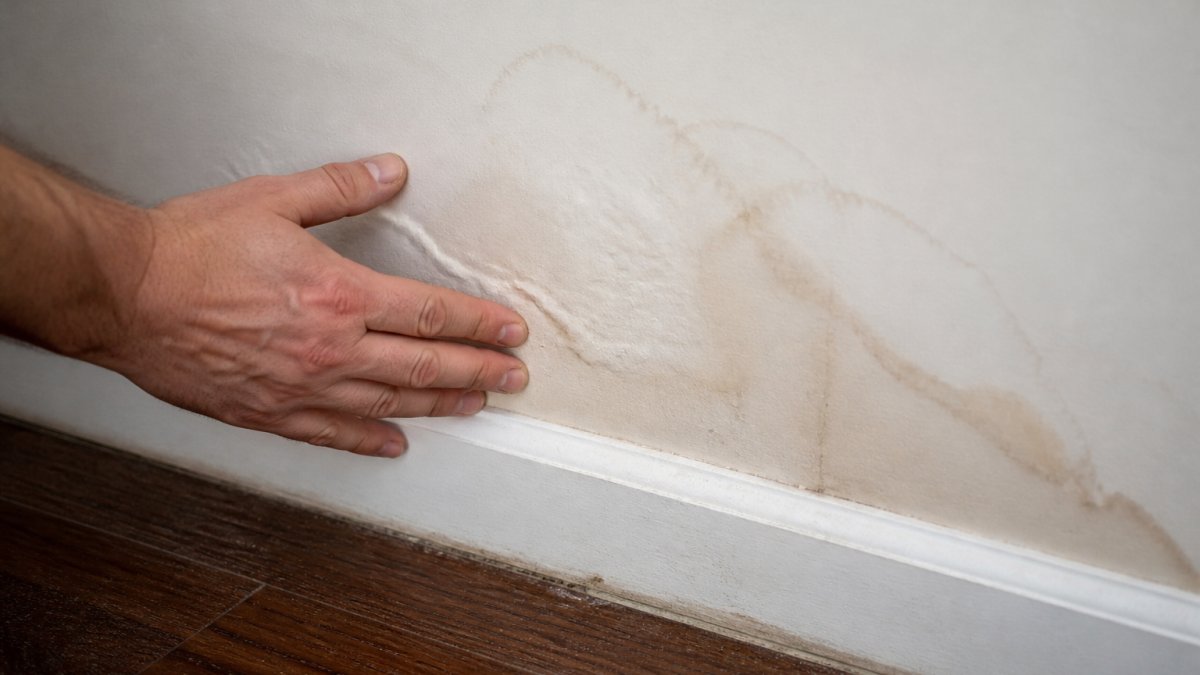
Watch for these specific signals:
- Bubbling or blistering paint: the paper face is delaminating from the core.
- Water stains that grow: active moisture is still present.
- Soft or spongy texture: the gypsum core has broken down.
- Crumbling at seams and corners: the board has lost integrity.
- Musty odor: mold is likely growing in the cavity or insulation.
When Patching Is Still an Option
Patching works when the damage is limited to a small area, the drywall is structurally sound, and moisture readings confirm the cavity is dry. A patch means cutting out the damaged section, installing a drywall sheet piece, taping, mudding, and matching texture.
The test is physical. Press the area. If it gives, it is not a patch candidate. If it feels solid and the moisture meter reads normal, a patch is reasonable.
Painting over a water stain without fixing the leak source traps moisture behind fresh paint. The stain returns, the drywall keeps degrading, and mold spreads inside the wall where you cannot see it.
::: Properly addressing this hidden decay often requires coordinating the restoration process, which raises important questions about the logistical benefits of hiring drywall and painting pros.
How to Dry Wet Drywall and Verify It Is Ready for Repair
Drying wet drywall means removing the water source, extracting standing water, and running air movers and dehumidifiers until moisture readings return to normal. Verification with a moisture meter and a documented drying log, not a visual check, is what confirms the wall is ready for repair.
Most practitioners find that the decision to patch, partially replace, or fully replace should follow a repeatable sequence rather than a gut call. Use this decision tree on site:
- Stop the source and classify the water. Clean supply-line water, gray appliance water, and black sewage water lead to different scopes. Category 2 and 3 water generally means removing porous drywall regardless of how dry it looks.
- Measure moisture before touching anything. Take baseline readings on an unaffected wall in the same room, then read the wet wall at multiple points: near the baseboard, mid-wall, at the ceiling line, and around any penetration such as outlets or plumbing escutcheons.
- Open the cavity if readings are elevated or inconsistent. A small inspection cut behind the baseboard or at the stud bay lets you see the back of the board, the insulation, and the framing.
- Dry with air movement and dehumidification, and log readings daily. Record the date, time, location, and reading for each point.
- Apply the decision rule. If readings return to the dry baseline range and the board is firm, patch. If readings stay elevated after 48-72 hours of active drying, or the board is soft, swollen, or moldy, replace the affected section. If the cavity insulation is wet or the framing reads high, partial or full-wall replacement is the safer call.
Moisture Meter Readings and What They Mean
A pin-type moisture meter reads the percentage of moisture in drywall. Normal interior drywall typically reads in the low single digits to around 10 percent depending on ambient humidity; many technicians treat readings above roughly 15 percent as a sign of active moisture that needs further drying before any repair.
A reading that climbs or holds steady after 48 hours of active drying means the cavity is not drying, often because insulation is saturated, the leak source was missed, or air movement is not reaching the back of the board. In that case, open the cavity rather than painting over the problem.
Take a baseline reading on an unaffected wall in the same room first, and log every reading with a date and location. A documented drying log is also useful evidence if you later file an insurance claim.
Verifying the Wall Is Actually Dry
Visual dryness is not verification. The paper face can read dry while the back of the board and the framing stay damp. Before closing up a wall, confirm three things: the drywall face and back read at or near the baseline, the insulation is dry to the touch and shows no staining or musty odor, and the framing reads at or near the baseline.
A common pattern is a homeowner who patched a wall that felt dry, only to see bubbling paint return weeks later because the cavity was still wet. The fix is to verify with a meter and an inspection cut, not with a hand pressed against the paint.
Drywall Replacement Cost After Water Damage vs Repair Costs
Repair costs less than replacement on paper, but only when the repair actually solves the problem. A patch that fails and gets redone costs more than replacing the section once.
We do not publish fixed prices because scope varies so widely, and any contractor quoting a number before seeing the damage is guessing. What drives cost is straightforward:
| Factor | Patch Repair | Full Wall Replacement |
|---|---|---|
| Scope | Small cut-out, tape, mud, texture | Remove and replace full sheets |
| Insulation | Usually untouched | Often removed and replaced |
| Drying equipment | Minimal | Air movers and dehumidifiers |
| Timeline | Short | Longer, includes drying phase |
| Mold risk | Higher if moisture missed | Lower, cavity is exposed and treated |
| Best for | Small, clean, fast-dried damage | Saturated, contaminated, or moldy walls |
A patch also requires texture matching and repainting, which is easy to underestimate. Blending a repaired section into an existing wall finish takes skill, and a poor match is visible in raking light.
Insulation, Framing, and Hidden Cavity Damage
Hidden cavity damage is the reason so many patch jobs fail. Water that reaches the wall cavity soaks insulation, and wet insulation holds moisture against the framing long after the drywall face looks dry.
Fiberglass insulation that stays wet loses effectiveness and can support mold growth on its paper facing. In severe cases, prolonged moisture exposure damages wood framing, which turns a drywall job into structural repair. That is the escalation nobody wants.
Replacing drywall over wet or moldy insulation seals the problem inside the wall. The new board absorbs moisture from the cavity and fails within months.
If you are unsure whether the cavity is dry, open it. A small inspection cut costs far less than a failed repair. This is also where professional moisture assessment earns its keep: thermal imaging and meter readings find wet zones that look fine from the surface.
Insurance Documentation and Claim Considerations
Insurance claims hinge on documentation, and documentation starts before anything is torn out. Photograph the damage, keep the failed part if possible, and log every step of the drying process.
Most homeowner policies cover sudden water damage from a burst pipe or appliance failure (Water Damage: Whats Covered; Whats Not). They typically exclude long-term seepage and maintenance neglect.
Keep these records:
- Photos and video of all damage before repair
- Moisture meter readings with dates
- Receipts for any emergency mitigation
- Contractor scope-of-work and invoices
- A written timeline of when the damage was discovered
At Aquaflame Restores it, we handle direct insurance billing so homeowners are not stuck fronting the full cost and chasing reimbursement.
Water damage never waits, and neither should your decision. If a wall is soft, stained, or smells musty, patching it is a gamble you will likely lose.
Frequently Asked Questions
Does wet drywall need to be replaced?
Not always. Drywall that got wet from a clean water source and was dried within 24 to 48 hours can often be patched and repainted. Replacement becomes necessary when the drywall is soft, crumbling, or delaminating, when moisture readings stay elevated after drying, or when the water was contaminated. A moisture meter reading below 1% on a pin meter, confirmed across the whole damaged section, is the usual signal that repair is safe. If mold is visible or a musty odor persists, cut out and replace the affected section.
How long does it take for wet drywall to dry?
Most wet drywall dries in 3 to 5 days with proper air movement and dehumidification. Thick sections, exterior walls, and areas with trapped moisture behind the drywall can take a week or longer. Drying time depends on how long the drywall was wet, the water category, and whether the wall cavity is open to airflow. Technicians typically check moisture readings daily and only close up the wall once readings match a dry reference point in an unaffected part of the room.
Can mold grow behind drywall after a leak?
Yes. Mold can start growing on wet drywall and paper facing within 24 to 48 hours, often before any stain appears on the surface. That is why hidden damage behind drywall matters so much after a water leak. Signs include a musty odor, bubbling paint, and dark speckling near seams or baseboards. If you suspect mold behind the drywall, the affected section usually needs to be cut out rather than patched, and the wall cavity should be cleaned and dried before new drywall goes up.
Does homeowners insurance cover drywall damage from a water leak?
Most homeowners policies cover sudden and accidental water damage, such as a burst pipe or failed appliance supply line, including drywall repair and replacement. Damage from long-term neglect, poor maintenance, or repeated leaks is often excluded. Document everything before work starts: photos of the damage, moisture readings, and the plumber’s report identifying the leak source. A restoration company that handles direct insurance billing can help organize the claim and provide the drying logs and scope documentation adjusters typically request.