Last Updated: October 27, 2026
Quick Summary
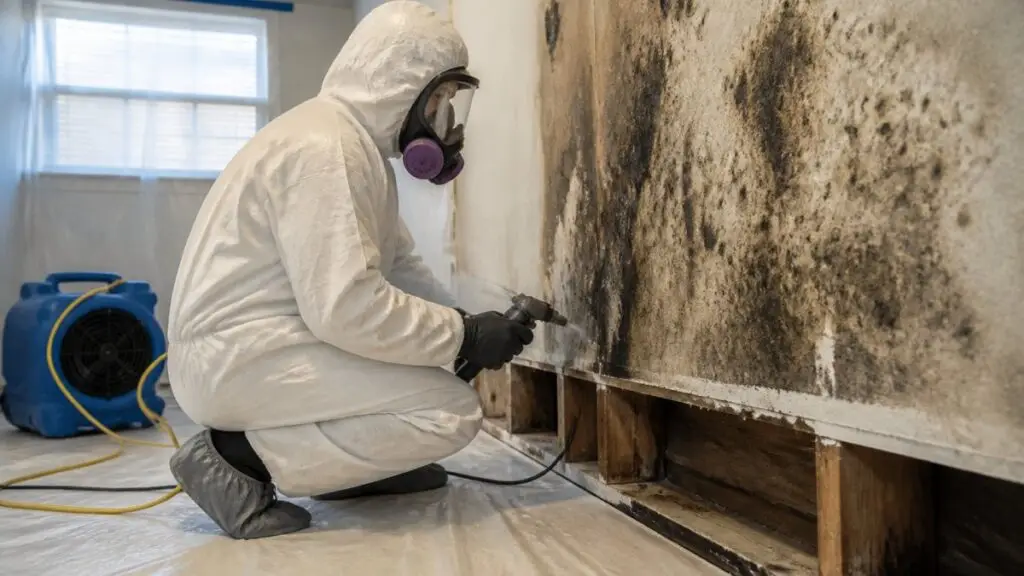
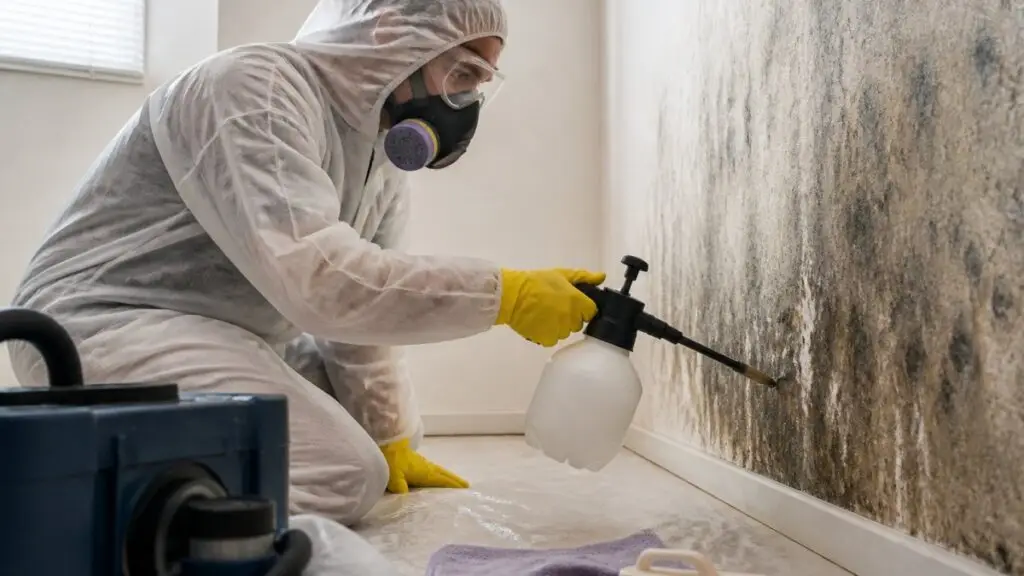
Mold clean up after water damage is a job you can do yourself only for small areas. Protect yourself first with an N-95 respirator, goggles, and gloves, then fix the water source before scrubbing the affected surface.
- Wear an N-95 respirator, not a basic paper dust mask.
- Use nitrile or rubber gloves that extend past your wrists.
- Keep children and pets out of the work area.
- Seal the room with plastic sheeting before cutting drywall.
- Find and fix the water problem before cleaning the mold.
Table of Contents
- Mold Clean Up Safety Precautions You Need Before Starting
- Materials and Tools for a Mold Clean Up Job
- Step-by-Step Mold Clean Up: Containment to Drying
- How to Remove Mold From Drywall Without Spreading It
- Mold Cleanup After Water Damage: Fixing the Source First
- Mold Remediation Cost: What Affects the Price
- Booking Emergency Mold Remediation in Atlanta
- Frequently Asked Questions
Mold Clean Up Safety Precautions You Need Before Starting
Mold clean up after water damage is a job you can do yourself, but only for small areas.
Before you pick up a sponge, protect yourself.
- Wear an N-95 respirator, not a basic paper dust mask (the CDC)
- Put on goggles that fit tight around the eyes
- Use nitrile or rubber gloves that go past your wrists
- Wear long sleeves and old clothes you can wash right away
- Keep children and pets out of the work area
Materials and Tools for a Mold Clean Up Job
Gather your supplies before you start.
- N-95 respirator and goggles
- Nitrile gloves and disposable coveralls
- Plastic sheeting and painter’s tape for containment
- Stiff brush, sponge, and bucket
- Detergent and a mold-killing product labeled for use on the surface
- HEPA-filter vacuum for dry debris
- Heavy-duty trash bags for disposal
- Fans and a dehumidifier for drying
The article lists the supplies you need for a mold clean up job, and what each one is for.
Item | Use |
|---|---|
N-95 respirator and goggles | Protect breathing and eyes |
Nitrile gloves and disposable coveralls | Protect skin and clothing |
Plastic sheeting and painter’s tape | Contain the work area |
Stiff brush, sponge, and bucket | Scrub the affected surface |
Detergent and mold-killing product | Clean and treat the surface |
HEPA-filter vacuum | Pick up dry debris |
Heavy-duty trash bags | Dispose of contaminated material |
Fans and a dehumidifier | Dry the area |
Step-by-Step Mold Clean Up: Containment to Drying
Follow these steps in order.
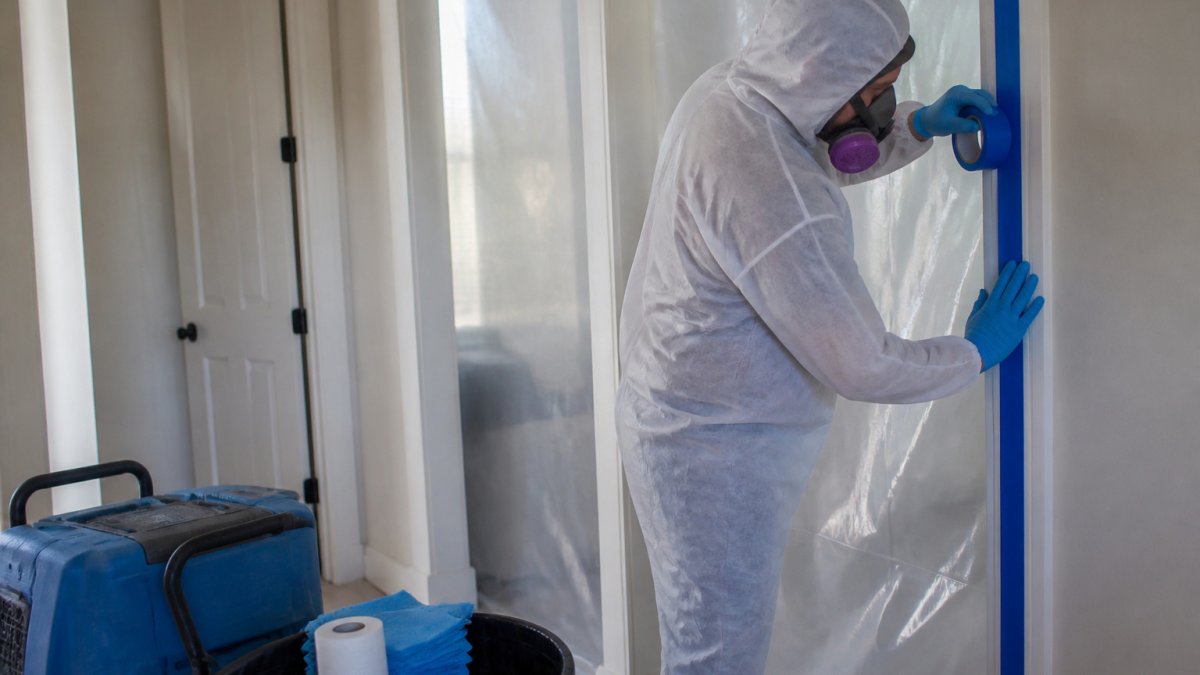
- Dry the source. Find and fix the water problem first.
How to Remove Mold From Drywall Without Spreading It
Watch out: cutting drywall without containment releases a large cloud of spores. Always seal the room first.
Mold Cleanup After Water Damage: Fixing the Source First
Mold cleanup and water damage repair go together (the EPA).
Check for these common sources:
- Leaking roof flashing or gutters
- Broken pipes or water heater leaks
- Condensation around air conditioning lines
- Groundwater seeping into crawlspaces
- Sprinkler or supply line failures
Mold Remediation Cost: What Affects the Price
Mold remediation costs vary widely. Our Decatur mold remediation guide explains the professional process and what drives the price. Pricing depends on how large the affected area is, how deep the growth goes, whether walls or flooring must be removed, and how long the drying takes. For a deeper explanation, read why mold remediation costs so much. Specific rates depend on local labor and materials.
Homeowners often wonder whether insurance covers the work. Our guide to mold removal insurance coverage explains what policies typically cover and why claims get denied. Coverage depends on the cause of the damage and the policy terms. Read your policy and talk to your adjuster before you hire anyone.
Booking Emergency Mold Remediation in Atlanta
Mold and water damage rarely wait for a convenient time. Find professional mold removal, testing, and remediation options that serve Metro Atlanta around the clock. If you find growth after a storm, leak, or flood, act quickly. Review water damage and mold restoration in Atlanta with one-hour emergency response. Aquaflame Restores it offers 24/7 emergency response and is on site within one hour, plus IICRC-trained technicians and direct insurance billing.
Call Aquaflame Restores it for emergency mold and water damage help.
Frequently Asked Questions
How do you clean up mold in a house?
Start by fixing the moisture source, then contain the affected area with plastic sheeting and run a negative-air machine if you have one. Remove porous materials that are soaked or heavily colonized, such as ceiling tiles and carpet padding. Clean hard, non-porous surfaces with detergent and water, dry everything fully within 48 hours, and verify moisture levels before rebuilding.
Can I clean mold myself, or should I hire a professional?
Aquaflame Restores It offers mold remediation with IICRC-trained technicians; contact the company directly for current pricing.
How long does mold cleanup take?
A small, surface-level cleanup can take a day or two, while larger remediation often takes several days and includes drying time. Timelines depend on the extent of growth, the materials involved, and how quickly moisture is controlled. Plan for drying to be completed before any rebuilding begins, since trapped moisture allows mold to return.
How can I prevent mold from coming back after cleanup?
Repair the leak, roof damage, or condensation problem that caused the growth before you clean. Keep indoor humidity between 30 and 50 percent, run exhaust fans in bathrooms and kitchens, and dry any wet materials within 24 to 48 hours. Recheck the area after a few weeks for new staining or odor.