Last Updated: October 30, 2026
Quick Summary
Commercial water damage repair starts with stopping the water source and protecting people, then documenting the loss before anything is moved. Next comes a thorough on-site assessment that checks behind walls and under floors, followed by extraction, structural drying, and confirmation that drying goals were met. Aquaflame Restores It offers 24/7 response and free assessments in metro Atlanta.
- Confirm people are safe and shut power to the affected area only if you can do so without standing in water.
- Photograph and video all water and damaged materials, and note the time you discovered the problem.
- Assessment identifies the water category, which determines whether materials can be dried in place or must be removed.
- Ask for documentation that drying goals were met before accepting a space as ready.
- Aquaflame Restores It is on site within one hour and provides a free damage assessment at 678-379-8000.
Table of Contents
- What to Do in the First Hour After Commercial Water Damage
- Commercial Water Damage Response Time: Why Speed Matters for Atlanta Businesses
- Water Damage Assessment for Commercial Buildings: What Happens on Site
- Commercial Water Damage Insurance Claim: Documentation That Protects You
- Extraction, Structural Drying and Verifying the Work Is Finished
- Keeping Your Business Open During Repairs in Metro Atlanta
- Book Your Free Assessment With Aquaflame Restores It
- Frequently Asked Questions
What to Do in the First Hour After Commercial Water Damage
When water first shows up in a commercial space, the first hour matters more than almost any other part of the response.
Start by confirming that people are safe. For guidance on keeping people safe and operations running during repairs, see protecting tenants, staff and equipment.
Next, document everything before you touch anything else. Photograph and video the water, the damaged materials, and the surrounding areas, including ceilings, walls, and floors. Note the time you discovered the problem.
Stopping the Water Source Safely
The fastest way to limit damage is to stop the water at its source. Locate the main shutoff for the building or the specific line that failed. For burst pipes, that often means the nearest isolation valve. For sprinkler system failures, the valve controlling that zone is usually the right place to start.
Do not attempt to fix the failed pipe, sprinkler head, or roof yourself during the emergency. Cap or shut off what you safely can, then call a plumber to handle the repair.
Protecting Tenants, Staff and Equipment
Water and electricity do not mix, so keep people away from any standing water near power sources. Move desks, files, and electronics off the floor and away from wet surfaces. If the water is clean supply water, you can often move equipment without special precautions.
Tenants and staff who must stay in adjacent spaces should avoid direct contact with wet materials. Simple steps, such as keeping doors closed between affected and unaffected areas, help prevent the spread of moisture and odors.
Commercial Water Damage Response Time: Why Speed Matters for Atlanta Businesses
Response time is one of the biggest factors in how much a commercial water loss ends up costing. To understand what happens when damage is left unaddressed, read what happens if fire damage is not repaired.
Aquaflame Restores It provides 24/7 emergency response and is on site within one hour, so business owners do not have to wait through a workday before the mitigation starts.
Delay also has a business cost. Every hour a space stays closed is an hour of lost revenue, and for tenants that can mean lease disputes.
Water Damage Assessment for Commercial Buildings: What Happens on Site
A proper assessment tells you what is wet, how wet it is, and how far the water has traveled. To learn how inspections are handled for property transactions and documentation, see why water damage inspections are required for home sales.
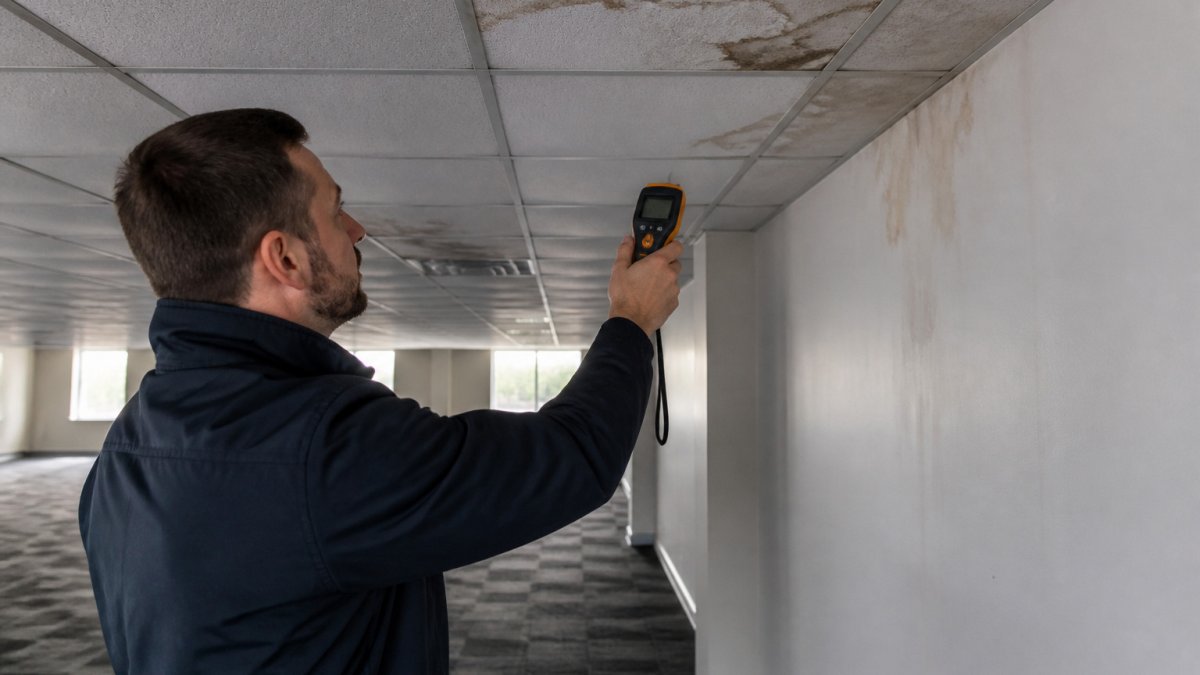
The assessment also identifies the water category. Clean supply water, gray water from appliances, and black water from sewage or contaminated sources each call for different handling.
Checking Behind Walls and Under Floors
Water rarely stays where it is first seen. It wicks up walls, soaks into insulation, and pools under flooring. Moisture that is hidden behind finishes can cause mold growth and structural problems if it is not found and dried.
Commercial buildings often have more concealed spaces than homes, including drop ceilings, plenum areas, and utility chases. Ask your restoration provider to check these areas, not just the rooms where you saw the water.
Commercial Water Damage Insurance Claim: Documentation That Protects You
Commercial water damage claims are decided on paper. For guidance on timelines and the steps that follow documentation, see manage insurance claims for home repairs. Insurers want to see what happened, when it happened, what was damaged, and what it cost to fix, and on a commercial policy, the adjuster is often working from a file rather than standing in your building. The stronger and more organized your records, the smoother the claim tends to go.
The documentation checklist
Build one folder, digital is fine, and keep every item in it:
- Photos and video from the first hour, including wide shots of each affected room and close-ups of the water line, damaged materials, and any visible source.
- The date and time you discovered the problem, and who found it.
- The cause of the loss if known (failed supply line, sprinkler head, storm intrusion, appliance).
- A written inventory of damaged contents and equipment, with photos and, where available, purchase records or depreciation schedules.
- Every moisture reading and drying log the restoration crew produces.
- The company’s itemized scope of work, showing what was removed, dried, or cleaned.
- All invoices, including emergency mitigation and any temporary power or equipment rental.
- A running log of every call, email, and meeting with your insurer, with dates and names.
Ask for itemized reports rather than lump-sum invoices. An adjuster who can see line-by-line what was dried versus removed is far more likely to approve the scope without a back-and-forth.
Notify early and mitigate
Most commercial property policies require you to notify the insurer promptly and to take reasonable steps to prevent further damage. That second duty is why emergency mitigation usually proceeds before the claim is fully reviewed, letting water sit while you wait for an adjuster can jeopardize coverage.
Georgia policies vary widely, so read your own declarations page and endorsements rather than relying on general advice. If your coverage is unclear, consult your insurance agent or a licensed professional.
Working with direct billing
Aquaflame Restores It works directly with insurance companies and bills them directly. Even so, keep your own copies of everything, the restoration company’s file and your file should not be the same file. If a claim is disputed, your independent records are what protect you.
Photograph the water line on walls and the edge of wet carpet before anything is moved. That single photo often establishes how far the water traveled and supports the scope later.
A note on tenant and landlord claims
If you lease space, the building owner’s policy and your business policy may both be in play. Keep separate documentation for the structure, your contents, and any tenant improvements, and share copies with your landlord or tenant as required by the lease. Clear records reduce disputes over who pays for what.
The documentation you gather in the first hours is what an adjuster will rely on, so the table below lists the core items to keep.
| Item | What to capture | Why it matters |
|---|---|---|
| Photos and video | Wide shots, water line, damaged materials | Establishes how far water traveled |
| Discovery time | Date, time, who found it | Fixes the start of the loss |
| Contents inventory | Damaged items with photos | Supports the contents claim |
| Moisture readings | Drying logs from the crew | Shows drying progress |
| Itemized scope | Removed, dried, or cleaned work | Helps approval without back-and-forth |
| Invoices | Mitigation and equipment rental | Documents total cost |
| Insurer contact log | Calls, emails, meetings with dates | Records the claim history |
Extraction, Structural Drying and Verifying the Work Is Finished
Once the source is controlled and the assessment is complete, the work moves into extraction and drying.
Verifying that the work is finished is just as important as starting it. Do not accept a space as ready based on appearance alone. Ask the restoration company for documentation that drying goals were met. Mold growth, warped materials, and hidden dampness that show up weeks later often trace back to work that was declared finished too early.
Keeping Your Business Open During Repairs in Metro Atlanta
Many commercial owners want to keep operating while mitigation is underway, especially when the affected area is only part of the building. Whether that is possible depends on the size of the loss and the safety of the space.
Response by building type
- Offices: Prioritize occupied workstations and server or IT rooms, and isolate the damaged zone with closed doors.
- Retail: Keep the sales floor open if the affected area is behind the scenes. Protect inventory by moving stock off wet floors and into dry, ventilated space, and watch for odors that drive customers away.
- Restaurants: Plan for temporary closure of affected areas and confirm reopening requirements with your local health authority.
- Warehouses: Focus on protecting palletized inventory and critical equipment, and document what was affected.
- Multifamily properties: Tenant communication is the priority. Notify residents of access restrictions, schedule work around occupied units, and keep a written log of notices.
Continuity planning before the next loss
A short written plan saves hours during an emergency. Identify in advance: who has authority to call a restoration company, where the main shutoff and sprinkler zone valves are, which areas can stay in use, and how you will reach tenants and staff. Keep a current contact list and a copy of your insurance declarations page in the plan.
Reopening considerations
Do not reopen a space based on appearance alone. Confirm that the space is safe for occupancy and that any contaminated materials have been removed before you move staff, tenants, or inventory back in.
A clear continuity plan, building-type-specific priorities, and written drying confirmation are what let you reopen with confidence rather than guesswork.
If your space has flooded, a pipe has burst, or a sprinkler system has failed, call Aquaflame Restores It at 678-379-8000 for a free assessment. You can also book emergency water damage repairs in Decatur, GA online.
Book Your Free Assessment With Aquaflame Restores It
Water damage in a commercial building does not wait for a convenient time, and neither should your response. If your space has flooded, a pipe has burst, or a sprinkler system has failed, call Aquaflame Restores It at 678-379-8000. We are available 24/7, we are on site within one hour, and we offer a free damage assessment. Our IICRC-certified technicians will document the damage, start the mitigation, and work with your insurance company so you can focus on keeping your business running.
Frequently Asked Questions
What should I do first after water damage in a commercial building?
Stop the water source if it is safe to do so, shut off power to affected areas if water is near electrical equipment, and move people out of the space. Then call a company that responds around the clock. Take photos and video of the damage before anything is moved or thrown away, because these records support your insurance claim. Keep a log of who called whom and when. Do not attempt large-scale cleanup yourself, and do not disturb standing water that is near outlets or wiring.
How quickly should a commercial property be dried after water damage?
Drying should begin as soon as possible, since materials that stay wet can swell, warp, and grow mold within a short period. Aquaflame Restores It technicians are on site within one hour. The total drying time depends on the building materials affected, the amount of water, and the humidity in the space, which is often high in metro Atlanta. Drying is complete when moisture readings return to normal levels for the materials involved, not simply when the surface feels dry.
What information should I document for a commercial water damage insurance claim?
Record the date and time the damage was discovered, the likely source, and every affected room or material. Photograph and video the damage from several angles before cleanup begins. List damaged inventory, equipment, and fixtures with approximate age and value, and keep receipts for emergency services and temporary measures. Save any communication with your insurer and your tenants. Aquaflame Restores It works directly with insurance companies and bills them directly. Request a free assessment to discuss your project.
Can a business keep operating during water damage restoration?
Sometimes. Some businesses can keep working in unaffected areas while drying and repairs are underway, while others need to relocate staff for a few days. Planning ahead for temporary workspace, customer communication, and inventory protection helps keep downtime shorter. Call 678-379-8000 for a free assessment and a plan tailored to your property.
