Table of Contents
- Why Water Damage Inspections Matter in Real Estate Transactions
- How to Identify Signs of Water Damage During a Home Inspection
- Seller Disclosure Requirements for Water Damage
- The Role of Water Damage Inspections in Closing Contingencies
- Environmental Hazards: Mold, Asbestos, and Radon
- Impact of Water Damage on Property Value and Appraisal
- Remediation Costs for Water Damage and Insurance Implications
- Repair vs. Credit: Making the Right Decision After Inspection
- The Core Trade-Off: Control vs. Certainty
- Decision Framework: Damage Type Determines the Right Choice
- Hidden Costs That Exceed the Credit Amount
- Timeline Risk: The 30-45 Day Closing Window
- Contractor Quality and Warranty Considerations
- The Partial Repair + Partial Credit Compromise
- Making the Final Decision
- Frequently Asked Questions
Last Updated: October 2, 2026
Why Water Damage Inspections Matter in Real Estate Transactions
Water damage inspections identify structural vulnerabilities, safety hazards, and moisture intrusion that compromise property integrity and value. For buyers, they reveal hidden problems before purchase; for sellers, they demonstrate transparency and prevent costly disputes.
A buyer discovering water damage after closing faces thousands in remediation costs; a seller failing to disclose known issues faces legal liability and contract rescission.
Water damage inspections uncover root causes, roof flashing failures, foundation cracks, drainage issues, HVAC condensation problems, and moisture intrusion patterns, that casual walkthroughs miss. These findings directly influence repair decisions, negotiations, and insurance implications.
How to Identify Signs of Water Damage During a Home Inspection
What Home Inspectors Look For
A professional water damage inspection examines roof integrity (flashing, gutters), foundation (cracks, seepage, stains), and attic (ventilation failures, roof leaks, condensation).
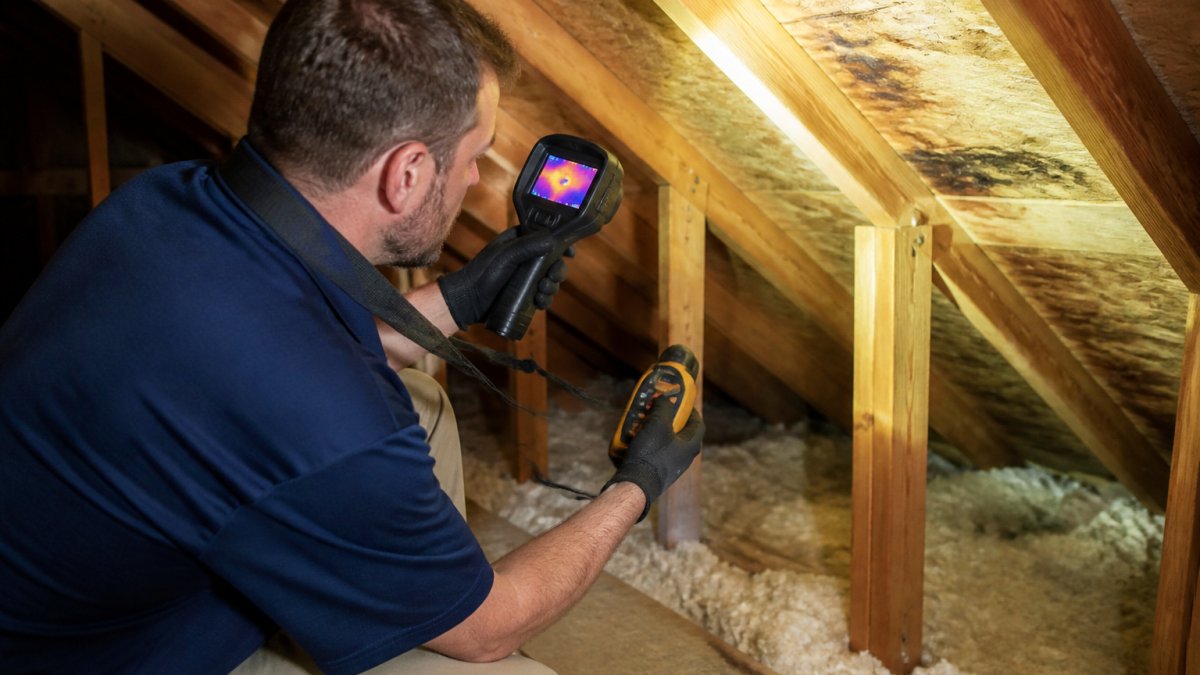
Inspectors also evaluate crawl spaces, HVAC drainage, plumbing connections, and window/door seals. Specialized equipment like hygrometers and thermal imaging reveal moisture patterns invisible to the naked eye.
Common Water Damage Red Flags
Water stains (brown discoloration, rings, soft drywall spots), peeling paint, and warped flooring indicate past or ongoing leaks.
Mold (dark patches, black or green) and musty odors indicate active moisture; rust stains on furnaces or water heaters point to water exposure.
Efflorescence (white, chalky deposits) and soft, spongy wood indicate ongoing moisture intrusion and rot, affecting structural integrity and safety.
Seller Disclosure Requirements for Water Damage
State law requires sellers to disclose known water damage. Failing to disclose can result in legal action, contract rescission, or financial penalties.
Standardized disclosure forms ask about water intrusion, foundation cracks, flooding, roof leaks, and mold. Sellers must answer honestly; “I didn’t notice” is not valid if evidence was reasonably discoverable.
The Role of Water Damage Inspections in Closing Contingencies
Most purchase agreements include an inspection contingency allowing buyers to terminate if inspections reveal significant defects. Water damage findings can justify walking away.
Many buyers and sellers negotiate repairs or credits instead. Clear documentation of damage extent and remediation costs provides a basis for negotiation.
Some contracts specify water damage thresholds or allow buyers to request seller repairs. The inspection contingency period (typically 7-10 days) allows time for estimates and decisions.
Environmental Hazards: Mold, Asbestos, and Radon
Mold thrives in damp environments and develops within 24-48 hours of water exposure, posing health risks and requiring expensive remediation (the CDC). Water damage inspections identifying mold or mold-favorable conditions protect occupants and property value.
Water intrusion in older homes may disturb asbestos-containing materials or deteriorate lead-based paint, creating health hazards. These require specialized testing and professional remediation.
Water damage that compromises foundation seals can worsen radon accumulation in basements and crawl spaces. Radon testing should be considered in high-risk regions and environmental hazards must be disclosed before closing.
Impact of Water Damage on Property Value and Appraisal
Water damage directly reduces property value. Appraisers account for moisture intrusion, mold, structural damage, and remediation costs.
Minor water stains may have minimal effect; extensive damage affecting multiple systems can reduce value by 10-20% or more.
Properties with documented water damage may face higher premiums, coverage limitations, or denial of coverage. This compounds financial impact and affects buyer negotiations.
Remediation Costs for Water Damage and Insurance Implications
Remediation costs range from hundreds of dollars for localized leaks to tens of thousands for extensive intrusion with mold. Water damage inspections quantify costs upfront, preventing surprises.
How Inspection Findings Affect Insurance Eligibility
Inspection reports documenting water damage, mold, roof leaks, or foundation issues become part of disclosure history. Insurers review these reports before underwriting and may deny coverage, exclude water damage, impose higher premiums, or require pre-closing repairs.
Understand your insurance situation before closing, a property that cannot be insured is unpurchaseable, since lenders require homeowners insurance as a mortgage condition.
Negotiating Insurance Requirements into Your Offer
Add a contingency requiring the seller to provide written proof the property can be insured at standard rates before closing. If the insurer requires repairs, those become non-negotiable prerequisites to financing.
If standard coverage is unavailable, demand seller-completed repairs with insurance clearance or a substantial credit reflecting remediation costs and ongoing premium penalties.
Insurance Coverage Distinctions by Damage Type
Insurance coverage depends on damage cause: sudden, accidental damage (burst pipes, storm damage) is typically covered; gradual leaks (roof failures, foundation cracks) are often excluded as maintenance issues; flood damage requires separate flood insurance; mold remediation is covered only if caused by a covered water damage event.
The inspection report’s specificity matters: it documents not just that water damage exists, but why, which insurers use to determine coverage eligibility.
Building Insurance Costs into Your Negotiation
Factor insurance premium increases into repair-versus-credit decisions. An extra $50-100 monthly in premiums equals $600-1,200 yearly, or $18,000-36,000 over 30 years. A $5,000 credit may not cover the true cost if ongoing premiums are higher.
Request repair estimates and preliminary insurance quotes showing premium impact before and after repairs. If repairs reduce premiums by $30 monthly ($360 yearly), that justifies seller investment in remediation.
Repair vs. Credit: Making the Right Decision After Inspection
After inspection reveals problems, decide: request seller repairs before closing or negotiate a credit for independent repairs. The right choice depends on damage type, seller resources, and risk tolerance.
The Core Trade-Off: Control vs. Certainty
Seller repairs provide certainty but lose control, sellers typically hire cheap contractors, work is rushed, and you have limited oversight. You inherit problems after closing if corners are cut.
Credits provide control but assume financial risk, you pay out of pocket, coordinate work around closing, and absorb overages. The seller has no liability after closing for inadequate work.
Decision Framework: Damage Type Determines the Right Choice
Structural damage: Demand seller repairs. These require licensed contractors, permits, and inspections.
Mold remediation: Take a credit if possible. Hire an IICRC-certified contractor and oversee work directly.
Roof leaks: Demand seller repairs if roof has 10+ years remaining; take a credit if roof is near end-of-life.
Plumbing leaks and drywall/flooring damage: Take a credit. These are straightforward and don’t require specialized expertise.
Hidden Costs That Exceed the Credit Amount
Get written repair estimates from at least two contractors before closing. Sellers often lowball credits. Common hidden costs include:
- Mold testing and clearance ($300-800) needed for insurance and resale
- Structural repairs discovered during remediation (budget 20-30% above initial estimate)
- Permit and inspection fees ($200-500)
- Temporary housing if needed ($1,500-3,000)
- Insurance deductibles ($500-1,000)
Timeline Risk: The 30-45 Day Closing Window
Sellers have 30-45 days from inspection to closing to complete repairs. For complex work like mold remediation or structural repairs, this timeline is extremely tight.
When demanding seller repairs, build in a contingency: the right to a final walk-through 24 hours before closing to verify work is complete and satisfactory.
When taking a credit, you have more flexibility.
Contractor Quality and Warranty Considerations
If the seller completes repairs, require that the contractor provide a written warranty (typically 1-5 years depending on the work type). Get the contractor’s name, license number, and insurance information in writing. Verify the contractor is licensed and insured before work begins. After closing, keep all warranty documentation, you may need it for insurance claims or future resale.
If you take a credit and hire your own contractor, prioritize credentials:
- Mold remediation: Look for IICRC (Institute of Inspection, Cleaning and Restoration Certification) certification or equivalent state credentials. Verify the contractor carries liability insurance and provides post-remediation testing.
- Structural repairs: Hire a licensed contractor in your state, verify they carry workers’ compensation and liability insurance, and get a written contract specifying the scope of work, timeline, and warranty.
- Roof repairs: Hire a licensed roofer, verify they’re insured, and get a written warranty on materials and labor (typically 5-10 years).
The Partial Repair + Partial Credit Compromise
Some negotiations result in a split: the seller completes major structural work, and you take a credit for cosmetic restoration or minor repairs. This can work if the division is clear. For example:
- Seller hires a licensed contractor to seal the foundation and install exterior drainage (major structural work).
- You take a $3,000 credit to hire a contractor to dry out the basement, remove damaged drywall, and restore flooring.
This approach gives you control over cosmetic work while ensuring structural issues are addressed by the seller’s contractor. However, require that the seller’s structural work be completed and inspected before you begin your cosmetic work. Otherwise, you may start restoration only to discover the structural repair was inadequate, forcing you to redo work.
Making the Final Decision
Use this checklist to decide:
Demand seller repairs if:
- The damage is structural (foundation, roof, framing, major plumbing).
- The repair requires permits and licensed contractors.
- The seller has resources and motivation to hire quality contractors.
- You want the work completed before you take ownership.
- You want the seller’s contractor to carry liability insurance and provide warranties.
Take a credit if:
- The damage is cosmetic or localized (drywall, flooring, minor water stains).
- The repair is straightforward and doesn’t require specialized expertise.
- You want to control contractor selection and work quality.
- You have time to coordinate repairs after closing.
- You can obtain repair estimates that are lower than the seller’s likely cost, giving you a financial advantage.
- The damage involves mold and you want to ensure proper remediation and testing.
Request a split if:
- Structural work is necessary but cosmetic restoration is also needed.
- The seller can handle major work but you want control over finishing work.
- You want to verify structural repairs are complete before investing in cosmetic work.
Frequently Asked Questions
Are sellers legally required to disclose past water damage?
Yes. Most states require sellers to disclose known water damage, structural issues, and prior flooding through property disclosure forms. Failure to disclose can expose sellers to legal liability and breach of contract claims. The specific disclosure requirements vary by state, but federal lending standards require lenders to identify water damage risks. Buyers can rescind purchases or pursue damages if sellers fail to disclose material water damage history.
How do home inspectors check for water damage?
Professional home inspectors use multiple methods to detect water damage: visual inspection of water stains on ceilings, walls, and foundations; moisture meters to measure subsurface water; thermal imaging to identify temperature variations indicating moisture; and careful examination of roof flashing, gutters, HVAC condensation lines, and plumbing for active leaks. They also assess crawl space moisture, attic ventilation, and drainage issues around the foundation to identify potential moisture intrusion sources.
What should I do if the inspector finds water damage before closing?
Contact a certified water damage restoration professional immediately to assess the extent of damage and identify the source. Request a detailed repair estimate and get written documentation of findings. You can then negotiate with the seller for repairs, a repair credit, or price reduction. Have the seller provide clearance documentation if mold remediation is needed. If the damage is extensive, consider a professional appraisal to understand impact on property value before finalizing your offer.
Can water damage affect a home’s appraisal value?
Yes. Significant water damage, structural compromise, or mold contamination typically reduces appraised value. Appraisers assess structural integrity, safety hazards, and remediation costs when valuing a property. Even past water damage that was professionally remediated may lower value if documentation is incomplete or if the damage was extensive. Insurance implications also factor in, homes with water damage history may face higher premiums or coverage restrictions, which buyers factor into their purchase decisions.