Table of Contents
- Crawl Space Encapsulation vs Basement Waterproofing: A Side-by-Side Comparison
- Signs of Crawl Space Moisture Problems (and Basement Warning Signs)
- How Each Approach Handles Moisture and Water Intrusion
- Vapor Barriers and Waterproofing Materials Compared
- Basement Waterproofing Methods: Interior, Exterior, and Drainage
- Crawl Space Waterproofing Cost vs Basement Waterproofing Cost
- When a Home Needs Both Crawl Space Encapsulation and Basement Waterproofing
- Frequently Asked Questions
Last Updated: October 11, 2026
Crawl Space Encapsulation vs Basement Waterproofing: A Side-by-Side Comparison
Crawl space encapsulation seals a vented crawl space with a heavy-duty liner, while basement waterproofing stops or redirects water at a basement wall or floor.
The two are not competing products but responses to different symptoms, and picking the wrong one wastes money.
The U.S. Environmental Protection Agency’s mold guidance notes that moisture control is the first step in any mold problem, regardless of which part of the house is affected.
What Crawl Space Encapsulation Is
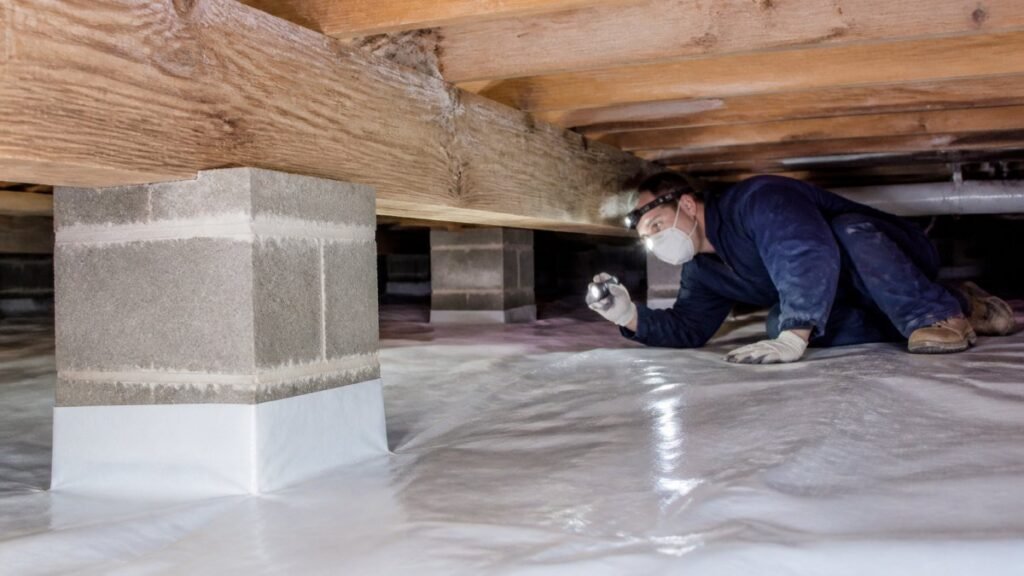
Encapsulation targets the crawl space specifically. A crew lays a heavy-duty liner across the floor, runs it up the walls and support piers, seals overlapping seams, and closes the foundation vents. A dehumidifier is often added for remaining humidity.
What Basement Waterproofing Is
Basement waterproofing targets water that reaches the basement, usually through the foundation. It can be interior, exterior, or drainage-based: interior systems manage water after it enters, exterior systems stop it before it gets in, and drainage moves it away.
Signs of Crawl Space Moisture Problems (and Basement Warning Signs)
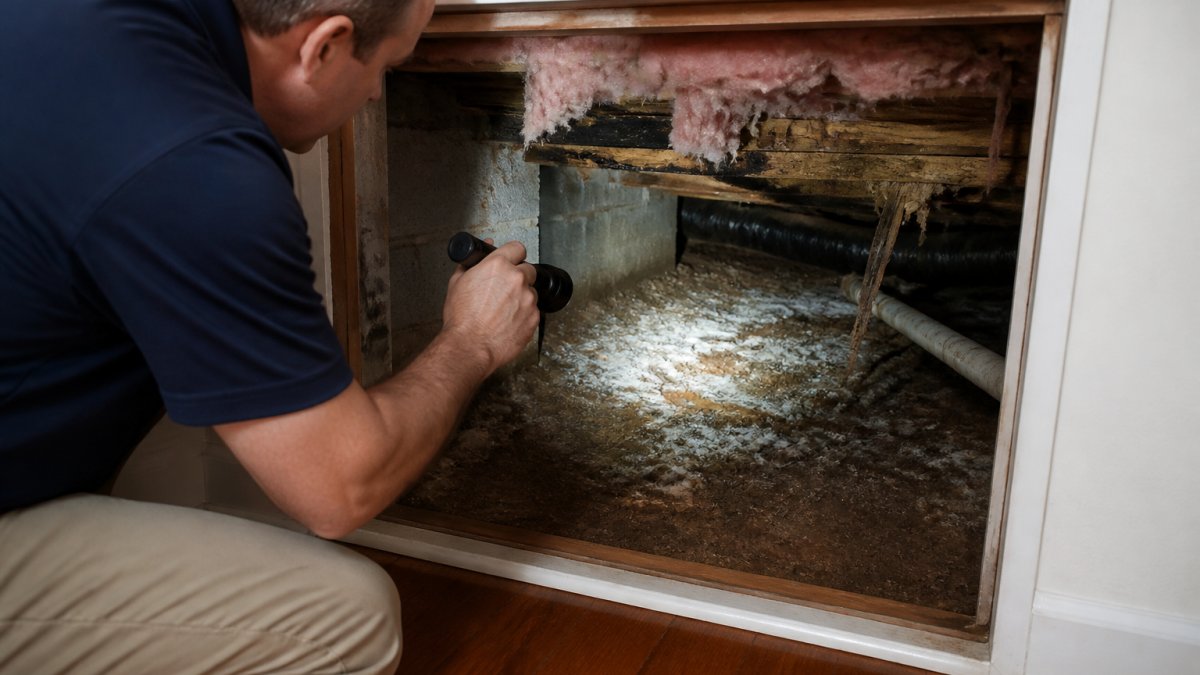
The fastest way to choose between the two approaches is to read the symptoms. Crawl space moisture problems show up as musty odors, sagging floors, and high humidity upstairs.
Watch for these in a crawl space:
- A musty smell that gets stronger in summer
- Bouncy or sagging floors above the crawl space
- Condensation on pipes, ducts, or joists
- Visible mold or mildew on wood framing
- Rusted metal straps, nails, or HVAC components
Watch for these in a basement:
- Damp or discolored walls, especially at the base
- White chalky mineral deposits on concrete
- Water staining or a visible water line on the floor
- A persistent damp smell after rain
- Efflorescence or peeling paint on block walls
If you see several at once, the problem has been building for months, not days, and a professional assessment matters more than a quick fix.
How Each Approach Handles Moisture and Water Intrusion
Encapsulation manages moisture; waterproofing manages water. That distinction explains almost every difference between the methods, including cost, materials, and lifespan. The more useful question is which moisture source you actually have, because the four common sources look similar but demand different remedies.
Four moisture sources and how to tell them apart
1. Groundwater seepage. Water pushes through the foundation wall or floor-wall joint under hydrostatic pressure.
2. Plumbing leaks. A slow supply-line drip or drain leak under a slab or in a crawl space raises humidity continuously, rain or shine.
3. Condensation. Warm humid air meets a cold surface, a duct, pipe, or concrete wall, and condenses.
4. Humid outside air. A vented crawl space pulls in humid summer air, which rises into the living space above.
How encapsulation works
Encapsulation blocks vapor. Ground moisture evaporates constantly, and in an open crawl space that vapor rises into the home. A sealed liner stops it at the source.
The system works in three layers:
- A vapor barrier across the floor and up the walls
- Sealed vents and penetrations to stop outside air
- A dehumidifier to control any residual humidity
The result is a dry, stable crawl space that no longer feeds moisture into the house above. The U.S. Department of Energy’s moisture control resources notes that a continuous, sealed vapor barrier is what makes the system work, gaps at seams, piers, and penetrations defeat the purpose.
How waterproofing works
Waterproofing redirects or blocks liquid water, addressing groundwater, drainage, and hydrostatic pressure rather than humidity.
Depending on the source, a contractor may:
- Install interior drainage and a sump pump
- Seal cracks and joints with hydraulic cement or polyurethane
- Apply exterior membrane and drainage board
- Regrade the yard and extend downspouts
The goal is to keep water away from the foundation or move it out once it arrives. Homeowners often pay for interior drainage before anyone checks grading and downspouts, and drainage was never the real fix.
Matching the source to the remedy
| What you observe | Most likely source | Right first move |
|---|---|---|
| Damp wall or water line after rain | Groundwater seepage | Exterior drainage, grading, or interior waterproofing |
| Constant dampness, no weather pattern | Plumbing leak | Locate and repair the leak |
| Beads of water on pipes or concrete in summer | Condensation | Air sealing and dehumidification |
| Musty air upstairs, humid summers | Humid outside air | Crawl space encapsulation |
If you cannot tell which source you have, call for an assessment rather than buying a system. Guessing wrong is how homeowners pay twice.
Vapor Barriers and Waterproofing Materials Compared
A crawl space moisture barrier and a basement waterproofing system use different materials because they solve different physics. The barrier stops vapor diffusion. The waterproofing system stops bulk water movement.
| Feature | Crawl Space Encapsulation | Basement Waterproofing |
|---|---|---|
| Primary target | Humidity and vapor | Liquid water and pressure |
| Main material | Heavy-duty liner (vapor barrier) | Membrane, drainage, sump system |
| Typical install | Interior, sealed space | Interior, exterior, or drainage |
| Vents | Sealed closed | Not applicable |
| Add-on | Dehumidifier | Sump pump |
| Best for | Vented crawl spaces | Basements with water entry |
The U.S. Department of Energy’s moisture control resources explains that vapor barriers are most effective when fully sealed and continuous, which is why overlapping sheets and taped seams matter more than the thickness of the plastic alone.
A common mistake is using a thin, unsealed plastic sheet and calling it encapsulation. It tears, traps nothing, and fails within a season.
Basement Waterproofing Methods: Interior, Exterior, and Drainage
Basement waterproofing methods fall into three families, depending on where the water originates. Interior systems are the most common retrofit because they need no excavation.
- Interior waterproofing: drainage channels along the footing, a sump pump, and sealed walls. Best when water enters through the floor-wall joint.
- Exterior waterproofing: membrane applied to the outside of the foundation, plus drainage board and gravel. Most effective, but requires excavation.
- Drainage: French drains, downspout extensions, and regrading to move water away. Often the cheapest first step.
Before spending on any waterproofing system, check the gutters and grading. A surprising share of “foundation leaks” are just downspouts dumping water next to the wall. Extending them three to four meters away from the house costs little and fixes a lot.
If a contractor recommends a full interior system without checking drainage first, get a second opinion.
Crawl Space Waterproofing Cost vs Basement Waterproofing Cost
Crawl space waterproofing cost and basement waterproofing cost both depend on square footage, water source, and whether structural repairs are needed. Neither has a single national price, and any phone quote is a guess. Below are the ranges most contractors work within, what moves a job up or down, and lifecycle costs, the part most quotes leave out.
Typical cost ranges
These are broad industry ranges for planning, not bids. Your number depends on your home.
| Scope | Typical range | What drives it |
|---|---|---|
| Crawl space encapsulation (basic liner, sealed vents) | $1,500-$5,000 | Square footage, liner thickness, number of piers |
| Encapsulation with dehumidifier and wood repair | $5,000-$15,000+ | Dehumidifier capacity, mold remediation, joist or subfloor repair |
| Interior basement waterproofing (drainage + sump) | $3,000-$10,000 | Linear feet of drainage, sump pump, discharge routing |
| Exterior basement waterproofing (membrane + drainage board) | $8,000-$25,000+ | Excavation depth and length, landscaping restoration, permit requirements |
| Crack injection or spot repair | $500-$1,500 per area | Number of cracks, accessibility |
| Yard regrading and downspout extensions | $500-$3,000 | Linear feet, soil volume, equipment access |
A sealed crawl space and a waterproofed basement can land in similar territory, but the scope differs. Encapsulation is a controlled interior job; exterior waterproofing means excavation, which pushes cost higher and adds landscaping restoration.
What moves the number
- Crawl space encapsulation: liner thickness (a 10-mil sheet and a 20-mil reinforced liner are different products), square footage, number of piers and penetrations to wrap, vent sealing, dehumidifier capacity, and any wood repair or mold remediation discovered once the space is opened.
- Basement waterproofing: interior versus exterior, sump pump and backup, drainage length, crack repair, discharge routing, and whether the foundation itself needs structural work.
- Both: accessibility. A low crawl space with limited entry takes longer to work in than a full-height basement, and labor is the largest line item in either job.
Maintenance and lifecycle
This is the part most quotes skip. Encapsulation is not a one-time purchase. A dehumidifier needs filter cleaning every few months and lasts roughly 8-12 years.
Basement waterproofing has its own ongoing costs. A sump pump should be tested seasonally and lasts 7-10 years; a battery backup adds cost but protects against power loss during the storms that cause the problem. Interior drainage channels need occasional flushing.
The cost of getting it wrong
A failed encapsulation, thin plastic, unsealed seams, no dehumidifier, typically fails within a season and must be redone. A waterproofing system installed without diagnosing the water source leaves the actual leak untouched, and the homeowner pays twice.
We do not publish flat prices because the range is too wide to be honest. For an accurate number, get a written estimate after an on-site assessment.
Do not accept a quote that skips a moisture source diagnosis. If a contractor cannot tell you where the water is coming from, the fix is a guess, and you will likely pay twice.
When a Home Needs Both Crawl Space Encapsulation and Basement Waterproofing
Some homes need both, more often than most homeowners expect.
The clearest signs you need both:
- A crawl space that stays humid even after vent sealing
- A basement that leaks during heavy rain while the crawl space stays dry
- Mold found in both areas during an inspection
- A home addition built on a different foundation type
When both are needed, order matters. Fix the water source first (drainage, grading, exterior waterproofing), then encapsulate or seal the interior.
If you are already dealing with mold, standing water, or damaged framing, that is a restoration job, not a waterproofing job.
Match the fix to the symptom. Humidity and musty air point to encapsulation. Visible water and damp walls point to waterproofing. When both appear, address the water source before sealing anything.
Water in a crawl space or basement rarely stays contained. Aquaflame Restores it handles crawl space drying, mold remediation, basement water extraction, and full reconstruction, with IICRC-trained technicians, direct insurance billing, and a 30-minute arrival guarantee.
Frequently Asked Questions
What is the difference between crawl space encapsulation and basement waterproofing?
Crawl space encapsulation seals a vented crawl space with a heavy-duty liner across the floor, walls, and support piers, then closes the vents to block outside air and humidity. Basement waterproofing manages water around a full-height foundation using interior drainage, sump pumps, sealants, or exterior membranes and footing drains. Encapsulation controls vapor and humidity in a shallow foundation space; waterproofing controls liquid water and groundwater around a basement.
What kind of moisture barrier is best for a crawl space?
A reinforced polyethylene liner of at least 12 mil, or thicker where foot traffic is expected, works best. The liner should cover the crawl space floor, run up the walls, and overlap at the seams with sealed tape. A thinner 6 mil sheet is common as a basic vapor barrier, but it tears easily and rarely lasts as long. The key is full coverage: floor, walls, and piers, not just a sheet laid over the dirt.
Can crawl space encapsulation stop standing water?
No. Encapsulation blocks vapor and humidity, but standing water means liquid is entering from somewhere, such as groundwater, a slope draining toward the foundation, or a plumbing leak. That water has to be removed and the source corrected first, often with drainage or a sump system. Encapsulating over an active leak traps moisture under the liner and can make mold and wood rot worse.
Does homeowners insurance cover crawl space damage?
It depends on the cause. Sudden, accidental events such as a burst pipe or appliance failure are often covered, while long-term seepage, poor maintenance, and gradual humidity damage are usually excluded. Many policies also cap mold remediation unless the mold traces back to a covered water event. Document the damage with photos, fix the water source, and ask your adjuster to confirm coverage in writing before work begins.
Can a home need both crawl space encapsulation and basement waterproofing?
Yes. Split-level and hillside homes can have a basement on one side and a vented crawl space on the other, and each area fails for different reasons. Waterproofing handles groundwater and hydrostatic pressure at the basement walls, while encapsulation handles humidity and vapor in the crawl space. Treating only one side often leaves the other feeding moisture back into the shared structure.