Last Updated: November 17, 2026
Quick Summary
The most costly home insurance claim mistakes are waiting too long to report water, fire, or mold damage, skipping documentation, and making permanent repairs before the adjuster inspects the property. Report damage promptly, photograph everything, and keep receipts for every temporary repair. Each step protects your payout.
- Call your insurer as soon as it is safe and get a claim number on the first call.
- Photograph and video every affected area before anything is moved or cleaned.
- Keep written estimates and invoices for every temporary repair such as board-up or tarping.
- Hold permanent repairs until the adjuster has inspected the damage and approved the work.
- Call Aquaflame Restores It at 678-379-8000 for a free assessment.
Table of Contents
- Waiting Too Long to Report Water, Fire, or Mold Damage
- Skipping Home Insurance Claim Documentation
- Making Permanent Repairs Before the Adjuster Sees the Damage
- Doing Temporary Repairs Without a Record
- Saying the Wrong Things to Your Insurance Adjuster
- Missing the Home Insurance Claim Timeline and Deadlines
- Booking Your Free Damage Assessment in Metro Atlanta
- Frequently Asked Questions
Filing a home insurance claim after water, fire, or mold damage is stressful, and small missteps can cost you money or delay your payout. At Aquaflame Restores It, we see the same avoidable mistakes across metro Atlanta. Below, we walk through seven of the most costly ones and explain what to do instead.
Waiting Too Long to Report Water, Fire, or Mold Damage
Delay is one of the fastest ways to weaken a claim. Read a guide to filing a roof leak claim promptly.
Metro Atlanta’s humidity makes this worse. Moisture in a crawl space or behind a wall can turn into visible mold within days, especially during the summer storm season.
What to do instead: Call your insurer as soon as it is safe, and call a restoration company to stop the water or limit the damage.
Skipping Home Insurance Claim Documentation
A claim is only as strong as its records. Without them, you may struggle to prove what was damaged, how badly, and what it cost to fix.
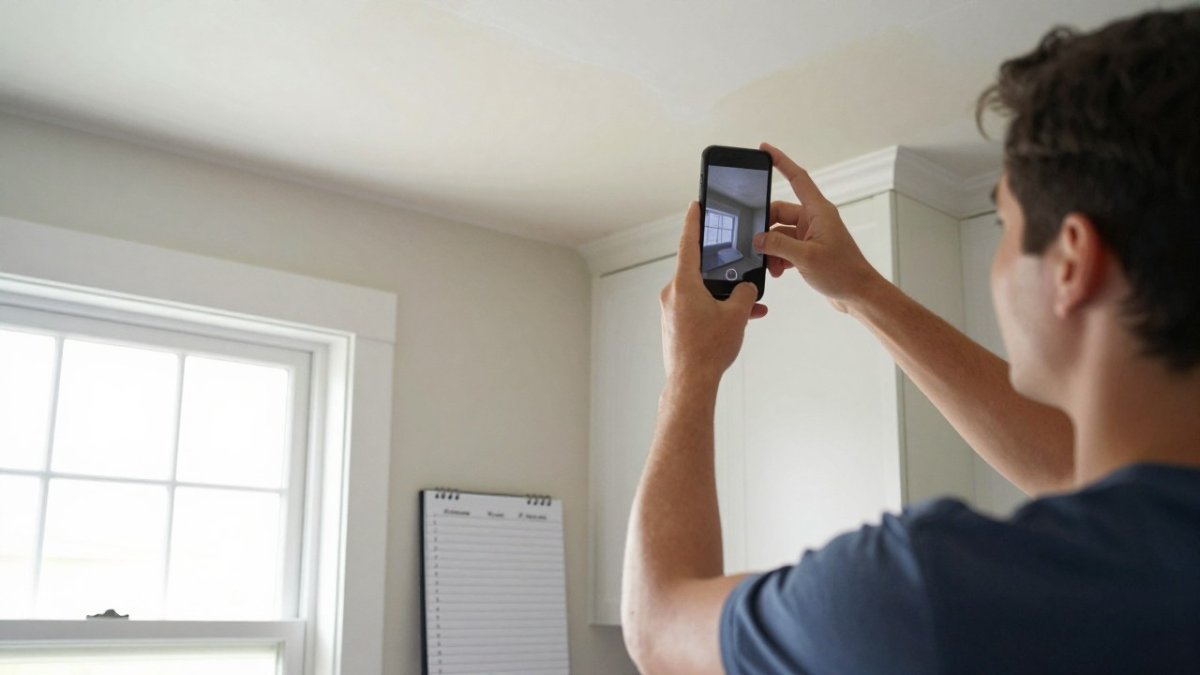
Take photos and video of every affected area before anything is moved or cleaned.
What to do instead: Start a dedicated folder, paper or digital, on day one. Read the steps to speed up your claim for more on keeping documentation organized.
Making Permanent Repairs Before the Adjuster Sees the Damage
It is tempting to start rebuilding right away. However, if permanent repairs happen before an adjuster inspects the property, your insurer may dispute the scope or the cost of the work.
What to do instead: Limit work to what prevents further damage, and keep the damaged materials until the adjuster has seen them. Ask your insurer how soon an inspection can happen, and schedule permanent repairs only after approval.
Doing Temporary Repairs Without a Record
Temporary repairs such as board-up, tarping, or water extraction are often covered, but only if you can show they were necessary.
What to do instead: Get written estimates and invoices that describe the work performed. Photograph the area before and after each temporary step.
Plumbing leaks follow the same rule. A plumber’s invoice and notes help show the repair was urgent and that the cause was sudden. See how a plumber’s report supports a claim when temporary repairs are made.
Temporary repairs are often covered, but only when you can prove they were necessary. The table below summarises what to record for each one.
| Temporary step | What to record | Why it matters |
|---|---|---|
| Board-up after fire | Written estimate and invoice | Shows the work was necessary |
| Water extraction | Before and after photos | Documents the extent of damage |
| Tarping | Date, time and reason | Establishes urgency |
| Plumbing repair | Plumber’s invoice and notes | Shows the failure was sudden |
Saying the Wrong Things to Your Insurance Adjuster
Adjusters are not adversaries, but they are building a record, and everything you say goes into it. The problem is rarely a lie, it is a guess, a hedge, or an offhand comment that later contradicts your documentation. Here are the specific patterns that cause trouble, what to say instead, and how the conversation changes by loss type.
The phrases that hurt claims
- “It’s probably been leaking for a while.” This hands the insurer a maintenance argument. Long-term seepage is often excluded or treated differently than a sudden failure. If you do not know when it started, say so: “I noticed it on the morning of the 14th; I don’t know how long it was there before that.”
- “It’s not that bad.” Minimizing damage on the first walkthrough can anchor the estimate low. Describe what you see, not your judgment of severity: “The drywall is soft about two feet up in the hallway and the baseboards are separating.”
- “I think the contractor said it would be around…” Never estimate costs for the adjuster. Point to the written estimate and let the document speak.
What to say instead
Answer what you know, say plainly when you do not know, and route everything else to documents. “I don’t know, I can check my photos and get back to you” is a complete, professional answer.
Watch out: a recorded statement is common, and casual phrasing in it can be quoted back months later. You can ask to give a written statement instead, or to review the scope of questions before the call.
How the conversation changes by loss type
- Water damage. The key question is sudden versus gradual. Describe the moment you discovered it and what you saw, standing water, a bulging ceiling, a wet cabinet floor, rather than theorizing about the plumbing. If a plumber made repairs, the invoice and notes help establish that the failure was sudden.
- Fire and smoke. Expect questions about the cause and about whether the home was occupied. Keep answers factual and avoid guessing at electrical or appliance causes. Board-up and contents pack-out records support the scope conversation.
- Mold. Adjusters will probe whether the moisture was long-standing. Georgia humidity and crawl-space conditions make this a frequent point of dispute, so your timeline of discovery and any prior inspection records matter. For anything beyond a small area, roughly 10 square feet, hidden mold, or contaminated water, professional assessment is the right call rather than a DIY answer to the adjuster.
Keep your own record of the conversation
After every call, write a short note: date, who you spoke with, what was asked, what you said, and what was promised. If a dispute arises later, that log is often more persuasive than memory. If water, fire, or mold damage has just happened, call Aquaflame Restores It at 678-379-8000 for a free assessment.
Missing the Home Insurance Claim Timeline and Deadlines
Most claim guides tell you to “act quickly” and stop there. That advice is useless when you are standing in a wet hallway at 11 p.m. What actually protects your payout is knowing which deadlines apply, which ones are set by your policy versus by state rule, and what to do when the insurer misses its own clock.
The deadlines that actually bind you
- Notice of loss. Your policy sets this, and the language varies. Many policies require “prompt” notice; others set a specific number of days. Report the loss in writing, email or the insurer’s app, so you have a timestamp, then follow up by phone for a claim number.
- Proof of loss. This is a formal, often sworn statement of what was damaged and what it cost. Many policies allow a set window after the insurer requests it, and the clock may start when they ask rather than when the damage happened. Ask for the request in writing and note the date.
- Supporting documents. Receipts, contractor assessments, and inventory lists usually ride along with the proof of loss. Send what you have and note in writing what is still coming so the file is not closed for incompleteness.
A practical claim timeline
- Day 0: Report the loss, get a claim number, and ask the adjuster’s name and contact info in writing.
- Day 0-1: Stop the damage. Extract water, board up after a fire, and photograph everything before and after.
- Day 1-3: Build your inventory and gather receipts. Request a copy of your policy’s claim section if you do not have it.
- Day 3-10: Adjuster inspection. Be present if you can, walk the adjuster through the damage, and ask what documentation they still need.
- Within the proof-of-loss window: Submit the sworn statement and attachments. Keep a copy of everything you send.
- Follow-up cadence: Check in writing every 10-14 days. A short email asking for status creates a paper trail without antagonizing anyone.
When the insurer stalls, disputes, or underpays
This is where most guides go quiet, and it is where claims are actually won or lost.
- Review the estimate line by line. Compare the adjuster’s scope against your photos, your contractor’s written assessment, and your inventory. Look for missing rooms, omitted categories of damage, and quantities that do not match what you can see.
- Request reconsideration in writing. State specifically what is missing, attach the evidence, and ask for a revised estimate. Vague complaints get vague responses.
- Ask about the appraisal clause. Many policies include a dispute process where each side hires an appraiser and a neutral umpire resolves differences. Ask your insurer whether your policy has one and how to invoke it.
- Escalate to the state. The Georgia Office of Commissioner of Insurance and Safety Fire Commissioner takes consumer complaints about claim handling. You can review the process at Georgia Office of Insurance and Safety Fire Commissioner.
Watch out: accepting a “final” payment or signing a release can close the door on supplementing the claim later, even if hidden damage turns up during the work. If the number feels low, ask for the breakdown before you cash anything.
Deadlines shift by loss type
Water and mold claims move fastest because damage compounds, Humidity can push a damp crawl space toward visible mold within days, so the notice-to-inspection gap matters more than it does for a theft claim.
Keep every deadline, phone call, and submission in one running log. Get practical steps to keep your property claim on schedule. If the timeline slips on the insurer’s side, a written status request with a copy kept for your file is the single most useful habit in the whole process.
Booking Your Free Damage Assessment in Metro Atlanta
Avoiding these seven mistakes starts with a clear, documented assessment. Aquaflame Restores It is a locally owned restoration company based in Decatur, serving DeKalb, Clayton, Cobb, Henry, and surrounding counties. Our IICRC-certified technicians respond 24/7 and are on site within one hour. We bill insurance companies directly and offer free damage assessments with contents pack-out and emergency board-up when needed.
If water, fire, or mold damage has just happened, call Aquaflame Restores It at 678-379-8000 for a free assessment. Our team can start the work that needs to happen now.
Frequently Asked Questions
What should I avoid saying in a home insurance claim?
Stick to facts you can verify. Describe what you saw, when you saw it, and what you did next. Avoid guessing about the cause, estimating the total cost, or saying the damage is ‘probably old’ or ‘no big deal.’ Those statements can be used to narrow coverage later. If you are unsure about something, say you are not sure and that you will follow up once you know more. Keep copies of everything you send and ask for written confirmation of any phone conversation.
How long do I have to file a home insurance claim in Georgia?
Most homeowners policies require prompt notice of a loss, and many set a specific deadline in the policy language itself. The exact window varies by insurer and policy, so the safest approach is to report damage as soon as you discover it and to check your policy’s ‘duties after loss’ section. Waiting weeks can give an insurer grounds to dispute the claim, especially if further damage such as mold developed in the meantime. Call your agent or insurer the same day you find the damage.
Can I make temporary repairs before the insurance adjuster visits?
Yes, and most policies expect you to. Your policy generally requires you to protect the property from further damage, such as tarping a leaking roof, shutting off water, or drying out a wet area. Take photos before and after, keep receipts for materials and labor, and do not make permanent repairs until the adjuster has inspected the damage or approved the work in writing. In metro Atlanta, humid summer conditions can make mold growth start quickly, so prompt drying matters.
What home insurance claim documentation do I need?
Gather dated photos and video of every affected area, a written list of damaged belongings with estimated values, receipts or proof of purchase where you have them, your policy declarations page, and copies of all correspondence with your insurer. Include notes on when the damage was discovered and what you did to limit it. Good documentation makes it easier for an adjuster to confirm the loss and helps you avoid disputes over what was damaged and when.
