
Table of Contents
- Why a Plumber Report for Insurance Matters
- What to Include in a Plumber Report
- Plumbing Incident Report Template
- Plumber Report for Water Damage Claim
- Water Damage Insurance Claim Process
- Common Mistakes and How to Avoid Them
- Frequently Asked Questions
Last Updated: October 16, 2026
Why a Plumber Report for Insurance Matters
A plumber report for insurance is a written, signed document from a licensed plumber recording the leak source, cause of damage, and condition of the affected plumbing.
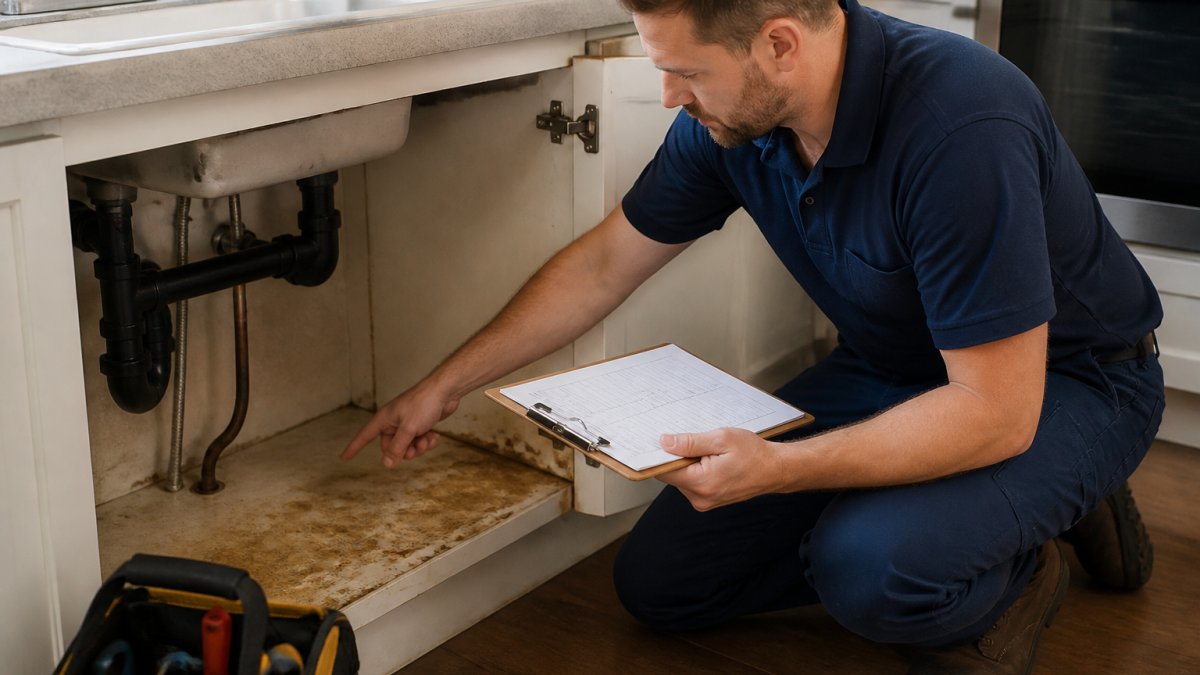
At Aquaflame Restores it, we see this across metro Atlanta constantly: a homeowner calls about a wet ceiling, and the adjuster’s first question is whether anyone documented the source.
A slow leak behind a wall can run for weeks before it shows, spreading into drywall, insulation, and framing.
The report is not paperwork for its own sake. It is the document that decides whether your claim reads as sudden and accidental damage or as neglected maintenance.
What to Include in a Plumber Report
A complete plumber report should identify the failed component, describe the mechanism of failure, state the date of discovery, and include photos of the leak source and damage. Anything less leaves room for the adjuster to question causation.
Most adjusters are not plumbers. They read your report to answer three questions: What failed? Why? Was it sudden or gradual? A report answering those in plain language, backed by photos and test results, does more for a claim than a technically perfect one in trade shorthand.
Essential Sections and Details
Ask for these elements before you accept the report:
- Licensed plumber’s name, license number, and signature
- Date of inspection and date of loss as reported by the homeowner
- Source of leak, named specifically (supply line, drain connection, water heater fitting)
- Pipe material and approximate age of the failed component
Insurer-Ready Report Checklist
Use this checklist when reviewing the finished document. If any line is missing, ask the plumber to add it before you submit the claim.
- Plumber’s full legal name, state license number, and signature
- Business name, address, phone, and email on letterhead
- Date of inspection and date of discovery stated separately
- Property address matching the insured address exactly
Sample Cause Statement
The cause statement is the paragraph the adjuster will quote in the claim file. Keep it short, specific, and free of hedging:
“Inspected the kitchen base cabinet on [date]. Found the hot water supply line to the kitchen faucet had failed at the compression fitting beneath the shutoff valve. The fitting showed corrosion and a hairline crack at the ferrule. No prior staining or mineral deposits were observed on the cabinet floor or adjacent framing, indicating a recent failure. Water traveled from the fitting down the cabinet base and into the subfloor beneath. Recommend replacing the supply line and shutoff valve and further evaluation of the subfloor by a restoration contractor.”
That statement names the component and mechanism, states what was not found, and separates the plumbing repair from the restoration scope. Your plumber should not be estimating drywall and flooring, that is the adjuster’s or restoration contractor’s job.
What to Leave Out
A plumber report is not the place for speculation about coverage, restoration estimates, or opinions on whether the insurer should pay, those can be used to challenge the report’s objectivity. Keep it to findings, cause, and repair recommendations for the plumbing itself.
Never let a plumber repair the failed section before photographing it. Once the damaged pipe is cut out and replaced, you have lost the single best piece of supporting evidence for your claim.
Ask the plumber to note anything they did not find as well as what they did. A line stating “no evidence of long-term seepage on adjacent framing” can carry as much weight as the cause statement itself.
Plumbing Incident Report Template
Use this structure when you request documentation. A plumbing incident report template keeps the plumber focused and gives your insurer a consistent format.
Property and contact
- Address, homeowner name, phone, email
- Date of discovery, date of inspection
Incident description
- Where water was first noticed
- How long the leak may have been active
- Rooms and materials affected
Inspection findings
- Component that failed
- Pipe material, approximate age, visible corrosion or cracking
- Pressure test or pipe inspection results
Cause statement
- One paragraph in the plumber’s own words: what failed and why
Damage assessment
- Photographs of the source and the affected area
- Water damage extent (cabinets, flooring, drywall, insulation)
Repair recommendations
- Immediate mitigation needed
- Permanent repair options
- Whether the plumbing system needs further evaluation
Sign-off
- Plumber name, license number, signature, date
Hand this template to the plumber before the visit. Most will fill it in without complaint, and the finished document holds up better when your adjuster reviews it.
Plumber Report for Water Damage Claim
For a water damage claim, the plumber report does one job: it connects the failure to the damage. Insurers separate claims into sudden events and gradual deterioration, and the report draws that line.
A report that says “leak under sink, repaired” tells the adjuster nothing. A report that says “supply line to kitchen faucet failed at the compression fitting, water traveled into the cabinet base and subfloor, no prior staining observed” gives the claim a clear cause and scope.
Sudden Failure vs. Gradual Deterioration
Most homeowners policies cover sudden and accidental discharge but exclude damage from repeated seepage, leakage, or deterioration over 14 days or more. Wording varies by carrier and policy form, so read your own declarations. The plumber report supplies the facts that push your claim to one side of that line.
Four factors tend to decide it:
- Cause of failure. A freeze fracture, a failed compression fitting, or a burst supply line reads as sudden. A pinhole from decades of corrosion reads as gradual.
- Duration. How long water was likely present. Fresh staining, no mineral deposits, and no mold suggest a short window. Tide lines, efflorescence, and mold suggest a long one.
- Maintenance history. Records of recent service, inspections, or replacements support the sudden-failure argument. No records at all leave the question open.
- Resulting damage. Water confined to a cabinet base reads differently than water that has soaked framing, subfloor, and insulation over months.
A plumber cannot decide coverage, but can document each of those four factors in writing. That is the report’s value.
Choosing a Plumber for an Insurance Report
Not every licensed plumber writes reports an adjuster will accept. Ask these questions before you book:
- Are you licensed in this state, and will your license number appear on the report?
- Do you provide written inspection reports as a standard service, or is that an add-on?
- Will you photograph the failed component before any repair?
- Can you perform or arrange pressure testing and camera inspection if needed?
That last question matters. An insurer may discount a report from the company that profits from the repair. A plumber who inspects and documents, then hands the repair to a separate contractor, produces a cleaner record.
Cost, Timing, and Who Pays
A written inspection report is usually a separate line item from a service call.
Timing is usually faster than homeowners expect: a straightforward report often arrives within a day or two, while hidden lines or camera inspection may take longer.
On payment: the homeowner typically pays up front. Whether the insurer reimburses depends on your policy and the adjuster’s judgment, many carriers fold a reasonable inspection cost into the claim, but there is no guarantee.
Confirming What Your Insurer Wants
Requirements differ by carrier, policy form, and adjuster. Before commissioning the report, call your claims line and ask:
- Do you require a licensed plumber’s written report, or will photos and a service invoice suffice?
- Is there a preferred format or any specific items you need addressed?
- Should the report be submitted with the initial claim or held for the adjuster’s review?
- Will the cost of the inspection be considered part of the claim?
Get the answers in writing if you can, a follow-up email summarizing the call is enough. If the adjuster later asks for something the report does not cover, you have a record of what was requested.
A denied claim is not always final. If your insurer cites a maintenance exclusion, a clearer report that distinguishes sudden failure from gradual deterioration is often the difference on appeal.
Water Damage Insurance Claim Process
The water damage insurance claim process runs in a fixed order, and the plumber report sits near the front. Get the sequence wrong and you can weaken a claim that would otherwise have been paid.
Step-by-Step Claim Filing
- Stop the water and document everything. Photograph the source and the damage before any repair.
- Call a licensed plumber and request a written report with the sections above.
- Contact your insurer and open the claim. Report the date of discovery accurately.
- Submit the plumber report with your claim documentation. Include photographs and any maintenance records.
- Meet the adjuster and walk them through the inspection findings.
- Get mitigation started. Water damage spreads; drying and extraction should not wait on the claim.
- Keep every receipt and every communication in one file for follow-up.
| Stage | What You Need | Who Handles It |
|---|---|---|
| Discovery | Photos, date noted | Homeowner |
| Inspection | Written plumber report | Licensed plumber |
| Filing | Claim number, report, photos | Homeowner and insurer |
| Adjustment | Access to damaged area | Homeowner and adjuster |
| Mitigation | Drying, extraction, repairs | Restoration team |
Most policies require you to mitigate further damage, which is why step six cannot wait. FEMA guidance on filing flood and water damage claims walks through the documentation standards adjusters expect, and the Insurance Information Institute’s overview of homeowners claims explains how carriers evaluate causation. For properties with federally backed mortgages, HUD’s guidance on property damage and repair adds another layer of documentation requirements.
Common Mistakes and How to Avoid Them
The most expensive mistake is repairing before documenting. A homeowner who fixes the leak and then files a claim has handed the insurer a closed case with no evidence.
Other errors we see regularly:
- Accepting a verbal opinion. “Yeah, that’s been leaking a while” is not a report. Ask for it in writing, signed.
- Using a handyman instead of a licensed plumber. Insurers weight licensed inspection findings far more heavily.
- Skipping the maintenance history. If you have had the system serviced, say so. It supports the sudden-failure argument.
- Waiting weeks to file. Delay invites questions about when you actually noticed the damage.
- Discarding damaged materials. Keep the failed fitting or pipe section until the claim closes.
If your property has already taken on water, the documentation window is short. Aquaflame Restores it provides 24/7 emergency response with on-site arrival within one hour across metro Atlanta, and our IICRC-trained technicians document the source and extent of damage during mitigation.
Water damage rarely announces itself at a convenient time.
Frequently Asked Questions
Will home insurance fix plumbing issues?
Home insurance typically covers sudden and accidental plumbing damage, like a burst pipe, but not the plumbing repair itself. For example, if a supply line bursts and floods your floor, the insurer may pay to dry the structure and replace damaged flooring, but you would pay the plumber to fix the pipe. A plumber report for insurance helps document the cause so the insurer can separate covered water damage from excluded plumbing repairs.
What should a plumber’s report for an insurance claim include?
A plumber’s report for an insurance claim should include the date and time of inspection, the plumber’s license and contact details, a description of the plumbing system and pipe material, the source and cause of the leak, whether the damage was sudden or gradual, photographs of the damaged part, and repair recommendations. This information supports your claim documentation and helps the adjuster verify the loss.
How long does it take to get a plumber’s report for insurance?
Timelines vary by plumber and urgency. For emergency calls, a verbal summary may be available the same day, with the written report following in 24 to 72 hours. If you need a detailed inspection report for a water damage insurance claim, ask for a firm delivery date when you schedule. Some plumbers provide a basic report on-site, while others need a few days to compile findings and photos.
Can an insurer require a plumbing inspection before approving a claim?
Yes. Insurers can require a plumbing inspection or a plumber’s written report to verify the cause of damage and confirm it was sudden and accidental. They may also request a pipe inspection if they suspect long-term leakage or seepage, which are common coverage exclusions. Cooperating with the inspection and providing a complete report can speed up claim approval.
Should I save the damaged pipe or plumbing part for an insurance inspection?
Yes, save the damaged pipe or part if possible. Insurers often want to inspect the failed component to confirm the cause, such as a burst pipe versus a slow leak. Store it in a labeled bag or box and photograph it before removal. Your plumber can note the part in the report and include photos, which strengthens your claim documentation and supporting evidence.