Table of Contents
- Why Fast Response Prevents Claim Denial Across Metro Atlanta
- Understanding Insurance Claim Denials and Common Rejection Reasons
- Pre-Emptive Documentation Checklist: Build Your Claim Defense Before Denial
- Claim Denial Management in Metro Atlanta: Immediate Action Steps
- Insurance Claim Appeal Process in Georgia: Reopen and Recover
- How to Communicate with Insurance Providers to Avoid Denial
- Prior Authorization Requirements in Georgia: Prevent Claim Rejection
- Best Fast Response Services Across Metro Atlanta for Claim Protection
Last Updated: July 30, 2026
Why Fast Response Prevents Claim Denial Across Metro Atlanta
When water floods your basement or fire damages your home, the first 24 to 48 hours determine whether your insurance claim gets approved or denied. At Aquaflame Restores it, we’ve seen firsthand how delayed response triggers claim rejections that could have been avoided entirely. Immediate action, extracting water, boarding up openings, photographing conditions, demonstrates to your insurance company that you took emergency steps to prevent further loss. Insurance companies scrutinize claims where property owners waited days to report damage or failed to take emergency steps. A slow response signals negligence, gives mold time to develop, allows structural damage to worsen, and creates gaps in your documentation.
How Delayed Response Triggers Denials
Most claim denials don’t happen because of fine print. They happen because the policyholder’s actions (or inaction) gave the insurance company justification to deny coverage. When you wait three days to call a restoration company, you’ve already lost critical documentation opportunities. Mold begins growing within 24 to 48 hours in Georgia’s humid climate. Insurance adjusters are trained to identify which damage occurred from the initial event and which resulted from neglect. If you can’t prove you acted quickly, they’ll argue the additional damage was your responsibility, not theirs.
The 24-48 Hour Window: Critical for Evidence Preservation
The first two days after property damage are your claim’s foundation. During this window, you need to document everything: water levels, fire char patterns, smoke damage, structural conditions. You need to extract standing water and begin drying before mold colonizes. You need to secure the property against further intrusion and notify your insurance company in writing with timestamps. IICRC-certified restoration professionals understand this timeline. They arrive within 30 minutes, photograph conditions immediately, begin mitigation work, and create documentation that holds up during claim review.
Document the exact time you first discovered the damage and the exact time you called for emergency response. Insurance companies track these timestamps closely. A documented 30-minute response time strengthens your claim significantly compared to a vague “sometime that morning.”
Understanding Insurance Claim Denials and Common Rejection Reasons
Claim denials fall into distinct categories. Some denials are legitimate coverage exclusions in your policy. Others are bad faith decisions that can be appealed.
Policy Coverage Gaps and Exclusions
Your homeowners insurance policy contains explicit exclusions. Flood damage is excluded from standard policies; you need a separate flood insurance rider. Maintenance failures (like a roof leak that should have been repaired years ago) may be excluded. Damage from poor ventilation causing mold growth can be denied if the insurer argues it resulted from your negligence rather than a covered event. Read your policy’s declarations page and coverage section before damage occurs. When you file a claim, reference the specific coverage section that applies.
Inadequate Documentation as a Denial Trigger
Insurance companies deny claims when they can’t verify the damage or its cause. If you have no photos of the initial conditions, no receipts for damaged items, no contractor estimates, the adjuster has little to work with. Your proof of loss is a sworn statement listing damaged items and their replacement cost. If this document is vague without itemization, the adjuster will request more detail.
Failing to submit your proof of loss within the timeframe specified in your policy (typically 30-60 days) is grounds for claim denial. Even if damage is clearly covered, missing this deadline gives insurers legal justification to deny. Mark this deadline in your calendar immediately after reporting the claim.
Pre-Emptive Documentation Checklist: Build Your Claim Defense Before Denial
The strongest claims are built before damage happens. Create a home inventory now, photograph your property, and keep receipts. When loss occurs, you’ll have baseline documentation that proves what you owned and its condition.
What to Document During Initial Inspection
When a restoration professional arrives, document conditions for your insurer: water level marks on walls and flooring (photograph with a measuring tape in frame), discoloration and visible mold growth, structural damage, affected items, timestamps, and utility shutoffs. Take photos and videos from multiple angles. Include wide shots showing overall damage and close-ups showing specific details. Don’t edit or filter images; insurers want raw documentation. Upload everything to cloud storage immediately.
Creating a Proof of Loss That Withstands Scrutiny
Your proof of loss is a legal document. It must be accurate, itemized, and thorough. Don’t guess at values; research replacement costs for specific items. Include receipts, credit card statements, and purchase records whenever possible. Group items by category: appliances, furniture, clothing, electronics, etc.
| Documentation Element | What to Include | Why It Matters |
|---|---|---|
| Initial damage photos | Wide and close-up shots with timestamps | Proves extent of damage immediately after loss |
| Itemized inventory | Category, quantity, estimated replacement cost | Supports proof of loss; prevents adjuster dismissals |
| Receipts and records | Original purchase documentation or credit statements | Substantiates claimed values and ownership |
| Contractor estimates | Multiple quotes for repairs from licensed professionals | Establishes fair market repair costs |
| Before/after comparison | Pre-loss photos compared to post-loss conditions | Demonstrates causation and extent of loss |
| Timeline documentation | Date/time of initial discovery and first response | Proves you acted quickly; avoids negligence claims |
Claim Denial Management in Metro Atlanta: Immediate Action Steps
Once damage occurs, the next 48 hours determine your claim’s success. Follow these steps in order, documenting each action.
Step 1: Secure Your Property and Document Ongoing Damage
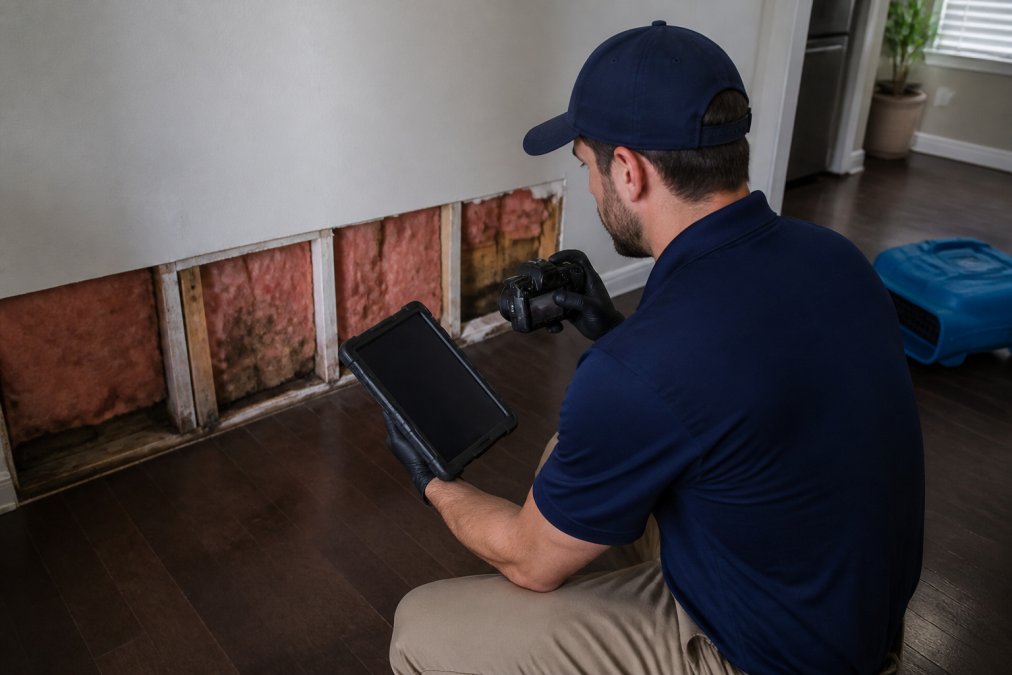
Your first priority is preventing secondary damage. If water is actively entering, shut off the water main. If there’s fire damage, ensure the structure is stable before entering. If there’s a roof breach, place tarps to prevent rain intrusion. Photograph conditions before you make any repairs. Then document your mitigation efforts: photos of tarps, extracted water, dehumidifiers running, boarded-up windows. These images prove you took immediate action to prevent further loss.
Step 2: Request Adjuster Response Time and Track Communications
Call your insurance company within 24 hours of discovering damage. Get the adjuster’s name, phone number, and email. Ask for an estimated inspection date and time. Request written confirmation via email. Document every communication: dates, times, names, what was discussed. Send follow-up emails confirming details: "Per our phone call today, you will inspect the property Thursday at 2 PM. Please confirm receipt of this email." This creates a paper trail that protects you if the adjuster misses the appointment or later claims they never received information.
Step 3: Hire IICRC-Certified Restoration Professionals Immediately
IICRC certification means the technician has completed rigorous training in water damage restoration, mold remediation, and fire damage cleanup. They understand insurance documentation requirements and photograph damage in ways that satisfy adjuster scrutiny. A certified restoration company arrives within 30 minutes, begins mitigation immediately, and documents everything. They extract water, set up dehumidifiers, prevent mold growth, and stabilize the structure. More importantly, they create a detailed scope of work that becomes part of your claim file.
The 30-minute response time is the difference between a claim that gets approved and one that gets denied. Every hour of delay increases mold growth risk, expands secondary damage, and weakens your documentation. Speed isn’t a luxury, it’s claim insurance.
Insurance Claim Appeal Process in Georgia: Reopen and Recover
If your claim is denied, you have options. Georgia law provides specific appeal procedures, and you don’t have to accept a denial as final.
Filing a Formal Appeal After Denial
When you receive a denial letter, read it carefully. The insurer must state specific reasons for denial. You have 30 days from the denial date to file a formal appeal in Georgia. Send a written appeal letter to your insurance company’s claims department, referencing the denial letter and explaining why you believe the denial is incorrect. If the denial cited "insufficient proof of loss," submit additional documentation with your appeal. Many denials are reversed on appeal because the initial adjuster made an error or didn’t fully review the file.
Working with a Public Adjuster vs. Attorney in Georgia
If your claim is significant and the denial appears unjustified, consider hiring professional help. A public adjuster represents you in claim negotiations. They investigate the damage, prepare detailed damage reports, negotiate with the insurance company, and typically work on contingency. An insurance attorney represents you if the claim goes to litigation or if you believe the insurer acted in bad faith. Bad faith occurs when an insurer denies a claim knowing it’s covered, or when they unreasonably delay payment. For most denied claims under $50,000, a public adjuster is cost-effective. For larger claims or suspected bad faith, an attorney is appropriate.
How to Communicate with Insurance Providers to Avoid Denial
Your communication style and documentation practices influence how adjusters view your claim. Professional, organized communication strengthens your position.
Documenting Every Conversation and Request
Create a communication log. Each time you speak with the adjuster, insurance company, or contractor, record the date, time, person’s name, and summary of the conversation. If you email, keep copies of sent messages and responses. This approach prevents disputes about what was said and shows the insurance company that you’re organized and serious about the claim.
Settlement Negotiation: When to Push Back on Initial Offers
Insurance adjusters often make initial settlement offers below the actual damage cost. When you receive an initial offer, don’t accept immediately. Request an itemized breakdown of how they calculated the amount. Compare their estimate to contractor estimates you’ve obtained. If there’s a significant gap, ask for justification. Many claims are settled for 20-40% more than the initial offer simply because the policyholder negotiated. If the adjuster won’t increase the offer, request an independent appraisal. Georgia law allows either party to request an appraisal if they disagree on the settlement amount.
Document the adjuster’s response time to your requests. Slow response times suggest the claim isn’t being prioritized. If the adjuster consistently delays, this becomes evidence of bad faith if you later need to litigate.
Prior Authorization Requirements in Georgia: Prevent Claim Rejection
Some insurance policies require prior authorization before you can hire contractors or begin repairs. Skipping this step can result in claim denial even if damage is clearly covered. Check your policy for prior authorization language. If your policy requires authorization, contact your insurance company before hiring contractors. Explain the damage, provide photos, and ask for authorization to proceed with repairs. Get written confirmation via email. For emergency situations where waiting for authorization would cause further damage, most policies allow emergency mitigation without prior authorization. However, you must notify the insurer within 24 hours and explain why the emergency required immediate action.
Best Fast Response Services Across Metro Atlanta for Claim Protection
The best fast response across metro atlanta for avoid claim denial comes from companies that understand insurance requirements and document damage professionally.
Why 30-Minute Response Times Matter for Your Claim
A 30-minute response guarantee means the restoration company prioritizes your claim. They arrive with equipment ready to begin mitigation immediately. This speed prevents mold growth, halts secondary damage, and creates a documented timeline that strengthens your claim. In Georgia’s humid climate, mold begins growing within 24 hours. Aquaflame Restores it guarantees 30-minute arrival across metro Atlanta. Their IICRC-certified technicians begin documentation and mitigation immediately. They photograph conditions, extract water, set up drying equipment, and create detailed reports that support your insurance claim.
Direct Insurance Billing: Eliminating Out-of-Pocket Disputes
Many restoration companies require upfront payment, then you submit receipts to your insurance company hoping for reimbursement. This creates disputes: the insurer argues your contractor overcharged, or they deny specific line items, leaving you responsible for the difference. Direct insurance billing eliminates this problem. The restoration company bills your insurance company directly. They negotiate pricing with adjusters and handle documentation and disputes. Aquaflame Restores it manages direct insurance billing. They work with your adjuster, provide detailed documentation, and handle all billing communication. When you hire a restoration company, ask about their insurance billing process and whether they can provide references from other claims they’ve managed.
Property damage in metro Atlanta demands immediate action. The best fast response across metro atlanta for avoid claim denial comes from restoration professionals who understand insurance requirements, document damage professionally, and manage claims strategically. Aquaflame Restores it provides 24/7 emergency response with 30-minute arrival guarantee, IICRC-certified technicians, direct insurance billing, and full reconstruction services. When water, fire, or mold damage strikes, contact Aquaflame Restores it immediately. Their rapid response protects your claim, prevents secondary damage, and ensures your property is restored to original condition without the stress of claim disputes.
Frequently Asked Questions
What are the most common reasons for claim denials in Georgia?
Claim rejection in Georgia typically occurs due to incomplete documentation, delayed reporting, policy exclusions not understood by the policyholder, and failure to mitigate further damage. Georgia law requires policyholders to act reasonably to prevent additional loss. Inadequate proof of loss, missed deadlines for filing appeals, and gaps in coverage are also frequent denial triggers. Fast response demonstrates good faith mitigation and strengthens your position.
How quickly should I hire a restoration company to avoid claim denial?
Contact a restoration provider within 24 hours of discovering damage. This timeline prevents secondary damage like mold growth, which insurance companies may exclude if you delayed mitigation. Fast response also preserves evidence for your claim. IICRC-certified technicians can document damage comprehensively, creating the proof of loss documentation insurers require. Delays give insurers grounds to argue negligence in claim denial management.
What should I include in my proof of loss to prevent claim rejection?
Your proof of loss must include: detailed descriptions of each damaged item, replacement cost estimates, photos and videos of all damage, receipts for original purchases, list of contents affected, and documentation of mitigation steps taken. Include adjuster response times and communication records. For water damage, include moisture readings and structural assessment reports from certified professionals. Georgia law requires this documentation be submitted within 60 days of loss to avoid rejection.
When should I consider hiring a public adjuster versus an attorney for a denied claim?
Hire a public adjuster immediately after denial if you believe the settlement offer is significantly underpaid, they work on contingency and focus on maximizing your payout. Choose an attorney if the insurance company is acting in bad faith, refusing communication, or if your claim involves complex policy language. Public adjusters handle claim negotiation; attorneys handle litigation. In metro Atlanta, many adjusters offer free initial consultations to assess your claim's strength.
This article was written using GrandRanker