
Table of Contents
- Step 1: Ensure Personal Safety First
- Step 2: How to Document Storm Damage for Insurance
- Step 3: Notify Your Insurance Company Immediately
- Step 4: Prevent Further Damage with Emergency Mitigation Services for Storm Damage
- Step 5: Review Your Insurance Policy and Coverage
- Step 6: What to Say to Your Insurance Adjuster After Storm Damage
- Step 7: Keep Detailed Records and Receipts for All Repairs
- Step 8: Meet with the Insurance Adjuster on Site
- Frequently Asked Questions
Last Updated: September 3, 2026
Filing a storm damage insurance claim shouldn’t feel like navigating a legal minefield. Yet many homeowners find themselves overwhelmed by the process, unsure what documentation insurers need, or confused about what their policy covers. The 10 steps outlined here will walk you through each stage, from the moment the storm passes to final settlement. At Aquaflame Restores it, we’ve guided homeowners through this exact process.
This guide covers critical actions immediately after storm damage, how to document properly, and how to work effectively with your insurance adjuster. We’ll also address what happens when insurers lowball offers or deny coverage.
Step 1: Ensure Personal Safety First
Your safety comes before documentation, before calling your insurance company, before anything else. Storm damage creates hazards that aren’t always obvious.
After a severe storm, stay out of areas with downed power lines, unstable structures, or standing water. Don’t climb onto a collapsed roof to assess damage yourself. Contaminated floodwater poses serious health risks. If there’s visible structural damage, sagging walls, cracked foundations, or roof sections hanging loose, don’t enter those areas.
If you’re unsure whether your home is safe, wait for local officials to clear it or call a professional restoration company. A 30-minute delay in documentation is worth avoiding a trip to the emergency room.
Step 2: How to Document Storm Damage for Insurance
Documentation is where most homeowners fail. Insurance adjusters need evidence that’s specific, timestamped, and comprehensive.
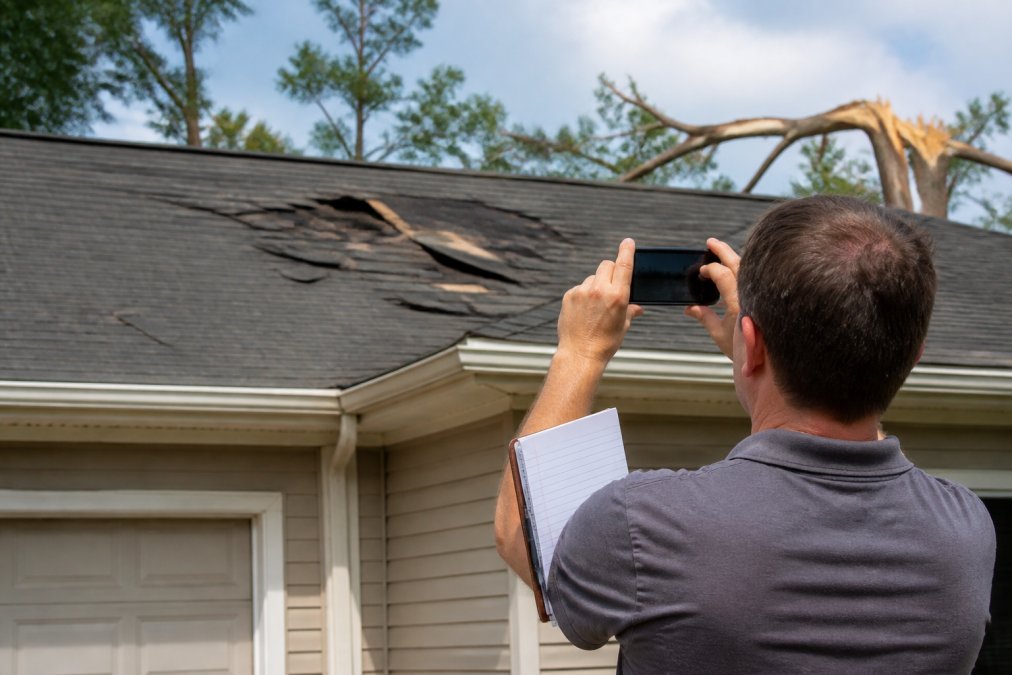
Start with photos and video. Take wide shots of each damaged area, then close-ups of specific damage. For roof damage, photograph from the ground if you can’t safely access the roof. For interior damage, photograph the damage itself, surrounding area, and any water stains showing the extent of water intrusion. Include photos of damaged personal property.
Video is underrated. Walk through your home slowly, narrating what you’re seeing: “Water entered through the east-facing wall, affecting the living room and kitchen. The carpet is soaked, and there’s visible mold beginning to form along the baseboards.” This creates a timestamped record harder for an adjuster to dispute.
Write down specific details your photos won’t capture. Note the date and time of the storm, wind speeds if known, precipitation type (hail, heavy rain, wind-driven rain), and which direction the storm came from. Wind damage is typically covered; flood damage often isn’t. The adjuster needs context to make that determination.
Create an itemized list of damaged personal property with specific items, purchase dates, prices, and current condition. For high-value items, include before-and-after photos. This becomes your proof of loss.
Step 3: Notify Your Insurance Company Immediately
Contact your insurance company as soon as it’s safe to do so. Most policies require prompt notification, typically within 24-48 hours of damage (iii.org). Waiting longer can give insurers grounds to deny your claim.
Have your policy number ready when you call. When you reach your insurer, explain the type of damage (wind, hail, water intrusion), the date it occurred, and affected areas. They’ll open a claim file and assign a claim number.
Request written confirmation of your claim number and the date and time you reported the damage. Ask for the adjuster’s name and expected inspection timeline.
Keep this initial call brief: “My home sustained wind and water damage during the storm on [date]. I have documentation and will provide details to the adjuster.” Detailed claims statements should go to the adjuster, not the initial claims line.
Step 4: Prevent Further Damage with Emergency Mitigation Services for Storm Damage
Mitigation means stopping additional damage from occurring. If your roof has a hole, water will continue entering your home. If windows are broken, rain will keep coming in.
Your insurance policy typically covers emergency mitigation, the immediate steps needed to prevent further loss. This includes tarping a damaged roof, boarding up broken windows, extracting standing water, and running dehumidifiers.
Document all mitigation work with photos and keep receipts. Take before-and-after photos of the mitigation work itself. These documents prove you acted reasonably to prevent additional damage, which strengthens your claim.
Your insurance policy includes a “duty to mitigate”, a legal obligation to take reasonable steps to prevent further loss. Failing to do so can result in claim denial for preventable damage. Aquaflame Restores it handles emergency mitigation as part of our 24/7 response. dealing with insurance adjusters.
Step 5: Review Your Insurance Policy and Coverage
Now that you’ve documented damage and notified your insurer, read your actual policy. Most homeowners have never read theirs.
Look for these key sections:
Dwelling coverage protects the structure of your home, walls, roof, foundation, built-in fixtures. This typically covers storm damage to the house itself.
Personal property coverage protects your belongings, furniture, electronics, clothing. The coverage limit is usually 50-70% of your dwelling coverage limit.
Loss of use coverage (also called additional living expenses) pays for temporary housing, hotels, or rental costs if your home becomes uninhabitable. This is often overlooked but critically important after major storm damage.
Deductible is what you pay out of pocket before insurance kicks in. Storm deductibles typically range from $500 to $5,000 or higher in areas prone to severe weather (naic.org).
Check for exclusions, what your policy specifically doesn’t cover. Flood damage is almost never covered by standard homeowner’s insurance; you need a separate flood policy (fema.gov). Wind damage is usually covered, but some policies have separate wind deductibles. Mold damage has strict limits.
If you’re unsure about coverage, call your insurance agent for clarification and get their response in writing.
Step 6: What to Say to Your Insurance Adjuster After Storm Damage
The adjuster’s job is to assess damage and determine what your insurer owes. Your job is to provide accurate information without volunteering information that might narrow coverage.
When the adjuster arrives, be present and prepared. Have your documentation organized: photos, videos, receipts, itemized property list, and your policy. Walk the adjuster through the damage, but let it speak for itself.
Stick to facts: “The storm occurred on [date]. Wind-driven rain entered through the east-facing wall. Water damaged the carpet, drywall, and insulation.” Don’t speculate about causes or severity.
If the adjuster asks about previous damage or prior claims, answer truthfully but briefly. Lying or omitting information gives insurers grounds to deny your claim entirely.
Ask the adjuster to explain their assessment. If they say something isn’t covered, ask why. Get their reasoning in writing. Ask for a copy of their written estimate or report and review it carefully before they leave.
Don’t accept a lowball estimate on the spot. Thank them and tell them you’ll review it and follow up.
Step 7: Keep Detailed Records and Receipts for All Repairs
As you move forward with repairs, every receipt becomes part of your claim documentation. Keep all invoices for labor, materials, permits, and inspections.
Create a claim log or diary. Date each entry and record every conversation with your insurer, adjuster, or contractors, who you spoke with, what was discussed, and what was decided. Include phone call dates and times, email exchanges, and meeting notes.
For major repairs, get written estimates from multiple contractors before proceeding. Keep all estimates, even the ones you didn’t accept. If your insurer’s estimate is significantly lower than what contractors actually charge, multiple estimates prove the insurer’s estimate was unrealistic.
Aquaflame Restores it handles direct insurance billing, so you don’t have to pay out of pocket and wait for reimbursement. We coordinate directly with your insurer.
Step 8: Meet with the Insurance Adjuster on Site
The on-site meeting with the adjuster is critical. This is where they assess the full scope of damage and determine their initial estimate.
Prepare before the adjuster arrives. Make sure damaged areas are accessible and visible. If water damage is in your attic, clear a path. If mold is forming, point it out, mold growth is often covered if it results directly from the covered loss.
During the meeting, ask specific questions:
- What damage are you including in your estimate?
- What damage are you excluding, and why?
- What’s your timeline for issuing payment?
- Do I need to provide additional documentation?
- What happens if my actual repair costs exceed your estimate?
The adjuster’s initial estimate is often lower than actual repair costs. If your contractors’ estimates are significantly higher, you can request a supplemental claim.
If you disagree with the adjuster’s assessment, you can request a second opinion from an independent adjuster or request an appraisal, a formal dispute resolution process where a neutral third party makes the final determination if your adjuster and the insurer’s adjuster can’t agree.
Don’t feel pressured to accept an estimate you believe is too low. Take time to review it and decide your next move.
Filing a storm damage insurance claim involves multiple steps, but the core principle is straightforward: document everything, communicate clearly, and don’t accept estimates you believe are too low. Aquaflame Restores it can handle the restoration work while you manage the claim. Our team coordinates directly with your insurer, manages mitigation immediately, and provides the documentation adjusters need. Call us 24/7 for emergency response.
| Step | Key Action | Timeline |
|---|---|---|
| 1 | Ensure safety; stay out of hazardous areas | Immediate |
| 2 | Document damage with photos, video, and written details | Within 24 hours |
| 3 | Notify insurance company and receive claim number | Within 24-48 hours |
| 4 | Arrange emergency mitigation to prevent further damage | Within 48 hours |
| 5 | Review your policy for coverage details and exclusions | Before adjuster visit |
| 6 | Meet with adjuster; provide documentation and ask questions | 3-7 days after claim |
| 7 | Keep receipts for all repairs and maintain claim log | Ongoing |
| 8 | Review adjuster estimate; request supplemental claims if needed | After initial assessment |
Storm damage claims move faster when you have organized documentation from day one. Create a folder, digital or physical, with all photos, receipts, policy documents, and correspondence in one place. Adjusters notice when a homeowner is organized and take their claims more seriously.
Failing to mitigate further damage (leaving a hole in your roof unrepaired, for example) can result in claim denial for damage that could have been prevented. Your insurance policy requires you to take reasonable steps to stop additional loss.
Frequently Asked Questions
How long does a storm damage insurance claim typically take to settle?
Most claims settle within 30-90 days, depending on the complexity of the damage and how quickly you provide documentation. Simple claims with clear coverage settle faster. Claims involving disputes over coverage or supplemental claims take longer.
What if my insurance company denies my storm damage claim?
Review the denial letter carefully to understand their reasoning. If you believe the denial is wrong, you can request an appraisal, hire a public adjuster to represent you, or consult an insurance attorney. Document everything in writing and keep copies of all correspondence.
Can I hire my own contractor, or do I have to use the insurance company’s preferred contractor?
You can hire your own contractor in most cases. Your insurer may recommend preferred contractors, but you’re not required to use them. If you hire your own contractor, get their estimate in writing and submit it to your insurer for approval.
What is Loss of Use coverage, and do I need it?
Loss of Use coverage pays for temporary housing, hotels, or rental costs if your home becomes uninhabitable due to covered damage. If your home is severely damaged and you can’t live there during repairs, this coverage is essential. Check your policy to see if you have it and what the limit is.
Should I hire a public adjuster to handle my claim?
A public adjuster represents your interests and negotiates with your insurance company on your behalf. They typically take 5-10% of the settlement as a fee. Consider hiring one if your claim is complex, if your insurer’s estimate seems significantly low, or if you disagree with a coverage decision.
Frequently Asked Questions
What documentation is required for a storm damage insurance claim?
You’ll need photographic evidence of all damage, a detailed itemized list of damaged items with replacement costs, receipts from emergency repairs, your claim number, and proof of loss. Your insurance adjuster will also conduct a damage assessment. Keep contractor estimates and any incident reports from emergency response teams. The more thorough your documentation, the stronger your claim for full coverage verification and claim settlement.
How long after a storm can you make an insurance claim?
Most policies require you to file within a specific timeframe, often 30 to 90 days, though this varies by state and your specific policy. The statute of limitations for property damage claims is typically three to six years depending on your state, but don’t delay filing. Report damage to your insurance company as soon as it’s safe to do so. Delaying notification can complicate your claim and may result in coverage denial if the damage worsens due to lack of mitigation.
What should you avoid saying to a home insurance adjuster?
Never admit fault, exaggerate damage, or make assumptions about coverage. Avoid vague statements like ‘I think the damage is around $50,000’, let the adjuster assess. Don’t say you’ve already hired contractors without getting repair authorization first, as this can complicate reimbursement. Stick to factual descriptions of what happened and the damage you observed. Provide your documentation and let the adjuster conduct their damage assessment. Honest, clear communication protects your claim and helps ensure fair claim settlement.
Can I file a storm damage claim myself, or do I need a public adjuster?
You can file the claim yourself by following these 10 steps. A public adjuster is optional and typically takes a percentage of your payout, usually 5-10%. They’re most helpful if your claim is denied, complex, or if you feel the insurance company’s offer is a lowball settlement. For straightforward claims with clear documentation, handling it yourself saves money. If you face a claim denial or significant dispute, consulting a public adjuster or attorney may help you appeal and maximize your recovery.
This article was written using GrandRanker