
Table of Contents
- Is Professional Crawl Space Repair Worth It? The Short Answer
- Crawl Space Repair Signs You Should Not Ignore
- What Crawl Space Repair Cost Actually Covers
- DIY Crawl Space Repair: What You Can and Cannot Do
- How to Choose a Crawl Space Repair Contractor
- Repair or Rebuild? Comparing Your Options
- Conclusion: When the Investment Pays Off
- Frequently Asked Questions
Last Updated: October 14, 2026
Is Professional Crawl Space Repair Worth It? The Short Answer
For most homeowners, professional crawl space repair is worth it because it fixes the source of moisture and structural problems rather than masking symptoms.
The short answer: yes, when you have active moisture, visible wood damage, or a foundation that is shifting.
Below, we break down the warning signs, what a repair scope includes, where DIY stops making sense, and how to compare quotes so you are not paying twice.
Professional crawl space repair pays off when it addresses the cause of moisture or movement, not just the visible damage. If a contractor cannot explain the cause, the repair is a guess.
Crawl Space Repair Signs You Should Not Ignore
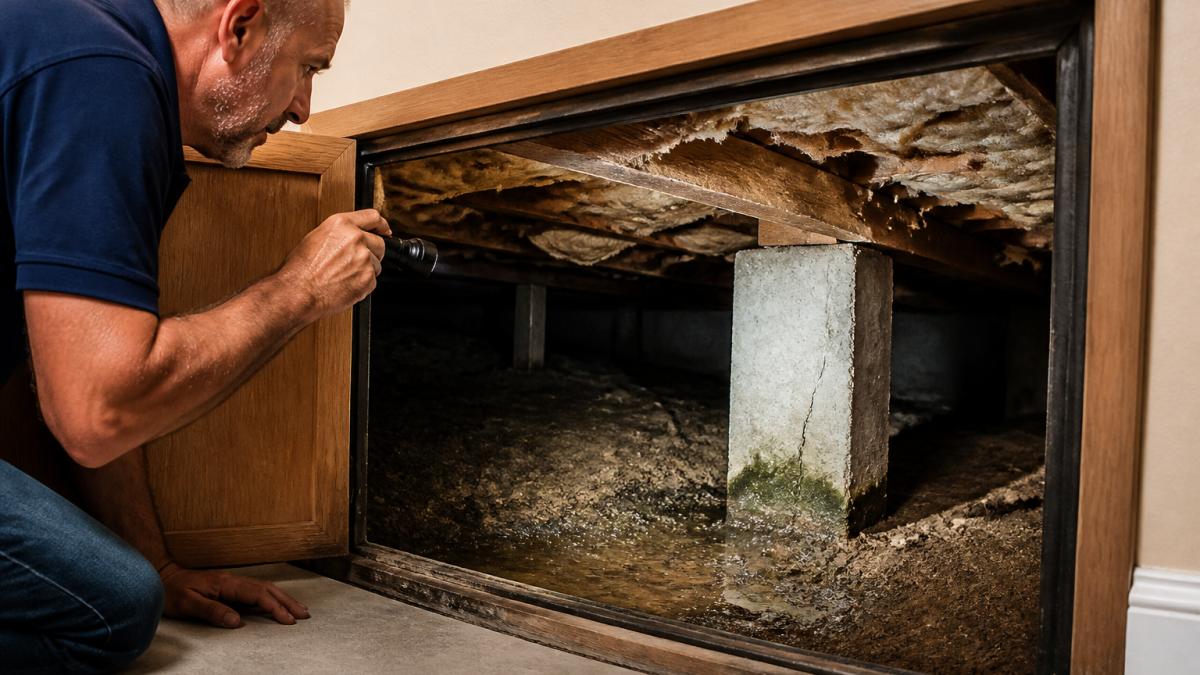
Some crawl space problems announce themselves; others sit quietly for years, rotting framing and feeding mold until a floor sags or a musty smell reaches the living room. Catching early signs is the difference between a contained repair and a full rebuild.
Warning Signs You Can Spot Yourself
- A musty, earthy smell that gets stronger in humid months
- Condensation on ductwork, pipes, or floor joists
- Soft, spongy, or bouncy spots in the floor above
Signs That Point to a Structural Problem
Structural symptoms need a professional assessment, not a weekend project. Look for doors and windows that stick in one season and swing free in another, cracks that widen over time, sloping floors, and gaps between wall and ceiling. These point to movement in the foundation or support system, and the crawl space is usually where the cause lives. Get an inspection before spending money on cosmetic fixes.
What Crawl Space Repair Cost Actually Covers
Crawl space repair cost depends on what the repair must accomplish, not square footage alone. Two same-sized homes can have wildly different scopes depending on water entry, damage spread, and how the space was built. Almost no competitor publishes real numbers or explains what moves them. Here is the honest version.
Typical Cost Ranges by Scope
| Scope | Typical Range | What Drives It |
|---|---|---|
| Vapor barrier only (sealed floor and walls) | $1,500-$4,500 | Square footage, liner thickness (6-mil vs. 12-mil+), wall height |
| Vapor barrier plus drainage and sump | $4,000-$9,000 | Number of drains, sump pump capacity, discharge routing |
| Full encapsulation with dehumidifier | $6,000-$15,000 | Sealing complexity, dehumidifier size, electrical work |
| Structural repair (joists, piers, supports) | $3,000-$15,000+ | Number of members, whether an engineer is required, temporary shoring |
| Mold remediation | $1,500-$6,000 | Affected area, containment needs, whether HVAC is involved |
| Full reconstruction of a failed section | $15,000-$40,000+ | Extent of rot, load-bearing involvement, permits and engineering |
The Five Cost Drivers That Actually Move the Number
- Access. A 24-inch hatch with 18 inches of clearance takes longer to work in than a full doorway with 4 feet of headroom. Labor hours are the biggest line item, and access multiplies them.
- Water volume and source. A damp floor is a vapor barrier job. An active leak, high water table, or downspout dumping at the foundation adds a drainage job. Fixing the source first keeps you from paying twice.
- Extent of structural damage. One sistered joist is cheap. Multiple failed supports, a cracked foundation pier, or a dropped floor means engineering, permits, and temporary shoring, each adding cost and time.
- Materials and system size. A 6-mil liner is not a reinforced 20-mil liner. A 70-pint dehumidifier is not a 120-pint unit with a condensate pump. Ask which is specified and why.
- Permits and engineering. Structural work usually requires a permit, and many jurisdictions require a licensed engineer’s stamp for anything touching load-bearing members. Skipping it can stall a future sale.
Why Two Quotes for the Same Job Can Differ
The most common reason two contractors quote different prices for the “same” job is that they are not quoting the same job. One may include a vapor barrier and dehumidifier; the other may only address the visible symptom.
When comparing quotes, line up the scopes side by side. If one is dramatically cheaper, find out what was left out before assuming you are getting a deal.
| Quote Element | What to Check | Why It Matters |
|---|---|---|
| Moisture source | Is the cause identified? | Treating symptoms means repeat repairs |
| Vapor barrier | Included or excluded? | Biggest driver of long-term moisture control |
| Structural work | Listed with quantities? | Vague line items hide cost later |
| Mold remediation | In scope or separate? | Affects both price and timeline |
| Permits | Who pulls them? | Unpermitted work can stall a sale |
| Warranty | Length and coverage? | Tells you who stands behind the work |
Ask each contractor to break the quote into labor, materials, and permits. A quote that is one lump sum is harder to compare and easier to pad. A line-item quote tells you exactly what you are paying for and what you are not.
We would be cautious of anyone who quotes numbers over the phone. A real number requires someone to look at the space, identify the cause, and write a scope. Anything less is a guess dressed up as a price.
DIY Crawl Space Repair: What You Can and Cannot Do
DIY crawl space repair works for small, surface-level issues and fails for anything involving structure, standing water, or widespread mold. Knowing the line saves money and keeps you safe.
Reasonable DIY tasks:
- Replacing a damaged access hatch or door
- Clearing debris and regrading soil away from the foundation
- Sealing small gaps around pipes and penetrations
Tasks that should go to a professional:
- Any repair involving joists, piers, or load-bearing supports
- Standing water, active leaks, or a wet crawl space that will not dry
- Mold growth beyond a small patch
Crawl spaces concentrate dust, mold spores, and sometimes sewer gas. Entering without proper respiratory protection and ventilation is a genuine health risk, and cutting into a support member without an engineer’s input can compromise the floor above.
How to Choose a Crawl Space Repair Contractor
Choosing a crawl space repair contractor comes down to three things: proof of training, a written scope that names the cause, and a usable warranty. Everything else is marketing.
Ask these questions before you sign:
- Are your technicians certified? Look for IICRC training or equivalent credentials, and ask to see them.
- How did you identify the cause? A good contractor explains the moisture path or structural movement, not just the damage.
- What is included in the scope? Get it in writing, with quantities and exclusions.
A contractor who cannot answer these clearly is not the right fit, regardless of price. For a broader look at how restoration professionals handle moisture and structural recovery, the IICRC certification standards outline the training and ethics requirements that separate qualified firms from the rest.
Repair or Rebuild? Comparing Your Options
Repair and rebuild are not the same decision, and the right choice depends on how much of the structure is still sound. Repair restores what is damaged and keeps what is serviceable. Rebuild replaces damaged components, or in severe cases reconstructs the affected section entirely. Most homeowners are told “you need a rebuild” without being shown why, that is the gap this section closes.
The Four Approaches, Side by Side
| Approach | Best For | Typical Trigger | Trade-Off |
|---|---|---|---|
| Targeted repair | Isolated damage, sound framing | One cracked pier or a small joist | Cheapest, but only if the cause is fixed |
| Repair plus encapsulation | Chronic moisture, no structural loss | Persistent damp, mold recurrence | Higher upfront, best long-term control |
| Partial rebuild | Rot or movement in multiple members | Sagging floor, multiple failed supports | More disruption, restores full integrity |
| Full reconstruction | Widespread damage or failed system | Collapsed support, extensive rot | Highest cost, longest timeline, most durable |
The Decision Criteria That Actually Matter
Four questions separate a repair from a rebuild:
- Is the damage isolated or systemic? One rotted joist under a bathroom is a repair. Rot in six joists, the rim board, and two piers is a rebuild. Count affected members, not square footage.
- Is the cause still active? If water is still entering, no repair will hold. Fix the source first, then decide on the structure. A rebuild over an active leak is money set on fire.
- Has the structure moved? Cracks that widen over time, doors that stick in one season and swing free in another, and sloping floors point to ongoing movement. Movement means the support system itself is failing, which usually pushes the decision toward rebuild.
- What does an engineer say? For anything load-bearing, a licensed structural engineer’s assessment is the tiebreaker. Most jurisdictions require an engineer’s stamp for structural repairs and rebuilds, and the report is what your contractor should build the scope from.
Warning Signs That Point Toward Rebuild
- A floor that has visibly dropped or feels springy across a whole room, not just one spot
- Multiple support posts that are leaning, cracked, or rotted at the base
- A rim joist or band board that is soft, crumbled, or separated from the sill
If you see two or more, a targeted repair is unlikely to hold. If you see one, get an engineer’s opinion before accepting a rebuild quote.
How to Tell a Real Rebuild Recommendation from an Upsell
A legitimate rebuild recommendation comes with evidence. Ask for:
- Photos of every affected member, not just the worst one
- An engineer’s report or letter if load-bearing work is involved
- A written scope that explains why the smaller repair will not work, not just that it will not
If a contractor recommends a full rebuild without showing why the smaller repair will not work, get a second opinion. If two contractors agree on the cause, that is a strong signal the scope is right.
A rebuild quote that does not include engineering, permits, and a written scope is not a rebuild quote, it is an estimate for something undefined. Do not sign one.
Ask each contractor to photograph the problem areas and include the images with the quote. Photos make it much harder to pad a scope, and they give you a record of the condition before work starts.
Conclusion: When the Investment Pays Off
Professional crawl space repair pays off when it removes the cause of moisture or movement, not just the evidence.
If you are dealing with recurring moisture, mold, or a floor that moves, the next step is a proper assessment. Aquaflame Restores it sends IICRC-trained technicians, offers 24/7 emergency response with a 30-minute arrival guarantee, handles direct insurance billing, and provides full reconstruction so one team carries the job from inspection to finished repair.
Frequently Asked Questions
Is professional crawl space repair worth the cost?
For most homeowners with active moisture, mold, or structural movement, yes. Crawl space repair protects the structural integrity of the home above it, and unresolved problems tend to get more expensive over time. Professional work also comes with a warranty, documented repairs, and in many cases clearance documentation. If the issue is a small vent or a single cracked pier, a targeted repair may be enough. If water is entering regularly or joists are sagging, professional crawl space repair is the safer financial call.
What are the signs that a crawl space needs professional repair?
Look for musty odors inside the house, soft or bouncy floors, doors that stick, visible mold or white mineral staining on joists, standing water after rain, and cracked or shifted foundation piers. Condensation on ductwork and higher-than-normal heating and cooling bills are also clues. Any of these crawl space repair signs point to a moisture or structural problem that a visual inspection alone cannot fully diagnose. A professional assessment determines the repair scope before damage spreads to the living space.
Can I repair crawl space problems myself?
Some tasks are reasonable for a confident homeowner: replacing a torn vapor barrier, clearing debris, fixing a downspout, or regrading soil away from the foundation. DIY crawl space repair becomes risky when the work involves floor jacks, sistering joists, replacing piers, or correcting a footing. Those tasks affect how the house carries load, and mistakes can cause settlement elsewhere. If you find rot, sagging framing, or standing water, stop and get an assessment before you start spending on materials.
What should I ask a crawl space repair contractor before hiring?
Ask for proof of state licensing and general liability plus workers’ compensation insurance. Confirm the crew is trained in a recognized restoration standard, such as IICRC certification, and request recent local project references. Get a written scope that names the materials, the moisture target, and how the work will be verified. Ask whether the quote includes a warranty and how long it lasts. Finally, ask who handles permits and whether the company coordinates directly with your insurance carrier on covered damage.
If your crawl space has been “fixed” before and the problem came back, that is a sign the cause was never found. Aquaflame Restores it handles water damage, mold remediation, and full reconstruction with IICRC-trained technicians, 24/7 emergency response, a 30-minute arrival guarantee, and direct insurance billing. Get started with Aquaflame Restores it and get a repair that addresses the source, not just the symptom.