
Last Updated: November 21, 2026
Quick Summary
The signs of water damage subfloor problems include soft or spongy spots underfoot, sagging or uneven floors, new squeaks and popped fasteners, stained or buckling floor coverings, and a musty odor with hollow sounds when tapped. Plywood and OSB begin to swell within hours, and mold can take hold within a day or two in warm, humid conditions.
- Press down with your foot in several spots; a springy floor means the wood beneath has absorbed water.
- Tap the floor with a screwdriver handle and note hollow sounds that suggest rot or delamination.
- Bathrooms are the number one source of hidden subfloor damage, often from a failed toilet wax ring.
- Stop and call a professional if you find standing water, visible mold beyond roughly 10 square feet, or sewage.
- Waiting a few days to see if it dries is the most common mistake, since soft spots usually form by then.
Table of Contents
- Why a Wet Subfloor Is Easy to Miss Until It’s Costly
- The Physical Signs of Water Damage in a Subfloor
- How to Know If a Subfloor Is Damaged: A Safe Inspection Checklist
- How Long Does It Take for Water to Damage a Subfloor?
- Signs of Water Damage in a Subfloor Bathroom
- When to Replace a Subfloor From Water Damage
- Schedule a Free Subfloor Assessment With Aquaflame Restores It
- Frequently Asked Questions
Why a Wet Subfloor Is Easy to Miss Until It’s Costly
The signs of water damage subfloor problems rarely announce themselves. In metro Atlanta homes, a slow plumbing leak or a water heater failure can soak the plywood for weeks before anyone notices.
Subfloor water damage is the deterioration of the structural board beneath your finished floor, caused by trapped moisture that softens wood, loosens fasteners, and invites mold.
A wet subfloor that feels fine on the surface can already be delaminating underneath, and by the time a floor dips, the repair scope may have grown.
Below, we’ll show you exactly how to spot the warning signs and inspect safely before the damage spreads.
The Physical Signs of Water Damage in a Subfloor
The clearest signal is a change in how the floor feels and sounds under your feet. Most homeowners notice one symptom first, then find others once they start looking. Here are the signs we check on every assessment.
Soft, Spongy, or Bouncy Spots Underfoot
A spongy floor is the classic red flag. Press down with your foot in a few spots. If the floor gives slightly or feels springy, the plywood or OSB beneath has absorbed water and started to break down. Bouncy areas near a bathroom door or under a kitchen sink deserve immediate attention.
Sagging, Dipping, and Uneven Floors
Sagging floors mean the subfloor or the joists below have lost strength. You may feel a dip when you walk across a room, or notice a slope that wasn’t there before. Uneven flooring that follows a straight line often traces back to a hidden leak running along a joist.
Squeaks, Creaks, and Popped Fasteners
New squeaks and creaks are easy to dismiss. But when fasteners pop loose and flooring shifts, it usually means the wood has swelled and shrunk. Loose flooring and movement around a doorway can point straight to water absorption underneath.
Stains, Swelling, and Buckling Floor Coverings
Look for discoloration, dark rings, or damp areas on the floor surface. Buckling, warping, and lifting floor coverings are strong clues. Carpet padding that stays damp, or tile that rocks, often hides a swollen subfloor beneath it.
Musty Odors, Mold, and Hollow Sounds
A musty odor that won’t clear is one of the most reliable signs of water damage in subfloor material. Tap across the floor with a screwdriver handle. Hollow sounds suggest a gap where wood has rotted or delaminated. Mildew and mold can follow within days in humid conditions. If the smell persists, our guide on musty smell after a water leak explains the causes and how to fix them.
How to Know If a Subfloor Is Damaged: A Safe Inspection Checklist
If you want to know how to know if subfloor is damaged, start with a careful, safe inspection. Do not pull up finished flooring or crawl under the house alone.
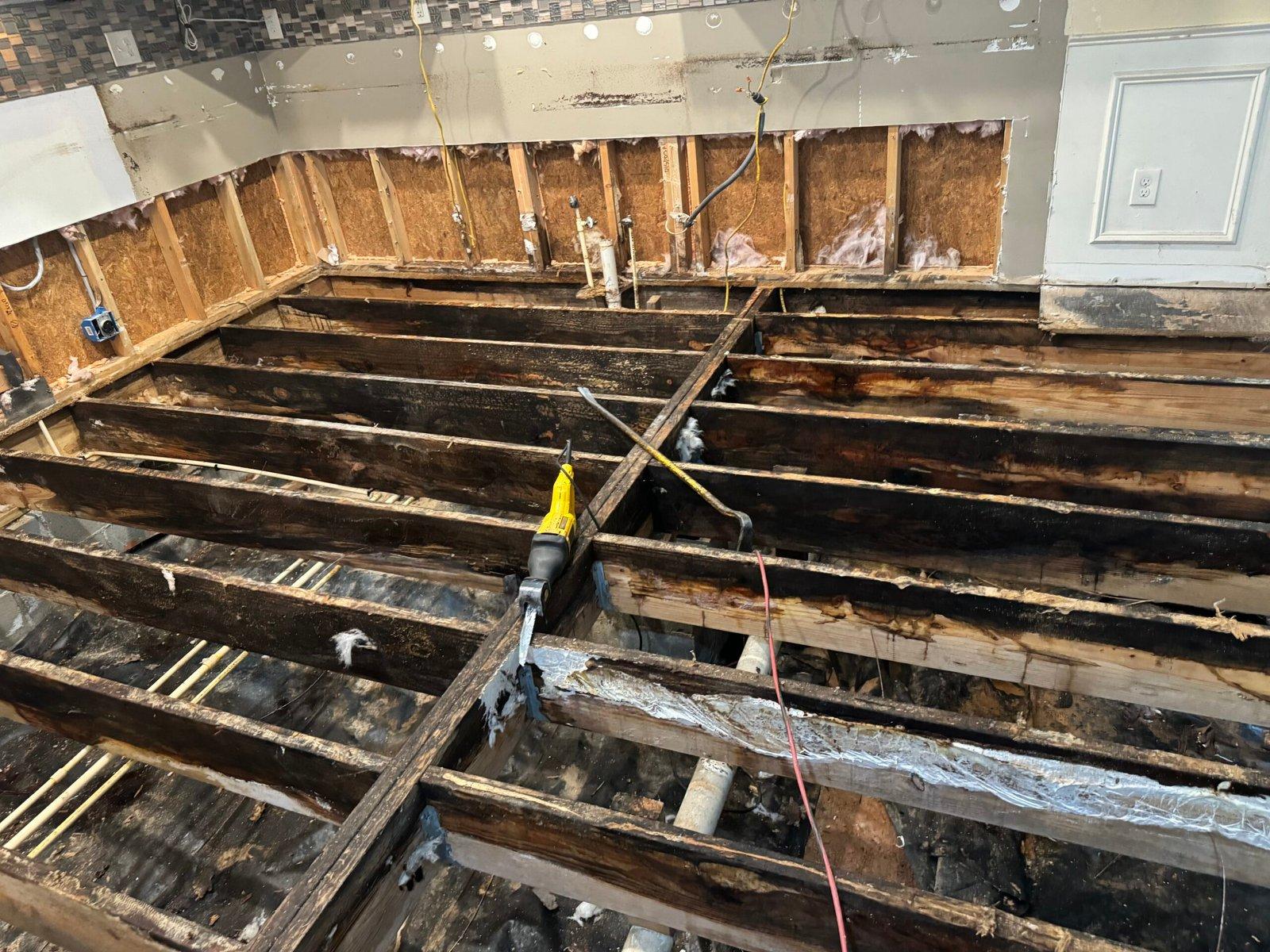
Before You Start: Safety Comes First
- Shut off the water supply at the fixture or the main valve if you suspect an active leak, and shut off power to any room where water is near outlets, switches, or a wet floor.
- Wear gloves, an N95-style mask, and shoes with grip. Standing water in a crawl space or under a cabinet can hide sharp edges, nails, and energized wiring.
- Treat floodwater and sewage backups as contaminated. Do not walk through Category 3 water, and do not touch porous materials that have soaked in it. Mold can begin colonizing damp wood and drywall within a few days in warm, humid conditions, so limit exposure and ventilate the area.
The Walk-Through Checklist
- Walk the room slowly and mark any soft, bouncy, or dipping spots with tape
- Tap the floor across the room with a screwdriver handle and note hollow sounds
- Look for stains, swelling, buckling, or damp patches, especially along walls and at floor transitions
What a Moisture Meter Actually Tells You
A moisture meter gives real numbers instead of guesswork, but the number alone is not the answer. Professionals take a reading in the suspect area and compare it to a reading in unaffected material of the same type in the same room. That comparison is what shows how far water has traveled. A single universal moisture threshold is unreliable because plywood, OSB, hardwood, and concrete all hold and release moisture differently, and a reading taken right after a humid Atlanta afternoon will not match one taken in dry winter air.
Know When to Stop
Stop the inspection and call a professional if you find standing water, a sagging area that flexes under your weight, visible mold beyond a small patch (roughly 10 square feet), sewage or gray water, or any sign that water has reached the joists or wall framing. Those conditions move the job from a surface check to a structural and contamination assessment. For the full professional process that follows a confirmed leak, see our guide on emergency water damage restoration steps.
How Long Does It Take for Water to Damage a Subfloor?
Water damage subfloor damage can start within hours.
Timeline matters more than most people realize. The longer moisture sits, the deeper it travels into joists and framing.
Watch out: waiting a few days to “see if it dries” is the most common mistake we see.
Moisture reaches the subfloor on a predictable clock, and the milestones below show how quickly each stage arrives.
| Stage | Timing | Note |
|---|---|---|
| Plywood and OSB begin to swell and absorb moisture | Within hours | Damage can start within hours |
| Mold can take hold | Within a day or two | In warm, humid conditions |
| Delamination and soft spots show up | Within the first week | Waiting days to see if it dries is the most common mistake |
Signs of Water Damage in a Subfloor Bathroom
Bathrooms are the number one source of hidden subfloor damage because water is supplied, used, and drained in a small footprint, and most of the plumbing sits behind a wall or under the floor where a slow leak can run for weeks. The signs of water damage in subfloor bathroom areas include a spongy floor around the toilet, loose or rocking tile, a musty smell, staining at the base of the walls, and a soft spot at the threshold where the bathroom meets a hallway.
Why Bathroom Fixtures Fail Quietly
- Toilet wax ring or seal failure. The seal between the toilet and the drain flange can fail without a visible puddle. Water seeps under the tile and into the subfloor around the flange, which is why a spongy ring around the toilet base is such a strong clue.
- Supply-line and valve leaks. A slow drip from a shutoff valve, supply line, or the tank-to-bowl connection wets the same area repeatedly. These leaks often show as a dark stain on the ceiling below before anything shows in the bathroom.
- Tub and shower drain leaks. A failed drain gasket or a cracked shower pan releases water under the floor with each use, so the subfloor never gets a chance to dry.
- Overflow and splash-out. A tub overflow or repeated splashing around a shower door wets the floor edge and the subfloor beneath it over time.
Tell the Source Apart Before You Repair
A bathroom subfloor can be wet from three very different sources, and each one changes the scope. A plumbing leak is usually localized around a fixture and stops when the supply is shut off. A crawl space moisture problem wets the subfloor from below, so the wood stays damp even when the bathroom is dry, and the musty smell is stronger near the floor and in adjacent rooms. Flooding or a sewage backup is a contamination issue, not just a moisture issue.
What We Check in a Bathroom Assessment
Technicians measure moisture in the subfloor around the toilet, tub, and vanity, compare those readings to dry material nearby, and check the ceiling below and the crawl space where it is accessible. For a closer look at how these leaks start and what cleanup involves, our page on toilet overflow and bathroom water damage cleanup walks through the risks and next steps.
Watch out: a bathroom floor that feels solid but smells musty after every shower is often a drain or pan leak that has been running for months. Do not seal over it or re-grout it before the source is found.
When to Replace a Subfloor From Water Damage
Replacement is the right call when the subfloor has lost structural integrity and drying won’t bring it back.
The decision also depends on the joists below. If water has reached the framing, the scope grows. This is where an honest assessment matters, and it’s the part most people get wrong: treating a cosmetic stain while the structure underneath keeps failing.
Schedule a Free Subfloor Assessment With Aquaflame Restores It
A wet subfloor is a problem you want to catch early, while drying and repair are still simple. If you’ve spotted any of these signs, don’t wait for the floor to sag.
Call 678-379-8000 for a free assessment and let us find the source before it costs more. You can also visit our Lawrenceville water, fire, and mold restoration page to see how we work.
If your floor feels soft or your home smells musty, that’s your cue to act.
Frequently Asked Questions
How can you tell if a subfloor is damaged by water?
Look for soft or spongy spots underfoot, sagging or dipping floors, new squeaks and creaks, and warped or lifting floor coverings. Dark stains, a musty odor, or a hollow sound when you tap the floor point to moisture trapped below. A moisture meter pressed against exposed wood confirms whether the subfloor is still wet. Because subfloor water damage hides under finished flooring, any cluster of these signs in a Decatur or DeKalb County home is worth a professional look before the wood rots further.
Does a wet subfloor always need to be replaced?
No. Plywood and OSB can dry out and keep their strength if water is caught early and the source is fixed. The decision turns on how long the wood stayed wet, whether it has delaminated or crumbled at the edges, and whether mold has taken hold. A moisture reading and a visual check of the joists settle it. In many metro Atlanta homes, drying the structure is enough; replacement becomes necessary when the wood has lost structural integrity.
Will homeowners insurance cover a water-damaged subfloor?
Georgia homeowners policies vary, but many cover sudden, accidental water damage such as a burst pipe or appliance failure. Coverage for long-term neglect or a known slow leak depends on the policy, so review your own coverage with your insurer. Document everything with photos and a written assessment, and file promptly. Aquaflame Restores It works directly with insurance companies and bills them directly, which takes the back-and-forth off your plate while the structure dries.
How long does it take for water to damage a subfloor?
Plywood and OSB begin absorbing water within hours, and swelling and delamination can start after prolonged exposure. Mold can appear within a few days in humid conditions. Structural weakening builds over days and weeks, not months. That timeline is why a slow plumbing leak under a bathroom or kitchen is so destructive: it drips for weeks before anyone notices a soft spot, and by then the wood may already be compromised.
