Table of Contents
- Why Musty Smell Lingers After Water Leaks
- Signs of Hidden Mold After Water Damage
- How Long Does It Take for Mold to Grow After a Leak
- Common Sources of Trapped Water and Odor
- How to Remove Black Mold Safely
- DIY vs. Professional Remediation: When to Call Experts
- Eliminating Musty Odors and Preventing Recurrence
- Conclusion
Last Updated: August 20, 2026
Why Musty Smell Lingers After Water Leaks
A musty smell after water damage signals that moisture is trapped in your home, even after visible water is removed. The odor develops because trapped moisture creates an environment where mold and mildew thrive in hidden spaces like wall cavities, subfloors, and insulation. Homeowners often assume the smell will fade once surfaces dry, but this rarely happens without proper remediation.
When a leak occurs, moisture seeps into porous materials, drywall, wood, carpet, insulation, where it becomes trapped deep within their structure. This trapped moisture generates the distinctive musty odor from volatile organic compounds released by mold spores and bacteria colonizing the damp materials. The smell indicates active microbial growth, not just an unpleasant scent. Addressing the problem quickly, within the first 24-48 hours, makes a critical difference in remediation costs and structural damage.
Ignoring a musty smell after water damage can lead to widespread mold colonization throughout your home’s structural systems. Once mold penetrates deep into subfloors and wall cavities, removal becomes exponentially more expensive and may require partial reconstruction.
Signs of Hidden Mold After Water Damage
Hidden mold grows inside walls, beneath flooring, and within insulation, places you can’t see until damage becomes severe. The musty odor is often your first clue that mold is growing in these concealed spaces.
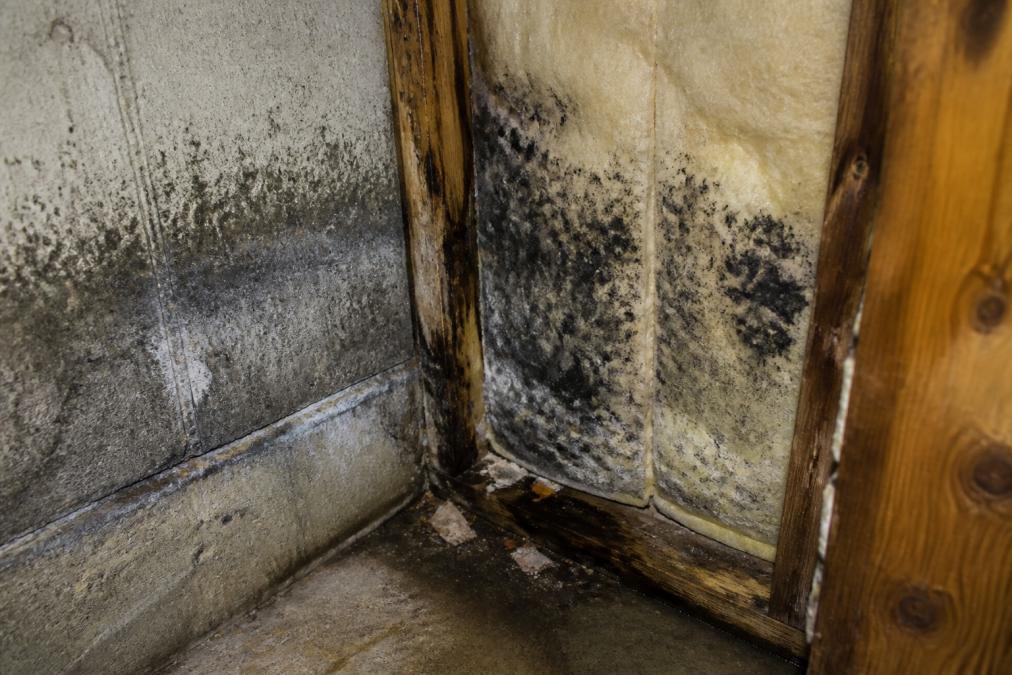
Physical indicators suggest mold is growing where you can’t see it. Discoloration on walls or ceilings indicates moisture has penetrated the surface and is being absorbed into the material beneath. Soft or spongy drywall means water has saturated the gypsum core. Peeling paint or wallpaper signals moisture is trapped between the wall and finish. Warped or buckled flooring means water has soaked into the subfloor.
The most reliable sign is a persistent musty smell that doesn’t fade after a few days of ventilation. A musty odor that lingers or worsens indicates trapped moisture and active mold growth, typically intensifying in humid conditions or when air circulation is poor.
Use a moisture meter, available at hardware stores for $20-40, to check suspected areas. Readings above 16% moisture content in drywall or wood indicate trapped water and active mold risk. [Professional restoration](/water-damage-restoration/) teams use calibrated meters to map moisture throughout a structure.
Porous materials like drywall, wood, carpet, and insulation absorb and retain moisture deeply, creating ideal conditions for mold. Non-porous materials like tile and concrete don’t absorb water as readily, but they can trap moisture underneath. A water leak under a tile floor often causes severe hidden damage because water gets trapped beneath the surface where it can’t evaporate.
How Long Does It Take for Mold to Grow After a Leak
Mold growth begins almost immediately after water damage occurs. Mold spores are already present in your home’s air and on surfaces. When moisture becomes available, they begin germinating and colonizing within 24-48 hours. By the time you notice a musty smell, mold colonies may already be well-established in hidden spaces.
The timeline depends on temperature, humidity, darkness, and material type. Mold grows fastest in warm, humid conditions (70-80°F with relative humidity above 60%) and in dark environments. A water leak in a dark, warm crawlspace will generate visible mold growth in 3-7 days. The same leak in a cool, well-ventilated space might take 2-3 weeks.
Visible mold is just the surface symptom. By the time you see mold or smell that musty odor, fungal colonies have already penetrated deep into the material. Surface cleaning alone won’t address the mold growing inside drywall, insulation, and subfloor.
Relative humidity is the controlling factor. Keep indoor humidity below 50% and mold growth slows dramatically. Above 60% humidity, mold accelerates. Dehumidifiers are essential after water damage because they reduce the moisture available for mold, slowing growth and giving you time to address the moisture source.
Common Sources of Trapped Water and Odor
Water doesn’t travel in straight lines; it seeps, wicks, and pools in unexpected places. A small pipe leak can saturate insulation six feet away. A roof leak can run down inside walls and pool in the subfloor. Understanding where water gets trapped helps you identify why the musty smell persists.
Subfloors are notorious for trapping water. When water reaches the subfloor, it gets absorbed into the wood or particle board and becomes trapped. Ventilation can’t reach it effectively, and the subfloor becomes a reservoir of moisture generating musty odors for months if not properly dried.
Wall cavities trap water in insulation and create ideal conditions for mold. When drywall gets wet, water wicks into the insulation behind it. If the wall isn’t opened and the insulation replaced, mold continues growing inside the wall cavity. A musty smell that seems to come from nowhere often indicates water is trapped inside the walls.
Crawlspaces are particularly vulnerable because they’re naturally damp, poorly ventilated, and often already near saturation. Mold develops rapidly in crawlspaces and the musty smell often rises into main living areas, creating an odor problem throughout the house.
The musty smell a water leak creates is almost always a sign of trapped moisture in materials you can’t see, not just on surfaces you can. [Addressing the](/water-clean-up-guide/) smell requires finding and drying the source.
HVAC systems can distribute musty odors throughout your entire home if mold grows in the ducts or on the evaporator coil. Check your HVAC system immediately after water damage. If moisture reaches the air handler or ducts, mold will colonize those spaces and spread spores throughout the house.
How to Remove Black Mold Safely
Removing mold safely requires understanding the difference between surface cleaning and structural remediation. Small areas of surface mold (less than 10 square feet) can sometimes be cleaned by homeowners with proper precautions. Larger areas or mold growing inside walls, insulation, or HVAC systems requires professional remediation.
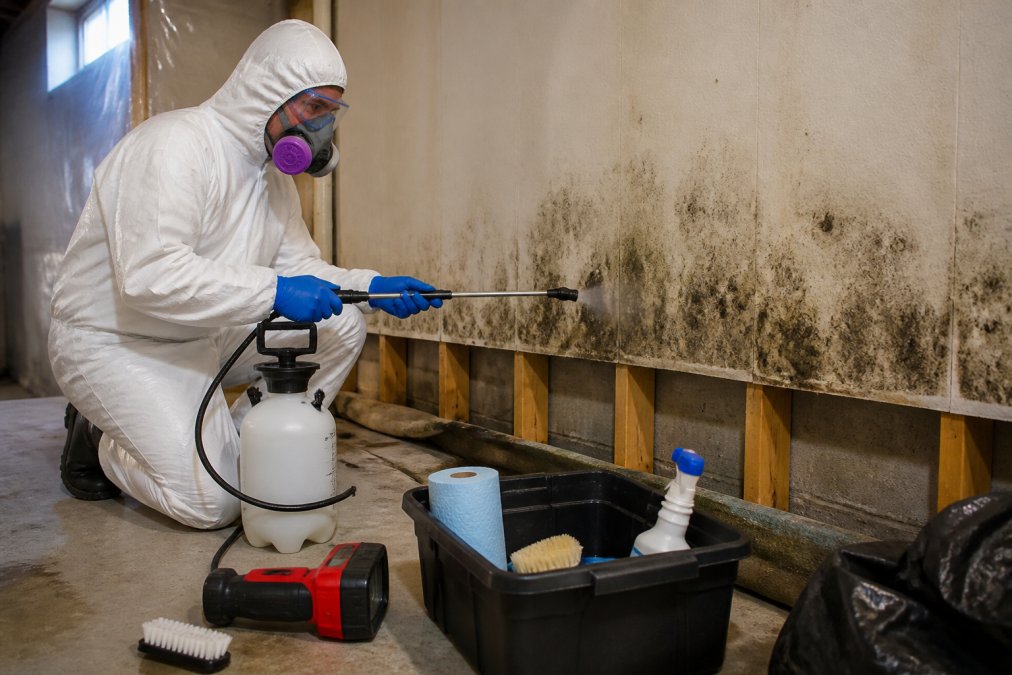
For small surface mold, wear an N95 or P100 respirator mask, nitrile gloves, and eye protection. Ensure the space is well-ventilated by opening windows and running exhaust fans. Never use bleach on porous materials like drywall or wood; it doesn’t penetrate deep enough to kill mold at its root. Use a commercial mold cleaner or detergent solution, then dry the surface completely with fans and dehumidifiers.
The critical step most homeowners miss is addressing the underlying moisture. You can clean mold off a surface, but if the material remains damp, mold will return within days. Professional remediation includes structural drying using industrial-grade dehumidifiers and air movers to remove moisture from deep within materials.
For larger mold problems or mold growing inside walls and insulation, professional remediation is necessary. Professionals use air scrubbing equipment to capture mold spores released during removal, preventing spread to unaffected areas. They open walls and remove contaminated insulation and drywall. They treat framing with approved fungicides and dry the entire affected area using industrial dehumidifiers, monitoring moisture levels to ensure complete drying.
Never attempt to remove mold from inside walls, attics, or crawlspaces without professional equipment. Disturbing mold releases spores into the air, spreading the problem and creating serious health risks.
Mold spores can trigger respiratory issues, allergies, and asthma attacks. Some mold species produce mycotoxins, toxic compounds causing serious health effects with prolonged exposure. This is especially concerning for children, elderly people, and anyone with compromised immune systems. Professional remediation teams have respiratory protection, containment protocols, and proper disposal procedures.
DIY vs. Professional Remediation: When to Call Experts
The decision between DIY cleanup and professional remediation depends on the extent of damage and your ability to address the root cause. Small, localized water damage caught quickly might be manageable if you have the right equipment.
DIY remediation makes sense when the water damage is limited to one small area, you caught it within 24 hours, affected materials are non-porous or easily replaceable, and you have access to industrial-grade dehumidifiers and air movers. You’ll need a moisture meter to verify complete drying; many homeowners only dry the surface while the interior remains damp.
Professional remediation becomes necessary when water damage affects multiple rooms or large areas, includes porous materials like drywall or insulation, the water source is still active, mold is visible or suspected in hidden spaces, or you’re dealing with contaminated water. A water leak in your basement that soaks the subfloor and wicks into walls above requires professional drying and mold remediation.
Insurance coverage is another factor. Most homeowners insurance policies cover water damage from sudden, accidental leaks, but coverage often requires prompt mitigation and reasonable care in remediation. If DIY remediation fails and mold develops, your insurance claim for subsequent mold damage may be denied. Professional remediation creates documentation of proper drying and treatment, protecting your insurance claim.
A professional restoration team will dry your home completely, treat mold if present, and provide documentation that your home is safe and dry. They coordinate directly with your insurance company, often handling billing directly. At Aquaflame Restores it, IICRC-trained technicians use moisture meters and thermal imaging to ensure complete drying.
DIY remediation: Small, isolated water damage caught within 24 hours, non-porous materials only, no visible mold. Professional remediation: Anything affecting multiple areas, porous materials, visible mold, hidden damage, or active moisture sources.
Eliminating Musty Odors and Preventing Recurrence
Once moisture has been addressed and mold removed, eliminating the musty smell requires completing the drying process and restoring air quality. The smell won’t disappear until materials are truly dry and microbial growth has stopped.
Industrial dehumidifiers are essential. Portable dehumidifiers are inadequate for serious water damage; they remove moisture too slowly. Professional-grade dehumidifiers remove hundreds of gallons of water per day from the air and materials. Air movers create circulation that forces moisture out of materials into the dehumidifier. This combination actually dries a home; running fans alone won’t do it.
Ventilation helps but is limited. Opening windows and running exhaust fans moves humid air out, but in humid climates, outside air may be as humid as inside air. Dehumidifiers are more effective because they remove moisture regardless of outdoor humidity.
Odor neutralization differs from odor masking. Masking uses air fresheners to cover the smell without addressing the problem. Neutralization removes the odor source by eliminating mold and drying materials completely. Some professional teams use ozone generators or activated charcoal, but these only work after the underlying moisture problem is resolved.
Prevention starts with controlling moisture. Keep indoor relative humidity below 50% using dehumidifiers if necessary. Ensure gutters and downspouts direct water away from your foundation. Fix plumbing leaks immediately. Inspect your roof regularly. Ensure crawlspaces are properly ventilated. Install sump pumps and foundation drainage if your home is prone to seepage.
Most importantly, address water damage immediately. The first 24-48 hours are critical. Water that sits for more than a few days will almost certainly develop mold. A musty smell after water damage signals that professional remediation is now necessary.
Eliminating a musty smell a water leak creates isn’t about covering the odor, it’s about removing the moisture causing mold to grow. Once materials are completely dry and mold is removed, the smell disappears naturally.
A musty smell after water damage signals that moisture is trapped in places you can’t see and mold is actively growing. Addressing it quickly, within the first day if possible, prevents the problem from becoming expensive and extensive. If you’re in the metro Atlanta area dealing with water damage, mold, or a persistent musty odor, Aquaflame Restores it responds within 30 minutes with IICRC-trained technicians using professional-grade equipment to dry your home completely and eliminate mold at the source. Our team handles insurance billing directly, so you can focus on getting your home back to normal. Call for 24/7 emergency service and get your home dry before mold becomes a major problem.
Frequently Asked Questions
How do I know if a musty smell after water damage is actually mold?
A musty smell typically indicates mold or mildew growth, even if you can't see visible colonies. The odor comes from volatile organic compounds released by fungal spores. If the smell appeared after water damage and persists despite drying efforts, mold is likely present in porous materials like drywall, insulation, or subfloor. A moisture meter reading above 16% in affected areas confirms excess moisture. Professional mold testing can identify the specific fungal species, but the smell itself is a reliable warning sign that remediation is needed.
Can I safely remove black mold myself, or should I hire a professional?
Small, isolated mold patches (less than 10 square feet) on non-porous surfaces can sometimes be handled with proper safety precautions: HEPA-filtered respirator, gloves, goggles, and detergent solution. However, black mold in crawlspaces, attics, or within structural materials like drywall requires professional remediation. Disturbing mold releases spores into the air, worsening air quality and spreading contamination. IICRC-trained technicians use containment, air scrubbing, and structural drying to eliminate the source, not just the visible growth. Professional remediation also provides documentation for insurance claims and property sales.
How quickly does mold grow after water damage occurs?
Mold can begin growing within 24 to 48 hours of water exposure in ideal conditions (warm temperatures and high relative humidity). In porous materials like drywall, insulation, and subfloor, microbial colonies establish rapidly once moisture is present. Some mold types grow faster than others, but visible growth can appear within 3 to 5 days. This is why immediate water extraction and structural drying are critical, the faster you remove trapped moisture, the smaller the window for fungal growth. Dehumidifiers, air circulation, and HVAC system operation help reduce relative humidity and slow mold colonization.
What should I do if the musty smell comes back after I've dried the area?
Recurring odor indicates either moisture is still trapped in hidden areas or mold has reestablished in porous materials. Check for seepage, condensation, or dampness using a hygrometer (humidity should stay below 50%). Inspect crawlspaces, attics, and behind walls for discoloration or soft spots in drywall. If DIY drying hasn't resolved the issue after 2-3 weeks, the leak source may not be fully addressed, or mold has penetrated deep into structural materials. Professional leak detection and structural drying equipment can locate hidden moisture and eliminate it completely, preventing recurrence.
This article was written using GrandRanker