Last Updated: November 1, 2026
Quick Summary
To clean carpet after a sewage backup, stop the source, remove standing water with a wet/dry vacuum, and discard any padding soaked by Category 3 water. Carpet soaked past 24 to 48 hours, glued-down carpet, or areas over roughly 10 square feet should be removed rather than cleaned.
- Sewage is Category 3 water, the most contaminated type, carrying bacteria, viruses, and parasites.
- Wear rubber gloves, boots, eye protection, and an N95 respirator before touching contaminated water.
- Padding soaked by Category 3 water is always removed and disposed of, with no salvage scenario.
- Disinfection is two stages: wash surfaces with warm water and mild detergent, then sanitize following label contact time.
- Call a professional if contamination exceeds about 10 square feet or reaches under baseboards or into crawl spaces.
Table of Contents
- Why Sewage Backup Water Changes the Cleanup Rules
- Sewage Backup Health Risks Before You Touch the Carpet
- Step 1: Stop the Source and Remove Standing Sewage Water
- Step 2: Decide Whether the Carpet and Padding Can Be Salvaged
- Step 3: How to Disinfect After a Sewage Backup
- How Long Sewage Bacteria Survive on Surfaces and in Carpet
- Step 4: Drying, Odor Removal, and Post-Cleanup Checks
- Call Aquaflame Restores It for a Free Sewage Damage Assessment
- Frequently Asked Questions
Why Sewage Backup Water Changes the Cleanup Rules
Sewage backup water is not like a spilled glass of water or a leaky pipe.
At Aquaflame Restores It, we respond to sewage backups across Decatur, DeKalb, Clayton, Cobb, and Henry counties.
The water category matters. Clean water from a supply line is Category 1.
So the rules change in three ways:
- You cannot dry and reuse most materials it touched.
- You need protective gear before you go near it.
- You need to disinfect, not just clean.
Keep reading. We will walk you through the safe sequence step by step, and show you where to stop and call a pro.
Sewage Backup Health Risks Before You Touch the Carpet
Sewage backup health risks are real and they start the moment you touch contaminated water.
Georgia’s heat and humidity make it worse. A backed-up carpet in a Decatur home in July becomes a breeding ground fast.
Before you touch anything, gear up:
- Rubber gloves, ideally long ones
- Rubber boots
- Eye protection
- An N95 respirator if there is any splashing risk
Watch out: never mix bleach with ammonia or other cleaners. The fumes can be toxic.
If you have a health condition, are pregnant, or have open cuts, do not do this yourself.
Step 1: Stop the Source and Remove Standing Sewage Water
Stop the source first. If a toilet or floor drain is backing up, do not flush or run water anywhere in the house.
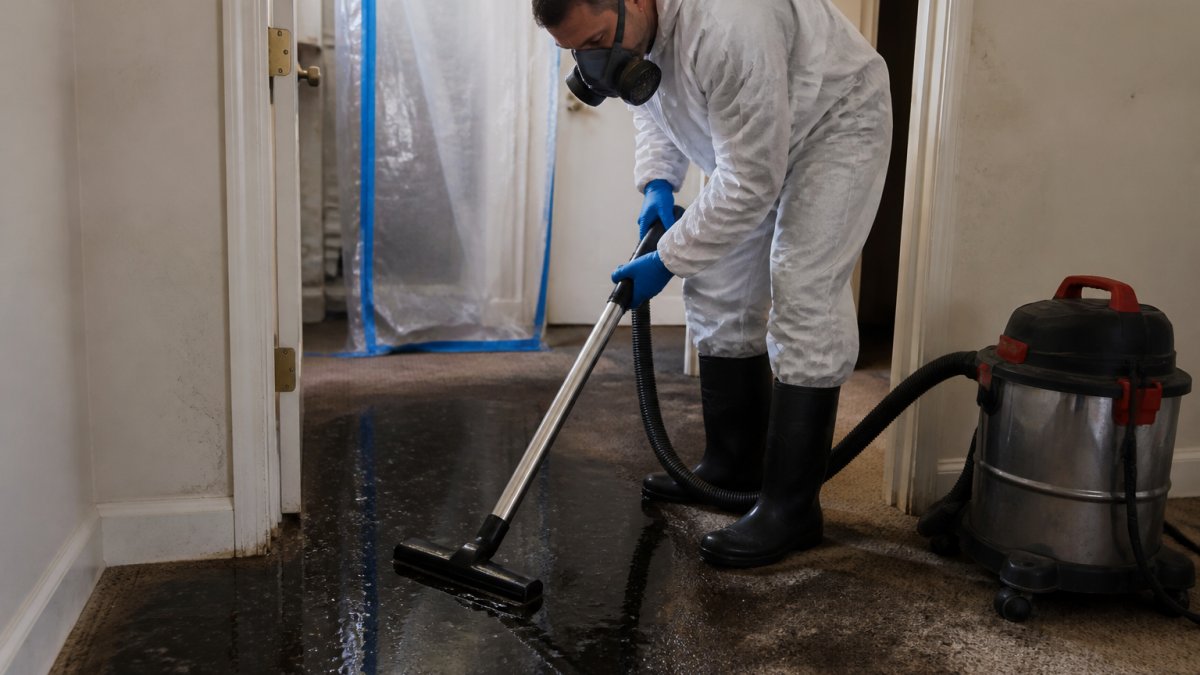
Once the flow stops, remove standing sewage water. A wet/dry vacuum made for wet pickup is the tool for this.
Extraction comes before anything else. Saturated carpet holds a lot of water, and every hour it sits raises the mold risk.
Step 2: Decide Whether the Carpet and Padding Can Be Salvaged
Whether carpet and padding can be salvaged depends on several factors.
Start with one non-negotiable: padding soaked by Category 3 water is always removed and disposed of. Padding is an open-cell foam. Sewage fills the cells, and no amount of surface cleaning reaches the interior. Reusing it traps bacteria under the carpet and brings the odor back within weeks. There is no salvage scenario for sewage-soaked pad.
Carpet is where the real decision lives. Work through these four questions in order:
- How contaminated was the water? A true sewage backup (toilet overflow, floor drain backup, main line backup) is Category 3. If the backup was a clean supply-line break that merely ran across a floor previously contaminated by sewage, treat it as Category 3 anyway. When in doubt, treat it as the worst case.
- How long was the carpet wet? Under a few hours with fast extraction, a small area has a fighting chance. Past 24 to 48 hours, contamination has wicked into the backing and subfloor, and mold risk climbs sharply. In Georgia’s summer humidity, that window shrinks.
- What kind of carpet is it? Glued-down or direct-glue carpet over a slab is almost always a removal job. Stretch-in carpet over a wood subfloor is sometimes a candidate for salvage, but only for small, contained, quickly addressed spills. Area rugs and loose-lay carpet are easier to evaluate off-site.
- How big is the affected area? Roughly 10 square feet or less, caught early, is the outer edge of what a professional might attempt to save. Anything larger, or anything that reached under baseboards, into a closet, or into a crawl space, is a removal job.
If any of the four answers points to removal, remove. The cost of new carpet is small compared with the cost of a mold problem or a recurring sewage odor.
What “removal” actually means in practice. Cut the carpet and pad into manageable sections, roll them contaminated-side inward, and bag or wrap them in heavy plastic before they leave the room. Carry them through the house in sealed plastic, not draped over a shoulder. Do not store them in a garage, on a porch, or at the curb where children, pets, or storm runoff can reach them. Check with your local solid waste or public works department for the correct disposal site, since rules for construction debris vary by county.
What about the subfloor? Once the carpet and pad are up, the subfloor is exposed and must be evaluated.
For a fuller picture of how water categories drive cleanup decisions, see our guide on water mitigation.
Work through these four questions in order to decide whether the carpet can be saved.
| Question | Salvage-friendly answer | Removal answer |
|---|---|---|
| How contaminated was the water? | Clean supply-line break only | True sewage backup is Category 3 |
| How long was the carpet wet? | Under a few hours with fast extraction | Past 24 to 48 hours |
| What kind of carpet is it? | Stretch-in over wood subfloor, small spills | Glued-down or direct-glue over slab |
| How big is the affected area? | Roughly 10 square feet or less, caught early | Anything larger or reaching hidden spots |
Step 3: How to Disinfect After a Sewage Backup
Disinfection after a sewage backup is a two-stage job: clean first, then sanitize. Disinfectant cannot penetrate dirt, grease, or biofilm.
Stage 1: Clean. Wash every hard surface the sewage touched with warm water and a mild detergent. Scrub the subfloor, baseboards, door frames, and any concrete or tile.
Stage 2: Sanitize. Choose a product labeled for use on the surface you are treating and follow the label’s contact time exactly.
A few practical rules that most guides skip:
- Match the product to the surface. Hard, non-porous surfaces (concrete, tile, sealed wood, metal fixtures) tolerate a wider range of disinfectants. Porous materials that soaked up sewage, drywall, wood framing, carpet backing, cannot be reliably disinfected and should be removed rather than treated.
- Bleach is not a universal answer. A diluted bleach solution can work on many hard surfaces, but it degrades quickly once mixed, so mix only what you will use in the next hour and discard the rest. It also corrodes metal and can discolor some materials. Read the label for the correct dilution and contact time rather than eyeballing it.
- Never mix cleaners. Bleach plus ammonia produces toxic gas. Bleach plus many acids does the same. Use one product at a time, rinse between products, and ventilate the area.
- Protect yourself during disinfection. Gloves, eye protection, and a respirator are not optional when you are working around sewage residue and chemical disinfectants. Keep children and pets out of the area until surfaces are dry.
If the contaminated area is larger than about 10 square feet, if sewage reached under baseboards, into wall cavities, or into a crawl space, or if you cannot see the full extent of the contamination, stop. Those are conditions for professional remediation, not a homeowner disinfection job.
Stage 3: Verify before you cover anything up. Before new flooring or carpet goes down, confirm the subfloor is dry and the odor is gone. A moisture meter reading on a wood subfloor, or a simple plastic-sheet test taped over concrete for a day, will tell you whether moisture is still trapped. If a sewage smell returns after the area dries, contamination is still present somewhere, often in the baseboards or the subfloor, and the job is not finished.
If the contaminated area is larger than about 10 square feet, or the sewage reached hidden spots like under baseboards or into a crawl space, call a professional. Disinfection and drying are part of our restoration work, and we can help document the work for your insurance claim.
How Long Sewage Bacteria Survive on Surfaces and in Carpet
How long sewage bacteria survive on surfaces depends on moisture, temperature, and the material.
The key variable is moisture. As long as the material stays wet, bacteria have what they need. That is why fast extraction and fast drying matter so much.
Mold is the second wave. Mold can start growing on wet materials within a day or two.
If you see or smell mold after a backup, do not scrub it yourself. Our guide on mold removal explains when DIY is safe and when it is not.
Step 4: Drying, Odor Removal, and Post-Cleanup Checks
Drying is where a lot of home cleanups fall short.
Odor removal follows drying. A sewage smell that lingers usually means contamination is still trapped somewhere, often in the pad, the baseboards, or the subfloor.
For wet carpet that can be saved, our guide on drying wet carpet covers the equipment and timing.
Run these post-cleanup checks before you call it done:
- The subfloor feels dry to the touch, not just on the surface
- No musty or sewage smell remains
- All contaminated padding and debris are gone
- Surfaces have been washed and disinfected
- No visible mold after several days
If any box stays unchecked, the job is not finished.
Call Aquaflame Restores It for a Free Sewage Damage Assessment
Sewage cleanup is one of the few home jobs where the stakes are high enough to call a pro early.
Aquaflame Restores It is locally owned in Decatur and serves metro Atlanta, including DeKalb, Clayton, Cobb, and Henry counties. We respond 24/7 and are on site within one hour.
If you are filing a claim, our team can help you work through the insurance process. You can also book professional sewage backup cleanup for fast response and insurance claim assistance.
Frequently Asked Questions
Can carpet be saved after a sewage backup?
In most cases, no. Sewage is Category 3 water, which means it carries bacteria, viruses, and parasites that soak into carpet backing and padding. Wall-to-wall carpeting and padding that were saturated usually have to be removed and disposed of, because cleaning the surface does not reach the contamination underneath. A small spill that stayed on the surface and was caught within minutes is the rare exception. Anything larger than about 10 square feet of sewage backup, or any carpet that sat wet for hours, should be handled by a professional remediation team.
How long do sewage bacteria last on surfaces?
It depends on the surface and the moisture. On a hard, nonporous surface that is cleaned and disinfected, most sewage bacteria die off within hours to a few days once the area is dry. In saturated carpet, padding, and subfloor, moisture keeps bacteria alive far longer, and mold can begin growing within 24 to 48 hours. That is why drying and disinfection have to happen fast. Porous materials that stay damp are the real risk, not the dry countertop you already wiped down.
What is the best disinfectant to use after a sewage backup?
For hard, nonporous surfaces, a diluted household bleach solution or an EPA-registered disinfectant labeled for sewage cleanup works well. Wash the surface with warm soapy water and a mild detergent first, rinse, then apply the disinfectant and let it sit for the contact time on the label. Bleach loses strength quickly once mixed, so make a fresh batch. Never mix bleach with ammonia or other cleaners. For carpet and padding, disinfectants cannot reliably reach the contamination, which is why removal is usually the answer.
Can you clean sewage-contaminated carpet yourself?
You can handle a very small, fresh spill on a hard surface yourself with gloves, boots, and a disinfectant. Sewage backup into carpet is a different job. The water is contaminated, the padding traps it, and a wet/dry vacuum alone will not sanitize what is underneath. If the affected area is larger than about 10 square feet, if the water came up through a floor drain or toilet, or if you smell odor after drying, call a professional. Aquaflame Restores It offers free assessments across metro Atlanta at 678-379-8000.
A sewage backup is stressful, and the cleanup rules are stricter than most people expect. Do not guess your way through it. Call Aquaflame Restores It at 678-379-8000 for a free assessment, and let certified technicians get your home clean, dry, and safe again.
