Last Updated: November 2, 2026
Quick Summary
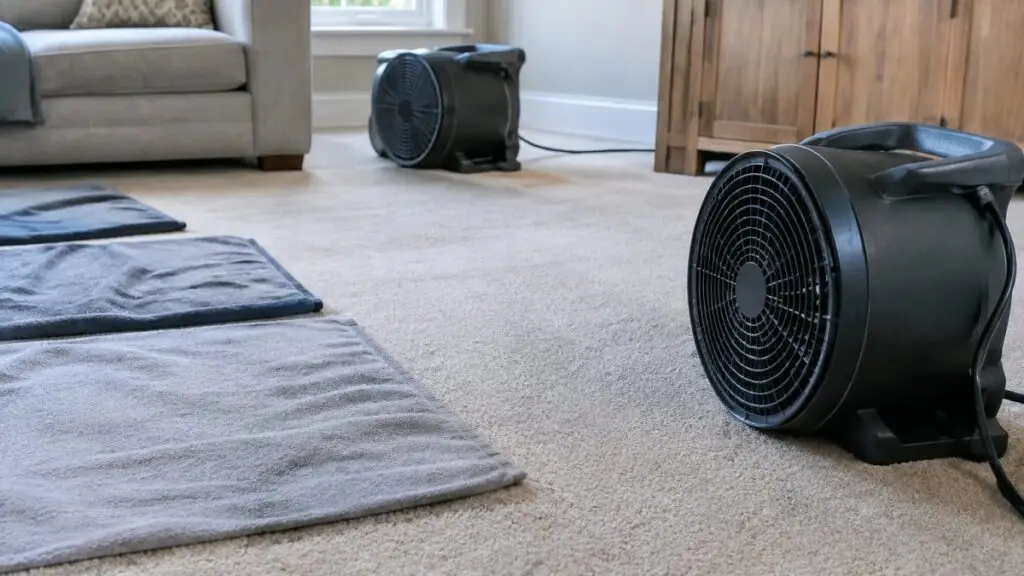
To get smell out of wet carpet, extract all standing water first with a wet-dry vacuum, then dry the carpet and padding completely using air movers and a dehumidifier before treating fibers with a pH-balanced or enzyme cleaner. Treating the surface before the moisture is gone only lets the odor return.
- Wear an N95 or P100 respirator, nitrile gloves, and eye protection when handling wet carpet.
- Lift a corner and press the padding with the back of your hand to check for trapped water.
- Open windows only if outdoor humidity is low, since Georgia summer air is often wetter than indoor air.
- Padding wet longer than 48 hours or wetted by gray or sewage water should be removed.
- Call for professional help if water has been sitting more than 24 hours or mold is suspected.
Table of Contents
- Start With Extraction, Not Air Freshener
- The Wet Carpet Smell Health Risk Most Homeowners Ignore
- How to Get Smell Out of Wet Carpet: Step by Step
- Signs of Mold Under Carpet You Can Check Yourself
- Carpet Padding Saturation: The Root Cause Hacks Miss
- When to Call for Emergency Water Damage Restoration
- Post-Cleaning Maintenance to Keep Odors From Returning
- Get a Free Assessment Before the Smell Settles In
- Frequently Asked Questions
Start With Extraction, Not Air Freshener
Most people reach for a spray can when the smell hits. That is the wrong first move.
Wet carpet holds moisture deep in the backing and padding. Until that water is physically removed, odor keeps regenerating.
In Decatur and DeKalb County, a common pattern is that someone sprays, the room smells fine for a day, then the musty odor returns worse.
Why the Smell Comes Back
Odor returns because moisture stays trapped where air cannot reach it. Carpet fibers dry fast on top. The padding below holds water like a sponge.
Bacteria and mold spores feed on that dampness, releasing new odor compounds every time humidity rises. Georgia’s summer air gives them plenty of help.
Break the cycle by drying the whole carpet assembly, not just the top.
The Wet Carpet Smell Health Risk Most Homeowners Ignore
A musty carpet is not just unpleasant. It can signal a wet carpet smell health risk that affects everyone in the home.
Damp carpet supports mold growth within a day or two. Mold spores then circulate through your HVAC system. People with allergies or asthma often notice symptoms before they notice the smell.
Watch for these warning signs:
- Stuffy nose or sneezing that improves when you leave the house
- Headaches in one particular room
- Worsening asthma symptoms
If anyone in the household has respiratory issues, treat a persistent musty smell as urgent. To check whether that smell points to a leak elsewhere, review these signs of hidden water damage.
How to Get Smell Out of Wet Carpet: Step by Step
Follow this sequence in order, treating fibers before the water is gone just resets the clock on the smell.
Step 1: Stop the water source. Fix the leak or shut off the supply before anything else.
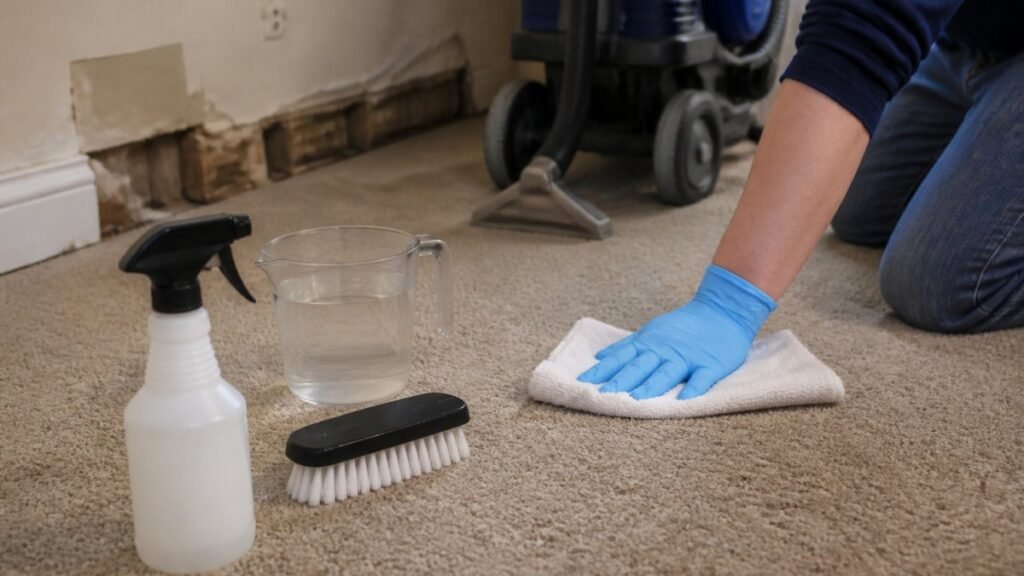
Step 2: Protect yourself. Wear an N95 or P100 respirator, nitrile gloves, and eye protection.
Step 3: Extract standing water. Use a wet-dry vacuum with a wide nozzle and make slow, overlapping passes. If the water is deep, has been sitting more than 24 hours, or is from a sewer or toilet backup, stop and call for emergency water removal, that is Category 3 water and not a DIY job.
Step 6: Treat the fibers, but only after they are dry. Apply a pH-balanced carpet cleaner or an enzyme product to the affected area.
Material-Specific Warnings Before You Treat
Not every carpet tolerates the same treatment. Test any solution on a hidden scrap first, and match your approach to the fiber:
- Synthetic (nylon, polyester, olefin): The most forgiving. Most pH-balanced cleaners and diluted enzyme products are fine. Avoid high-pH cleaners on wool blends and never use bleach.
- Wool: Sensitive to alkaline cleaners and heat. Use a wool-safe, neutral-pH cleaner, keep water cool, and do not scrub aggressively, wool felts. Dilute vinegar heavily.
- Silk and viscose/rayon area rugs: The most fragile. Water alone can cause shrinkage, watermarking, or pile distortion. Do not soak, and do not apply vinegar, hydrogen peroxide, or enzyme products; these need professional handling.
Baking Soda and Vinegar: What Actually Works
Baking soda absorbs odor and moisture from carpet fibers. Sprinkle it generously, let it sit for several hours, then vacuum thoroughly.
White vinegar can help with surface odor.
But here is the limit most guides skip: vinegar and baking soda treat surface odor only. They do nothing for saturated padding.
For small spot treatments, a diluted hydrogen peroxide solution can help with organic stains.
Enzyme Cleaners and Odor Neutralizers
Enzyme-based cleaners break down the organic matter that bacteria feed on.
How to use them well:
- Clean the area first so the enzyme can reach the source
- Apply and let it dwell per the label
- Keep the area damp so the enzymes stay active
Odor neutralizers bind to odor molecules rather than covering them. Look for products labeled for carpet use and follow dwell times.
Watch out: mixing cleaners, especially bleach with ammonia-based products or vinegar with hydrogen peroxide, can produce toxic gas.
Here is the order to work in, from stopping the water to confirming everything is dry.
| Step | What to do | Key detail |
|---|---|---|
| 1 | Stop the water source | Shut the valve; check the fitting, not just the pipe |
| 2 | Protect yourself | N95 or P100 respirator, nitrile gloves, eye protection |
| 3 | Extract standing water | Wet-dry vacuum, slow overlapping passes, empty tank often |
| 4 | Pull up carpet edge, check padding | Press padding with back of hand for water |
| 5 | Dry with air movement and dehumidification | Air movers plus refrigerant or desiccant dehumidifier, run continuously |
| 6 | Treat the fibers once dry | pH-balanced carpet cleaner or enzyme product |
| 7 | Confirm carpet and subfloor are dry | Dry paper towel test; check backing for discoloration |
Signs of Mold Under Carpet You Can Check Yourself
Mold under carpet often hides until it has spread. These signs are worth checking yourself before you assume the carpet is fine.
- A musty smell that returns within hours of cleaning
- Dark or greenish discoloration on the carpet backing
- Visible fuzz or spotting at the edges near walls
Small surface patches under about 10 square feet can sometimes be handled with careful cleaning. For a safe, step-by-step approach, see this mold removal guide. Hidden mold, mold on the padding, or anything larger needs professional help. A professional can advise on safe steps and when to stop.
Carpet Padding Saturation: The Root Cause Hacks Miss
Here is what most cleaning hacks miss: the padding is the problem. Carpet padding is a dense foam layer, usually rebond, prime polyurethane, or frothed foam, that soaks up water and holds it far longer than the carpet above.
How Water Moves Through Padding
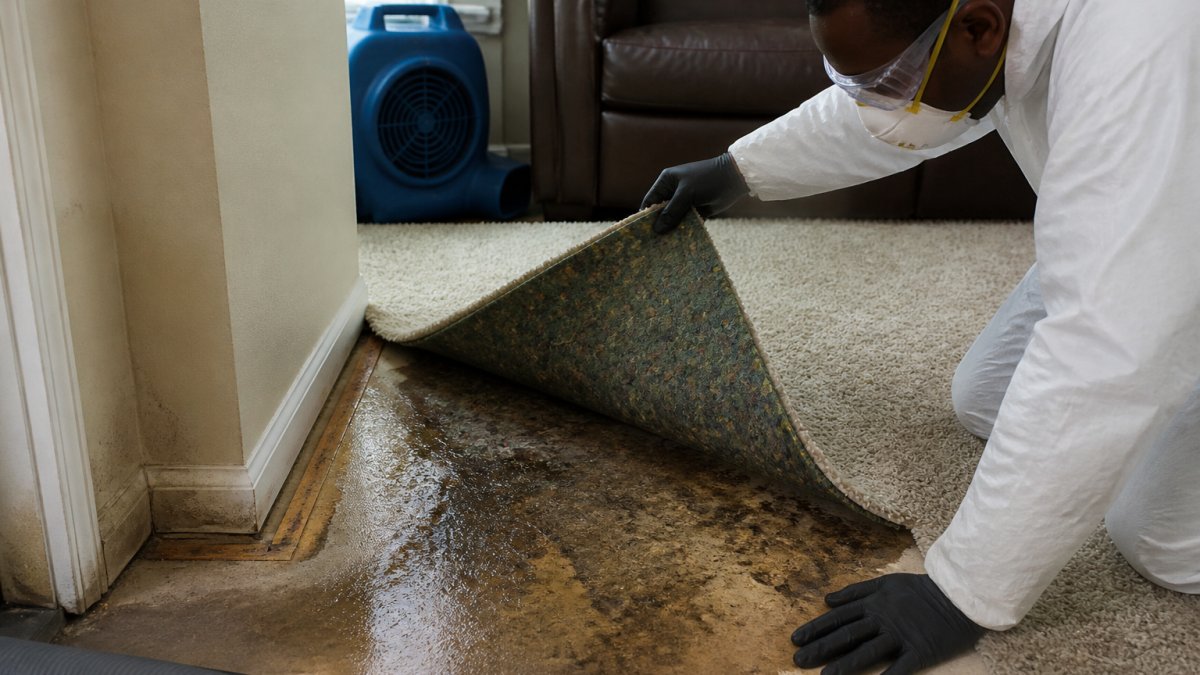
Water does not stay where it spilled. It wicks sideways and downward through the padding by capillary action, so the wet footprint under the carpet is almost always larger than the visible stain.
That trapped moisture feeds microbial growth and keeps odor coming back. In Georgia’s humid months the padding may never dry on its own, and in older Atlanta-area homes with crawl spaces, moisture can rise from below, wetting the padding from both sides.
Signs the padding is saturated:
- A squishy feel when you press down, or water rising around your fingers
- Discolored padding visible at the edges or at a pulled-back corner
- Odor that gets stronger near walls, where padding meets the tack strip
Can Saturated Padding Be Dried in Place?
Sometimes, but the window is narrow. Padding wet for less than about 24 hours, in a small area, with clean Category 1 water (such as a supply-line leak), may sometimes be dried in place with air movement and dehumidification.
Padding wet longer than 48 hours, saturated across a room, wetted by Category 2 (gray water, such as a washing machine discharge) or Category 3 (sewage or toilet backup) water, or showing any discoloration or musty odor should be removed.
What Removal and Replacement Actually Involves
When padding has to come out, the sequence is: cut and lift the carpet, bag and remove the saturated padding, dry the subfloor and carpet backing completely, then install new padding and re-stretch the carpet.
This is the step hacks skip, and why the smell keeps returning.
Watch out: if the water came from a sewer backup or toilet overflow, do not handle the padding yourself.
When to Call for Emergency Water Damage Restoration
Call for professional help when the water source is unclear, the area is large, or the smell persists after proper drying. These emergency water damage restoration steps show what the pros do and when DIY stops being safe.
Emergency water damage restoration is the right call in these situations:
- Water has been sitting more than 24 hours
- The water is from a sewer or toilet backup
- Padding is saturated across a room
- Mold is visible or suspected under the carpet
Our IICRC-certified technicians respond 24/7 and are on site within one hour across metro Atlanta, including DeKalb, Clayton, Cobb, and Henry counties. We handle water damage restoration, and we bill insurance directly.
Watch out: if you smell sewage or see dark water, do not touch it. Category 3 water carries serious health risks and needs professional handling.
Post-Cleaning Maintenance to Keep Odors From Returning
Drying is not the finish line. Keeping the carpet dry afterward is what keeps odor away.
- Run a dehumidifier during humid Georgia months
- Keep indoor humidity in check with a hygrometer
- Fix small leaks before they soak the padding
- Vacuum regularly to lift damp soil from fibers
Older Atlanta-area homes with crawl spaces are especially prone to dampness rising into floors. After summer storms or winter pipe freezes, check carpet edges for dampness early.
Get a Free Assessment Before the Smell Settles In
A musty smell that keeps coming back is telling you something. The water is still there, and it is likely in the padding or subfloor where sprays cannot reach.
Aquaflame Restores It offers free damage assessments across DeKalb, Clayton, Cobb, and Henry counties. See our water damage restoration in Decatur, GA for contact details and to book your assessment.
For related reading, the IICRC’s standards for water damage restoration explain how professional drying is measured, and the EPA’s mold guidance covers when mold becomes a health concern.
Frequently Asked Questions
What kills wet carpet smell?
The smell comes from moisture feeding bacteria and mold spores in the carpet fibers and padding, so killing the odor means removing the water first. Extract standing water with a wet-dry vacuum, run air movers and a dehumidifier until the carpet and padding are dry, then treat the area with a pH-balanced or enzyme-based cleaner. Baking soda and white vinegar can help with surface odor, but they will not fix a soaked pad. If the musty smell lingers after 24 to 48 hours of drying, the padding is likely still wet.
How long does it take for wet carpet smell to go away?
Most light dampness odors fade within 24 to 48 hours once the carpet is fully dry and air circulation is restored. A musty smell that lasts longer usually means moisture is trapped in the carpet padding or subfloor. Georgia humidity slows evaporation, so metro Atlanta homes often need dehumidifiers running longer than expected. If the odor is still there after two days of active drying, treat it as a sign of hidden moisture and get the padding checked.
When does a wet carpet smell indicate mold growth?
A musty, earthy smell combined with visible dark spots, discolored carpet backing, or a damp feel is a strong sign of mold under carpet. Mold spores can start colonizing damp materials within 24 to 48 hours. Pull back a corner and check the padding and subfloor. If you find mold over roughly 10 square feet, or it is hidden under the carpet, call a professional. Small surface spots on a dry carpet can sometimes be cleaned, but hidden growth needs proper remediation.
Can I leave baking soda on wet carpet overnight?
Baking soda absorbs odor and some surface moisture, but leaving it on a soaked carpet overnight can turn it into a paste that pushes moisture deeper into the fibers and backing. Vacuum up as much water as possible first, apply a thin layer of baking soda, and let it sit only until the carpet feels dry, usually a few hours. Vacuum thoroughly afterward. For a carpet that is still wet to the touch, extraction and airflow matter far more than any powder.
Call Aquaflame Restores It at 678-379-8000 for a free assessment. We will find the moisture source, dry it properly, and stop the smell at the cause instead of covering it up.