Last Updated: November 3, 2026
Quick Summary
To sanitize carpet after a water leak, stop the source, identify the water category, and extract standing water before contamination spreads. Match your sanitizer to the fiber type, then dry the carpet and padding fast with air movers and a dehumidifier. Replace padding that was wet more than about 24 hours or soaked by Category 2 or 3 water.
- Category 1 leaks can turn into Category 2 within a day or two in warm, damp Georgia humidity.
- Never run a wet-dry vacuum over Category 3 sewage water because it aerosolizes pathogens.
- Mix 1 part white vinegar to 1 part water, let it dwell about 10 minutes, then blot and extract.
- Baking soda absorbs odor and surface moisture but does nothing to microbes in the backing or pad.
- Call a professional when the wet area is larger than about 10 square feet or mold is visible.
Table of Contents
- Immediate Steps to Sanitize Carpet After a Water Leak
- How to Dry Wet Carpet Fast Before Mold Sets In
- Extracting Standing Water and Cleaning Carpet Fibers
- Signs of Mold Under Carpet and When to Call a Professional
- Schedule a Free Damage Assessment in Metro Atlanta
- Frequently Asked Questions
Immediate Steps to Sanitize Carpet After a Water Leak
The first hour after a water leak decides whether your carpet survives. To sanitize carpet after a water leak, stop the water, identify what kind of water soaked the carpet, and start drying before contamination spreads. A slow supply line drip or a burst pipe can go unnoticed overnight, and by morning the padding may already be soaked. By then the padding is soaked and the smell has started.
Here is your first-hour checklist:
- Shut off the water at the valve or call a plumber for a burst line
- Kill power to any room with standing water near outlets
- Photograph everything before you move it
Stop the source and check the water category
Water type is the single most important detail in this whole process. It determines whether you clean the carpet or replace it.
| Category | Source | Carpet Outcome |
|---|---|---|
| Category 1 (clean) | Supply line, rain through a failed seal, water heater | Usually salvageable if dried fast |
| Category 2 (gray) | Washing machine overflow, toilet with urine only, aquarium | Needs sanitizing; padding often goes |
| Category 3 (black) | Sewage backup, floodwater, long-standing water | Carpet and padding usually must go |
Georgia humidity works against you here. A Category 1 leak in July can turn into Category 2 within a day or two as bacteria multiply in warm, damp fibers.
Watch out: never run a wet-dry vacuum or shop vac over Category 3 water. Sewage contamination carries pathogens, and a household vacuum just aerosolizes them. For sewage-affected carpet, follow how to clean carpet after a sewage backup safely rather than improvising.
How to Dry Wet Carpet Fast Before Mold Sets In
Mold needs moisture, warmth, and organic material. Wet carpet padding is all three at once, and Georgia humidity in July and August supplies the warmth for free. Drying fast is how you win, but it is a sequence, not just a fan pointed at the carpet, and the padding decision sits in the middle of it. For the full emergency water damage restoration steps, from extraction through sanitization and mold prevention, follow the sequence in order.
The drying sequence that actually works
- Extract before you move air. A wet-dry vacuum or rented extractor in overlapping passes pulls water out of the fibers and backing. Air movers on a soaked carpet just push humidity around the room.
- Lift the carpet off the tack strip. Pull the carpet up along one wall and separate it from the padding. Air cannot reach the backing through saturated pad, and the pad is where most of the water sits.
- Decide the pad now, not later. This is the step most homeowners skip. See the padding test below.
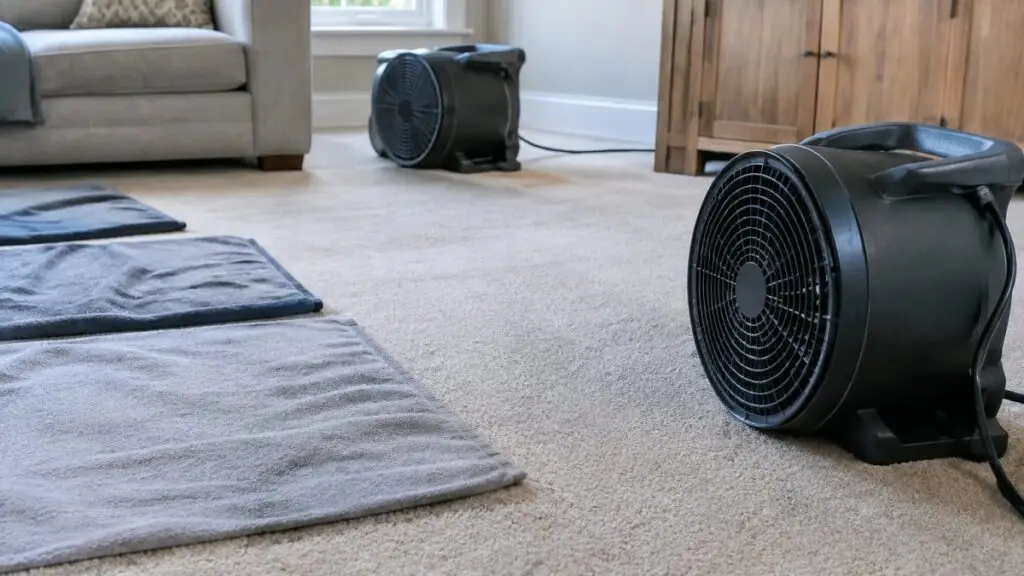
- Position air movers along the wall. Angle industrial fans so air travels under the lifted carpet edge and across the backing. A wet 12×15 room typically needs several air movers plus a dehumidifier to dry in two to three days.
- Add a dehumidifier and close the room. A dehumidifier pulls vapor out of the air so the carpet keeps releasing it. In an Atlanta basement or a crawl-space-adjacent first floor, ambient humidity can stall drying without one.
- Verify with a moisture meter, not your hand. Carpet that feels dry can still read 20%+ moisture at the backing and subfloor. Treat carpet and pad as dry when readings are within a few points of a dry reference sample in the same room.
The padding test: dry in place or replace
Padding is a sponge, and a saturated sponge under an impermeable carpet backing does not dry in place in a humid climate. Use this test before you commit to drying:
- Dry in place only if the water was Category 1, the pad is thin (typically 6 lb or less), you started extraction within a few hours, and the pad still springs back when you pinch it.
- Replace if the water was Category 2 or 3, if the pad has been wet more than about 24 hours, if it crumbles or delaminates when pinched, or if it has a musty smell when you lift the carpet.
- Check the subfloor while the pad is up. Wet plywood or concrete under carpet stays damp long after the surface feels dry, and a subfloor that never dries is why odors return weeks later.
Watch out: drying the carpet beautifully and leaving soggy pad underneath is the most common reason a musty smell comes back after a leak. If you are unsure whether the pad is salvageable, replace it.
How long drying actually takes
Drying time depends on how wet the carpet got, pad thickness, and how fast you started. Thin carpet in a dry, conditioned room may dry in a day, while plush carpet over thick pad in a humid Georgia basement can take several days. If the carpet has been wet more than a day or two, or the wet area is larger than about 10 square feet, professional equipment and moisture readings are recommended.
Extracting Standing Water and Cleaning Carpet Fibers
Standing water comes out before anything else. Skip this step and every product you apply just sits on top of a soaked sponge.
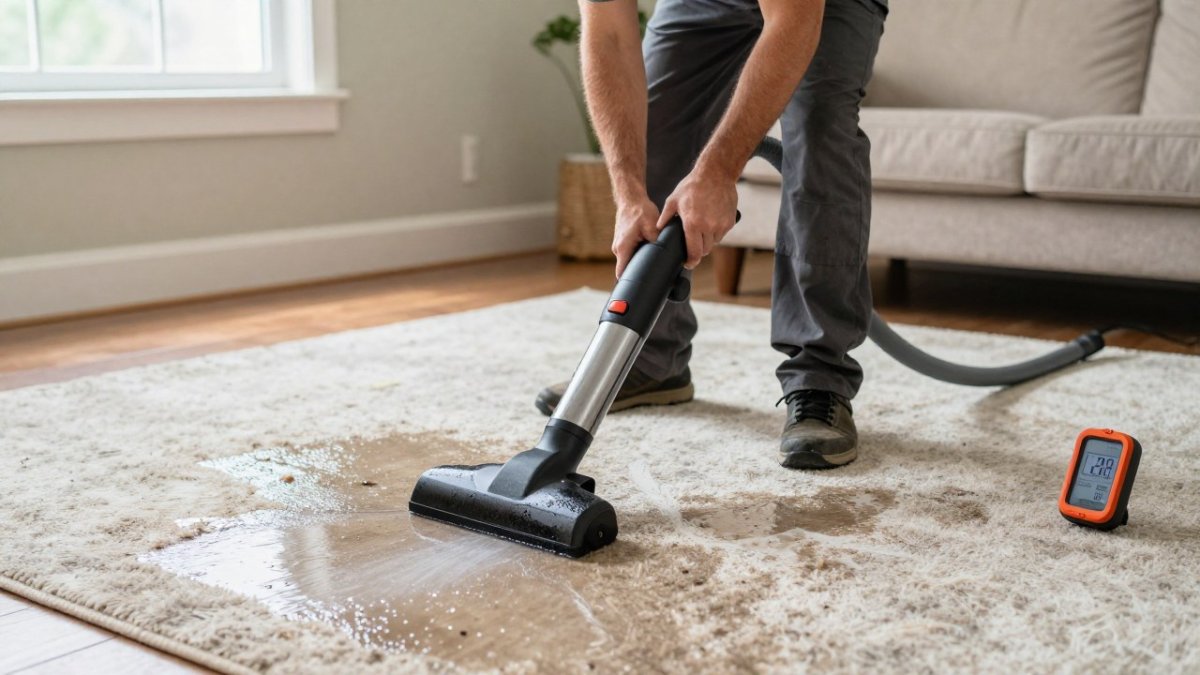
Then clean the fibers themselves. Dirt, silt, and organic matter get trapped in the carpet backing and feed mildew.
(/how-to-get-smell-out-of-wet-carpet/), tackle the source before it reaches the rest of the room.
Signs of Mold Under Carpet and When to Call a Professional
Signs of mold under carpet include a musty odor that will not fade, dark or greenish patches at the edges and under furniture, visible fuzz on the backing, and allergy symptoms that worsen in one room. If you are unsure what you are seeing, this guide on mold vs mildew in Atlanta homes helps you tell them apart before deciding whether to call a pro.
Some jobs are simply too big for a shop vac and a box fan. Call a professional when:
- The wet area is larger than about 10 square feet
- The water was Category 3 or came from a sewage backup
- Mold is visible or you smell it after drying
For confirmed mold behind or under carpet, IICRC-certified technicians can test, contain, and treat the area properly.
Schedule a Free Damage Assessment in Metro Atlanta
Every hour counts when carpet and padding are wet, and faster response with the right equipment can help limit damage. We serve homeowners and property managers across metro Atlanta, including Decatur, DeKalb, Clayton, Cobb, and Henry counties.
What you get from us:
- 24/7 emergency response, with a technician on site within one hour
- IICRC-certified technicians
- Free damage assessments
If you are in Decatur or nearby and want a local team to take over, call 678-379-8000 to book a free assessment.
Frequently Asked Questions
How long does carpet take to dry after a water leak?
Most carpet dries in 24 to 72 hours with proper air circulation, dehumidifiers, and industrial fans. Georgia humidity can extend drying time, so run a dehumidifier and keep windows closed. If the carpet padding is soaked, it often needs replacement because it traps moisture. Check moisture content with a hygrometer before replacing furniture. If the carpet stays damp beyond 72 hours, mold growth prevention becomes urgent, and you should call a professional for a free assessment.
Can I sanitize carpet myself after a water leak?
You can sanitize small areas yourself if the water was clean and the affected area is under about 10 square feet. Use a wet-dry vacuum to extract standing water, then apply a diluted white vinegar solution or a mild antimicrobial, and dry thoroughly with fans and a dehumidifier. For larger areas, sewage contamination, or any signs of mold under carpet, call a professional. IICRC-certified technicians can help sanitize carpet safely.
Will Lysol sanitize carpet?
Lysol and similar household disinfectants are not designed for carpet fibers and can leave residue that attracts dirt or irritates skin. They may kill surface bacteria but do not penetrate carpet backing or padding where moisture and mold spores hide. For water damage carpet smell and mildew odor, use a targeted antimicrobial or diluted white vinegar, then dry completely. If odor persists after drying, hidden mold may be present, and professional remediation is the safer next step.
What are the signs of mold under carpet?
Look for a musty mildew odor, discoloration or dark spots on the carpet backing, visible fuzz or spore growth near baseboards, and worsening allergy symptoms in the room. Pull back a corner of the carpet if it lifts easily; mold under carpet often appears as black or green patches on the padding. Any mold larger than about 10 square feet or hidden under carpet requires professional remediation, especially in humid metro Atlanta homes with crawl spaces.
A wet carpet is a countdown, and mold does not wait for a convenient time. If the leak is bigger than a small spot, or the smell is already there, call Aquaflame Restores It at 678-379-8000 for a free assessment. We respond 24/7, arrive within one hour, and handle the drying, sanitizing, and insurance paperwork from start to finish.