Table of Contents
- Understanding Water Removal and Water Damage Categories
- Emergency Water Extraction: When Speed Matters Most
- Water Damage Restoration: From Extraction to Recovery
- Basement Water Removal: Specific Challenges and Solutions
- Water Mitigation Strategies to Prevent Future Damage
- DIY Water Removal vs. Professional Services: Safety and Effectiveness
- Professional Water Removal Equipment and Techniques
- Conclusion: Protecting Your Property from Water Damage
Water Removal: A Complete Guide to Emergency Extraction
Last Updated: July 25, 2026
Water damage strikes without warning. A burst pipe, heavy flooding, or failed sump pump can turn your home or business into a crisis zone within hours. Understanding water removal and the extraction process is the difference between manageable recovery and catastrophic structural damage.
At Aquaflame Restores it, we respond to water emergencies across metro Atlanta 24/7. Speed matters more than almost anything else, the first 48 hours determine whether your property recovers fully or develops mold, rot, and electrical hazards that cost tens of thousands more to fix.
Understanding Water Damage and Water Damage Categories
Water damage requires different responses based on contamination level. Category 1 water comes from clean sources: burst supply lines, rainwater, or melted ice. Category 2 water contains contaminants: washing machine overflow or toilet backup. Category 3 water is sewage or heavily contaminated water from flooding. This classification determines which equipment gets deployed, how quickly work must proceed, and what safety precautions apply.
Category 1 allows for careful work over 24-48 hours. Category 2 requires action within 24 hours. Category 3 demands immediate professional response, waiting even a few hours dramatically increases health risks and structural damage. Most homeowners can’t distinguish between categories visually, which is why professional assessment within the first hour is critical.
Emergency Water Extraction: When Speed Matters Most
Water spreads horizontally and vertically faster than most expect, wicking into walls and pooling in low points within 30 minutes.
Professional water removal begins with assessment. Technicians identify the water source, determine the category, measure standing water depth, and locate secondary damage zones, areas that appear dry but contain trapped moisture. This 15-30 minute assessment determines the entire extraction strategy.
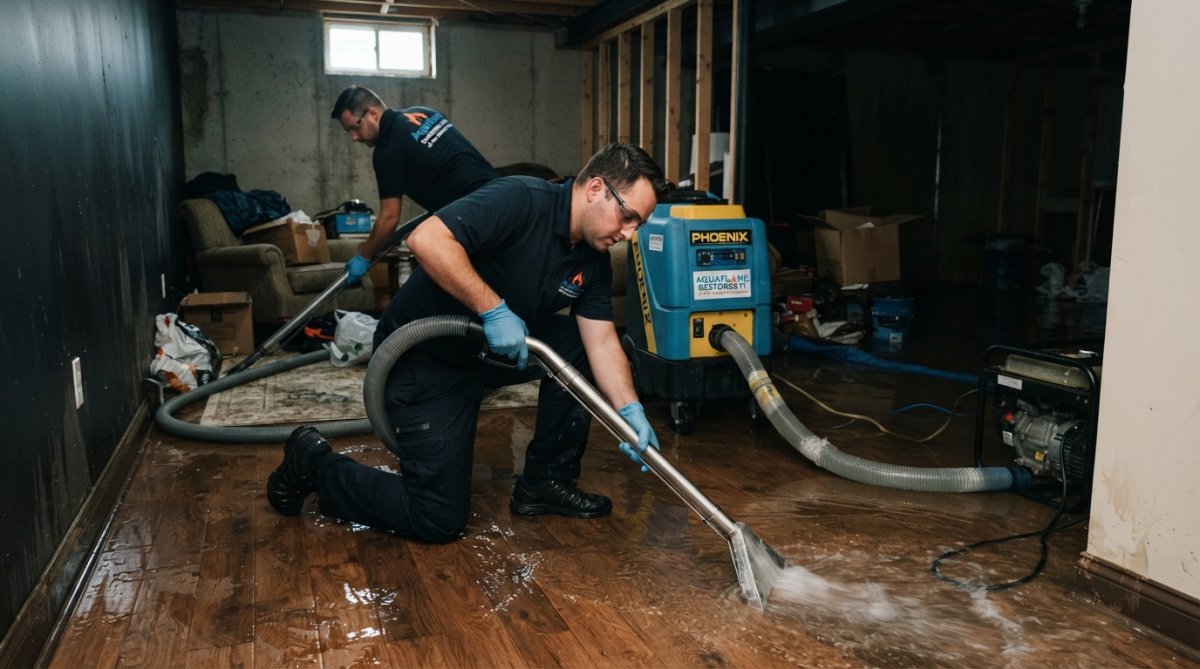
Extraction uses a hierarchy of equipment. For small amounts of standing water (under 2 inches), submersible pumps move water to the exterior. For deeper water, truck-mounted vacuum systems extract water while removing debris and contaminated materials, moving 10,000+ gallons per hour.
The real challenge is finding water trapped in walls, under flooring, and within structural cavities. Moisture detection equipment identifies water pockets invisible to the naked eye. Without this step, hidden moisture becomes mold within 48-72 hours.
According to IICRC water damage standards, water removal should begin within the first hour for Category 1 damage and immediately for Categories 2 and 3. Every hour of delay increases the likelihood of permanent damage and mold colonization. This is why 24/7 emergency response is standard in professional restoration.
Water Damage Restoration: From Extraction to Recovery
Extraction is step one. Restoration is the entire process that follows.
After water removal, industrial dehumidifiers and air movers run continuously for 7-14 days, pulling moisture from materials and circulating air to prevent mold growth. Moisture meters track progress, drying is complete when moisture levels return to baseline (typically 12-15% for wood, 2-3% for concrete).
Contaminated materials are removed in parallel. Drywall below the waterline typically requires replacement. Insulation that contacted water loses effectiveness and becomes a mold vector. Flooring may need replacement depending on water category and saturation duration.
Structural inspection evaluates framing, subfloors, and foundation integrity for damage requiring repair. Water weakens wood and corrodes metal, creating safety hazards invisible until inspection.
Finally, reconstruction begins: new drywall, flooring, paint, and restoration of damaged areas. Full restoration takes 2-4 weeks for moderate water damage.
Post-Water Damage Recovery Checklist
After professional extraction is complete, verify these critical elements:
- Moisture readings confirm all materials are at baseline (drywall under 17%, subfloor under 15%, concrete under 3%)
- All contaminated materials (drywall, insulation, subflooring) have been removed and replaced
- HVAC system has been professionally cleaned and tested
- Electrical systems have been inspected by a licensed electrician; water-damaged outlets or panels are replaced
- Foundation and framing have been inspected for structural damage; repairs are documented
- Mold clearance testing shows no elevated spore counts
- Insurance claim documentation is complete with before/after photos and detailed scope of work
- All work is permitted and inspected by local building authority where required
- HVAC filters are replaced; air quality is tested if Category 2 or 3 water was involved
This checklist prevents the common scenario where extraction is completed and mold appears 6-8 weeks later because hidden moisture remained.
Basement Water Removal: Specific Challenges and Solutions
Basements are where water removal becomes most complex. Gravity pulls water downward, making basements the collection point. Basements also have sump pump systems, foundation walls, and often poor drainage that complicate extraction and drying.
Standing water in basements often exceeds 12-24 inches, requiring industrial pumps rather than portable wet vacuums. Truck-mounted extraction systems capable of moving thousands of gallons per hour are necessary to meet the critical 24-48 hour window.
Foundation walls present a secondary challenge. Concrete and masonry wick water upward through capillary action, saturating walls 3-4 feet above the water line. This creates massive mold risk if not properly dried and dehumidified.
Sump pump systems often fail during heavy rainfall. Professional restoration requires assessment of the sump pump system itself, pump replacement, backup power installation, or improved drainage design to prevent future failures.
Pumps, Vacuums, and Drainage Systems for Basement Extraction
Submersible pumps work best for moderate standing water (under 18 inches), with flow rates of 2,000-5,000 gallons per hour.
Truck-mounted vacuum systems handle high-volume extraction, combining suction power with debris removal. Flow rates reach 10,000+ gallons per hour, reducing extraction time from days to hours.
Industrial dehumidifiers remove 100-150 pints of moisture per day. Basements typically require 3-5 units running continuously for 7-14 days.
Air movers (high-velocity fans) circulate air across wet surfaces at 3,500-4,000 CFM, accelerating evaporation and preventing moisture re-settling.
Drainage improvements prevent future flooding. French drains, exterior perimeter drainage, or interior drainage channels redirect water away from the foundation. Sump pump upgrades with backup power ensure future heavy rain doesn’t overwhelm the system.
Water Mitigation Strategies to Prevent Future Damage
Prevention is always cheaper than restoration.
Exterior grading is the first line of defense. Soil should slope away from the foundation at least 6-8 feet, with a minimum 1-inch drop per foot.
Gutters and downspouts must discharge water at least 4-6 feet from the foundation. Many homes dump water directly against the house, creating an artificial water source that guarantees basement moisture.
Sump pump systems should be installed in any basement below the water table. Backup power (battery or generator) ensures the pump works during power outages, when heavy rain is most likely.
Waterproofing treatments on foundation walls reduce capillary wicking. Interior sealants prevent water from traveling up walls; exterior waterproofing prevents water from entering in the first place.
Device Maintenance and Moisture Prevention
Washing machines, dishwashers, and refrigerators are common water damage sources. Supply line hoses should be inspected annually for cracks or bulges. Hoses over 5 years old should be replaced with stainless steel braided hoses.
HVAC systems require annual inspection and filter replacement. Professional maintenance includes inspection of ductwork for leaks and proper condensation drainage.
Humidity control prevents moisture accumulation. Basements should maintain 30-50% relative humidity. Dehumidifiers during humid months prevent slow moisture accumulation that leads to mold.
Roof maintenance prevents water intrusion from above. Annual inspections identify missing shingles, damaged flashing, or deteriorating seals before they become leak sources.
DIY Water Removal vs. Professional Services: Safety and Effectiveness
Small water incidents (under 100 gallons from a single source, clearly Category 1) can be handled with portable wet vacuums and fans. Anything larger requires professional assessment and equipment.
Portable wet vacuums move 50-200 gallons per hour. A basement with 500 gallons takes 5-10 hours of continuous operation. By hour 3, mold is already colonizing damp materials. By hour 6, damage is likely permanent.
Professional extraction systems move 10,000+ gallons per hour. The same 500-gallon basement is dry in 15-30 minutes. This time difference is the difference between recovery and permanent damage.
DIY efforts also miss hidden water. Moisture detection equipment identifies water trapped in walls, under flooring, and in structural cavities. Without this detection, hidden water becomes mold within 48-72 hours. Mold remediation costs 5-10 times more than proper initial extraction.
Hardware-Specific Safety Warnings for DIY Attempts
Electrical danger is immediate. Standing water conducts electricity. Turn off power to affected areas at the breaker before entering water. If water is deep or extensive, call a professional.
Contaminated water presents biological hazards. Category 2 and 3 water contains bacteria, viruses, and harmful pathogens. Wear gloves, boots, and respiratory protection if water contact is necessary.
Structural collapse can occur if water has weakened floors or support beams. Wet wood loses strength rapidly. Professional assessment determines structural safety before any work proceeds.
Mold exposure occurs when disturbing water-damaged materials without containment. Removing these materials without containment spreads spores throughout the space, contaminating unaffected areas.
Improper drying leaves moisture in cavities and structural materials. Without professional moisture detection and monitoring, hidden moisture becomes mold.
Professional Water Removal Equipment and Techniques
Truck-mounted extraction systems combine powerful vacuum with drainage and filtration, extracting 10,000+ gallons per hour.
Moisture meters measure water content in materials. Professionals use pin-type meters that penetrate surfaces and non-invasive meters that detect moisture without damage.
Thermal imaging cameras detect moisture invisible to the naked eye, revealing where water is hidden in walls, under flooring, and in structural cavities.
Industrial dehumidifiers (150+ pints per day) remove moisture from the air; air movers circulate that dry air across wet surfaces, drying materials in days rather than weeks.
Advanced Extraction Methods: Beyond Basic Pumps and Vacuums
Injectidry systems inject heated, dry air directly into wall cavities and structural spaces, accelerating drying of unreachable materials.
Structural drying uses targeted equipment placement to dry framing, subfloors, and foundation walls from the inside out.
Containment and negative pressure systems isolate contaminated areas during removal of water-damaged materials, preventing mold spores from spreading.
Category 2 and 3 water requires antimicrobial treatments to prevent bacterial growth and odor. HEPA filtration during material removal prevents spore dispersal. Decontamination of HVAC systems ensures bacteria and mold aren’t spread through ductwork.
Documentation is critical. Professional restoration companies photograph all damage, document moisture readings, track drying progress, and provide detailed reports for insurance claims.
Water removal isn’t a DIY project for anything beyond minor incidents. The consequences of incomplete extraction, hidden moisture, mold, structural damage, and health hazards far exceed the cost of professional response. Aquaflame Restores it offers 24/7 emergency water removal with a 30-minute arrival guarantee across metro Atlanta. Our IICRC-trained technicians handle everything from extraction through complete reconstruction, managing your insurance claim directly. When water damage strikes, speed and expertise determine whether your property recovers fully or suffers permanent damage. Contact Aquaflame Restores it immediately, the first hour is critical.
Frequently Asked Questions
What's the difference between water removal and water damage restoration?
Water removal is the immediate extraction of standing water using pumps, vacuums, and drainage systems. Water damage restoration encompasses the entire process, removal, drying, dehumidification, repairs, and recovery. Restoration addresses structural damage, mold prevention, and rebuilding, while removal focuses on eliminating the liquid itself. Both are essential for full property recovery.
When should I call a professional for water removal instead of handling it myself?
Call professionals immediately if water covers more than a few square feet, involves contaminated water (sewage, floodwater), affects electrical systems, or threatens structural integrity. Professional water mitigation teams have industrial-grade pumps, dehumidifiers, and moisture detection equipment that DIY approaches cannot match. They also document damage for insurance claims and prevent mold growth through proper drying protocols.
How long does professional water removal and restoration take?
Initial emergency water extraction typically takes 24-48 hours, depending on water volume and property size. Full water damage restoration, including drying, dehumidification, and repairs, can take 1-3 weeks or longer for severe cases. The timeline depends on moisture levels, structural damage, and whether mold remediation is needed. Professional teams use moisture meters to confirm completion before restoration work begins.
Does homeowners insurance cover water removal and water damage restoration costs?
Coverage depends on the water source. Sudden, accidental events like burst pipes or storm damage are typically covered. However, gradual leaks, flooding from heavy rain, or sewage backup may not be covered under standard policies, flood insurance is separate. Professional restoration companies handle direct insurance billing and provide documentation for claims, but you should verify your policy limits and deductibles with your insurer before damage occurs.
This article was written using GrandRanker