Table of Contents
- What Is Fire Damage: Definition and Scope
- Types of Fire Damage: Heat, Smoke, Soot, and Water
- Immediate Steps After Fire Damage: Emergency Response
- Fire Damage Restoration Process: Step-by-Step
- Smoke Damage Cleanup: Addressing Volatile Organic Compounds
- Fire Damage Insurance Claims: Documentation and Coverage
- Long-Term Maintenance After Fire Damage Recovery
- Conclusion
Last Updated: July 31, 2026
When fire strikes your home, the destruction extends far beyond what flames consume. Fire damage affects every surface, system, and material in its path, from visible charring to hidden structural compromise that threatens your home’s integrity for years. This guide from Aquaflame Restores it covers the complete recovery process, from immediate emergency response through long-term restoration, so you understand exactly what your property needs and how to navigate insurance claims while protecting your family’s health.
What Is Fire Damage: Definition and Scope
Fire damage is the destruction of property caused by heat, flames, smoke, soot, and the water used to suppress fires. It encompasses thermal damage from extreme heat exposure, corrosive byproducts that deteriorate materials long after flames are extinguished, chemical residues that compromise air quality, and structural integrity loss that may not be visible to the untrained eye.
Fire damage involves four distinct categories: thermal damage from direct heat exposure causing charring and weakening of structural components; smoke damage traveling through air systems and embedding into materials; soot residue containing volatile organic compounds that pose health risks; and water damage from fire suppression that triggers mold growth if not properly mitigated. Each damage type requires different remediation approaches. A professional assessment identifies which types affected your specific property, determining the restoration sequence and which specialists you’ll need.
Thermal Damage and Heat Exposure
Heat exposure causes immediate and permanent changes to building materials. Wood loses structural strength at temperatures above 300 degrees Fahrenheit, metal warps and loses load-bearing capacity, concrete develops internal stress fractures, and drywall becomes brittle and fails. Heat travels through walls, attics, and crawlspaces in ways homeowners can’t see. A room that didn’t burn directly may have suffered severe heat exposure in wall cavities, compromising the structural systems that hold your home together. Professional structural assessment after any fire is non-negotiable.
Smoke Damage and Soot Residue
Smoke penetrates everywhere through HVAC systems, wall cavities, and insulation, coating every surface including areas you can’t see. Soot residue is particularly corrosive because it contains acidic compounds that continue degrading materials weeks after the fire ends. Smoke inhalation introduces volatile organic compounds and particulates into your respiratory system, and even after visible smoke clears, chemical residues remain in air ducts, on fabrics, and in materials. Professional decontamination removes these hazards.
Water Damage from Fire Suppression
Firefighting produces as much water damage as the fire itself. Sprinkler systems release thousands of gallons, fire hoses pour water through walls and floors, and water pools in basements and crawlspaces. This water accelerates deterioration and triggers mold growth within 24-48 hours if not properly mitigated. Water mitigation must happen immediately after fire suppression ends, with structural drying removing moisture from materials before mold establishes.
Types of Fire Damage: Heat, Smoke, Soot, and Water
Fire damage manifests in distinct physical forms, each requiring specific remediation.
Charring and Structural Integrity Loss
Charring is the visible blackening of wood and other materials exposed to direct flame. Charred wood has lost structural strength and cannot be simply painted over and reused. Structural integrity loss extends beyond charred areas, heat-weakened steel, concrete with internal fractures, and compromised load-bearing walls create safety hazards that may not be obvious. A wall may appear sound but have lost 40% of its load-bearing capacity. Structural assessment must come before any reconstruction work.
Corrosive Byproducts and Chemical Residues
Combustion produces corrosive byproducts that attack metals, concrete, and other materials long after the fire ends. Copper wiring corrodes, steel beams develop rust, and aluminum components deteriorate. The process accelerates in humid environments, which is why controlling moisture during restoration is critical. Chemical residues also contaminate air quality through volatile organic compounds that require professional decontamination to remove safely.
Hidden Structural Damage and Material Deterioration
The most dangerous fire damage is what you can’t see. Heat travels through wall cavities, weakening framing members and structural joints. Insulation absorbs heat and moisture, losing its thermal properties. What appears stable immediately after fire suppression may fail during reconstruction if hidden damage wasn’t identified and addressed.
Immediate Steps After Fire Damage: Emergency Response
The hours immediately after a fire determine your property’s recovery trajectory. Proper emergency response prevents secondary damage and protects your family’s safety.
Safety Hazards and Air Quality Assessment
Do not re-enter your home until fire officials declare it safe. Structural collapse, electrical hazards, and toxic air pose immediate risks. Once cleared by authorities, a professional assessment identifies remaining hazards before anyone lives there again. Air quality assessment is critical, smoke inhalation damages lungs even when you can’t see or smell smoke. Professional air quality testing measures volatile organic compounds and determines whether decontamination is necessary before occupancy.
Documenting Property Destruction for Insurance
Insurance claim documentation begins immediately. Photograph everything before any cleanup or removal occurs, documenting each room and the extent of destruction. Create a detailed inventory listing items destroyed or damaged with approximate values. Keep receipts for emergency response, temporary housing, meals, and replacement clothing, as these expenses are often recoverable. Contact your insurance company within 24 hours with your policy number, the date and time of the fire, and initial damage assessment. Having detailed documentation before the adjuster arrives strengthens your claim.
Fire Damage Restoration Process: Step-by-Step
Professional fire damage restoration follows a structured sequence. Understanding this process helps you know what to expect and why each step matters.
Structural Assessment and Hazard Mitigation
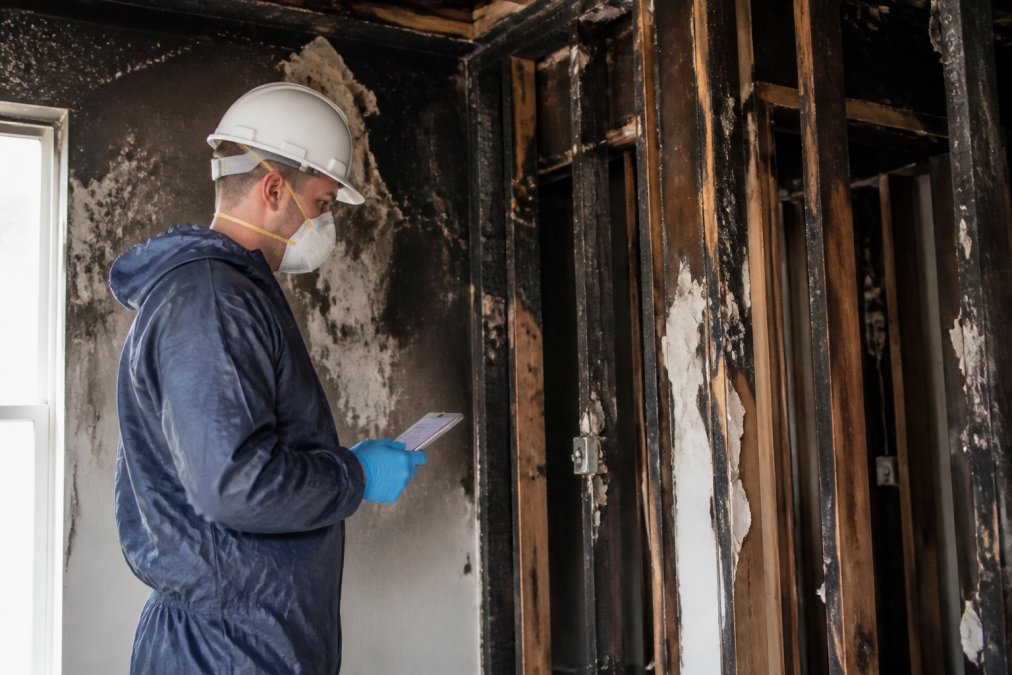
The restoration process begins with comprehensive structural assessment. Certified inspectors evaluate load-bearing walls, roofing systems, flooring integrity, and foundation stability, identifying heat-damaged materials and water-saturated structural members. Hazard mitigation addresses immediate safety concerns, including boarding up windows and doors, securing unstable structures, removing debris, and stabilizing the property against weather damage.
Water Mitigation and Deodorization
Water extraction removes standing water from the property. Structural drying follows, using dehumidifiers and air movers to remove moisture from walls, floors, and structural cavities over 3-7 days. Deodorization addresses smoke odor embedded in materials using thermal fogging, ozone treatment, or activated charcoal absorption to neutralize odor at the molecular level.
Ash Removal and Decontamination
Ash removal clears debris and fire residue using HEPA-filtered vacuum systems and proper disposal methods. Decontamination removes chemical residues and soot from surfaces using specialized cleaning solutions, with air ducts, HVAC systems, and interior surfaces receiving professional cleaning.
Reconstruction and Salvageable Items Recovery
Reconstruction replaces damaged structural components, drywall, flooring, and finishes. Salvageable items are professionally cleaned and restored where possible. Professional restoration teams coordinate reconstruction sequentially, with structural repairs first, followed by mechanical systems, then finishes.
| Restoration Phase | Duration | Key Activities | Expected Outcome |
|---|---|---|---|
| Assessment & Planning | 2-3 days | Structural inspection, hazard identification, insurance documentation | Clear understanding of damage scope and restoration sequence |
| Water Mitigation | 3-7 days | Water extraction, structural drying, dehumidification | Moisture removed from materials to prevent mold growth |
| Decontamination | 3-5 days | Ash removal, soot cleaning, deodorization, air quality restoration | Chemical residues eliminated, air quality restored |
| Reconstruction | 4-12 weeks | Structural repairs, system replacement, finishing work | Property restored to pre-fire condition |
Smoke Damage Cleanup: Addressing Volatile Organic Compounds
Smoke damage extends beyond visible soot. Volatile organic compounds, gaseous chemicals released during combustion, permeate materials and air systems, creating health risks that persist long after visible smoke clears.
Health and Toxicity Risks from Smoke Inhalation
Smoke inhalation introduces particulates and volatile organic compounds into the respiratory system. Short-term effects include coughing, throat irritation, and breathing difficulty. Long-term exposure increases risk of respiratory disease, cardiovascular problems, and cancer. Children, elderly family members, and people with existing respiratory conditions face elevated risk. Volatile organic compounds remain in your home’s air and materials even when you can’t smell smoke.
Professional Decontamination and Air Quality Restoration
Professional decontamination removes volatile organic compounds using thermal fogging, ozone treatment, or activated charcoal absorption. Air quality restoration includes HVAC system cleaning and replacement of air filters, with ductwork professionally cleaned to remove soot and chemical residues. Professional teams measure air quality before and after decontamination, providing documentation that your home is safe for occupancy.
Request air quality testing results in writing before returning to your home. This documentation protects your family and provides evidence for insurance purposes if health issues arise later.
Fire Damage Insurance Claims: Documentation and Coverage
Insurance claims for fire damage require detailed documentation and strategic communication with your insurer. Understanding the process helps you maximize recovery and avoid common mistakes.
What to Document and How to File
Document everything photographically before cleanup begins, taking photos of each room from multiple angles and individual items, especially high-value possessions. Create a written inventory listing items destroyed or damaged with descriptions and approximate values. Gather receipts, appraisals, and documentation of ownership for high-value items. Keep all receipts related to emergency response, temporary housing, meals, and replacement clothing. File your claim within the timeframe specified in your policy (typically within 30-60 days of the loss), providing your policy number, the date and time of the fire, and your initial damage assessment.
Working with Adjusters and Direct Insurance Billing
Your insurance company assigns an adjuster to inspect the property and determine coverage. Schedule the inspection once emergency response is complete and initial cleanup has begun. Direct insurance billing allows your restoration contractor to bill your insurance company directly, rather than requiring you to pay out of pocket and seek reimbursement.
Aquaflame Restores it handles direct insurance billing, managing communication with your adjuster and submitting documentation directly to your insurer. Their IICRC-trained technicians provide detailed estimates that insurance adjusters accept, and they coordinate the entire restoration process while managing insurance paperwork.
Direct insurance billing with your restoration contractor eliminates out-of-pocket costs and accelerates recovery. Verify that your contractor offers this service before signing an agreement.
Long-Term Maintenance After Fire Damage Recovery
Recovery doesn’t end when reconstruction is complete. Long-term monitoring prevents secondary damage and ensures your restored home remains safe and structurally sound.
Monitoring Structural Systems and Mold Prevention
After reconstruction, monitor your home’s structural systems for signs of problems. Check for new cracks in walls or ceilings and listen for unusual sounds, creaking, popping, or shifting noises, that suggest structural movement. Mold prevention requires ongoing moisture control through maintaining proper humidity levels (30-50%), ensuring gutters and downspouts direct water away from your foundation, and inspecting crawlspaces and attics periodically for moisture accumulation. Professional mold inspections annually during the first few years after fire damage catch problems early.
Professional Inspections and Clearance Documentation
Request a final inspection from your restoration contractor before occupying the property. This inspection verifies that all damage has been properly addressed, all systems function correctly, and the property is safe for occupancy. Keep all restoration documentation, including structural assessments, air quality reports, decontamination records, and reconstruction invoices. Professional inspections every 2-3 years during the first decade after fire damage provide early warning of problems.
Fire damage recovery is a complex process requiring expertise across multiple disciplines: structural engineering, hazard mitigation, decontamination, and reconstruction. Attempting to manage this process alone leads to incomplete restoration, missed hidden damage, and health risks that emerge months later. Aquaflame Restores it brings IICRC-trained technicians who handle every phase of fire damage restoration, from initial structural assessment through final reconstruction. Their 24/7 emergency response and 30-minute arrival guarantee mean that your property receives immediate professional attention when minutes matter most. With direct insurance billing and complete reconstruction services, Aquaflame Restores it eliminates the stress of coordinating multiple contractors and managing insurance claims. Contact their emergency line today to begin your property’s recovery.
Frequently Asked Questions
What are the different types of fire damage?
Fire damage includes thermal damage from direct heat exposure causing charring, smoke damage creating soot residue and volatile organic compounds, water damage from fire suppression systems, and corrosive byproducts that deteriorate materials. Each type requires different restoration approaches. Thermal damage affects structural integrity of walls and joints, while smoke damage penetrates deep into materials. Water mitigation prevents secondary mold growth. Professional assessment identifies all damage types to ensure complete restoration.
What should I do immediately after fire damage occurs?
First, ensure all occupants are safe and contact emergency services if needed. Evacuate and do not re-enter until authorities clear the structure. Document property destruction with photos and video for insurance claims before cleanup begins. Contact your insurance company within 24-48 hours. Call a professional restoration service for emergency response, they handle structural assessment, hazard mitigation, and water extraction from fire suppression. Do not attempt cleanup yourself due to health and safety hazards from smoke inhalation and chemical residues.
How does the fire damage restoration process work?
Professional fire damage restoration follows a structured process: emergency response and structural assessment, water mitigation from suppression systems, ash removal and decontamination, deodorization to address volatile organic compounds, salvage of recoverable items, and full reconstruction. IICRC-trained technicians evaluate structural systems for hidden damage, address corrosive byproducts, and restore air quality. The timeline depends on damage severity. Many restoration companies offer direct insurance billing to reduce out-of-pocket costs and coordinate with adjusters throughout the process.
What should I document for a fire damage insurance claim?
Document all property destruction with detailed photos and video of each room, damaged items, and structural damage before cleanup begins. Create a detailed inventory listing damaged items with approximate values and purchase dates. Keep receipts for any emergency expenses like temporary housing or repairs. Document the fire's cause and date. Preserve evidence of pre-fire condition if possible. Request a professional property appraisal from your restoration company. Provide all documentation to your insurance adjuster promptly. Direct insurance billing arrangements with restoration services help ensure proper coverage and reduce claim disputes.
External Sources Referenced
[EXTERNAL_LINK: National Fire Protection Association fire statistics and safety guidance | nfpa.org]
[EXTERNAL_LINK: IICRC Standards for Professional Water Damage Restoration | iicrc.org]
[EXTERNAL_LINK: EPA guidance on indoor air quality and smoke damage health risks | epa.gov]
This article was written using GrandRanker